
The Science of Decluttering: How the 'One-Touch' Rule and Home Zones Reduce Cognitive Load
Emerging research shows that physical clutter actively elevates stress hormones, but behavioral systems like the One-Touch Rule and zone-based organization can transform a home back into a sanctuary.
By Factlen Editorial Team
- Productivity Experts
- Advocate for frictionless systems like the One-Touch Rule to bypass the need for daily willpower and reduce decision fatigue.
- Behavioral Psychologists
- Focus on the physiological impact of visual noise, arguing that clutter fundamentally alters brain chemistry and stress hormones.
- Spatial Designers
- Emphasize the physical layout of a home, arguing that zone-based organization naturally dictates tidier habits.
What's not represented
- · Individuals with severe ADHD or executive dysfunction who may require specialized organizational therapies.
Why this matters
Understanding the biological link between our physical environment and our stress levels allows us to stop relying on exhausting willpower. By implementing simple, frictionless systems, we can actively lower our daily cognitive load and reclaim our homes as places of genuine rest.
Key points
- Visual clutter acts as a chronic stressor, preventing cortisol levels from naturally declining in the evening.
- The brain interprets misplaced items as 'undone tasks,' increasing cognitive load and reducing emotional bandwidth.
- The One-Touch Rule breaks the cycle of clutter by forcing immediate decision-making when an item is handled.
- Zone-based organization groups items by activity rather than category, mimicking the efficiency of commercial workspaces.
The feeling of walking into a messy room isn't just an aesthetic annoyance—it is a measurable physiological event. For decades, interior design focused primarily on how a space looks, but an emerging body of research is shifting the focus to how a space makes the brain behave. The modern home is intended to be a sanctuary, a place to decompress after a demanding day. Yet for many, walking through the front door triggers the exact opposite response.[6]
The culprit is "visual noise"—the accumulation of misplaced items, unsorted mail, and half-finished projects that silently demand our attention. This phenomenon was quantified in a landmark study by the UCLA Center on Everyday Lives of Families (CELF). Researchers tracked 32 middle-class, dual-income families, taking regular saliva samples to measure their hormone levels as they navigated their homes.[1][2]
The results revealed a stark biological reality: individuals who perceived their homes as cluttered exhibited chronically elevated levels of cortisol, the body's primary stress hormone. In a healthy physiological cycle, cortisol peaks in the morning to wake us up and steadily tapers off throughout the day, allowing the body to relax and prepare for sleep.[1][2]
However, a cluttered environment disrupts this natural decline. Surrounded by visual reminders of undone tasks, the brain remains in a low-grade state of "fight or flight." This constant state of low-level alarm taxes the prefrontal cortex, increasing our overall cognitive load. When the brain is forced to process excessive visual stimuli, it has less bandwidth available for emotional regulation, often resulting in thinned patience and a pervasive sense of exhaustion.[2][6]

To combat this biological tax, professional organizers and behavioral psychologists are moving away from the concept of "willpower" and instead focusing on frictionless systems. The most prominent of these behavioral interventions is the "One-Touch Rule," sometimes referred to as OHIO (Only Handle It Once).[3][4]
The premise of the One-Touch Rule is deceptively simple: once an item is in your hand, you may not put it down until it is in its final resting place. Much of the clutter in a typical home is not the result of a lack of storage space, but rather the physical manifestation of delayed decision-making.[3]
The premise of the One-Touch Rule is deceptively simple: once an item is in your hand, you may not put it down until it is in its final resting place.
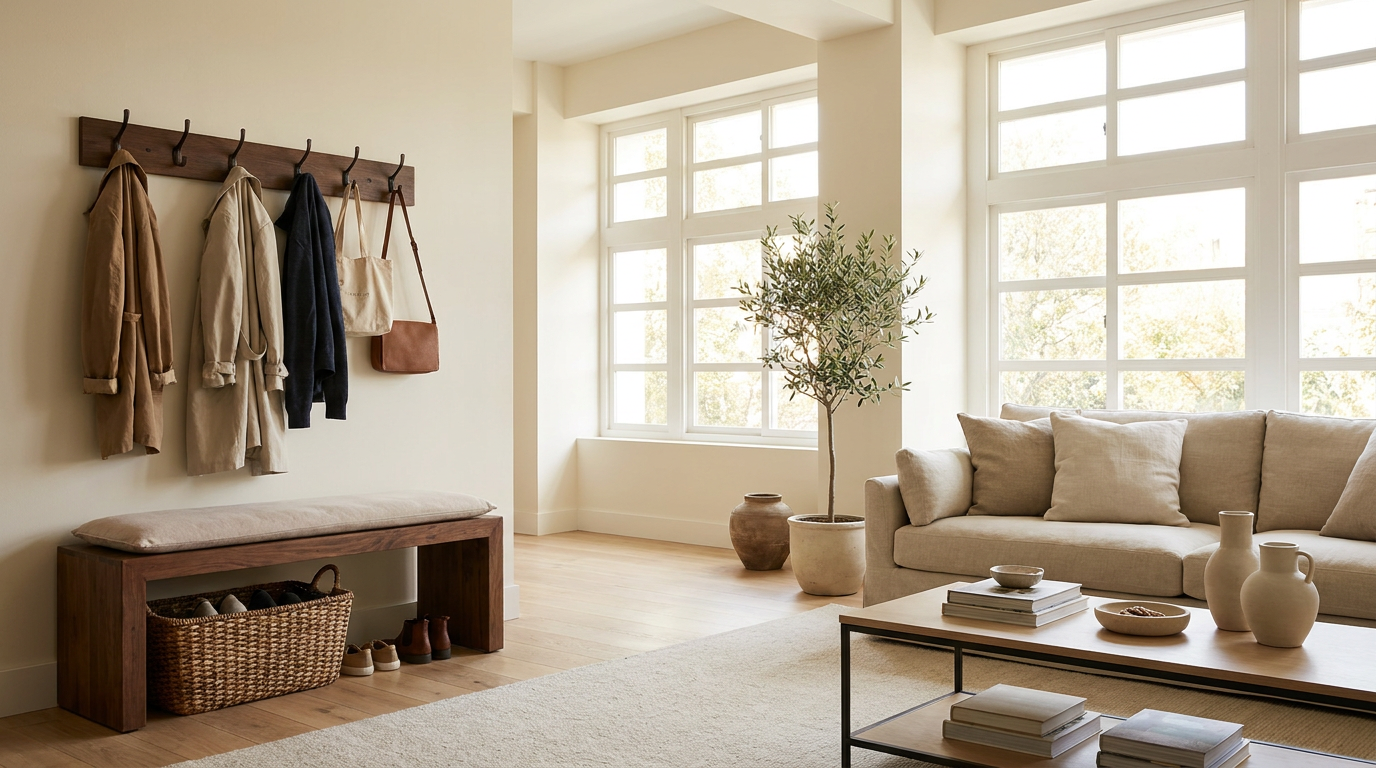
For example, taking off a coat and draping it over a dining chair is a temporary deferral of a task. It requires a second "touch" later to move it to the closet. By forcing the decision immediately—hanging the coat up the moment it comes off—the cycle of accumulation is broken before it begins.[3][4]
This immediate completion of micro-tasks does more than just keep surfaces clear; it provides a small but crucial dopamine hit to the brain. For individuals who struggle with executive dysfunction or chronic procrastination, these continuous, low-effort victories build momentum and replace the dread of looming weekend cleaning sessions.[4]

The second pillar of scientifically backed home management is "Zone-Based Organization." Traditionally, people organize their homes by category—keeping all paper in an office, or all cleaning supplies under a single sink. Zone-based systems, however, organize by activity.[5]
A zone is a dedicated physical space where all the items required for a specific routine are grouped together, regardless of their category. If a family drinks coffee every morning, a "coffee zone" would house the machine, the beans, the mugs, and the spoons in one immediate area, eliminating the need to cross the kitchen multiple times.[5]
This strategy mimics the efficiency of commercial workspaces. By establishing distinct zones for bill-paying, homework, or mail sorting, the home is divided into functional areas that reduce the cognitive friction of starting a task. When everything needed is within arm's reach, the barrier to entry plummets.[5][6]

Crucially, these zones also create clear boundaries that help the brain transition between different modes of thinking. A dedicated work-from-home zone allows an individual to mentally "clock out" when they leave that specific area, preserving the rest of the house for relaxation and family connection.[5]
Ultimately, the goal of these systems is not to achieve a sterile, minimalist perfection. A supportive home does not need to look like a magazine cover; it simply needs to be designed to lower the cognitive load on the people living inside it.[6]
By treating physical organization as a form of mental health maintenance—purging the visual noise to "create disk space" in the brain—families can transform their living spaces. Through the One-Touch Rule and functional zones, the home shifts from a source of chronic stress back into the sanctuary it was always meant to be.[2][6]
Viewpoints in depth
The Biological View
Examining how our physical environment directly alters our hormone levels.
Researchers in this camp view the home not as a static container, but as an active participant in human biology. By measuring cortisol levels in dual-income families, they have demonstrated that visual clutter acts as a chronic stressor. Because the brain interprets misplaced items as a never-ending to-do list, it remains in a state of low-grade alarm, preventing the natural evening relaxation response necessary for restorative sleep.
The Behavioral Systems View
Focusing on the habits and rules that prevent clutter from accumulating in the first place.
Productivity experts and professional organizers argue that relying on willpower to clean is a losing battle. Instead, they champion frictionless systems like the One-Touch Rule. By forcing immediate decision-making—such as hanging up a coat the moment it is taken off—these systems eliminate the 'temporary piles' that eventually overwhelm a space. The focus is on micro-habits that deliver small dopamine rewards rather than exhausting weekend purges.
The Spatial Design View
Structuring the physical layout of a home to naturally support daily routines.
Spatial designers and architects emphasize that form must follow function. Rather than organizing items by what they are, they advocate for organizing by how they are used. By creating dedicated 'zones' for specific activities—like a mail-sorting station or a coffee nook—the physical environment reduces the friction of daily tasks. When the easiest action is also the correct action, maintaining order requires almost zero mental effort.
What we don't know
- Whether the cortisol-clutter link affects all demographics equally, as early studies primarily focused on dual-income families with children.
- The exact threshold of visual stimuli required to trigger a stress response, which likely varies significantly from person to person.
Key terms
- Cortisol
- The body's primary stress hormone, which naturally peaks in the morning and should taper off throughout the day to allow for rest.
- Cognitive Load
- The total amount of mental effort and working memory being used by the brain at any given time.
- Visual Noise
- The accumulation of misplaced items and clutter that unconsciously demands the brain's attention and processing power.
- OHIO Method
- An acronym for 'Only Handle It Once,' a productivity rule designed to eliminate the procrastination that causes clutter.
Frequently asked
What is the One-Touch Rule?
A behavioral strategy where you only handle an item once, putting it directly in its final home rather than setting it down temporarily on a chair or counter.
How does clutter affect the brain?
Excess visual stimuli from clutter act as 'undone tasks,' keeping the brain in a low-grade fight-or-flight state and preventing cortisol levels from dropping naturally.
What is zone-based organization?
Grouping household items by the activity they are used for (like a dedicated coffee station) rather than by their category, which reduces the friction of starting a task.
Does my home need to be perfectly minimalist?
No. Experts emphasize that a supportive home doesn't need to be empty; it simply needs intuitive systems that lower the cognitive load on its inhabitants.
Sources
Source coverage
6 outlets
3 viewpoints surfaced






[1]UCLA Center on Everyday Lives of FamiliesBehavioral Psychologists
Life at Home in the Twenty-First Century
Read on UCLA Center on Everyday Lives of Families →[2]Mother.lyBehavioral Psychologists
The science of decluttering: Why a messy home makes you stressed
Read on Mother.ly →[3]Apartment TherapyProductivity Experts
I Follow the 'One Touch Rule' to Keep My Home in Order
Read on Apartment Therapy →[4]Homes & GardensProductivity Experts
Why the one-touch tidying rule is the secret to a clutter-free home
Read on Homes & Gardens →[5]Berkeley GroupSpatial Designers
How to Use Zones For an Organised Home
Read on Berkeley Group →[6]Factlen Editorial TeamSpatial Designers
Synthesis by Factlen editorial team
Read on Factlen Editorial Team →

Every angle. Every day.
Get home stories with full source coverage and perspective breakdowns delivered to your inbox.