
Potential End to U.S.-Iran War Tests Trump's Economic Promises as Dispute Over Strait of Hormuz Tolls Emerges
The U.S. and Iran are nearing a fragile 60-day ceasefire to reopen the Strait of Hormuz, but the deal faces internal skepticism from the CIA and a looming international legal battle over Tehran's demand to charge commercial ships a toll.
By Factlen Editorial Team
- US Administration
- Focuses on the immediate reopening of the strait and securing a commitment that Iran will never develop nuclear weapons, prioritizing a swift end to the conflict and economic relief.
- International Legal Community
- Warns that allowing Iran to toll an international strait would set a dangerous precedent that unravels global freedom of navigation laws established by UNCLOS.
- US Security Skeptics
- Argues that Iran is using the ceasefire to regroup and doubts Tehran will ever genuinely dismantle its nuclear infrastructure, viewing the deal as a temporary pause.
- Iranian Leadership
- Demands tangible economic compensation for the war, asserting sovereign rights over the Strait of Hormuz to levy tolls and insisting on the unfreezing of assets.
What's not represented
- · Commercial shipping companies and maritime insurers
- · Gulf Arab states heavily reliant on the strait
Why this matters
If the fragile peace deal holds, the reopening of the Strait of Hormuz could quickly lower global gas prices and stabilize the stock market. However, if Iran successfully imposes unprecedented tolls on commercial shipping, the cost of transporting energy will remain artificially high, keeping inflation elevated and threatening to unravel international maritime law.
Key points
- The U.S. and Iran are finalizing a 60-day ceasefire to end months of conflict and reopen the Strait of Hormuz.
- President Trump claims the deal will immediately lower gas prices and boost the global economy.
- CIA Director John Ratcliffe warns that Iran may be using the pause to rebuild its nuclear infrastructure.
- Iran is demanding the right to charge commercial ships a toll to pass through the strait.
- European allies and legal experts argue that tolling an international waterway violates global maritime law.
The United States and Iran are nearing a fragile, high-stakes agreement to end the months-long war that has severely disrupted global trade and energy markets. Following intense negotiations mediated by Pakistan and Qatar, a preliminary memorandum of understanding is expected to be signed in Switzerland later this week. The diplomatic breakthrough comes after a grueling military campaign that began in February, which saw U.S. and Israeli forces target Iranian infrastructure and Tehran retaliate by choking off international shipping routes. While the impending deal offers a desperately needed off-ramp from active hostilities, officials caution that it represents only a temporary pause rather than a comprehensive peace treaty.[5]
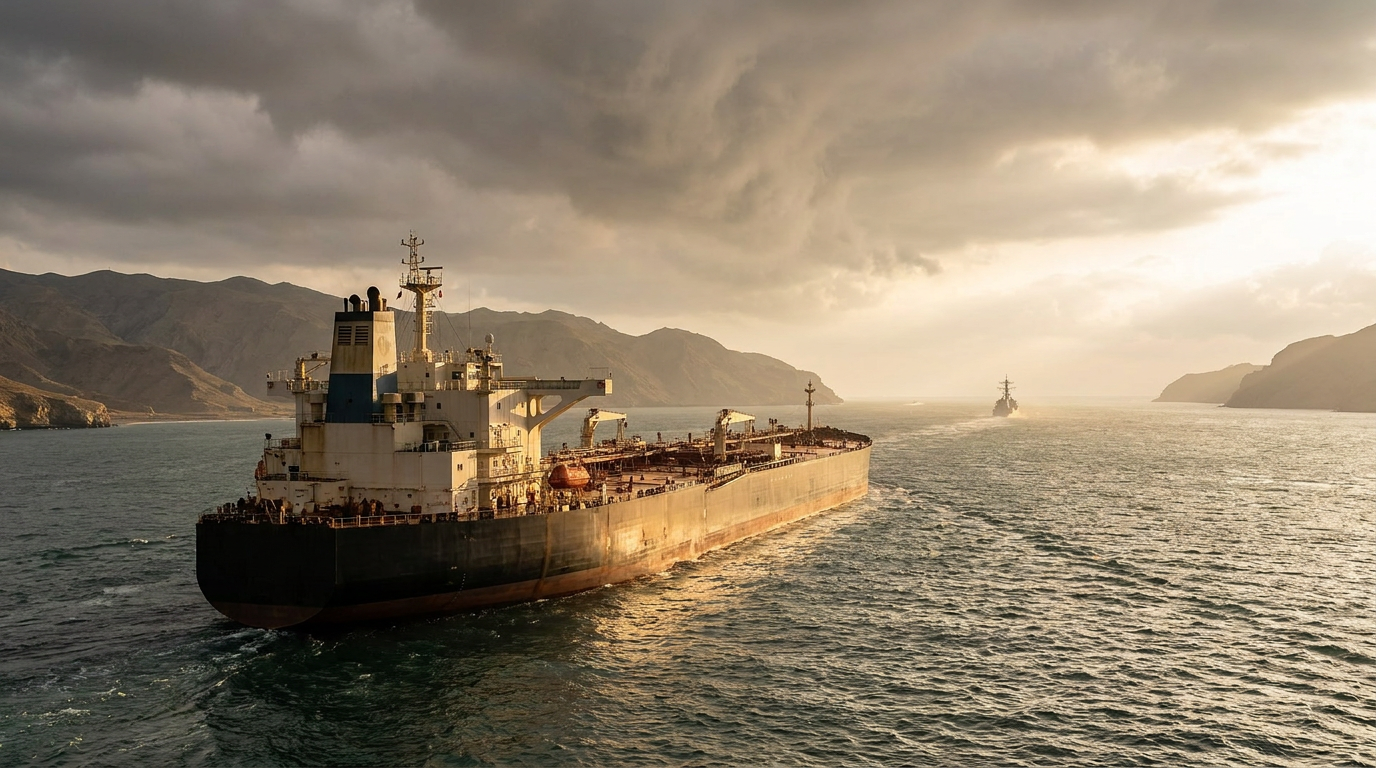
The emerging framework centers on a 60-day ceasefire designed to de-escalate immediate military tensions and create space for broader diplomatic talks. As part of the arrangement, the United States has agreed to lift its naval blockade on Iranian ports, a measure that had severely crippled Tehran's economy. In exchange, Iran is expected to immediately reopen the Strait of Hormuz—a critical maritime chokepoint that handles roughly one-fifth of the world's daily oil supply. The deal also outlines a phased approach to sanctions relief, tying the unfreezing of billions of dollars in Iranian assets to Tehran's verifiable compliance with new restrictions on its nuclear program.[5][7]
President Donald Trump has aggressively heralded the agreement as a decisive victory for his administration's "peace through strength" doctrine. Speaking to reporters ahead of a G7 summit in France, the president promised that the strait will be "completely open" by Friday, predicting that the resumption of unimpeded maritime traffic will trigger an immediate drop in global energy prices and send the stock market "shooting up like a rocket." The administration maintains that the framework forces Iran to commit indefinitely to never procuring or developing nuclear weapons, framing the 60-day window as a period for strict enforcement rather than open-ended negotiation.[4][7]

However, the path to a lasting peace is already fraught with deep internal U.S. divisions and a looming international legal battle over the mechanics of reopening the Persian Gulf. Almost immediately after the framework was announced, conflicting narratives emerged regarding Iran's demand to charge commercial ships a toll to pass through the waterway. Furthermore, the intelligence community remains deeply divided over whether the Iranian regime has genuinely altered its strategic calculus or is simply buying time to rebuild its degraded military and nuclear capabilities after absorbing months of heavy airstrikes.[3][4]
Within the administration, profound skepticism remains regarding Tehran's ultimate objectives. CIA Director John Ratcliffe has reportedly warned the White House that recent intelligence assessments raise serious doubts about Iran's willingness to make the permanent, verifiable nuclear concessions the U.S. is demanding. Ratcliffe, who has long advocated for a hardline stance against the Islamic Republic, briefed senior officials that Tehran's negotiating posture may be a tactical retreat rather than a strategic surrender, pointing to the regime's history of obfuscation regarding its highly enriched uranium stockpiles.[1]
Ratcliffe, alongside other senior cabinet members including Secretary of State Marco Rubio, has cautioned that Iran may attempt to use the 60-day ceasefire window to regroup, repair damaged infrastructure, and harden its nuclear facilities against future attacks. This internal debate highlights the growing friction between the intelligence community's stark warnings and the administration's political push for a swift, decisive diplomatic resolution. While the White House insists that robust verification mechanisms will be embedded in the final accord, skeptics worry that the U.S. is trading permanent leverage for temporary quiet.[1][7]
While the White House insists that robust verification mechanisms will be embedded in the final accord, skeptics worry that the U.S.
The most immediate and volatile flashpoint threatening to unravel the deal, however, is the status of the Strait of Hormuz. Iranian state media and leaked negotiating documents suggest that Tehran intends to levy "maritime service fees" on transiting commercial vessels. Iranian officials have framed these proposed tolls as necessary to fund post-war reconstruction and compensate for the economic devastation wrought by the U.S. naval blockade. By asserting the right to charge for passage, Iran is attempting to convert a natural geographic bottleneck into a permanent geopolitical tollbooth.[3][4]
This unprecedented demand has triggered fierce pushback from European allies, maritime experts, and the global shipping industry. French President Emmanuel Macron publicly rebuked the toll proposal, declaring that the international community will do "everything in our power to ensure there is no toll" imposed on the vital energy artery. Macron even floated the possibility of a joint European naval deployment, led by the French aircraft carrier Charles de Gaulle, to escort commercial ships and guarantee free navigation if Iran attempts to enforce the fees unilaterally.[4]

Legal scholars and maritime security experts point out that under the 1982 United Nations Convention on the Law of the Sea (UNCLOS), the Strait of Hormuz is classified as an international transit corridor. Under this framework, the "innocent passage" of vessels must be continuous, expeditious, and cannot be impeded or tolled by the coastal states. While artificial waterways like the Suez Canal are legally permitted to charge transit fees to maintain infrastructure, natural straits are protected as global commons where freedom of navigation is considered a bedrock principle of international law.[6][8]
Iran, however, counters that because it never formally ratified UNCLOS, it is not bound by the treaty's transit passage provisions. Tehran argues that the waters of the strait fall under its sovereign territorial control alongside neighboring Oman, giving the Islamic Republic the inherent right to regulate access, impose safety laws, and charge for maritime services. This legal ambiguity creates a dangerous gray zone; if Iran successfully normalizes the collection of tolls, it could fundamentally erode the foundational principles of maritime law and encourage similar moves in other contested waterways around the globe.[6][8]
The economic stakes of this legal standoff are massive and immediate. The war's disruption of the strait sent global energy prices soaring, creating a ripple effect of inflation that has squeezed consumers worldwide. The White House is heavily banking on the peace deal to deliver a promised economic rebound, hoping that a flood of delayed oil shipments will lower gas prices ahead of the upcoming midterm elections. However, the uncertainty surrounding the tolls threatens to undermine that recovery before it even begins.[2]

If shipping companies are forced to pay exorbitant fees to transit the Persian Gulf—or if the ongoing legal and military ambiguity causes maritime insurers to balk at covering vessels entering the region—the cost of transporting energy will remain artificially high. Analysts warn that these added logistical costs would inevitably be passed down to consumers, meaning that gas prices and the cost of everyday goods could remain elevated for months, severely complicating the administration's narrative of a swift return to economic normalcy.[2][3]
As negotiators prepare for Friday's high-stakes signing ceremony in Switzerland, the international community watches with a mix of relief and profound anxiety. The coming weeks will serve as a critical test of whether the 60-day framework can hold under the weight of its own contradictions. If the unresolved disputes over nuclear verification, sanctions relief, and maritime tolls are not carefully managed, the fragile memorandum of understanding could easily collapse, dragging the United States, Iran, and the global economy back into a devastating conflict.[5][7]
How we got here
February 2026
The U.S. and Israel launch a military campaign against Iran, escalating regional tensions.
March 2026
Iran retaliates by blocking commercial shipping through the Strait of Hormuz, causing global energy prices to spike.
April 2026
The United States imposes a naval blockade on Iranian ports as the conflict settles into a tense standoff.
June 11, 2026
Negotiators reach a preliminary framework for a 60-day ceasefire and the reopening of the strait.
June 15, 2026
President Trump announces the deal is ready to be signed, though disputes over maritime tolls and nuclear concessions immediately emerge.
Viewpoints in depth
US Administration's view
The White House views the framework as a decisive victory that will reopen global trade and force permanent nuclear concessions.
President Trump and his allies argue that the intense military pressure of the past several months has forced Iran to the negotiating table on highly favorable terms. By securing an immediate reopening of the Strait of Hormuz and lifting the naval blockade, the administration aims to deliver a rapid economic rebound. They maintain that the 60-day ceasefire is not an open-ended negotiation, but a strict compliance window where Iran must prove it is dismantling its nuclear infrastructure before receiving any permanent sanctions relief.
Intelligence Skeptics' view
Security officials warn that Iran is using the diplomatic pause to rebuild its military capabilities rather than surrender its nuclear ambitions.
Figures like CIA Director John Ratcliffe point to intelligence suggesting that Tehran's negotiating posture is a tactical maneuver to survive the devastating U.S. airstrikes. Skeptics argue that the Islamic Republic has a long history of obfuscating its nuclear progress and that a 60-day pause simply gives the regime time to harden its facilities against future attacks. They fear the administration's desire for a quick political and economic win is blinding it to the long-term threat of a nuclear-armed Iran.
Iranian Negotiators' view
Tehran is demanding economic compensation for the war and asserting its sovereign right to control the waters off its coast.
For the Iranian leadership, the peace deal must deliver tangible economic relief to justify the heavy losses sustained during the conflict. By floating the idea of maritime service tolls, Iran is attempting to leverage its geographic position to fund post-war reconstruction. Iranian officials argue that because they never ratified the UN Convention on the Law of the Sea, they are not bound by its rules on free transit, asserting that the strait falls under their sovereign territorial jurisdiction.
International Maritime view
Legal scholars and European allies warn that tolling the strait would destroy the foundational principles of global freedom of navigation.
The international legal community, backed by leaders like French President Emmanuel Macron, views Iran's toll proposal as an existential threat to global trade. They argue that natural chokepoints like the Strait of Hormuz are protected global commons under customary international law, regardless of whether a specific coastal state ratified UNCLOS. Allowing Iran to charge for passage would set a dangerous precedent, potentially encouraging other nations to hold critical maritime corridors hostage for political or financial gain.
What we don't know
- Whether Iran will actually follow through on its threat to charge maritime service fees to transiting ships.
- How the U.S. and its European allies will respond if Iran attempts to unilaterally enforce a toll.
- Whether the 60-day ceasefire will lead to a permanent dismantling of Iran's nuclear program.
Key terms
- Strait of Hormuz
- A narrow, 167-kilometer waterway connecting the Persian Gulf to the Gulf of Oman, through which roughly 20% of the world's oil passes.
- UNCLOS
- The United Nations Convention on the Law of the Sea, a 1982 international treaty that establishes guidelines for the use of the world's oceans and marine resources.
- Innocent Passage
- A concept in international maritime law that allows vessels to pass through another state's territorial waters so long as the passage is continuous and peaceful.
- Memorandum of Understanding (MOU)
- A preliminary agreement outlining the framework and core principles of a deal before a final, legally binding treaty is signed.
Frequently asked
What is the proposed US-Iran deal?
It is a preliminary memorandum of understanding that establishes a 60-day ceasefire, lifts the U.S. naval blockade, and reopens the Strait of Hormuz while setting the stage for permanent nuclear negotiations.
Why does Iran want to charge a toll?
Tehran is seeking to raise funds for post-war reconstruction and asserts that it has sovereign control over its territorial waters in the strait, giving it the right to charge maritime service fees.
Is it legal to charge ships in the Strait of Hormuz?
Under the UN Convention on the Law of the Sea, international straits cannot be tolled. However, Iran argues it is exempt from this rule because it never formally ratified the treaty.
Why is the CIA director skeptical of the deal?
CIA Director John Ratcliffe has cited intelligence suggesting Iran is using the ceasefire to regroup and is not genuinely willing to make the permanent nuclear concessions the U.S. is demanding.
Sources
Source coverage
8 outlets
4 viewpoints surfaced







[1]AxiosUS Security Skeptics
Scoop: CIA director doubts Iran's intentions on deal, sources say
Read on Axios →[2]The New York TimesInternational Legal Community
Potential End of War Tests Trump’s Promise of Quick Economic Rebound
Read on The New York Times →Will Commercial Ships Have to Pay to Pass Through the Strait of Hormuz? Maybe.
Read on The New York Times →[4]The GuardianInternational Legal Community
US president says strait of Hormuz will be open from Friday but questions remain over waterway fees
Read on The Guardian →[5]PBS NewsHourUS Administration
US and Iran reach agreement to end war and open Strait of Hormuz
Read on PBS NewsHour →[6]El PaísInternational Legal Community
Can Iran legally impose tolls in the Strait of Hormuz?
Read on El País →[7]TIMEUS Administration
What's in the Iran deal Trump says he's ready to sign
Read on TIME →[8]TRT WorldIranian Leadership
Law versus power: The legal battle over the Strait of Hormuz
Read on TRT World →

Every angle. Every day.
Get news politics stories with full source coverage and perspective breakdowns delivered to your inbox.