
UK Announces Sweeping Social Media Ban for Children Under 16
Prime Minister Keir Starmer has unveiled plans to ban children under 16 from major social media platforms by spring 2027, making the UK the latest nation to impose strict age limits on tech companies.
By Factlen Editorial Team
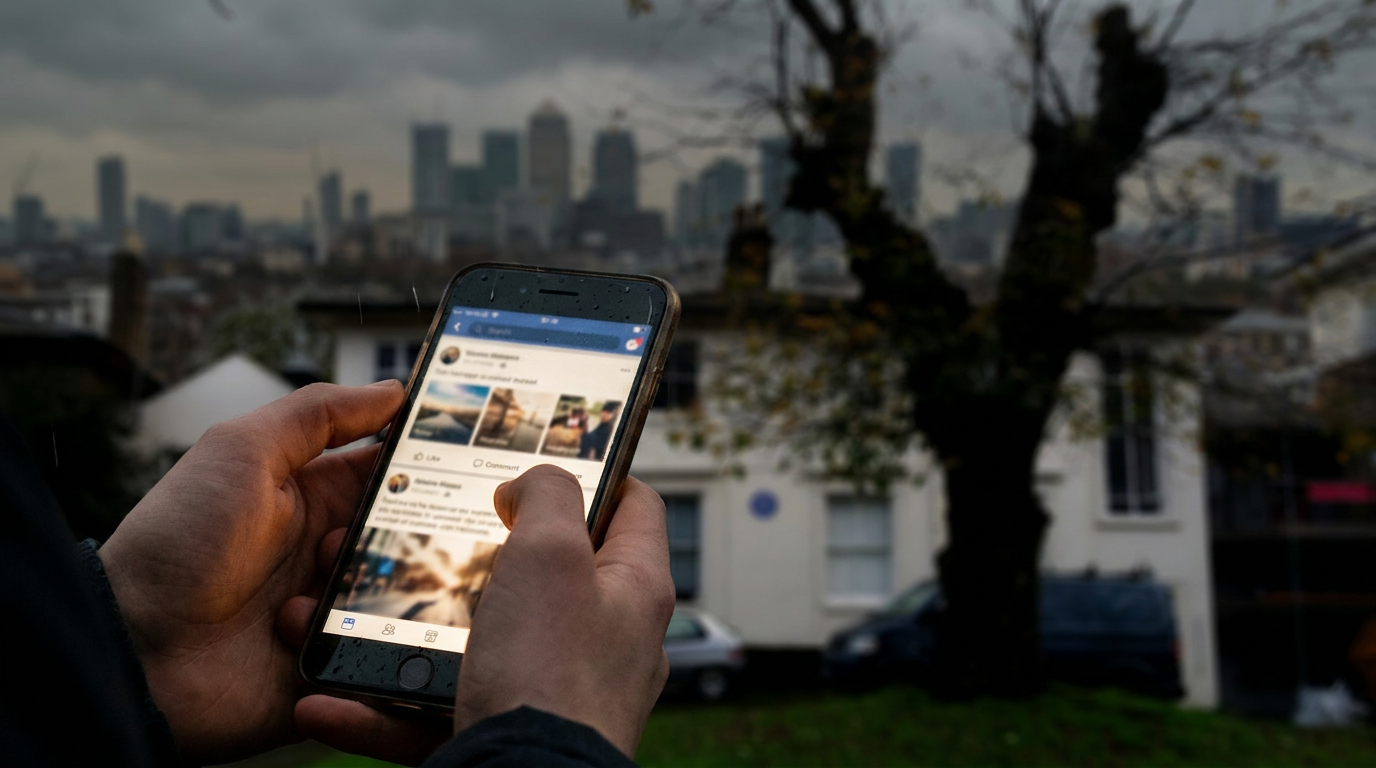
- Child Safety Advocates
- Support the ban as a necessary intervention against addictive algorithms.
- Digital Rights Groups
- Oppose the ban due to privacy concerns over mandatory age verification.
- Tech Industry
- Argue the ban is unworkable and will push kids to less safe platforms.
What's not represented
- · Teenagers directly affected by the ban
- · Child psychologists studying the impact of social media isolation
Why this matters
The UK's ban represents one of the most aggressive regulatory crackdowns on Big Tech in Western history. It forces a fundamental shift in how millions of children interact online and sets a major precedent that could accelerate similar legislation across Europe and North America.
Key points
- The UK will ban children under 16 from major social media platforms by spring 2027.
- The ban covers apps like TikTok, Instagram, and YouTube, but exempts messaging services like WhatsApp.
- Additional restrictions will limit livestreaming and gaming communications for users under 18.
- Tech companies will be responsible for enforcing age verification and face heavy fines for non-compliance.
- Digital rights groups warn the mandate could lead to invasive age-verification checks for all adult users.
The United Kingdom will ban children under the age of 16 from using major social media platforms, Prime Minister Keir Starmer announced on Monday. The sweeping legislation marks a dramatic escalation in the global effort to regulate Big Tech, positioning the UK alongside a growing coalition of nations concluding that parents can no longer manage the digital landscape alone.[1][2][3]
The prohibition will cover ten of the world's most dominant platforms, including TikTok, Instagram, YouTube, Facebook, X, and Snapchat. However, the government has explicitly exempted essential messaging services such as WhatsApp and Signal, ensuring that young people can still communicate directly with family and known friends.[2][3][4]
The legislation goes further than simply barring younger teenagers from creating accounts. For users aged 16 and 17, the government plans to mandate the restriction of high-risk features. Livestreaming capabilities and the ability to communicate with strangers—particularly in online gaming environments—will be disabled by default for all minors.[1][3][4]

Starmer's government aims to pass the regulations through Parliament by late December, with the full ban scheduled to come into force in the spring of 2027. The onus of enforcement will fall entirely on the technology companies, which will face massive financial penalties if they fail to keep underage users off their platforms.[1][3]
Defending the aggressive timeline, Starmer argued that social media platforms are fundamentally engineered to be addictive and expose children to dangerous content. He dismissed concerns about the feasibility of the ban, stating that society does not abandon alcohol age limits simply because some teenagers manage to bypass them.[2][3]
Defending the aggressive timeline, Starmer argued that social media platforms are fundamentally engineered to be addictive and expose children to dangerous content.
The policy shift follows a massive national consultation conducted between March and May of 2026. According to the UK Government, the results demonstrated overwhelming public demand for intervention, with nine out of ten parents backing a blanket ban for under-16s.[4]

Britain's move is heavily influenced by Australia, which became the first nation to pass a strict under-16 social media ban in December 2025. Since then, a wave of international momentum has built, with Canada, Brazil, Denmark, France, and South Korea all developing or announcing similar legislative measures.[1][2]
However, the ban has drawn sharp criticism from digital rights and human rights organizations. Amnesty International UK characterized the policy as the "right diagnosis but the wrong prescription," arguing that it unfairly excludes children from modern digital life instead of forcing companies to fix platforms that are unsafe by design.[5]
Privacy advocates are particularly alarmed by the mechanics of enforcement. To effectively screen out determined teenagers, platforms will likely need to implement robust age-verification systems—such as facial age estimation or digital ID checks. The Open Rights Group warns this could create "your papers please" digital checkpoints, effectively forcing every adult user to surrender sensitive data to access the internet.[2]

The technology industry has also pushed back. A spokesperson for YouTube warned that a blanket ban could inadvertently drive children toward less regulated, less safe corners of the internet. Big Tech companies are widely expected to mount fierce legal and lobbying challenges before the spring 2027 implementation date.[1][3]
Questions also remain about the practical reality of enforcement. In Australia, early data suggests significant evasion; a March poll by the country's internet regulator found that roughly 70 percent of parents reported their children had already found ways to bypass the age-gating systems.[3]
The UK government is undeterred, promising to announce further details in July, which may include overnight curfews and mandated breaks in infinite scrolling for older teenagers. As the 2027 deadline approaches, the UK is setting the stage for a defining battle between sovereign governments and the world's most powerful technology companies.[1][4]
How we got here
December 2025
Australia becomes the first nation to pass a strict under-16 social media ban.
March–May 2026
The UK government runs a national consultation, finding 90% of parents support a ban.
June 15, 2026
Prime Minister Keir Starmer officially announces the UK's under-16 ban.
Late December 2026
Target deadline for the UK Parliament to pass the new regulations.
Spring 2027
The ban is scheduled to come into full force.
Viewpoints in depth
UK Government & Parents
Argues that a blanket ban is necessary to protect children from addictive algorithms and harmful content.
Proponents of the ban view social media as a public health crisis that has fundamentally altered childhood. They argue that tech companies have intentionally designed their platforms to be addictive, prioritizing engagement and profit over the mental health of young users. Because these algorithms are so powerful, the government contends that it is unreasonable to expect individual parents to successfully police their children's screen time. A blanket legal ban is seen as the only effective way to reset societal norms and force tech giants to take responsibility.
Digital Rights Advocates
Argues that banning children violates their rights and forces invasive age-verification on all adults.
Human rights and privacy organizations argue that the government is punishing children for the failures of tech companies. They emphasize that social media is a crucial space for young people to learn, find support, and connect with peers. Furthermore, they warn that enforcing a strict age limit requires mass surveillance. To prove a user is over 16, platforms will have to age-verify everyone, potentially forcing millions of adults to hand over government IDs or biometric data to private companies, fundamentally compromising online privacy.
Tech Industry
Warns that age-gating is technically flawed and will drive teenagers to unregulated platforms.
Technology companies and industry representatives argue that a blunt ban is both technologically unfeasible and counterproductive. They point to early data from Australia showing that tech-savvy teenagers easily bypass age-gating using VPNs or borrowed credentials. Industry advocates warn that pushing children off mainstream, moderated platforms will simply drive them toward encrypted messaging apps or darker, unregulated corners of the internet where harmful content is far more prevalent and harder to track.
What we don't know
- Exactly what age-verification technology will be mandated and how it will avoid collecting sensitive biometric data from adults.
- How the government plans to prevent tech-savvy teenagers from using VPNs or alternative apps to bypass the restrictions.
- Whether the ban will survive inevitable legal challenges from major technology companies.
Key terms
- Age-gating
- Technology used to restrict access to digital content based on the user's age, often requiring ID or biometric verification.
- Infinite scrolling
- A design feature that continuously loads new content as a user scrolls down, designed to maximize time spent on an app.
- Digital ID
- An electronic representation of a person's identity, which may be required to prove age under the new laws.
Frequently asked
Will messaging apps be banned?
No, the government has explicitly exempted messaging services like WhatsApp and Signal from the ban.
What happens to 16 and 17-year-olds?
They can use social media, but will face restrictions on livestreaming, talking to strangers in games, and potentially overnight curfews.
How will the ban be enforced?
Tech companies will be legally required to implement age-verification systems and will face massive fines if underage users access their platforms.
Sources
Source coverage
5 outlets
3 viewpoints surfaced





[1]Al JazeeraTech Industry
Britain announces sweeping social media ban for under-16s
Read on Al Jazeera →[2]The Washington PostDigital Rights Groups
Britain announces sweeping ban on most social media for children under 16
Read on The Washington Post →[3]CBS NewsChild Safety Advocates
U.K. announces plan to ban social media for children under 16
Read on CBS News →[4]UK GovernmentChild Safety Advocates
The UK government will ban social media for under 16s
Read on UK Government →[5]Amnesty InternationalDigital Rights Groups
UK: Social media ban for under 16s 'right diagnosis, wrong prescription'
Read on Amnesty International →
More in news politics
See all 5 stories →


Every angle. Every day.
Get news politics stories with full source coverage and perspective breakdowns delivered to your inbox.