
US and Iran Reach Deal to End War and Reopen Strait of Hormuz
President Trump announced a memorandum of understanding with Tehran to end military operations and lift the US naval blockade on the Strait of Hormuz. While global markets rallied and allies welcomed the ceasefire, Israeli leaders insisted they are not bound by the agreement's terms in Lebanon.
By Factlen Editorial Team
- US Administration
- Frames the agreement as a decisive diplomatic victory that halts a costly war and secures global energy routes.
- Israeli Leadership
- Views the bilateral US-Iran deal as insufficient for Israel's immediate security needs, particularly regarding Hezbollah.
- Global Markets & Allies
- Anticipates a stabilization of crude prices but remains cautious about the timeline for full logistical recovery.
- Regional Mediators & Analysts
- Emphasizes the fragility of the ceasefire and the unresolved geopolitical tensions that could derail the 60-day negotiation window.
What's not represented
- · Lebanese civilians affected by the ongoing Israeli occupation
- · Commercial shipping companies navigating the Strait of Hormuz
Why this matters
The reopening of the Strait of Hormuz relieves a massive bottleneck in the global energy supply chain, promising to lower fuel prices worldwide. However, Israel's refusal to accept the deal's terms regarding Lebanon leaves the risk of regional conflict simmering.
Key points
- The US and Iran signed a memorandum of understanding to end military operations and lift the naval blockade on the Strait of Hormuz.
- A 60-day ceasefire window has been established to negotiate broader issues, including Iran's nuclear program.
- Global crude oil futures dropped by 4% following the announcement, signaling relief for energy markets.
- Israeli Prime Minister Benjamin Netanyahu stated that Israel is not bound by the deal and will keep forces in Lebanon.
- A formal signing ceremony is scheduled for June 19 in Geneva, Switzerland.
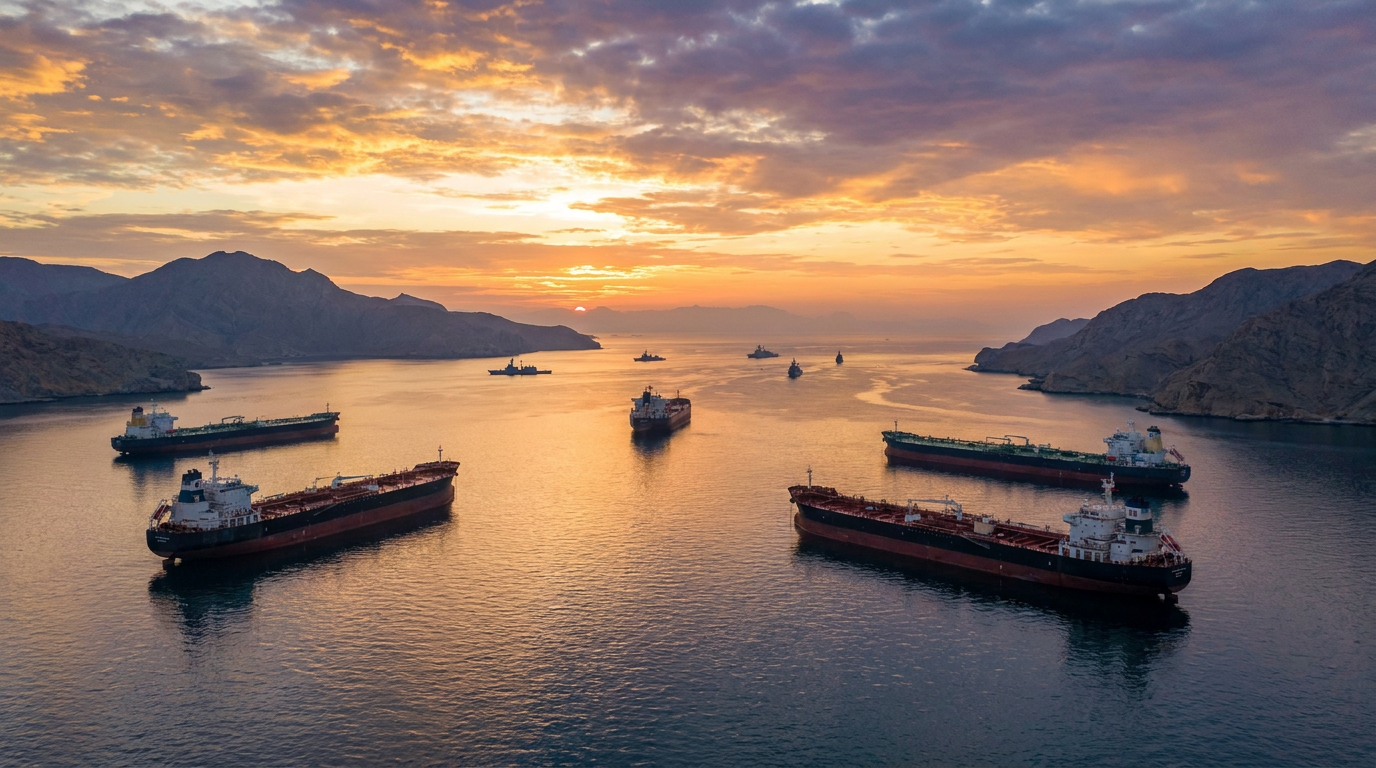
The United States and Iran have reached a memorandum of understanding to end their months-long military conflict, a breakthrough that includes the immediate lifting of the US naval blockade on the Strait of Hormuz. President Donald Trump announced the agreement on social media on Sunday, declaring the deal "complete" and authorizing the "toll-free opening" of the vital global shipping route. The sudden de-escalation aims to halt a war that has disrupted global energy markets and drawn in multiple regional actors since late February. "Ships of the world, start your engines. Let the oil flow!" Trump wrote, signaling an end to the severe restrictions on oil traffic that have battered the global economy.[1][2]
The agreement, brokered with the help of Pakistani and Qatari mediators, establishes a 60-day ceasefire window. During this period, Washington and Tehran are expected to negotiate broader, long-term issues, including strict limitations on Iran's nuclear program and the potential release of billions of dollars in frozen Iranian assets. Vice President JD Vance confirmed that the memorandum was signed "digitally" over the weekend, adding that no frozen funds have been released to Tehran yet. A formal, in-person signing ceremony is scheduled for Friday, June 19, in Geneva, Switzerland, hosted by Pakistani Prime Minister Shehbaz Sharif.[1][4][8]
Global markets reacted swiftly to the prospect of restored energy flows. Crude oil futures dropped more than 4% to their lowest levels in over three months, as traders anticipated the resumption of normal shipping through the Middle Eastern chokepoint. However, energy analysts and industry experts caution that while the diplomatic breakthrough is a highly positive signal, it will take time for global fuel prices to fully normalize. Port bottlenecks, heightened insurance premiums, and the logistical realities of ramping up production and realigning shipping schedules mean that consumers may not see immediate relief at the pump.[3][7]

While European allies, including UK Prime Minister Keir Starmer and French President Emmanuel Macron, welcomed the ceasefire as a critical step toward regional stability, the agreement has exposed a sharp rift between Washington and its closest Middle Eastern ally. The US-Iran deal reportedly includes provisions for a comprehensive ceasefire across all fronts, including in Lebanon, where Israeli forces have been engaged in a deep ground offensive against the Iran-backed militant group Hezbollah. US officials expressed hope that the agreement would naturally lead to a reduction in regional hostilities.[2][5]
Israeli Prime Minister Benjamin Netanyahu quickly and forcefully distanced himself from the US-brokered arrangement. In a press conference on Monday evening—his first in three months—Netanyahu stated that Israel is not a party to the agreement and is absolutely not bound by its terms. He vowed that Israeli troops would remain in the security buffer zone they have occupied in southern Lebanon "for as long as necessary" to dismantle Hezbollah's military infrastructure and ensure the safety of northern Israeli residents.[5][6]
Israeli Prime Minister Benjamin Netanyahu quickly and forcefully distanced himself from the US-brokered arrangement.
"This agreement was made by the United States, by the president of the United States," Netanyahu told reporters, emphasizing the bilateral nature of the pact. He acknowledged that while he and Trump often see eye to eye, Israel must prioritize its own immediate security interests above diplomatic consensus. Netanyahu reiterated his unwavering commitment to preventing Iran from ever obtaining a nuclear weapon, declaring that Israel retains the right to act independently against Iranian proxies and nuclear facilities regardless of the framework signed in Geneva.[6]

The ceasefire deal has also sparked fierce domestic backlash within Israel's political establishment. Far-right National Security Minister Itamar Ben Gvir denounced the agreement on social media, stating it "does not safeguard our security" and demanding that Israel not settle for anything less than the complete dismantling of Hezbollah. Meanwhile, opposition leader Yair Lapid characterized the outcome as a massive strategic failure for Netanyahu, arguing that despite enduring months of warfare and flying thousands of combat sorties, Iran has emerged from the conflict in a stronger geopolitical position.[5][6]
In Washington, the sudden announcement of the memorandum caught many lawmakers entirely off guard. Members of Congress from both the Democratic and Republican parties indicated they had been kept in the dark about the final stages of the high-stakes negotiations. Senators demanded immediate, classified briefings from the administration on the specific concessions made to Tehran, particularly regarding the timeline for any potential sanctions relief and the precise enforcement mechanisms designed to police Iran's nuclear ambitions during the fragile 60-day negotiation window.[5]

As world leaders gather at the G7 summit in Évian-les-Bains, France, questions remain about the precise mechanics of the Strait of Hormuz's reopening. Iranian state media reported that a last-minute clause was added to the text to explicitly emphasize Iranian and Omani sovereignty over the waterway. This has raised concerns among European leaders that Tehran might attempt to impose maritime service fees or tolls on international shipping—a move that would contradict Trump's public assurance of a "toll-free" reopening and potentially complicate the deployment of international maritime task forces.[2][8]
The resolution of the conflict, if it holds, marks the end of a devastating chapter that began with US and Israeli strikes in late February. The ensuing months of warfare resulted in thousands of casualties across multiple fronts, displaced civilian populations, and created an unprecedented energy shock that threatened to tip the global economy into recession. While the memorandum of understanding offers a tangible off-ramp from open warfare, diplomats acknowledge that the underlying geopolitical tensions—from Israel's northern border to Tehran's nuclear facilities—remain largely unresolved, placing immense pressure on the upcoming 60 days of technical negotiations.[2][4][8]
How we got here
Late Feb 2026
US-Israeli military strikes on Iran trigger a broader conflict and the closure of the Strait of Hormuz.
Jun 14, 2026
The US and Iran digitally sign a memorandum of understanding to end hostilities.
Jun 15, 2026
Oil prices drop 4% as President Trump announces the lifting of the US naval blockade.
Jun 19, 2026
A formal signing ceremony is scheduled to take place in Geneva, Switzerland.
Viewpoints in depth
The US Administration's view
Frames the agreement as a decisive diplomatic victory that halts a costly war and secures global energy routes.
Vice President JD Vance and President Trump argue that the deal achieves America's primary objectives: preventing a nuclear-armed Iran and reopening the Strait of Hormuz without immediately releasing frozen funds. They view the 60-day window as a structured mechanism to enforce compliance while providing immediate relief to the global economy.
The Israeli Government's view
Views the bilateral US-Iran deal as insufficient for Israel's immediate security needs, particularly regarding Hezbollah.
Prime Minister Benjamin Netanyahu and his cabinet maintain that Israel is not bound by an agreement it did not sign. They argue that the deal fails to dismantle Hezbollah's infrastructure in Lebanon and potentially leaves Iran in a stronger geopolitical position. Consequently, Israel insists on retaining its military presence in southern Lebanon and reserves the right to strike Iranian proxies.
Global Energy Markets' view
Anticipates a stabilization of crude prices but remains cautious about the timeline for full logistical recovery.
Traders and economic analysts reacted positively to the lifting of the naval blockade, driving oil futures down by 4%. However, industry experts caution that the physical reopening of the Strait of Hormuz will not instantly normalize fuel prices. High insurance premiums, disrupted shipping schedules, and port bottlenecks mean the supply chain will take weeks or months to fully recover.
What we don't know
- Whether Iran will successfully impose maritime service fees on international shipping through the Strait of Hormuz.
- How the United States will enforce the ceasefire in Lebanon given Israel's refusal to withdraw its troops.
- The exact timeline for when global fuel prices will return to pre-war levels.
Key terms
- Strait of Hormuz
- A crucial maritime chokepoint between the Persian Gulf and the Gulf of Oman through which a significant portion of the world's oil supply passes.
- Memorandum of Understanding (MoU)
- A formal agreement between two or more parties that outlines the terms and details of a mutual understanding, often serving as the foundation for a binding treaty.
- Naval Blockade
- The use of naval forces to cut off a specific area, preventing ships from entering or leaving, typically to exert economic or military pressure.
Frequently asked
What does the US-Iran deal entail?
It establishes a 60-day ceasefire, ends military operations, and lifts the US naval blockade on the Strait of Hormuz while broader issues are negotiated.
Will gas prices go down?
Global crude oil prices dropped immediately following the announcement, which is expected to lower fuel costs, though experts say it may take months for supply chains to fully normalize.
Is Israel participating in the ceasefire?
No. Israeli Prime Minister Benjamin Netanyahu stated that Israel is not bound by the US-Iran agreement and will keep its forces in Lebanon to combat Hezbollah.
Sources
Source coverage
8 outlets
4 viewpoints surfaced








[1]CBS NewsUS Administration
Trump says U.S.-Iran deal 'is now complete,' U.S. ending blockade on Strait of Hormuz
Read on CBS News →[2]The GuardianGlobal Markets & Allies
Trump declares US-Iran peace deal 'all signed' as G7 leaders battle to tie up loose ends
Read on The Guardian →[3]Al JazeeraRegional Mediators & Analysts
US fuel prices to take 'months' to normalise after US-Iran deal to end war
Read on Al Jazeera →[4]Fox NewsUS Administration
Vance says Trump administration's key objectives have been reached in US-Iran deal
Read on Fox News →[5]The New York TimesIsraeli Leadership
Netanyahu Says Israel Will Keep Forces in Lebanon, Despite U.S.-Iran Deal
Read on The New York Times →[6]The Times of IsraelIsraeli Leadership
Netanyahu avoids criticizing US-Iran deal, claims war's main goals have been achieved
Read on The Times of Israel →[7]AxiosGlobal Markets & Allies
Oil prices sink on announcement of Iran deal
Read on Axios →[8]The HinduRegional Mediators & Analysts
West Asia highlights: Trump says Hormuz to reopen Friday under U.S.-Iran deal
Read on The Hindu →
Every angle. Every day.
Get news politics stories with full source coverage and perspective breakdowns delivered to your inbox.