
US-Iran Framework Agreement Aims to Reopen Strait of Hormuz, Easing Global Oil Markets
President Trump announced a tentative ceasefire and transit agreement with Iran to reopen the Strait of Hormuz, sending global crude prices lower. While the deal offers immediate relief to depleted US oil reserves and inflation pressures, crucial details regarding sanctions and nuclear enrichment remain undisclosed.
By Factlen Editorial Team
- Global Energy Markets
- Focused purely on supply normalization; highly optimistic about the return of Gulf oil but anxious about transit enforcement.
- US Administration
- Argues the deal successfully halted a catastrophic economic spiral and achieved its primary goal of reopening the Strait.
- Geopolitical Skeptics
- Warns that the secret nature of the nuclear and sanctions-relief clauses means the US may have traded long-term security for short-term economic relief.
What's not represented
- · Iranian domestic public
- · Commercial shipping insurers
Why this matters
The closure of the Strait of Hormuz has been the primary driver of recent global inflation and soaring energy costs. If this framework holds, it could significantly lower gasoline prices for consumers and stabilize a fragile global economy, though a collapse of the deal would immediately reignite supply shocks.
Key points
- The US and Iran have reached a framework agreement to prolong a ceasefire.
- The deal aims to reopen the Strait of Hormuz to commercial shipping.
- Global crude oil prices fell sharply following the announcement.
- The US Strategic Petroleum Reserve had reached its lowest level since 1983.
- Details regarding Iran's nuclear program and sanctions relief remain secret.
The announcement of a framework agreement between the United States and Iran has injected sudden optimism into a global economy battered by months of energy-driven inflation. President Trump confirmed that a deal has been reached to prolong a fragile ceasefire and, crucially, reopen the Strait of Hormuz to commercial shipping.[1]
Financial markets and energy exchanges reacted almost instantly to the news. Crude oil prices experienced a sharp decline as traders priced in the return of millions of barrels of daily supply that had been effectively landlocked by the conflict. Wall Street also saw a broad rally, with investors betting that lower energy input costs will translate to wider corporate margins and immediate relief for consumers.[6][8]

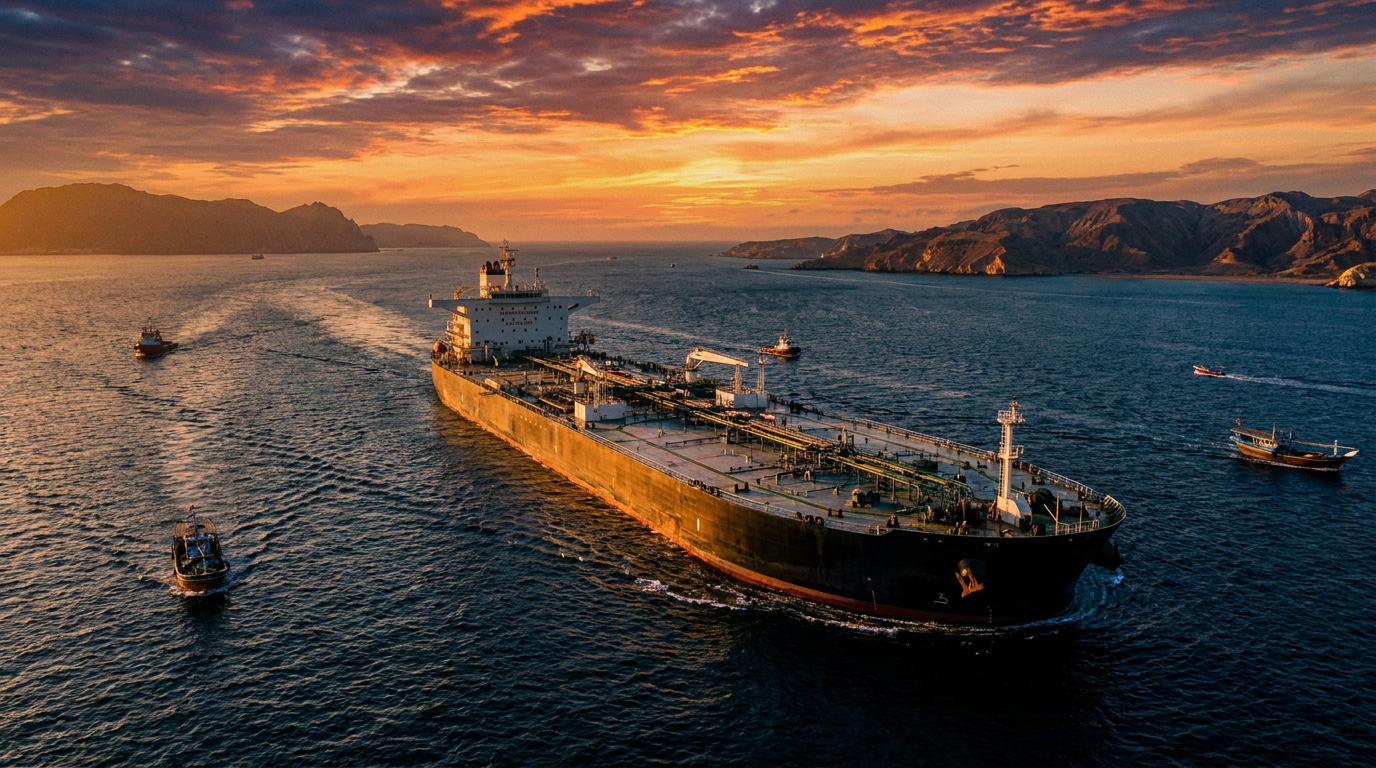
To understand why a single waterway dictates global economic health, one must look at the geography of the global oil trade. The Strait of Hormuz is a narrow chokepoint between the Persian Gulf and the Gulf of Oman. Historically, roughly 20 percent of the world's total oil consumption passes through this 21-mile-wide channel, making it the most critical energy transit route on the planet.[7]
When the conflict escalated and the Strait was closed to standard commercial transit, the global supply chain was instantly severed. Tankers were forced to anchor or seek impossibly long alternative routes, creating an artificial supply shock that rippled from industrial manufacturing down to the local gas pump.[4]

The timing of the diplomatic breakthrough is particularly critical for the United States' domestic energy strategy. Throughout the conflict, the US government has heavily relied on the Strategic Petroleum Reserve (SPR) to buffer domestic markets against the worst of the price spikes and maintain baseline economic stability.[2]
That buffer, however, was rapidly running out. Oil industry executives and energy analysts have been warning for weeks that global and domestic inventories were depleting at an unsustainable rate. As of this week, the SPR has hit its lowest operational level since 1983, leaving the US with severely limited ammunition to fight future supply disruptions if the war were to drag on.[2]

Oil industry executives and energy analysts have been warning for weeks that global and domestic inventories were depleting at an unsustainable rate.
The macroeconomic stakes of this agreement cannot be overstated. Economists suggest that if the peace deal sticks and the Strait remains open, the worst of the war-driven inflation cycle may have finally passed. Energy costs are a foundational input for almost every sector of the economy, meaning cheaper oil naturally cools the prices of logistics, manufacturing, and consumer goods.[4]
Yet, despite the market euphoria, the actual text of the agreement remains closely guarded, leaving significant structural questions unanswered. The framework is currently functioning more as a prolonged ceasefire than a comprehensive treaty, and the diplomatic hurdles remaining are immense.[1][5]
Crucial aspects of the arrangement have not been disclosed to the public or international observers. It is currently unclear what concessions were made regarding Iran's nuclear enrichment program, which was a primary catalyst for the initial US military engagement.[3]
Furthermore, there are unresolved questions about the economic mechanics of the Strait's reopening. Reports indicate that the deal may involve new transit tolls for vessels passing through the chokepoint, and the extent of US sanctions relief granted to Tehran remains a tightly kept secret.[3]

The geopolitical equation is further complicated by regional allies. Any lasting peace deal must account for Israel's security requirements and its stance on Iran's nuclear capabilities. Diplomatic channels are currently working to ensure that the bilateral US-Iran framework does not trigger unilateral actions from other regional powers who may feel sidelined by the sudden detente.[5]
For now, the global economy is operating on a sigh of relief. Tanker companies are beginning the complex logistical process of securing insurance and scheduling transit through the Gulf, a process that will take weeks to fully normalize even under the best conditions.[6]
The coming days will test the durability of this framework. If the details hold up to international scrutiny and the physical flow of oil resumes without incident, it will mark a massive de-escalation of one of the most economically destructive conflicts of the decade. If it fractures, the global economy will find itself facing an energy crisis with even fewer reserves than before.[2][4]
How we got here
Early 2026
Conflict escalates, leading to the closure of the Strait of Hormuz to commercial shipping.
Spring 2026
Global oil prices surge, driving severe inflation and forcing the US to drain the SPR to 1983 lows.
June 15, 2026
President Trump announces a framework agreement to prolong a ceasefire and reopen the Strait.
Viewpoints in depth
US Administration
Argues the deal successfully halted a catastrophic economic spiral and achieved its primary goal of reopening the Strait.
From the perspective of the US government, the framework represents a necessary pragmatic victory. Facing an election year and an electorate exhausted by inflation, the administration prioritized the immediate stabilization of global energy markets. By securing the reopening of the Strait of Hormuz, officials argue they have neutralized the most potent economic weapon in the conflict without committing the United States to a prolonged, large-scale ground war in the Middle East.
Global Energy Markets
Focused purely on supply normalization; highly optimistic about the return of Gulf oil but anxious about transit enforcement.
Traders and energy executives are largely ignoring the geopolitical nuances in favor of the raw mathematics of supply and demand. The prospect of millions of barrels of landlocked crude re-entering the market has triggered a massive sell-off in oil futures. However, this optimism is tempered by logistical anxieties. Shipping companies and their insurers are demanding clarity on whether Iran will impose new transit tolls and what security guarantees exist to prevent tankers from being seized if the fragile ceasefire collapses.
Geopolitical Skeptics
Warns that the secret nature of the nuclear and sanctions-relief clauses means the US may have traded long-term security for short-term economic relief.
Foreign policy analysts and regional allies express deep concern over the opacity of the agreement. Because the core issues that sparked the conflict—namely, Iran's nuclear enrichment timeline and the enforcement of international sanctions—remain undisclosed, skeptics argue the deal is merely a band-aid. They warn that granting sanctions relief in exchange for transit rights effectively rewards the closure of the Strait, potentially emboldening future blockades and alienating key allies like Israel who view the nuclear program as an existential threat.
What we don't know
- The specific concessions made regarding Iran's nuclear enrichment program.
- The exact financial terms of the sanctions relief granted to Tehran.
- Whether commercial vessels will be subject to new transit tolls in the Strait.
- How regional allies, particularly Israel, will respond to the undisclosed terms of the framework.
Key terms
- Strait of Hormuz
- A narrow waterway between the Persian Gulf and the Gulf of Oman, serving as the only sea passage from the Persian Gulf to the open ocean.
- Strategic Petroleum Reserve (SPR)
- An emergency fuel storage of petroleum maintained underground in Louisiana and Texas by the United States Department of Energy.
- Sanctions Relief
- The reduction or removal of economic penalties applied by one or more countries against a targeted country, group, or individual.
Frequently asked
Is the conflict with Iran completely over?
Not definitively. The current agreement is described as a framework to prolong a ceasefire and reopen transit, but a comprehensive peace treaty has not been finalized.
Will gas prices go down immediately?
Crude oil prices have already dropped on the news, but it typically takes several weeks for wholesale price drops to fully reflect at local gas stations.
What happens to Iran's nuclear program?
The details regarding Iran's nuclear enrichment capabilities under this new framework remain secret and have not been publicly disclosed.
Sources
Source coverage
8 outlets
3 viewpoints surfaced





[1]NPRUS Administration
U.S. and Iran reach an agreement, but details remain scant
Read on NPR →[2]CNBCGlobal Energy Markets
The Iran deal came just in time as Strategic Petroleum Reserve hits lowest level since 1983
Read on CNBC →[3]ForbesGeopolitical Skeptics
Crucial Aspects Of Trump’s Iran Deal Remain Secret: Nuclear Program, Strait Of Hormuz Tolls And Sanctions Relief
Read on Forbes →[4]BloombergGlobal Energy Markets
Worst of US Inflation May Be Over If Iran Peace Deal Sticks
Read on Bloomberg →Where the US, Israel and Iran Stand on a Deal to End Months of War
Read on Bloomberg →Crude oil is cheaper as markets embrace news of a U.S.-Iran deal
Read on NPR →[7]U.S. Energy Information AdministrationGlobal Energy Markets
World Oil Transit Chokepoints
Read on U.S. Energy Information Administration →Markets Rally on Hope for US-Iran Peace Deal | Closing Bell
Read on Bloomberg →

Every angle. Every day.
Get business stories with full source coverage and perspective breakdowns delivered to your inbox.