
The Science of Stretching: Why PNF and Dynamic Movement Are Replacing the Old 'Touch Your Toes' Routine
Sports science has fundamentally rewritten the rules of flexibility, shifting away from cold static holds in favor of dynamic warm-ups and neurological techniques like PNF to build lasting mobility.

In short
- Dynamic stretching is now the gold standard for pre-workout warm-ups, as it increases blood flow without reducing muscle power.
- Static stretching should be reserved for post-workout cool-downs when muscles are warm and pliable.
- Proprioceptive Neuromuscular Facilitation (PNF) uses active muscle contractions to trigger a neurological release, allowing for deeper stretches.
For decades, the standard fitness warm-up was universal: sit on the floor, reach for your toes, and hold the position until it hurt. But sports science has fundamentally rewritten the rules of flexibility. The old "stretch and hold" routine is not just outdated—when done at the wrong time, it can actually hinder performance and increase the risk of injury.[4]
Today, exercise physiologists and physical therapists divide flexibility training into three distinct disciplines: dynamic stretching, static stretching, and a highly effective neurological technique known as PNF. Understanding how and when to deploy each is the secret to unlocking better movement, whether you are an elite athlete or simply trying to maintain independence as you age.[4]
The stakes for maintaining flexibility extend far beyond athletic performance. According to Harvard Health, flexibility is the "secret sauce" that enables safe, pain-free movement in daily life. When we spend hours hunched over keyboards or sitting in chairs, muscles like the hamstrings and hip flexors physically shorten.[1]
When a shortened muscle is suddenly called upon for a strenuous activity—like chasing a bus or swinging a tennis racket—it cannot fully extend. This limitation forces the surrounding joints to compensate, dramatically increasing the risk of strains, joint pain, and muscle damage. For older adults, this progressive loss of mobility is a primary driver of life-altering falls.[1]
The most significant shift in modern flexibility guidelines is the timing of static stretching. The Mayo Clinic explicitly warns against static stretching with cold muscles. Lengthening a cold muscle and holding it under tension can cause micro-tears in the tissue. Furthermore, research shows that static stretching immediately before an explosive activity, like sprinting or heavy lifting, temporarily reduces the muscle's power output and neural responsiveness.[2]
Instead, the pre-workout window belongs entirely to dynamic stretching. Dynamic stretches involve moving joints smoothly through their full available range of motion without holding a static position. Movements like walking lunges, arm circles, and leg swings actively raise the body's core temperature and increase blood flow to the tissues.[2]
By mimicking the movements of the upcoming activity at a lower intensity, dynamic stretching increases nerve conduction velocity and decreases joint stiffness. This prepares the neuromuscular system for action, ensuring that muscles are warm, compliant, and ready to fire efficiently without sacrificing their explosive potential.[4]
Static stretching—the classic "reach and hold"—still plays a vital role, but its optimal placement is at the end of a workout. When muscles are already warm, they are far more pliable and receptive to lengthening. Think of a warm muscle like a heated elastic band; it stretches further and more safely than a cold one.[1][2]
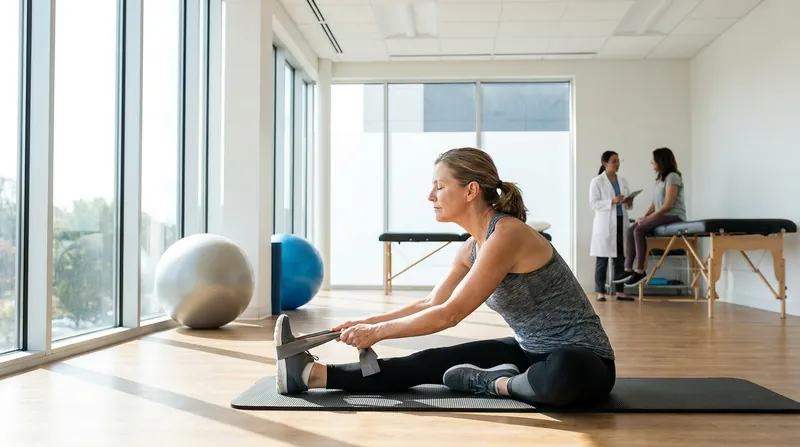
The American College of Sports Medicine (ACSM) recommends holding static stretches for 10 to 30 seconds for most adults. However, for older adults, the ACSM advises extending that hold to 30 to 60 seconds to achieve the greatest benefits in tissue lengthening. The goal is always to feel mild tension, never sharp pain.[2][3]
While static stretching is excellent for maintaining baseline flexibility, those looking to significantly increase their range of motion are increasingly turning to Proprioceptive Neuromuscular Facilitation, or PNF. Originally developed in clinical rehabilitation settings, PNF has become the gold standard for breaking through flexibility plateaus.[5]
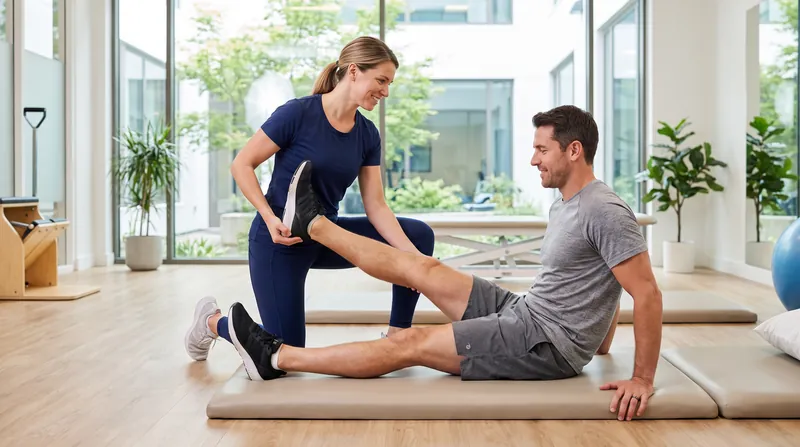
PNF works by essentially "tricking" the nervous system. The most common PNF technique, known as "contract-relax," begins with a standard passive stretch held for a few seconds. Then, instead of just holding the position, the individual actively contracts the stretched muscle against resistance—often provided by a partner or a stretch strap—for 5 to 10 seconds.[5]
Following this intense isometric contraction, the muscle is relaxed, and the individual immediately moves into a deeper passive stretch. This process leverages a physiological reflex called autogenic inhibition. The intense contraction forces the muscle's tension-sensing organs to trigger a relaxation response, allowing the muscle to safely stretch further than it could through static holding alone.[5]
Despite the proven benefits of these protocols, several persistent myths remain. Chief among them is the belief that stretching prevents Delayed Onset Muscle Soreness (DOMS). Current sports medicine consensus indicates that while stretching feels good, it does not significantly reduce the soreness that follows a heavy workout—that soreness is caused by micro-trauma to the muscle fibers, which stretching cannot undo.[4]
Another common misconception is that extreme flexibility is the ultimate goal. The Mayo Clinic emphasizes that achieving symmetry—having equal flexibility on both the left and right sides of the body—is far more important for injury prevention than matching a gymnast's range of motion. Asymmetrical tightness often leads to mechanical compensations and eventual joint wear.[2]
Finally, the physical benefits of stretching are highly transient if not maintained. A single stretching session increases muscle length temporarily, but the peak effect begins to diminish within hours. To create lasting structural changes in the tissue, consistency is paramount.[1]
The ACSM guidelines state that flexibility exercises must be performed at least two to three days per week to see measurable improvement, though daily practice is considered optimal. Whether through a dedicated yoga practice, a targeted PNF session, or simply five minutes of dynamic movement every morning, regular flexibility training remains one of the most accessible investments in long-term physical capability.[3][4]
Key terms
- Dynamic Stretching
- Moving joints smoothly through their full range of motion to warm up muscles and increase blood flow before activity.
- Static Stretching
- Lengthening a muscle to the point of mild tension and holding that position without movement, best done after exercise.
- Proprioceptive Neuromuscular Facilitation (PNF)
- An advanced flexibility technique that combines passive stretching with active muscle contractions to trick the nervous system into allowing a deeper stretch.
- Autogenic Inhibition
- A neurological reflex where a muscle is forced to relax after experiencing intense tension, a mechanism leveraged during PNF stretching.
- Isometric Contraction
- Activating and tensing a muscle without actually changing its length or moving the joint.
Frequently asked
Should I stretch before I run or lift weights?
You should perform dynamic stretches (like leg swings or lunges) to warm up the muscles. Static stretching before a workout can actually decrease your power output and increase injury risk.
Does stretching prevent muscle soreness after a workout?
No. Current sports medicine consensus shows that stretching does not significantly reduce Delayed Onset Muscle Soreness (DOMS), which is caused by micro-tears in the muscle fibers.
Why do my muscles shake when I stretch?
Shaking usually indicates that the muscle is fatigued or that you have pushed the stretch too far into the pain zone, triggering a protective nerve reflex. You should back off to a point of mild tension.
How long does it take to see improvements in flexibility?
While a single session provides temporary relief, the ACSM notes that it takes 3 to 4 weeks of consistent stretching (at least 2-3 times a week) to create lasting structural changes in joint range of motion.
Viewpoints in depth
Sports Performance Coaches
Prioritize dynamic movement to prime the nervous system and preserve explosive power.
For athletic trainers and performance coaches, the primary goal of a warm-up is to prepare the neuromuscular system for high-intensity output. They advocate almost exclusively for dynamic stretching before events, noting that static holds temporarily desensitize the muscle's stretch reflex. By using movement-based stretches like high knees and walking lunges, coaches ensure athletes retain their explosive power and sprint speed while still achieving the necessary joint mobility.
Longevity & Aging Experts
Focus on consistent static stretching to maintain joint health, independence, and fall prevention.
Gerontologists and longevity researchers view flexibility through the lens of functional independence. As the body ages, connective tissues naturally lose elasticity, which can restrict daily movements like reaching for a high shelf or tying shoes. This camp emphasizes daily static stretching routines, noting that maintaining a baseline range of motion is one of the most effective, non-invasive interventions for preventing life-altering falls and preserving a high quality of life in later decades.
Physical Therapists
Champion PNF and targeted mobility work to correct muscular imbalances and rehabilitate injuries.
In clinical and rehabilitation settings, physical therapists focus on correcting mechanical asymmetries that lead to chronic pain. They frequently utilize PNF techniques because the active contraction phase helps retrain the nervous system while simultaneously building strength at the end ranges of motion. For this camp, flexibility isn't just about how far a muscle can stretch, but how well the brain can control and stabilize the joint in those extreme positions.
- Longevity & Aging Experts
- Focus on consistent static stretching to maintain joint health, independence, and fall prevention.
- Physical Therapists
- Champion PNF and targeted mobility work to correct muscular imbalances and rehabilitate injuries.
- Sports Performance Coaches
- Prioritize dynamic movement to prime the nervous system and preserve explosive power.
Perspectives this story doesn't cover
- Yoga & Pilates Practitioners
- Desk Workers
Sources
Source coverage
5 outlets
3 viewpoints surfaced





- [1]Harvard Health PublishingLongevity & Aging Experts
The importance of stretching
Read on Harvard Health Publishing → - [2]Mayo ClinicPhysical Therapists
Stretching: Focus on flexibility
Read on Mayo Clinic → - [3]American College of Sports MedicineLongevity & Aging Experts
ACSM Physical Activity Recommendations
Read on American College of Sports Medicine → - [4]Factlen Editorial TeamLongevity & Aging Experts
Synthesis by Factlen editorial team
Read on Factlen Editorial Team → - [5]StretchMedPhysical Therapists
What is PNF Stretching? The Complete Guide
Read on StretchMed →

More in Fitness
See all →Mobility Science
The Science of Flexibility: How Eccentric Training and PNF Stretching Alter Muscle Architecture
5 sources
Muscle Physiology
Eccentric Exercise Found to Build Strength More Efficiently With Less Effort Than Traditional Lifting
2 sources

Resistance Training
Study Pinpoints 'Goldilocks' Zone: 90-120 Minutes of Weekly Resistance Training Maximizes Longevity and Cuts Alzheimer's Risk
4 sources

Longevity Science
New Study Links Low Flexibility to Significantly Higher Mortality Risk in Middle-Aged Adults
4 sources
Comments
Every angle. Every day.
Get Fitness stories with full source coverage and perspective breakdowns, free every day.