
Do Smart Rings Actually Work? An Evidence-Based Review of Sleep and Recovery Trackers
As millions of consumers trade smartwatches for sleek titanium rings, peer-reviewed data reveals exactly where wearable sleep trackers excel—and where their algorithms fall short.
By Factlen Editorial Team
- Clinical Researchers
- Focus on the limitations of consumer wearables compared to medical-grade polysomnography, emphasizing that rings cannot diagnose sleep disorders.
- Consumer Tech Analysts
- Evaluate smart rings based on form factor, battery life, and the practical utility of their software ecosystems for everyday users.
- Evidence-Based Consumers
- Value long-term physiological trend data over perfect nightly accuracy, using the devices to modify daily habits and improve recovery.
What's not represented
- · Traditional Watchmakers
- · Health Insurance Providers
Why this matters
Consumers are spending hundreds of dollars on smart rings to optimize their health. Understanding the scientific accuracy of these devices prevents over-reliance on flawed sleep-stage data while unlocking their true value as long-term recovery trackers.
Key points
- Smart rings achieve near-clinical accuracy for resting heart rate and heart rate variability (HRV).
- The finger is anatomically superior to the wrist for optical heart rate sensors due to closer arteries and less motion.
- Basic sleep-versus-wake detection is highly reliable, with top devices achieving 95% sensitivity.
- Four-stage sleep classification (Light, Deep, REM) remains an estimate, with accuracy hovering between 57% and 79%.
- Smart rings cannot diagnose sleep disorders and lose accuracy in populations with conditions like sleep apnea.
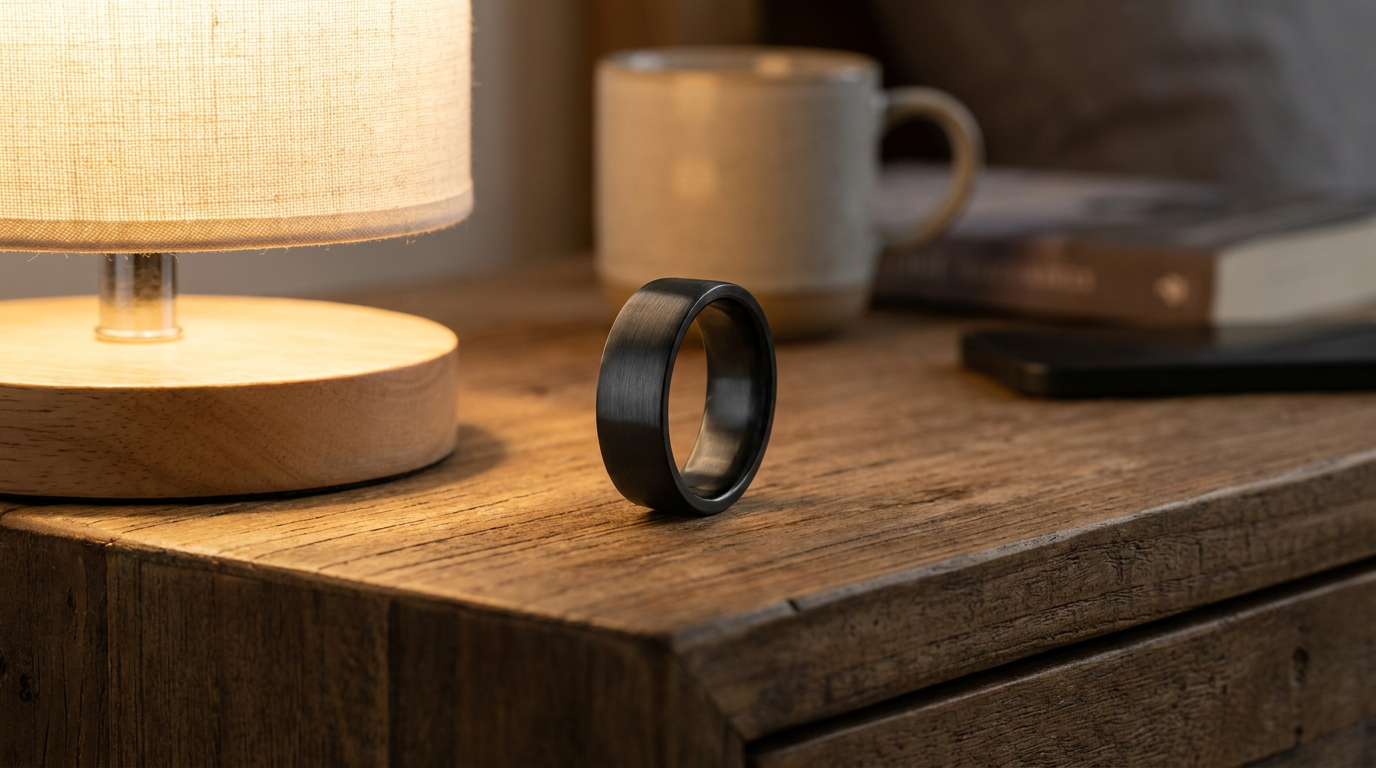
Millions of consumers in 2026 are trading their bulky smartwatches for sleek, screenless titanium rings. Devices like the Oura Ring, Samsung Galaxy Ring, and Ultrahuman Ring Air promise to track sleep, recovery, and stress with unprecedented precision, all from the comfort of a finger.[4]
But as the wearable market shifts toward these minimalist trackers, a critical question remains regarding whether they actually work. With devices costing upwards of $300, consumers are demanding more than just slick marketing and gamified daily readiness scores.[6]
To answer that, this evidence pack bypasses the promotional claims and examines the peer-reviewed clinical data. By comparing smart ring outputs against medical gold standards like electrocardiography (ECG) and polysomnography (PSG), we can map exactly where the technology excels and where it falls short.[6]
When it comes to measuring resting heart rate and heart rate variability (HRV), the scientific evidence is exceptionally strong. For these foundational cardiovascular baselines, smart rings perform at near-clinical levels.[1]

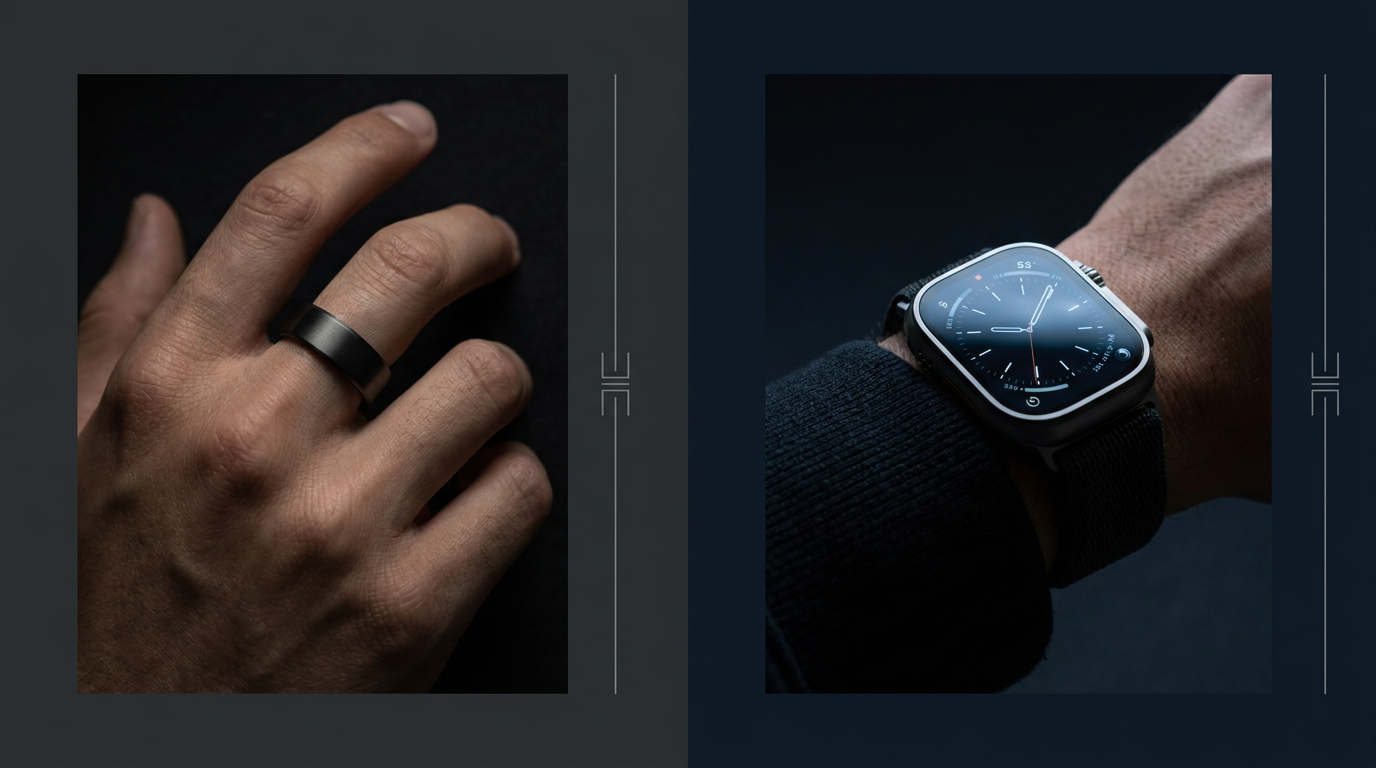
The finger is an anatomically ideal location for photoplethysmography (PPG) sensors. The arteries in the finger are closer to the skin surface and feature a denser capillary network than the wrist. This allows the ring's infrared LEDs to capture a much cleaner signal, free from the optical noise and motion artifacts that often plague wrist-worn devices.[5]
A comprehensive 2025 systematic review of 107 studies, published by the National Institutes of Health, confirmed this structural advantage. The meta-analysis found that smart rings achieved correlation scores of 0.996 for resting heart rate and 0.980 for HRV when benchmarked against clinical ECGs.[1]
Independent validation in Physiological Reports echoed these findings, noting that top-tier devices consistently outperformed wrist-worn competitors in nocturnal HRV accuracy. For users tracking their nervous system recovery, the data is highly reliable.[3]
The evidence supporting basic sleep detection is equally robust. If a user simply wants to know how many total hours they slept and how long it took to fall asleep, a smart ring is a highly dependable instrument.[2]

The evidence supporting basic sleep detection is equally robust.
A 2024 study published in the Sensors journal, conducted at Brigham and Women's Hospital, found that leading smart rings achieved 95% sensitivity in detecting sleep versus wakefulness.[2]
Because rings fit snugly and experience less extraneous motion during the night compared to wristbands, they generate fewer false awakenings in the data. This stability makes them superior to older research-grade actigraphy monitors for basic sleep duration tracking.[5]
However, when evaluating whether smart rings can accurately map specific sleep stages—such as light, deep, and REM sleep—the evidence shifts from strong to moderate. This is the area where consumer marketing most frequently outpaces physiological reality.[6]
Clinical polysomnography, the gold standard for sleep studies, measures actual brain waves via EEG to determine sleep stages. Smart rings cannot read brain waves; they must infer sleep stages indirectly through algorithmic interpretations of heart rate, temperature, and movement.[2]
In peer-reviewed testing, the four-stage classification accuracy of the best smart rings hovers between 57% and 79%. While this is impressive for a consumer device, it leaves a substantial margin of error, particularly in distinguishing between light sleep and REM sleep.[1][5]
Researchers use a metric called Cohen's kappa to measure this agreement, adjusting for chance. The Oura Ring achieved a kappa of 0.65, which is considered substantial agreement and outperformed both the Apple Watch and Fitbit, but it still falls short of clinical diagnostic standards.[2]

Consequently, there is no evidence to support using smart rings to diagnose sleep disorders, and manufacturers explicitly warn against it. Consumer wearables are wellness tools, not medical diagnostic devices.[4]
Clinical researchers emphasize that in populations with sleep disorders, such as sleep apnea or severe insomnia, the accuracy of sleep staging algorithms drops significantly. In some clinical samples, all-stage classification accuracy fell to roughly 53%.[5]

Ultimately, smart rings are not replacements for clinical sleep studies, and their exact breakdown of REM versus deep sleep should be viewed as an estimate rather than an absolute truth.[6]
Despite these limitations, they remain highly effective tools for tracking long-term baseline trends. A device does not need perfect REM-stage accuracy to tell a user that late-night alcohol, elevated stress, or a heavy meal ruined their physiological recovery. For behavioral awareness and habit modification, the evidence shows that smart rings absolutely work.[6]
How we got here
2015
The original Oura Ring launches on Kickstarter, introducing the concept of a dedicated, screenless sleep tracking ring.
2021
Oura releases its Generation 3 ring, adding continuous heart rate monitoring and blood oxygen sensing.
2024
Samsung enters the market with the Galaxy Ring, validating the form factor for mainstream Android users and eliminating subscription fees.
2025
A major NIH systematic review of 107 studies confirms that smart rings match clinical ECGs for resting heart rate accuracy, though sleep staging remains imperfect.
Viewpoints in depth
Clinical Researchers
Medical professionals evaluating the diagnostic limits of wearable technology.
For sleep scientists and clinicians, the distinction between a wellness device and a diagnostic tool is paramount. Researchers acknowledge that smart rings are excellent at gathering basic actigraphy and heart rate data, but they caution against over-relying on their sleep staging algorithms. Because rings infer sleep stages from peripheral signals rather than measuring brain activity directly, their accuracy degrades significantly in individuals with actual sleep disorders like apnea or insomnia. Clinicians argue these devices are best used as screening prompts that might encourage a patient to seek a proper medical sleep study, rather than as definitive diagnostic instruments.
Consumer Tech Analysts
Reviewers focused on usability, ecosystem lock-in, and daily practicality.
Tech analysts view the smart ring boom through the lens of user friction and long-term ownership costs. They point out that the primary advantage of a ring over a smartwatch is compliance; users are far more likely to wear a lightweight, screenless ring to bed every single night. However, analysts are increasingly critical of the subscription models attached to many top-tier rings. The debate in the tech community centers on whether the gamified insights and AI-driven readiness scores justify ongoing monthly fees, especially when the underlying hardware sensors are largely similar across competing brands.
What we don't know
- How accurately smart rings perform across diverse skin tones, as most validation studies have predominantly featured lighter-skinned participants.
- Whether upcoming AI-driven algorithms can bridge the gap between peripheral heart rate data and actual brain-wave sleep staging.
- The long-term battery degradation curve for the newest generation of ultra-thin smart rings over a 3-to-5 year lifespan.
Key terms
- Photoplethysmography (PPG)
- An optical measurement technique that uses light to detect changes in blood volume in the microvascular bed of tissue, commonly used in wearables to track heart rate.
- Heart Rate Variability (HRV)
- The measure of the specific changes in time between successive heartbeats, used as a key indicator of nervous system recovery and physical stress.
- Polysomnography (PSG)
- A comprehensive, medical-grade sleep study that monitors brain waves, oxygen levels, heart rate, and breathing to diagnose sleep disorders.
- Cohen's kappa
- A statistical metric used to measure inter-rater reliability or agreement, adjusting for the possibility that the agreement occurred by chance.
- Actigraphy
- The continuous measurement of movement and rest cycles using a wearable motion sensor, used to estimate sleep and wake patterns.
Frequently asked
Are smart rings more accurate than smartwatches for sleep?
Yes, generally. The finger provides a more stable location with less motion artifact than the wrist, and the arteries are closer to the skin, allowing for cleaner heart rate and HRV readings during sleep.
Can a smart ring detect sleep apnea?
While some smart rings track blood oxygen drops and breathing disturbances that correlate with sleep apnea, they cannot officially diagnose the condition. They can only flag patterns that warrant a clinical sleep study.
How accurate is the REM sleep tracking on a smart ring?
Moderate at best. Peer-reviewed studies show that smart rings achieve between 57% and 79% accuracy for four-stage sleep classification, often struggling to perfectly distinguish between light sleep and REM sleep compared to medical EEG.
Do all smart rings require a monthly subscription?
No. While the market-leading Oura Ring requires a monthly membership for full data access, competitors like the Samsung Galaxy Ring, Ultrahuman Ring Air, and RingConn offer their full feature sets without ongoing subscription fees.
Sources
Source coverage
6 outlets
3 viewpoints surfaced






[1]National Institutes of Health (NIH)Clinical Researchers
Systematic Review of Smart Ring Applications in Clinical Medicine
Read on National Institutes of Health (NIH) →[2]Sensors JournalClinical Researchers
Validation of Consumer Wearables Against Polysomnography
Read on Sensors Journal →[3]Physiological ReportsClinical Researchers
Accuracy of Nocturnal HR and HRV Assessed via Ring PPG
Read on Physiological Reports →[4]PCMagConsumer Tech Analysts
The Best Smart Rings for 2026
Read on PCMag →[5]Centralive HealthConsumer Tech Analysts
Smart Rings vs Watches: A Citation-Backed Comparison
Read on Centralive Health →[6]Factlen Editorial TeamEvidence-Based Consumers
Synthesis by Factlen editorial team
Read on Factlen Editorial Team →


Every angle. Every day.
Get shopping stories with full source coverage and perspective breakdowns delivered to your inbox.