
House Advances 10% Education Cut as Strict New Student Loan Caps Loom
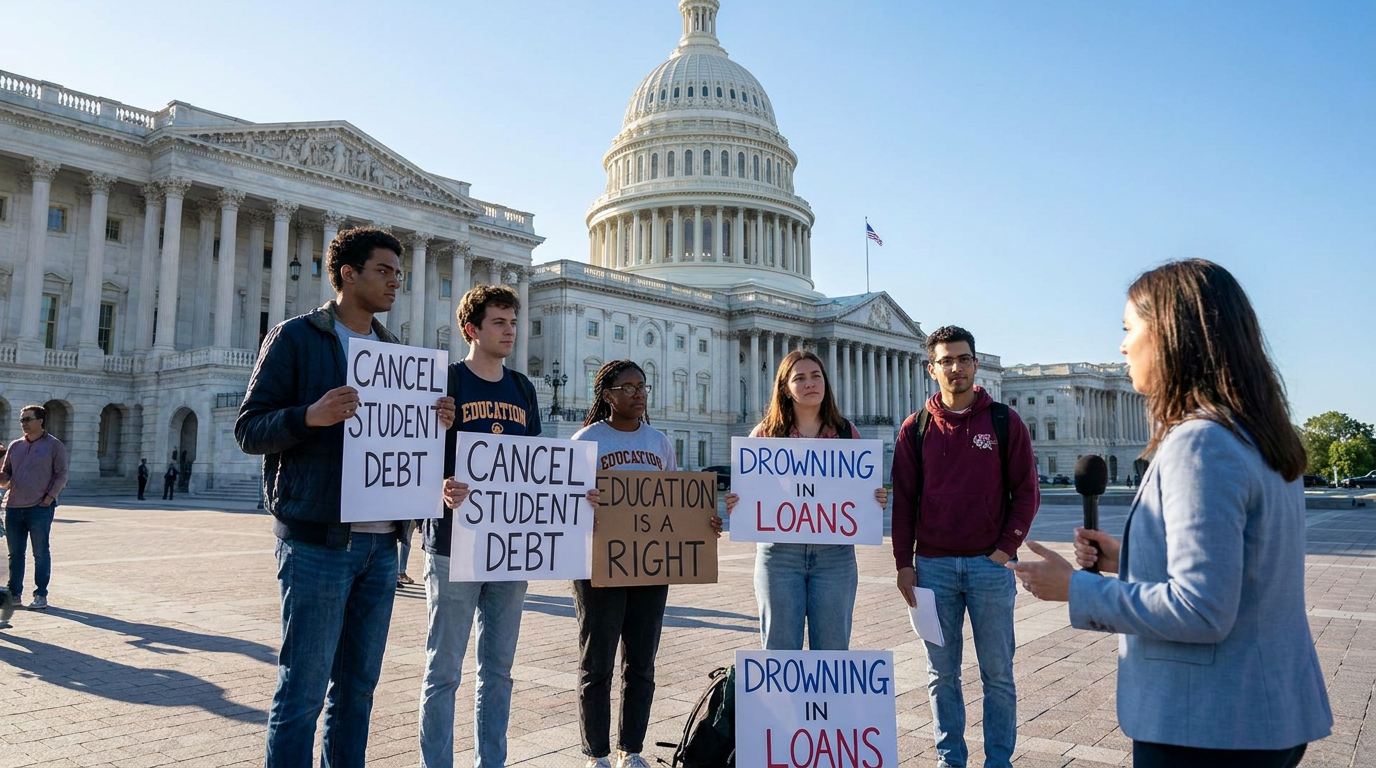
The House Appropriations Committee advanced a bill cutting the Department of Education's budget by 10%, while simultaneously exempting nursing students from strict new federal student loan caps set to take effect on July 1.
By Factlen Editorial Team
- Fiscal Conservatives
- Argue that strict borrowing caps and budget cuts are necessary to stop runaway tuition inflation and reduce the federal bureaucracy.
- Higher Education Advocates
- Warn that hard caps on graduate borrowing will lock low-income students out of advanced degrees and exacerbate shortages in critical professions.
- Policy Analysts
- Focus on the structural impacts of the legislation, noting the tension between fiscal restraint and workforce pipeline needs.
What's not represented
- · Current undergraduate students who may now reconsider applying to graduate school.
- · University financial aid officers tasked with implementing the new RAP and Tiered Standard Repayment plans.
Why this matters
Millions of prospective graduate students face a July 1 deadline that will permanently cap their federal borrowing and eliminate legacy income-driven repayment plans. The House's move to exempt nursing students highlights the growing panic over how these caps will impact critical workforce pipelines like healthcare and education.
Key points
- The House Appropriations Committee advanced a bill cutting the Department of Education's budget by 10%.
- Strict new federal student loan caps take effect on July 1, limiting general graduate borrowing to $100,000.
- A manager's amendment in the House bill would exempt advanced nursing programs from the caps to protect the healthcare workforce.
- New borrowers after July 1 will lose access to legacy income-driven repayment plans, shifting to the new Repayment Assistance Plan (RAP).
The House Appropriations Committee voted 34-28 on June 15 to advance a fiscal year 2027 education funding bill that would slash the Department of Education's budget by 10 percent. The legislation arrives during a volatile moment for American higher education, as universities and students brace for a seismic shift in federal financial aid.[2][6]
On July 1, strict new federal student loan caps mandated by the 2025 One Big Beautiful Bill Act (OBBBA) will take effect, fundamentally altering how graduate and professional degrees are funded. The looming deadline has triggered widespread anxiety among prospective students, who face a permanently altered borrowing landscape.[1][3][6]
Under the finalized Department of Education rules, students pursuing general graduate degrees—including teaching and most master's programs—will be capped at $100,000 in total federal borrowing. Professional degree students in 11 designated fields, such as law, dentistry, and clinical psychology, will face a higher $200,000 lifetime cap.[3]

The impending caps have sparked intense lobbying from industry groups warning of catastrophic workforce shortages. In response, a manager's amendment in the House appropriations bill directs the Department of Education to reclassify advanced nursing programs as "professional degrees."[2]
If enacted into law, this reclassification would exempt nursing students from the restrictive $20,500 annual cap slated for general graduate students, allowing them to borrow up to $50,000 annually. The American Council on Education called the provision a "significant win for the healthcare workforce pipeline," but criticized it as an incomplete solution that leaves other critical fields behind.[2]
Teachers, in particular, face a steep financial cliff under the new rules. Heather Peske, president of the National Council on Teacher Quality, has warned that excluding teaching from the higher borrowing limits will exacerbate staffing shortages, particularly in rural districts where educator pipelines are already severely strained.[3]
Teachers, in particular, face a steep financial cliff under the new rules.
Beyond the strict borrowing limits, the July 1 changes will completely overhaul the repayment landscape for future borrowers. Students who take out new federal loans or consolidate existing ones after the deadline will lose access to legacy income-driven repayment plans.[1]

Instead, these new borrowers will be forced to choose between a Tiered Standard Repayment plan or a newly created Repayment Assistance Plan (RAP). The Department of Education recently updated its online guidance, clarifying that payments must be made "on time and in full" under RAP to count toward Public Service Loan Forgiveness (PSLF).[1]
The Trump administration and conservative lawmakers argue these caps are a necessary corrective to decades of unchecked tuition inflation. By limiting the federal spigot, they contend, universities will be forced to lower their costs rather than passing exorbitant tuition hikes onto taxpayers and saddling students with unpayable debt.[1][4][6]
However, higher education advocates argue the caps will disproportionately harm low-income students who rely entirely on federal loans to access advanced degrees. Critics warn the policy could make graduate education a luxury reserved for the wealthy, effectively locking marginalized groups out of advanced professions.[3][5][6]

The House bill's 10 percent cut to the Department of Education reflects a broader congressional push to rein in the federal bureaucracy's footprint in local schooling. The Brookings Institution notes that while Congress rejected the administration's proposed cuts in the previous fiscal year, the current legislative environment signals a renewed appetite for fiscal restraint.[4][5]
As the July 1 deadline approaches, universities are scrambling to update their financial aid packages and advise incoming cohorts on the new reality. With the House appropriations bill now heading for a broader floor debate, the fight over who gets exempted from the caps—and who bears the brunt of the budget cuts—is only just beginning.[2][6]
How we got here
July 2025
President Trump signs the One Big Beautiful Bill Act, mandating new caps on federal student loans.
April 30, 2026
The Department of Education issues final rules distinguishing between graduate and professional degree limits.
June 9, 2026
The Education Department releases updated guidance on the new Repayment Assistance Plan (RAP).
June 15, 2026
The House Appropriations Committee advances a bill cutting ED funding by 10% and exempting nursing programs from the caps.
July 1, 2026
The new borrowing limits and repayment plan restrictions officially take effect.
Viewpoints in depth
The Administration's View
Strict borrowing limits are necessary to curb tuition inflation and protect taxpayers.
Proponents of the One Big Beautiful Bill Act argue that the federal government has essentially written a blank check to universities for decades, allowing them to raise tuition without consequence. By capping the amount students can borrow, the administration believes universities will be forced to lower their prices to remain competitive, ultimately reducing the debt burden on future generations.
Higher Education Advocates' View
Caps will price low-income students out of advanced degrees and cause workforce shortages.
Educational organizations warn that hard borrowing caps do not immediately lower tuition; instead, they simply cut off access for students who cannot pay out of pocket. Advocates argue that capping loans for future teachers, social workers, and public defenders will exacerbate existing shortages in critical, lower-paying public service fields, making graduate education accessible only to the wealthy.
The Healthcare Industry's View
Targeted exemptions are required to prevent a collapse in the medical talent pipeline.
Healthcare groups successfully lobbied for the House amendment to reclassify nursing as a professional degree, arguing that the $20,500 annual cap would decimate enrollment in advanced nursing programs. While they view the exemption as a critical victory for public health, other sectors point to this carve-out as evidence that the overarching caps are fundamentally unworkable for the modern workforce.
What we don't know
- Whether the Senate will agree to the House's 10% funding cut for the Department of Education.
- If additional professions, such as teaching or social work, will secure exemptions from the graduate borrowing caps before July 1.
- How universities will adjust their graduate tuition pricing in response to the new federal borrowing limits.
Key terms
- One Big Beautiful Bill Act (OBBBA)
- A 2025 federal law that overhauled higher education financing, most notably by imposing strict caps on graduate student borrowing.
- Repayment Assistance Plan (RAP)
- One of the two remaining federal repayment options for new borrowers after July 1, 2026, replacing legacy income-driven repayment plans.
- Public Service Loan Forgiveness (PSLF)
- A federal program that forgives the remaining balance on direct loans after 120 qualifying monthly payments for those working full-time for a qualifying employer.
Frequently asked
What happens to my existing student loans on July 1?
Existing loans remain under their current terms. However, any new federal loans taken out or consolidated after July 1, 2026, will be subject to the new Repayment Assistance Plan (RAP) or Tiered Standard Plan.
How much can graduate students borrow under the new rules?
Students in general graduate programs, such as teaching and most master's degrees, are capped at $100,000 in total federal borrowing. Professional degrees, like law and dentistry, are capped at $200,000.
Does the nursing exemption apply immediately?
No. The exemption is currently part of a House appropriations bill that must pass the full Congress and be signed into law before it takes effect.
Sources
Source coverage
6 outlets
3 viewpoints surfaced





[1]ForbesFiscal Conservatives
Education Department Updates Key Student Loan Guidance In Advance Of Huge July Changes
Read on Forbes →[2]American Council on EducationHigher Education Advocates
Higher Education Faces New Spending Limits as House Appropriations Bill Advances
Read on American Council on Education →[3]BallotpediaHigher Education Advocates
On the issues: the debate over capping graduate degree loans for teachers
Read on Ballotpedia →[4]U.S. Department of EducationFiscal Conservatives
ED is implementing the President's One Big Beautiful Bill
Read on U.S. Department of Education →[5]Brookings InstitutionPolicy Analysts
Education Policy FAQs: The US Department of Education and the Trump administration
Read on Brookings Institution →[6]Factlen Editorial TeamPolicy Analysts
Synthesis by Factlen editorial team
Read on Factlen Editorial Team →

More in news politics
See all 7 stories →US-Iran Ceasefire
US and Iran Reach Tentative Agreement to End War and Reopen Strait of Hormuz
0 sources

Digital Provenance
The End of the Deepfake Arms Race: How C2PA and Cryptographic Provenance Are Rebuilding Digital Trust
0 sources

Strait of Hormuz
Potential End to U.S.-Iran War Tests Trump's Economic Promises as Dispute Over Strait of Hormuz Tolls Emerges
0 sources

US-Iran Relations
CIA Director Doubts Iran's Intentions in Peace Deal as White House Seeks Economic Rebound
0 sources
Every angle. Every day.
Get news politics stories with full source coverage and perspective breakdowns delivered to your inbox.