
The Solid-State Battery Era Arrives: How EV Tech's 'Holy Grail' Moved From Lab to Road in 2026
After decades of research, all-solid-state batteries are entering mass production in 2026, promising electric vehicles with double the range, five-minute charging, and unprecedented safety.
By Factlen Editorial Team
- Automakers & Manufacturers
- Confident in immediate commercialization, pointing to successful A-sample tests and 2026 production lines.
- Industry Analysts
- Cautious about the timeline for mass-market affordability and the capital expenditure required to scale.
- Safety & Regulatory Advocates
- Focused entirely on the elimination of thermal runaway as a critical safety mandate for urban environments.
What's not represented
- · Lithium-ion supply chain workers
- · Used EV market dealers
Why this matters
By replacing flammable liquid electrolytes with solid materials, this breakthrough eliminates the primary fire risk of EVs while drastically reducing charging times and range anxiety, paving the way for the total electrification of global transport.
Key points
- Solid-state batteries replace flammable liquid electrolytes with solid materials, eliminating the risk of thermal runaway.
- The technology enables the use of lithium metal anodes, doubling energy density to 400–600 Wh/kg.
- Vehicles equipped with solid-state cells can achieve 1,000-kilometer ranges and charge in under 10 minutes.
- Major automakers and battery startups are launching the first mass-produced solid-state vehicles in 2026.
For the better part of a decade, the solid-state battery has been the electric vehicle industry’s white whale—a theoretical "holy grail" that promised to solve every major drawback of EV ownership, yet always seemed five years away. In 2026, that timeline has abruptly collapsed.[7]
Across the globe, major automakers and battery startups are shifting from laboratory prototypes to active assembly lines. Companies like Greater Bay Technology (GBT) and Chery have announced mass-production timelines for this year, while early adopters like Donut Lab are already putting solid-state technology onto public roads in high-performance electric motorcycles.[1][2][4]
To understand why this shift is monumental, one must look inside the conventional lithium-ion batteries that power everything from smartphones to current electric SUVs. These traditional cells rely on a liquid electrolyte—a chemical soup of lithium salts dissolved in an organic solvent—to ferry ions back and forth between the anode and the cathode during charging and discharging.[5][7]
The problem with this liquid is twofold: it is highly flammable, and it is vulnerable to the formation of dendrites. Dendrites are microscopic, needle-like metallic whiskers that grow from the anode over time. If a dendrite pierces the separator and reaches the cathode, it causes a short circuit, which can ignite the liquid electrolyte and trigger a catastrophic fire known as thermal runaway.[7]

A solid-state battery elegantly solves this by replacing the liquid soup with a solid material—typically a specialized polymer, oxide, or sulfide glass. This solid electrolyte is inherently non-flammable and physically rigid enough to suppress dendrite growth entirely.[1][7]
By eliminating the risk of dendrites, battery engineers can swap out the traditional graphite anode for one made of pure lithium metal. This single substitution is the key to unlocking massive gains in energy density, which is measured in watt-hours per kilogram (Wh/kg).[1][7]
Today’s best commercial lithium-ion batteries top out at roughly 200 to 300 Wh/kg. The first wave of commercial solid-state cells rolling off production lines in 2026 are targeting 400 to 600 Wh/kg.[1][2][6]

Today’s best commercial lithium-ion batteries top out at roughly 200 to 300 Wh/kg.
In practical terms, doubling the energy density means an automaker can either double the driving range of a vehicle without increasing the battery's physical size, or keep the range identical while cutting the battery's weight and footprint in half. Chery’s upcoming Exeed Liefeng, for instance, is projected to utilize a 600 Wh/kg solid-state pack to achieve ranges approaching 1,000 kilometers (621 miles) on a single charge.[2][6]
Beyond range, the solid architecture fundamentally rewrites the safety profile of electric vehicles. In conventional lithium-ion cells, thermal runaway can begin at temperatures as low as 90°C (194°F) under stress or damage.[7]
Comparative testing of new solid-state systems shows that thermal events do not begin until the battery reaches approximately 247°C (476°F). Furthermore, even if a thermal incident occurs, the heat release rate is drastically lower. GBT’s recent A-sample cells successfully passed rigorous needle penetration, extrusion, and thermal shock tests without any fire or explosion.[1][2][3]
The technology also conquers one of the most persistent frustrations for EV owners in northern climates: cold weather degradation. Liquid electrolytes become sluggish in freezing temperatures, severely limiting range and charging speeds. Solid electrolytes maintain their structural and chemical integrity, allowing the battery to operate flawlessly even at -40°C.[1][7]

Charging speeds are seeing a similar revolution. Because the solid architecture is highly stable and resistant to heat buildup, these batteries can accept massive amounts of current without degrading. Manufacturers are reporting reliable 0-to-80% charge times of just 5 to 10 minutes, effectively bringing the EV charging experience to parity with filling a gas tank.[1][4]
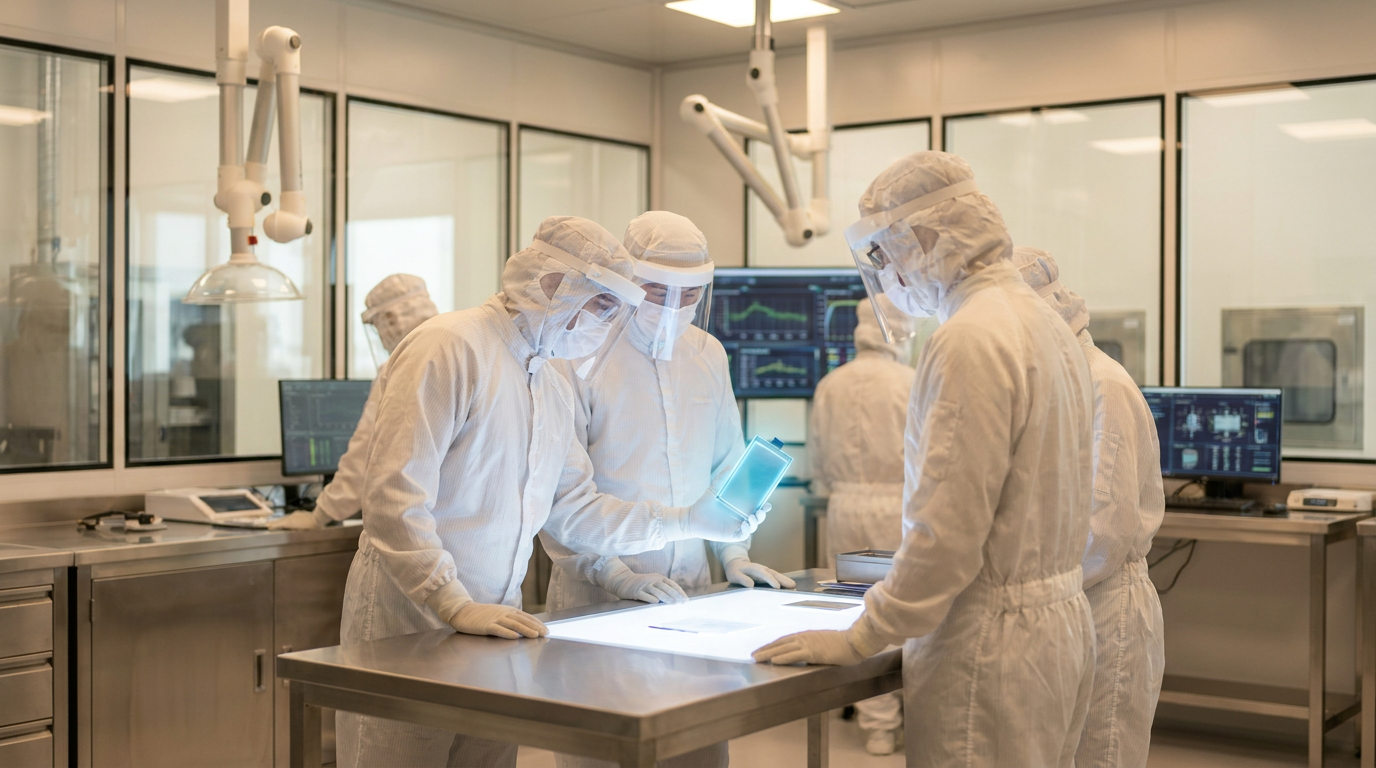
Despite the euphoria surrounding these 2026 milestones, the transition is not without its uncertainties. The primary hurdle is no longer chemistry, but manufacturing scale. Building solid-state batteries requires entirely new production lines, specialized equipment, and ultra-dry cleanroom environments that are incredibly capital-intensive to construct.[5][7]
There is also a lingering debate within the industry regarding terminology. Some early market entries labeled as "solid-state" are actually "semi-solid" batteries, which still contain a small percentage of liquid or gel electrolyte to bridge the gap between the electrodes. True "all-solid-state" batteries, which contain zero liquid, are harder to manufacture at scale.[2][6]

Cost parity remains the final frontier. While the raw materials for solid-state batteries aren't necessarily more expensive, the low initial production volumes mean these cells will carry a premium. For the next few years, true solid-state technology will likely be confined to luxury vehicles, high-performance motorcycles, and commercial aviation, before economies of scale bring them to the mass market.[5][7]
Nevertheless, the barrier has been broken. The transition from liquid to solid electrolytes represents the most significant leap in energy storage since the commercialization of lithium-ion in the 1990s. As production ramps up globally, the electric vehicle is poised to shed its final compromises, ushering in an era of cleaner, safer, and vastly more capable transportation.[1][5][7]
How we got here
1991
Sony commercializes the first rechargeable lithium-ion battery, revolutionizing portable electronics.
2012
Early investments in solid-state startups like QuantumScape begin, targeting the automotive sector.
2024
Companies achieve ultra-fast charging milestones in lab settings but struggle with mass-manufacturing solid electrolytes.
Late 2025
Automakers unveil prototype solid-state cells achieving 600 Wh/kg energy density.
Early 2026
First A-sample all-solid-state cells roll off production lines, passing rigorous safety and penetration tests.
Mid 2026
Solid-state batteries debut in production electric motorcycles and high-end luxury EVs.
Viewpoints in depth
Automakers & Cell Manufacturers
Confident in immediate commercialization, pointing to successful A-sample tests and 2026 production lines.
Manufacturers argue that the technology is no longer a laboratory experiment. With successful A-sample testing that passes needle penetration and thermal shock without incident, companies like GBT and Chery believe the engineering hurdles have been cleared. They view the immediate rollout in high-end vehicles and motorcycles as the definitive proof of concept, paving the way for rapid scaling.
Industry Analysts
Cautious about the timeline for mass-market affordability and the capital expenditure required to scale.
While acknowledging the scientific breakthrough, analysts point out that building solid-state batteries requires entirely new, capital-intensive production lines and ultra-dry cleanrooms. They caution that early market entries are likely to carry a significant price premium, and warn consumers to look closely at marketing claims, as some early 'solid-state' batteries are actually 'semi-solid' hybrids that still contain trace amounts of liquid.
Safety & Regulatory Advocates
Focused entirely on the elimination of thermal runaway as a critical safety mandate.
For safety advocates, the energy density and range improvements are secondary to the elimination of the flammable liquid electrolyte. They view solid-state technology as a necessary evolution that will ease urban parking restrictions, simplify maritime shipping regulations for EVs, and fundamentally change the public perception of electric vehicle safety.
What we don't know
- How quickly the global battery supply chain can retool factories to produce solid-state cells at a mass-market scale.
- The exact price premium consumers will pay for solid-state EVs during the initial rollout phase.
- Whether 'semi-solid' hybrid batteries will dominate the transition period before true all-solid-state cells become affordable.
Key terms
- Solid-State Battery
- A battery that uses a solid material to conduct ions between its electrodes, rather than a liquid or gel.
- Electrolyte
- The medium inside a battery that allows electrical charge (ions) to flow between the cathode and the anode.
- Dendrites
- Microscopic, needle-like metallic growths that can form inside liquid batteries, potentially causing short circuits and fires.
- Energy Density
- The amount of energy a battery can store relative to its weight, typically measured in watt-hours per kilogram (Wh/kg).
- Thermal Runaway
- A dangerous chain reaction inside a battery where excess heat causes a rapid, unstoppable increase in temperature, often leading to a fire.
- Lithium Metal Anode
- A highly efficient battery component made of pure lithium, usable only in solid-state batteries because liquid batteries allow dangerous dendrites to grow on it.
Frequently asked
When can I buy a car with a solid-state battery?
Early models from brands like Chery are launching in late 2026, but the technology will likely remain in luxury or high-end vehicles until manufacturing scales up closer to 2030.
Why are solid-state batteries safer?
They replace the flammable liquid electrolyte found in traditional batteries with a non-flammable solid material, drastically reducing the risk of fire or explosion even if the battery is punctured.
Do they really charge in five minutes?
Yes. Because solid electrolytes are highly stable and resist heat buildup, they can safely accept massive amounts of electrical current without degrading the battery's lifespan.
Will they work in extreme cold?
Unlike liquid electrolytes that freeze or become sluggish, solid-state batteries maintain their chemical integrity, operating flawlessly in temperatures as low as -40°C.
Sources
Source coverage
7 outlets
3 viewpoints surfaced







[1]ElectrekAutomakers & Manufacturers
Solid-state EV batteries are coming sooner than expected after another breakthrough
Read on Electrek →[2]electriveSafety & Regulatory Advocates
Chery to launch first electric vehicle with solid-state battery
Read on electrive →[3]NE-TimeAutomakers & Manufacturers
GBT aims to launch world's first mass-producible all-solid-state battery
Read on NE-Time →[4]CES PressAutomakers & Manufacturers
Donut Lab Introduces World's First All-Solid-State Battery for Production Vehicles
Read on CES Press →[5]IEAIndustry Analysts
Global EV Outlook 2026 – Analysis
Read on IEA →[6]CarNewsChinaAutomakers & Manufacturers
Chery unveils prototype solid-state battery with 600 Wh/kg density
Read on CarNewsChina →[7]ReutersIndustry Analysts
Solid-State Batteries 2026: How the Technology Is Finally Reaching Commercial Use
Read on Reuters →
Every angle. Every day.
Get automotive stories with full source coverage and perspective breakdowns delivered to your inbox.