
The Science of Koji: How a Domesticated Mold is Rewiring Global Cuisine
For millennia, the fungus Aspergillus oryzae has been the engine behind soy sauce and sake. Now, its enzymatic power is transforming global fine dining, plant-based foods, and nutritional science.
By Baran Demir

In short
- Aspergillus oryzae, known as koji, is a domesticated fungus that secretes powerful enzymes to break down starches and proteins.
- The mold is the biological engine behind umami, transforming raw ingredients into savory staples like soy sauce, miso, and sake.
- Modern chefs are using koji to rapidly dry-age meats in 36 hours and to upcycle food waste into complex flavor sauces.
In the world's most ambitious kitchens, the most valuable worker is not a chef, but a microscopic fungus. Across the globe, culinary innovators are turning to an ancient, fluffy white mold to unlock unprecedented depths of flavor, upcycle food waste, and dramatically accelerate traditional cooking techniques. From Michelin-starred tasting menus in Copenhagen to fast-casual delicatessens in Ohio, this biological tool is quietly rewiring the boundaries of modern gastronomy, proving that the future of food might just be found in a prehistoric organism.[6]
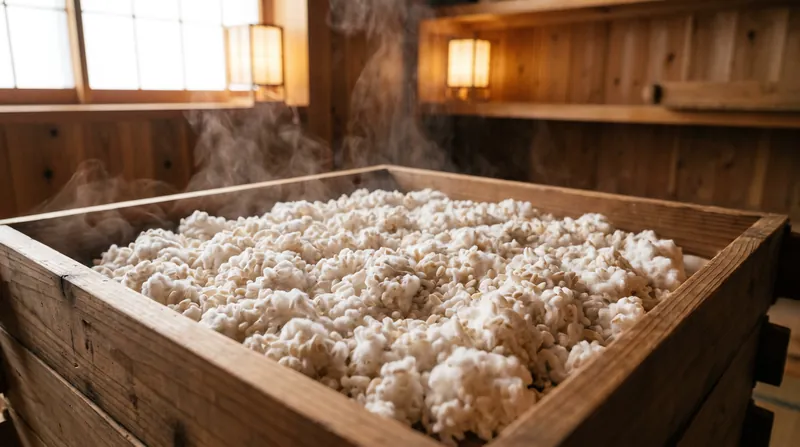
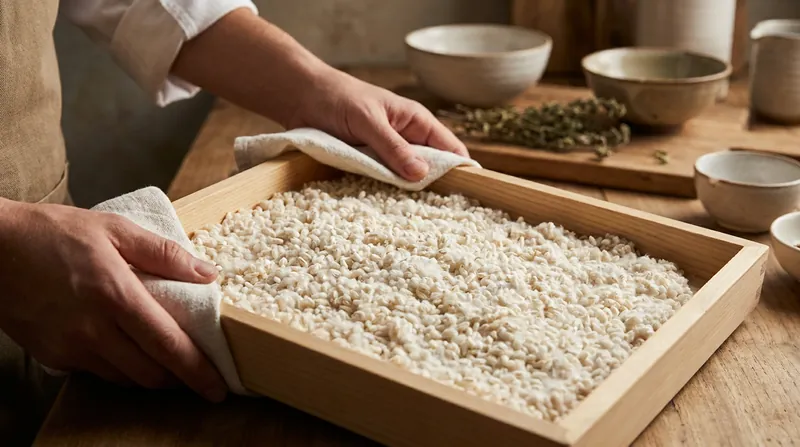
This microscopic powerhouse is Aspergillus oryzae, a filamentous fungus known in Japanese as koji-kin. When these raw spores are carefully inoculated onto steamed grains—most typically polished white rice, barley, or soybeans—and left to incubate in a meticulously controlled, warm, and humid environment for two to three days, the resulting living culture is simply called koji. As it grows, the mold binds the individual grains together into a dense, pristine white mat that smells faintly of sweet chestnuts, tropical fruit, and fresh yeast, ready to be deployed as a culinary catalyst.[3]
In Japan, the cultural and historical reverence for this specific organism is so profound that the Brewing Society of Japan officially designated Aspergillus oryzae as the country's "national fungus" in 2006. Without its unique biological capabilities, the foundational pillars of traditional Japanese cuisine—including soy sauce, miso paste, sake, and sweet mirin—would simply not exist. For over a millennium, it has served as the invisible architect of the nation's flavor profile, transforming simple, abundant agricultural staples into complex, shelf-stable ingredients that define the Japanese palate.[3]
The true magic of koji lies in its voracious biological appetite and its unparalleled enzymatic arsenal. As the mold grows and colonizes its host substrate, it extends a microscopic, root-like web of fungal threads, known as hyphae, deep into the core of the grain. Because the fungus cannot ingest solid food, it must digest its meals externally. To achieve this, it secretes a massive payload of specialized enzymes into its immediate environment, acting as a microscopic chemical factory that breaks down complex macromolecules into simpler, easily absorbable nutrients.
These secreted enzymes act as highly specific microscopic scissors. Amylases target complex, tasteless carbohydrates, snipping the long starch chains into simple, sweet sugars—a saccharification process that provides the essential fermentable fuel for brewing rice wines like sake. Meanwhile, proteases attack long, tightly coiled protein molecules, slicing them into individual, free-floating amino acids, most notably glutamate. This precise chemical breakdown is the fundamental biological engine of umami. By liberating these amino acids, koji transforms otherwise bland, raw ingredients into intensely savory, deeply complex foods without the need for artificial additives.
The very existence of this sophisticated culinary tool represents a monumental triumph of prehistoric biotechnology. Modern genomic sequencing and evolutionary research have revealed that the benign, delicious Aspergillus oryzae is actually a directly domesticated descendant of Aspergillus flavus, a notorious and highly toxic agricultural pest. In the wild, A. flavus frequently contaminates peanut and corn crops, producing deadly carcinogenic compounds known as aflatoxins that pose a severe threat to human and animal health.[1][3]
Roughly 9,000 years ago, coinciding with the dawn of agriculture, early humans in East Asia began farming rice and soybeans, inadvertently starting the process of taming the wild molds that naturally grew on their harvests. By repeatedly selecting the most delicious and effective ferments to start their next batches, these early brewers guided the organism's evolution.
Over millennia of this human-directed selective breeding, the fungus underwent a critical, permanent genetic mutation: while it still possesses the DNA sequence for aflatoxin production, that specific gene cluster was permanently switched off, rendering the modern mold entirely safe for human consumption.[1][3]
For centuries following its domestication, the cultivation of koji remained a highly specialized, closely guarded trade. By the 15th century, Japanese spore merchants known as moyashi-ya had established what historians argue is the world's first true bio-industry. These specialized vendors mastered the art of isolating and propagating the purest strains of the fungus, selling standardized, reliable koji-kin spores to regional sake breweries and miso makers. This commercialization ensured consistent, high-quality fermentation across the country, laying the groundwork for the massive, industrialized soy sauce and sake production facilities that operate today.[6]
Today, that ancient biological technology has decisively broken out of its traditional geographic and culinary boundaries. The catalyst for this recent global expansion was largely driven by the pioneers of New Nordic cuisine, most notably chef René Redzepi's acclaimed restaurant Noma in Copenhagen. By establishing a dedicated, state-of-the-art fermentation laboratory, Noma's research team began systematically exploring koji's enzymatic potential outside the context of traditional Asian flavor profiles, applying the mold to local European ingredients to see what new flavors could be unlocked.[2]
Western chefs quickly realized a fundamental scientific truth: koji's enzymes do not care what specific cultural ingredients they are breaking down; they simply seek out starches and proteins. At Larder, a celebrated delicatessen in Cleveland, chef Jeremy Umansky leverages koji to revolutionize the process of dry-aging meat.
While traditional dry-aging relies on naturally occurring airborne enzymes and takes 21 days or more to break down tough muscle fibers, Umansky coats his veal chops directly in cultivated koji. The concentrated enzymatic payload achieves the exact same tenderization and deep, nutty flavor profile in a mere 36 hours.[2]
This wave of cross-cultural fermentation is fundamentally reshaping the landscape of global fine dining. In Mexico City, innovative chefs are now growing koji spores on native heirloom corn varieties, subsequently blending the inoculated grains with huitlacoche—a local corn fungus—to create intensely savory, deeply complex garums that bridge two distinct fungal traditions. Similarly, in India, artisanal chocolate makers have begun using the mold to ferment raw cacao beans, utilizing the enzymatic breakdown to unlock entirely new, unexpected flavor dimensions that traditional chocolate fermentation methods simply cannot achieve.[6]
Beyond the realm of Michelin-starred kitchens and culinary experimentation, medical researchers and clinical nutritionists are increasingly uncovering the profound health benefits associated with this domesticated mold. A growing body of clinical studies indicates that the unique bioactive metabolites and organic acids produced during koji fermentation can have a measurable, curative effect on chronic systemic inflammation and various metabolic disorders. By pre-digesting complex macromolecules, the fungus not only makes the underlying nutrients significantly more bioavailable to the human body, but it also generates novel therapeutic compounds in the process.[4][5]
One of the most heavily researched applications of this nutritional science is amazake, a traditional, naturally sweet, non-alcoholic Japanese beverage made entirely from koji-fermented rice. Recent gastroenterological research demonstrates that amazake is exceptionally rich in resistant proteins—specialized molecules that survive the harsh acids of the stomach and act similarly to soluble dietary fiber in the lower intestine. Once there, these proteins significantly improve gut motility and serve as a potent prebiotic, actively stimulating the proliferation of beneficial Bifidobacterium strains within the human microbiome.
Furthermore, rigorous randomized controlled trials have recently demonstrated that the daily consumption of specific koji-fermented foods can actively and significantly lower LDL cholesterol levels in hyperlipidemic patients. The enzymatic breakdown process also generates a wealth of bioactive peptides—short chains of amino acids that function as signaling molecules in the body. These specific koji-derived peptides have been shown in clinical settings to exhibit strong antihypertensive effects, helping to naturally regulate blood pressure, while also providing robust antioxidant properties that protect cellular structures from oxidative stress.[4][5]
As the global food industry urgently looks toward a more sustainable, resource-efficient future, koji is rapidly emerging as a critical technological tool. By strategically deploying its powerful proteases to break down abundant plant proteins—such as peas, lentils, and oats—food developers are successfully creating next-generation vegan condiments and plant-based meat alternatives.
These sustainable products finally deliver the deep, satisfying, and complex umami notes that were previously exclusive to resource-intensive animal products. From the ancient clay fermentation pots of Neolithic East Asia to the gleaming stainless-steel laboratories of modern food science, this 9,000-year-old domesticated fungus is decisively proving to be the future of global flavor.[6]
Key terms
- Aspergillus oryzae
- The scientific name for the domesticated filamentous fungus used to make koji.
- Koji-kin
- The raw spores of the fungus before they are inoculated onto a substrate.
- Umami
- The fifth basic taste, characterized by a deep, savory flavor, driven by amino acids like glutamate.
- Amazake
- A traditional, sweet, non-alcoholic Japanese drink made from koji-fermented rice.
- Garum
- Historically a Roman fermented fish sauce, now adapted by modern chefs to describe any intensely savory liquid amino sauce made via fermentation.
- Shio Koji
- A versatile marinade made by fermenting koji with salt and water.
Frequently asked
Can I make koji at home?
Yes. Koji spores can be purchased online and grown on cooked rice or barley, provided you can maintain a humid environment at roughly 30°C for two to three days.
Is the mold safe to eat?
Yes. While its wild ancestor produced toxins, the domesticated Aspergillus oryzae lost this ability thousands of years ago and is entirely safe for human consumption.
Does koji contain gluten?
Koji grown on rice or soybeans is naturally gluten-free. However, it is sometimes grown on barley or wheat, particularly in traditional soy sauce production, so celiacs should check the specific substrate used.
Viewpoints in depth
Culinary Innovators
Chefs leveraging koji's enzymes to accelerate cooking processes and create novel flavors.
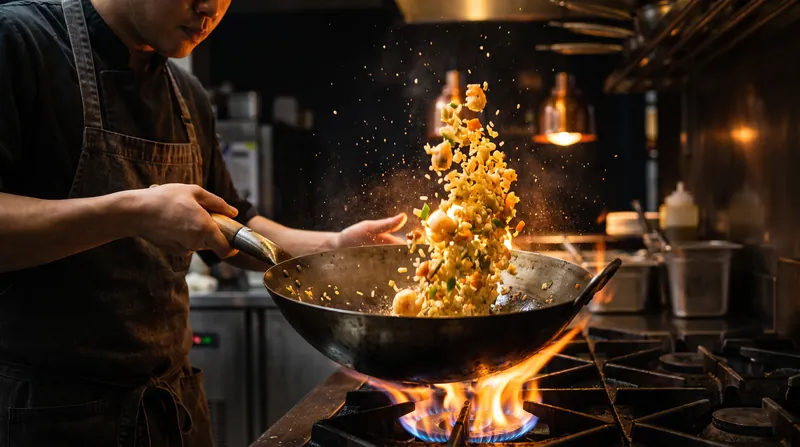
For modern chefs, koji is less about preserving traditional Asian recipes and more about harnessing a biological tool. By applying Aspergillus oryzae to non-traditional substrates—like quinoa, stale bread, or local legumes—they can create bespoke amino sauces (garums) that reflect their specific regional terroir. Furthermore, the mold's ability to rapidly tenderize proteins allows kitchens to dry-age meats in a fraction of the time, drastically reducing inventory costs while elevating flavor.
Traditional Brewers
Artisans dedicated to the centuries-old methods of Japanese fermentation.
In Japan, the cultivation of koji remains a highly respected craft, essential to the identity of sake, miso, and soy sauce. Traditional brewers emphasize the importance of solid-state cultivation in wooden rooms (koji-muro), where temperature and humidity are meticulously controlled by hand. For these artisans, the specific strain of koji-kin and the subtle environmental variables of their brewery are what give their products a unique, irreplaceable character.
Clinical Nutritionists
Researchers investigating the metabolic and gastrointestinal benefits of koji-fermented foods.
Medical researchers view koji as a potent source of functional nutrition. The fermentation process not only pre-digests complex macromolecules, making nutrients more bioavailable, but also generates bioactive peptides and resistant proteins. Clinical trials increasingly point to these compounds as effective agents for lowering LDL cholesterol, regulating blood pressure, and acting as prebiotics to stimulate beneficial gut flora like Bifidobacterium.
- Culinary Innovators
- Focus on rapid flavor development, zero-waste cooking, and cross-cultural applications.
- Traditional Brewers
- Focus on preserving centuries-old techniques for sake, miso, and soy sauce.
- Microbiologists & Geneticists
- Focus on the evolutionary history, genomics, and enzymatic pathways of the fungus.
- Clinical Nutritionists
- Focus on the gut microbiome, resistant proteins, and metabolic health benefits.
Perspectives this story doesn't cover
- Industrial soy sauce manufacturers
- Traditional East Asian home cooks
Sources
Source coverage
6 outlets
4 viewpoints surfaced






- [1]Knowable MagazineMicrobiologists & Geneticists
From toxic fungus to soy sauce superstar
Read on Knowable Magazine → - [2]ForbesCulinary Innovators
Western Chefs Are Discovering And Transforming Koji Culture
Read on Forbes → - [3]WikipediaTraditional Brewers
Kōji (food)
Read on Wikipedia → - [4]ResearchGateClinical Nutritionists
Clinical Perspectives of Domesticated Koji Mold
Read on ResearchGate → - [5]National Center for Biotechnology InformationClinical Nutritionists
Medical Application of Substances Derived from Non-Pathogenic Fungi Aspergillus oryzae
Read on National Center for Biotechnology Information → - [6]Factlen Editorial TeamCulinary Innovators
Synthesis by Factlen editorial team
Read on Factlen Editorial Team →
More in Food & Drink
See all →Culinary Science
The Science of Koji: How a Single Mold Became the Foundation of Asian Fermentation
3 sources
Koji Fermentation
How an Ancient Japanese Mold is Rewriting the Rules of Global Cuisine
2 sources
Fonio Grain
How Fonio, an Ancient West African Grain, is Becoming a Global Climate-Resilient Staple
4 sources
Global Agriculture
How Global Food Networks Are Absorbing the 2026 Cereal Output Drop
4 sources
Comments
Every angle. Every day.
Get Food & Drink stories with full source coverage and perspective breakdowns, free every day.