
Silicon-Anode Batteries Arrive: How 2026 Became the Year of the 3-Day Smartphone
A major shift in battery chemistry is bringing 9,000mAh capacities to standard-sized smartphones, effectively doubling battery life to meet the demands of power-hungry AI features.
By Factlen Editorial Team
- Smartphone Manufacturers
- Device makers leveraging battery life as a primary competitive advantage.
- Battery Innovators
- Component manufacturers focused on pushing the chemical limits of energy storage.
- Consumer & Sustainability Advocates
- Voices emphasizing the practical and environmental benefits of longer-lasting devices.
What's not represented
- · Lithium Mining Industry
- · Independent Repair Shops
Why this matters
For consumers, the arrival of silicon-anode batteries marks the end of daily charging anxiety and planned obsolescence. By doubling capacity without increasing device size, these batteries allow phones to run advanced AI features while extending the device's usable lifespan by years.
Key points
- Smartphone manufacturers are rapidly transitioning from traditional graphite batteries to high-density silicon-anode technology.
- Silicon anodes can store up to ten times more lithium ions, allowing for massive capacity increases without making devices thicker.
- The shift is largely driven by the immense power requirements of new on-device artificial intelligence features.
- Industry analysts project that mainstream smartphone battery capacities will reach 9,000mAh to 10,000mAh by the end of 2026.
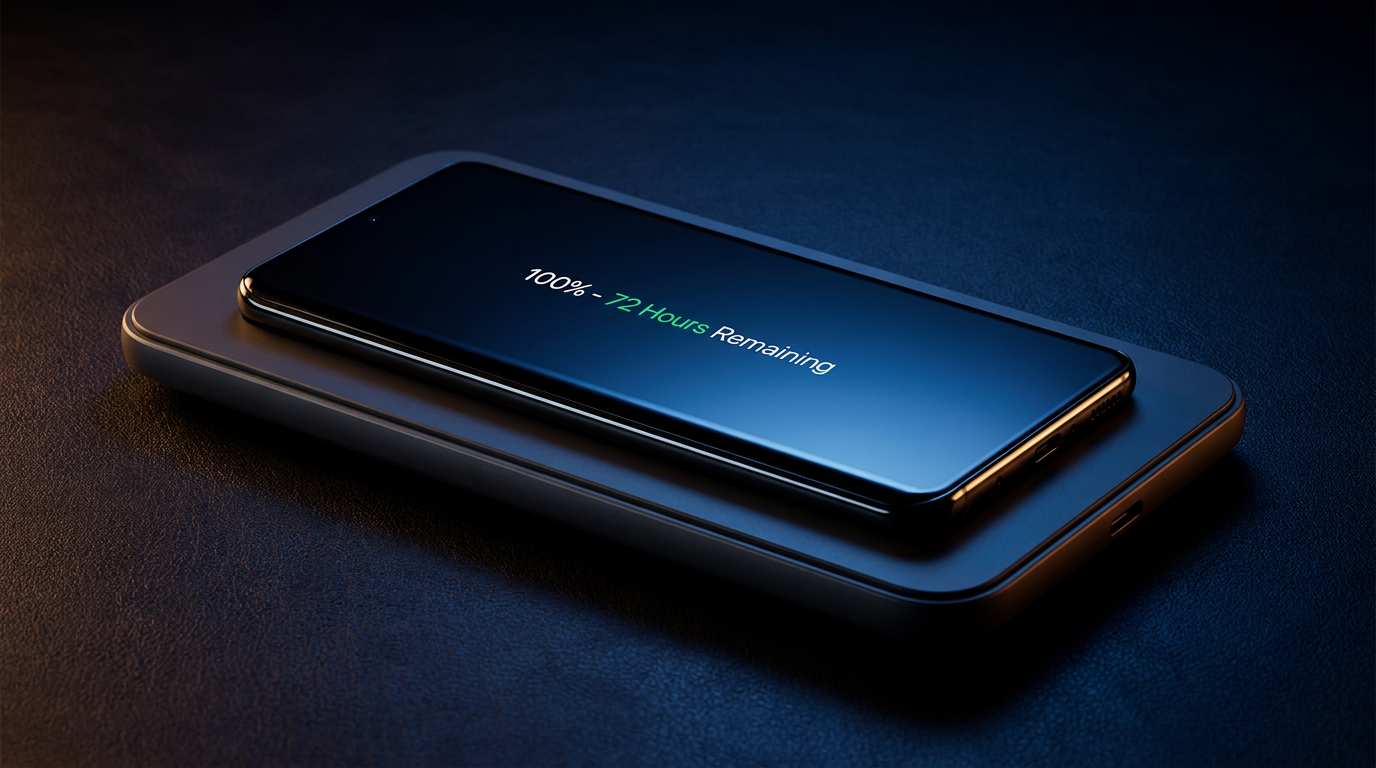
For the better part of a decade, the smartphone industry has been locked in a familiar cycle: processors get faster, screens get brighter, and battery life remains stubbornly tethered to a single day of use. Consumers have begrudgingly accepted the daily ritual of overnight charging and the midday anxiety of a red battery icon. But in 2026, the industry is witnessing a sudden and dramatic pivot. The era of the one-day smartphone is quietly coming to an end, replaced by a new generation of devices capable of lasting three to four days on a single charge.[1][7]
This leap in endurance is not the result of a software trick or a minor optimization. It is the culmination of a fundamental shift in battery chemistry that is now hitting the commercial market at scale. Manufacturers are rapidly abandoning traditional graphite-based lithium-ion cells in favor of silicon-anode technology, allowing them to pack unprecedented amounts of energy into the exact same physical footprint.[4][5]
The numbers reflect a staggering pace of innovation. Just two years ago, a 5,000 milliampere-hour (mAh) battery was considered the gold standard for a flagship device. Today, Chinese manufacturers are routinely shipping phones with 7,000mAh and 8,000mAh capacities, and industry insiders project that mainstream single-cell batteries will hit 9,000mAh to 10,000mAh before the end of the year.[1][2]
The catalyst for this rapid deployment is the rise of the "AI smartphone." As tech giants integrate large language models and real-time generative AI directly onto mobile devices, the computational load—and the resulting power draw—has skyrocketed. Traditional batteries simply cannot sustain the continuous heavy processing required by on-device AI without draining in a matter of hours.[3][5]

To solve this, the industry turned to silicon. In a conventional lithium-ion battery, the anode (the negative electrode) is made of graphite. While stable, graphite has a strict physical limit on how many lithium ions it can hold. Silicon, by contrast, can bond with up to ten times as many lithium ions as graphite, offering a massive theoretical increase in energy density.[4][7]
However, silicon has historically suffered from a fatal flaw: it swells. When a silicon anode absorbs lithium ions during charging, it can expand by up to 300 percent, causing the battery to fracture and degrade after just a few cycles. For years, this swelling relegated silicon to a minor additive, typically making up less than 5 percent of a battery's anode.[1][5]
The breakthrough of 2026 is the commercialization of architectures that finally tame silicon's expansion. Companies like Enovix have introduced 100 percent active silicon anodes, utilizing patented physical constraints and redesigned cell structures to prevent swelling while maintaining safety. Enovix's new AI-1 platform delivers 7,350mAh of capacity and can charge to 20 percent in just five minutes, specifically targeting the high-drain environment of AI-class smartphones.[5]
The breakthrough of 2026 is the commercialization of architectures that finally tame silicon's expansion.
Major component suppliers are also scaling up production to meet global demand. Japanese electronics giant TDK, which supplies batteries to several top-tier smartphone brands, announced the rollout of its fourth-generation silicon anode battery for the first half of fiscal year 2026. TDK's leadership noted that the technology is critical for addressing the power consumption of real-time data transmission and on-device AI processing.[3]
The consumer impact is immediate and tangible. Because silicon anodes offer vastly higher volumetric energy density, smartphone makers do not have to compromise on device aesthetics. A phone equipped with an 8,000mAh silicon-anode battery is just as thin and light as a device from two years ago that carried a 4,500mAh graphite cell.[1][7]

This invisible upgrade is reshaping the competitive landscape. Brands like Honor, Oppo, and Xiaomi have aggressively adopted the technology, using multi-day battery life as a primary selling point to capture market share. Leaks suggest that at least one major manufacturer is preparing to launch a 10,000mAh mid-range device that will offer up to 18 hours of continuous screen-on time, effectively eliminating the need for power banks.[2]
The financial markets are reflecting this shift. According to Precedence Research, the market for silicon anode batteries in mobile devices is experiencing explosive growth, with a projected compound annual growth rate of 28.4 percent through the next decade. The technology is rapidly transitioning from a premium novelty to a baseline requirement for consumer electronics.[4]
Interestingly, the triumph of silicon anodes comes at a time when the tech world was largely distracted by the promise of solid-state batteries. Solid-state technology—which replaces the liquid electrolyte with a non-flammable solid—has long been heralded as the holy grail of energy storage. However, persistent manufacturing challenges and recent high-profile investment scandals have pushed the timeline for mainstream solid-state smartphones back to 2028 or beyond.[6][7]

In the absence of solid-state readiness, silicon anodes have stepped in to fill the void, delivering the exact benefits consumers have been waiting for. Beyond the daily convenience of longer battery life, these high-capacity cells offer a profound environmental benefit. Because a 9,000mAh battery needs to be charged far less frequently than a 4,500mAh one, it accumulates charge cycles at half the rate.[1][5]
This slower accumulation of cycles means the battery will maintain its peak health for significantly longer. For consumers, this translates to a device that remains usable for four to five years before experiencing noticeable degradation, directly combating the cycle of planned obsolescence and reducing electronic waste.[7]
As 2026 progresses, the smartphone industry is crossing a threshold it has chased since the invention of the iPhone. The convergence of AI demands and silicon-anode breakthroughs has finally broken the stagnation of mobile energy storage, promising a near future where charging a phone is a twice-a-week afterthought rather than a daily chore.[1][3][5]
How we got here
1991
Sony commercializes the first rechargeable lithium-ion battery, establishing the graphite-anode standard that would power consumer electronics for decades.
Early 2020s
Smartphone battery capacities plateau around 5,000mAh, limited by the physical constraints of graphite and the demand for thin device designs.
2024–2025
The rapid integration of on-device AI features drastically increases smartphone power consumption, forcing the industry to seek new battery chemistries.
Early 2026
Companies like Enovix and TDK announce the successful commercialization of high-density silicon-anode batteries that solve historical swelling issues.
Mid 2026
Major smartphone manufacturers begin shipping devices with 7,000mAh to 8,000mAh capacities, with 10,000mAh models projected for the end of the year.
Viewpoints in depth
Battery Innovators
Component manufacturers focused on pushing the chemical limits of energy storage.
For companies like TDK and Enovix, the transition to silicon anodes is the culmination of years of materials science research. Their primary hurdle was overcoming silicon's tendency to swell by up to 300 percent when absorbing lithium ions, which historically destroyed battery cells. By developing patented physical constraints, 100-percent active silicon architectures, and advanced electrolytes, these firms argue they have finally unlocked the 10x storage potential of silicon, providing the foundational hardware required for the AI era.
Smartphone Manufacturers
Device makers leveraging battery life as a primary competitive advantage.
In a mature smartphone market where processor speeds and camera quality have plateaued for the average user, OEMs view battery endurance as the ultimate differentiator. Brands like Honor, Oppo, and Xiaomi are aggressively adopting silicon-anode technology to market devices that offer 18 hours of screen-on time without increasing the phone's thickness. For these companies, the new batteries are not just a convenience feature—they are a mandatory upgrade to support the massive power draw of on-device large language models and real-time AI processing.
Consumer & Sustainability Advocates
Voices emphasizing the practical and environmental benefits of longer-lasting devices.
Beyond the immediate convenience of leaving the charger at home, consumer advocates highlight the long-term lifecycle benefits of high-capacity cells. Because a 9,000mAh battery requires charging half as often as a traditional 4,500mAh cell, it accumulates charge cycles at a significantly slower rate. This slower degradation means the device can maintain peak performance for four to five years, directly combating the cycle of planned obsolescence and potentially reducing the global volume of electronic waste.
What we don't know
- How the increased demand for high-grade silicon will impact global supply chains and raw material costs over the next five years.
- Whether Apple and Samsung will fully adopt 100-percent silicon anodes for their flagship devices in 2027, or stick to hybrid chemistries.
- If the rapid success of silicon anodes will permanently derail investment in solid-state battery research for consumer electronics.
Key terms
- Silicon Anode
- The negative electrode in a battery made from silicon, which allows for significantly higher energy storage compared to traditional graphite.
- Energy Density
- The amount of energy a battery can store relative to its physical size or weight.
- Charge Cycle
- The process of charging a rechargeable battery from 0% to 100% and discharging it back down to 0%.
- Solid-State Battery
- An experimental battery technology that replaces the flammable liquid electrolyte found in current batteries with a solid material, promising greater safety and density.
- On-Device AI
- Artificial intelligence processing that happens directly on the smartphone's hardware, rather than relying on cloud servers, requiring significant local power.
Frequently asked
What is a silicon-anode battery?
It is a new type of lithium-ion battery that replaces the traditional graphite negative electrode with silicon. Silicon can store up to ten times more lithium ions, drastically increasing the battery's overall capacity.
Will these new batteries make smartphones thicker or heavier?
No. Because silicon anodes have a much higher volumetric energy density, manufacturers can pack 8,000mAh to 9,000mAh of capacity into the same physical space that previously held a 4,500mAh battery.
Why do new smartphones need such massive batteries?
The push for larger batteries is largely driven by the integration of on-device artificial intelligence. Running large language models and real-time generative AI requires immense computational power, which drains traditional batteries very quickly.
What happened to the promise of solid-state batteries?
While solid-state batteries remain the long-term goal for the industry, persistent manufacturing challenges and scaling issues have delayed their mainstream smartphone adoption until at least 2028, allowing silicon-anode technology to fill the gap today.
Sources
Source coverage
7 outlets
3 viewpoints surfaced






[1]PhoneArenaSmartphone Manufacturers
Battery technology to make big leaps in 2026, as single-cell capacity expected to hit 9,000 mAh
Read on PhoneArena →[2]NotebookcheckSmartphone Manufacturers
Mainstream smartphone battery sizes to hit 10,000mAh by 2026
Read on Notebookcheck →[3]ReutersBattery Innovators
TDK to Launch Next-Gen Silicon Anode Battery in First Half of FY2026, Targeting AI Smartphone Demand
Read on Reuters →[4]Precedence ResearchBattery Innovators
Silicon Anode Battery Market Size, Share and Trends 2026 to 2035
Read on Precedence Research →[5]EnovixBattery Innovators
Silicon-Anode Batteries Redefine AI Smartphone Performance
Read on Enovix →[6]Diga TopiaConsumer & Sustainability Advocates
The Solid-State Battery Arrival: Why 2026 Is the Year Everything Changes
Read on Diga Topia →[7]MelitaConsumer & Sustainability Advocates
The 2026 Smartphone Battery Guide
Read on Melita →



Every angle. Every day.
Get technology stories with full source coverage and perspective breakdowns delivered to your inbox.