
The 2026 EV Road Trip: How NACS Standardization and NEVI Funding Reshaped Long-Distance Travel
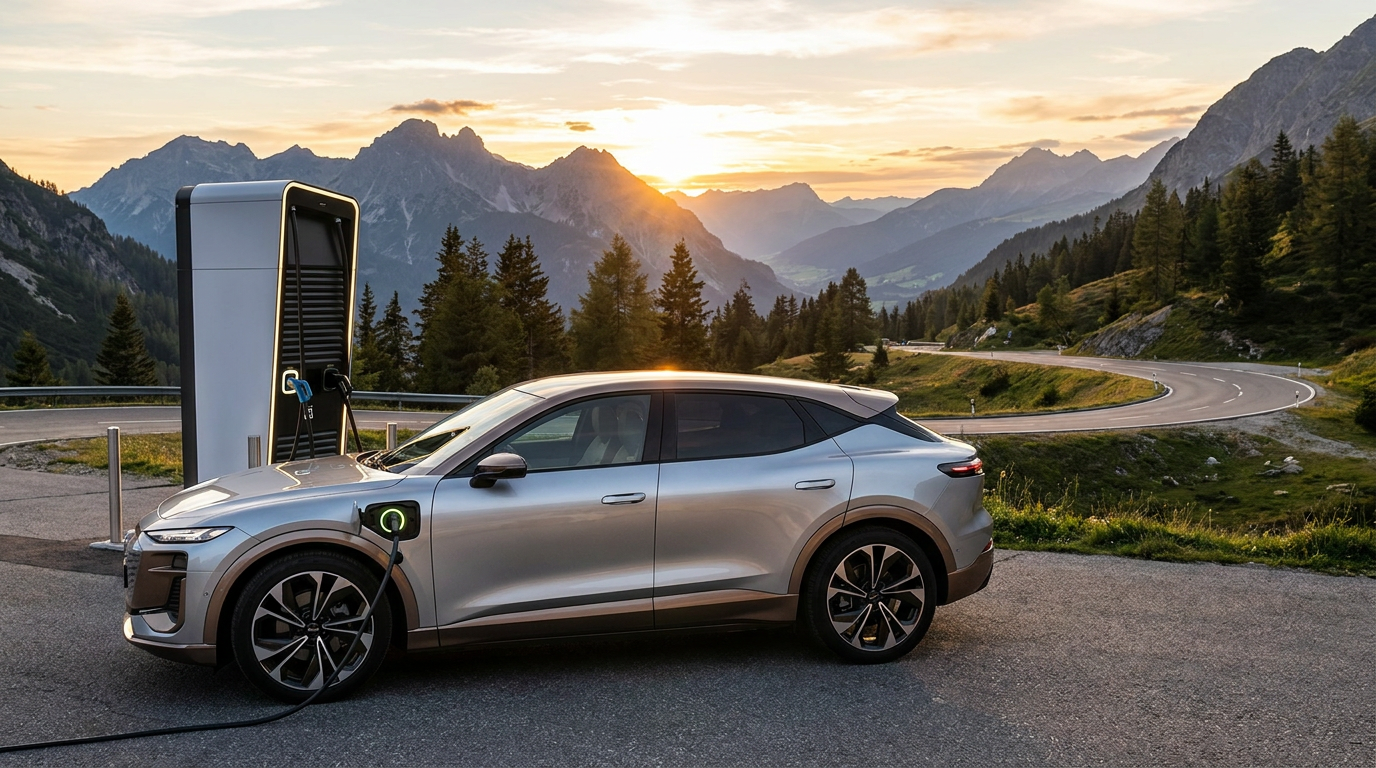
With the widespread adoption of the NACS charging standard and the reboot of federal infrastructure funding, the electric vehicle road trip has transitioned from an early-adopter challenge to a predictable, mainstream reality.
By Factlen Editorial Team
- Automakers & Infrastructure Providers
- Focused on standardization, V4 deployment, and leveraging NEVI funds to build out the network.
- Mainstream Consumers
- Prioritize ease of use, reliable route planning apps, and stress-free travel without needing to understand the underlying tech.
- EV Early Adopters
- Value the expanding network but worry about Supercharger congestion as non-Teslas flood the stations.
What's not represented
- · Rural gas station operators
- · Grid utility managers
Why this matters
Understanding the new charging landscape and the '20-80% rule' saves drivers hours of travel time and eliminates the range anxiety that previously deterred families from taking their electric vehicles on summer vacations.
Key points
- The widespread adoption of the NACS plug has unified the EV industry, granting non-Tesla drivers access to over 27,500 Supercharger stalls.
- Next-generation V4 charging hardware delivers up to 500 kW of power and features longer cables to accommodate diverse vehicle designs.
- The federal NEVI program has rebooted with streamlined guidance, accelerating the deployment of fast chargers along major highways and in local communities.
- Successful road-tripping relies on a combination of route-planning software, crowdsourced charger status apps, and built-in battery preconditioning.
- Drivers can minimize travel time by following the '20-80% rule,' taking shorter, more frequent charging stops rather than waiting for a full battery.
The great American road trip has always been defined by the open highway, a curated playlist, and the reliable rhythm of gas station stops. But as the summer travel season of 2026 kicks into gear, the mechanics of long-distance travel are undergoing a profound transformation. For millions of electric vehicle owners, the anxiety that once accompanied cross-country routing is rapidly fading. It is being replaced by a new era of interoperability, driven by standardized hardware, intelligent software, and a massive influx of infrastructure funding. The EV road trip is no longer an early-adopter puzzle; it has become a mainstream reality.[7]
The most significant catalyst for this shift is the widespread adoption of the North American Charging System (NACS). Originally developed as a proprietary plug for Tesla vehicles, NACS has effectively won the charging standard war. By early 2026, nearly every major automaker—including Ford, General Motors, Rivian, and Stellantis—has committed to integrating NACS ports into their future lineups. This standardization has fundamentally altered the charging landscape, breaking down the walled gardens that previously fragmented the EV experience and forcing the industry to coalesce around a single, reliable connector.[1][4]
For drivers of non-Tesla EVs, this standardization unlocks access to the most expansive and reliable charging network in the world. As of March 2026, more than 27,500 Supercharger stalls globally have been opened to vehicles from competing brands. This expansion is not merely a convenience; it is a paradigm shift in route planning. Drivers who previously had to navigate a patchwork of third-party networks with varying degrees of reliability can now tap into a ubiquitous system that boasts a reported 99.95% uptime.[2][4]
However, the transition to a unified standard requires a physical bridge for the millions of EVs already on the road. Vehicles equipped with the older Combined Charging System (CCS) ports must rely on specialized adapters to connect to NACS stations. These adapters, such as the NACS-to-CCS converters, have become essential road trip gear. They allow older models to seamlessly interface with the Supercharger network, communicating securely to initiate charging and handle billing without requiring a separate app or credit card swipe.[6][7]

While opening the Supercharger network solves the access problem, it introduces a new challenge: congestion. With Fords, Chevrolets, and Hyundais now vying for the same stalls as Teslas, the risk of bottlenecks at popular highway corridors has increased. To mitigate this, infrastructure providers are rapidly scaling up their hardware capabilities. In March 2026, Tesla's Gigafactory in New York produced its final V3 Supercharger cabinet, marking a complete pivot to the next-generation V4 architecture.[2][4]
The V4 Supercharger is engineered specifically for a multi-brand future. It delivers up to 500 kilowatts of power—double the capacity of its predecessor—and features significantly longer cables. This physical redesign is crucial, as non-Tesla EVs have charge ports located in various positions, from the front bumper to the front-left fender. The longer cables ensure that any vehicle can plug in without occupying two parking spaces, a common friction point during the early days of the open-network rollout.[4]
The deployment of this new hardware is also accelerating thanks to innovative engineering in the logistics chain. In June 2026, the first 'Folding Unit' Superchargers were deployed in Europe, featuring pre-assembled V4 cabinets mounted on industrial hinges with telescopic light poles. This design allows the entire station to be shipped flat and unfolded on-site, cutting installation time in half and reducing deployment costs by more than 20%. Every hour saved on installation translates directly to faster network expansion along critical travel corridors.[2]

The deployment of this new hardware is also accelerating thanks to innovative engineering in the logistics chain.
Beyond the private sector, the federal government is injecting unprecedented capital into the charging ecosystem through the National Electric Vehicle Infrastructure (NEVI) Formula Program. Armed with $5 billion in funding, NEVI aims to build a cohesive network of fast chargers across the United States. Following a brief pause and a strategic reboot in late 2025, the program released streamlined guidance that cut red tape and gave states more flexibility in how they deploy their allocated funds.[1][3]
The core mandate of the NEVI program is to establish 'Alternative Fuel Corridors' by ensuring that compliant fast chargers are available every 50 miles and located within one mile of the highway. As of mid-2026, several states are rapidly approaching 'Fully Built-Out' status on these primary routes. Once this milestone is achieved, the revised federal guidance allows states to redirect remaining NEVI funds toward off-corridor locations, bringing high-speed charging to parking facilities, rural destinations, and community centers that were previously overlooked.[1][3]

Yet, even with abundant hardware, a successful EV road trip relies heavily on the software layer. Unlike gasoline vehicles, where drivers simply look for the next exit sign, EVs require predictive route planning that accounts for battery capacity, elevation changes, and charging speeds. The modern EV driver relies on a 'holy trinity' of digital tools to navigate long distances: dedicated route planners, crowdsourced charger maps, and the vehicle's built-in navigation system.[5][6]
Applications like A Better Route Planner (ABRP) serve as the strategic brain of the journey. By inputting the specific vehicle model, current battery level, and desired destination, drivers receive an optimized itinerary that calculates exactly where to stop and how long to charge. These algorithms factor in variables like payload weight, anticipated weather, and the specific power output of each charging station along the route, ensuring the most efficient path possible.[5][6]
To verify the real-time status of these planned stops, drivers turn to crowdsourced platforms like PlugShare. While a route planner might suggest a specific station, PlugShare provides ground-truth data from other drivers, flagging broken connectors, slow charging speeds, or blocked parking spots. This community-driven verification is the ultimate defense against the dreaded scenario of arriving at a remote station with a depleted battery, only to find the hardware out of service.[5][6]
The final piece of the software puzzle is the vehicle's native navigation system, which plays a critical role in thermal management. When a driver routes to a fast charger using the car's built-in maps, the vehicle initiates a process called 'preconditioning.' It automatically warms or cools the battery pack to the optimal temperature for receiving high-voltage direct current. Arriving at a charger with a preconditioned battery can shave significant time off the charging session, maximizing the hardware's capabilities.[6][7]
Understanding the physics of the battery itself is perhaps the most important skill for the modern EV road-tripper. Unlike a gas tank that fills at a constant rate, an EV battery charges on a curve. The battery accepts energy incredibly fast when it is nearly empty, but the charging rate slows dramatically as it approaches full capacity. This phenomenon is managed by the vehicle's onboard computers to protect the chemical integrity of the battery cells and prevent overheating.[6][7]
Because of this charging curve, the most efficient way to travel long distances is to embrace the '20-80% rule.' Instead of waiting an hour to charge a battery to 100%, experienced EV drivers aim to arrive at a station with roughly 15 to 20% charge, plug in until the battery reaches 80%, and then immediately get back on the road. Mathematically, taking three short, 15-minute charging stops is significantly faster than taking one long, 45-minute stop to reach a full charge.[6][7]

As the summer of 2026 unfolds, the convergence of universal charging standards, rapid hardware deployment, and sophisticated software has fundamentally rewritten the rules of the road. The anxiety of the unknown has been replaced by the predictability of a mature, interconnected system. For the millions of drivers embarking on cross-country journeys this year, the electric road trip is no longer an exercise in pioneering patience—it is simply the new normal of American travel.[1][4][7]
How we got here
Late 2021
The Bipartisan Infrastructure Law establishes the $5 billion NEVI program to fund a national charging network.
Early 2024
Ford becomes the first major automaker to gain access to the Tesla Supercharger network, kicking off the NACS transition.
August 2025
The federal government releases streamlined NEVI guidance, cutting red tape and accelerating state-level deployment.
March 2026
Tesla produces its final V3 Supercharger cabinet, fully pivoting to the 500kW V4 architecture.
June 2026
The first pre-assembled 'Folding Unit' Superchargers are deployed in Europe, drastically reducing installation times.
Viewpoints in depth
Automakers & Infrastructure Providers
Focused on standardization, V4 deployment, and leveraging NEVI funds to build out the network.
For the companies building the cars and the chargers, 2026 is the year of convergence. The industry's rapid consolidation around the NACS standard has eliminated the costly need to support multiple hardware types, allowing capital to flow directly into network expansion. Infrastructure providers are heavily focused on deploying next-generation V4 cabinets and securing NEVI funding to fill the remaining gaps in rural corridors. Their primary metric for success is network uptime and the seamless integration of 'Plug and Charge' technology, which aims to make the payment process invisible to the user.
EV Early Adopters
Value the expanding network but worry about Supercharger congestion as non-Teslas flood the stations.
Veteran EV owners—particularly those who bought into the Tesla ecosystem early for its exclusive charging network—view the 2026 landscape with cautious optimism. While they celebrate the broader adoption of electric vehicles and the environmental benefits it brings, there is palpable concern about localized congestion. With Fords, Rivians, and Chevrolets now utilizing Superchargers, early adopters are closely monitoring whether Tesla's aggressive V4 rollout can outpace the influx of new users. They advocate for dynamic pricing models and strict idle fees to ensure that high-traffic stations keep moving efficiently.
Mainstream Consumers
Prioritize ease of use, reliable route planning apps, and stress-free travel without needing to understand the underlying tech.
For the newest wave of EV drivers, the underlying mechanics of kilowatt-hours, battery preconditioning, and adapter compatibility are secondary to simple convenience. This camp expects an EV road trip to mirror the predictability of a gasoline-powered journey. They rely heavily on integrated software—like Apple Maps' EV routing or built-in vehicle navigation—to handle the complex math of range estimation. For this group, the success of the 2026 infrastructure reboot is measured entirely by whether they can plug in, grab a coffee, and get back on the highway without opening three different apps or calling a customer support line.
What we don't know
- How severe congestion will become at legacy V3 Supercharger stations during peak holiday travel weekends now that multiple brands have access.
- Whether the pace of NEVI-funded installations can keep up with the accelerating sales of electric vehicles in rural and midwestern states.
- How quickly older CCS-only public charging stations will be retrofitted or replaced with native NACS cables by third-party network operators.
Key terms
- NACS (North American Charging System)
- The charging plug standard originally developed by Tesla, now adopted by nearly all major automakers for future electric vehicles.
- CCS (Combined Charging System)
- The previous standard fast-charging connector used by most non-Tesla EVs, which now requires an adapter to use NACS stations.
- NEVI (National Electric Vehicle Infrastructure)
- A federal program providing $5 billion to states to build a nationwide network of EV fast chargers along major highways.
- DC Fast Charging (Level 3)
- High-power charging that bypasses the vehicle's onboard converter to deliver direct current straight to the battery, enabling rapid recharges.
- Preconditioning
- The process where an EV automatically warms or cools its battery to the optimal temperature as it approaches a fast charger, maximizing charging speed.
Frequently asked
Do I need to buy a new car to use the Supercharger network?
No. If you own an older EV with a CCS port, you can purchase an approved NACS-to-CCS adapter to access compatible Superchargers.
Why does my EV charge slower after reaching 80%?
To protect the battery's chemistry and longevity, the vehicle's battery management system intentionally slows the influx of energy as the battery nears full capacity.
What happens if a charging station is broken?
Route planning apps like PlugShare rely on crowdsourced data to flag broken chargers in real-time, allowing you to route around out-of-service stations before you arrive.
Are NEVI-funded chargers only located on interstate highways?
Initially, yes. However, once a state achieves 'Fully Built-Out' status with chargers every 50 miles along designated corridors, it can use NEVI funds for community and parking-adjacent chargers.
Sources
Source coverage
7 outlets
3 viewpoints surfaced







[1]GreenCarsAutomakers & Infrastructure Providers
NEVI Charging Network Reboots in 2026
Read on GreenCars →[2]TeslaratiEV Early Adopters
Tesla opens Supercharging Network to other EVs in new country
Read on Teslarati →[3]Federal Highway AdministrationAutomakers & Infrastructure Providers
National Electric Vehicle Infrastructure (NEVI) Formula Program
Read on Federal Highway Administration →[4]TESMAGEV Early Adopters
Supercharger Network – 2026 Expansion Roadmap & Non-Tesla Access
Read on TESMAG →[5]Healvanna AutoMainstream Consumers
Best EV Route Planning Apps 2026
Read on Healvanna Auto →[6]TidBITSMainstream Consumers
My First 700-Mile EV Road Trip—What Worked and What I'd Change
Read on TidBITS →[7]AAAMainstream Consumers
A Guide to Road-tripping in an Electric Car
Read on AAA →
Every angle. Every day.
Get automotive stories with full source coverage and perspective breakdowns delivered to your inbox.