
U.S. and Iran Sign 60-Day Cease-Fire and Framework Agreement
The United States and Iran have agreed to a 60-day cease-fire and a framework for future negotiations, pausing direct hostilities while leaving major nuclear and regional issues unresolved.
By Factlen Editorial Team
- U.S. Administration
- Views the framework as a successful de-escalation and a definitive step toward a broader peace treaty.
- Israeli Leadership
- Deeply skeptical of the pause, arguing it allows Iran to regroup and advance its nuclear program without military pressure.
- Iranian State
- Frames the cease-fire as a tactical victory of resistance, proving they can negotiate without surrendering core interests.
- Global Observers
- Relieved by the temporary halt in hostilities but highly cautious about the likelihood of a permanent resolution.
What's not represented
- · Civilians in conflict zones
- · European Union negotiators
Why this matters
This agreement temporarily halts a major Middle Eastern conflict that has disrupted global security and energy markets. However, the retention of 50,000 U.S. troops in the region and fierce opposition from Israeli leadership highlight the extreme fragility of the truce.
Key points
- The U.S. and Iran have signed a framework agreement establishing a 60-day cease-fire.
- The pause is intended to allow time for negotiations on a permanent peace treaty and nuclear limits.
- The U.S. will keep approximately 50,000 troops in the Middle East during the talks.
- Israeli Prime Minister Benjamin Netanyahu condemned the deal and vowed to maintain military positions in Lebanon.
- Major issues, including sanctions relief and the status of Iranian proxy forces, remain unresolved.
The United States and Iran have officially signed a framework agreement that includes a 60-day cease-fire, temporarily halting a period of intense military confrontation. The deal, announced early Monday, is designed to pave the way for comprehensive negotiations regarding a final peace treaty and the future of Iran’s contested nuclear program. The diplomatic breakthrough marks a sudden shift from open hostilities to a precarious negotiating window, though officials on both sides acknowledge that the hardest compromises lie ahead.[1]
Despite the pause in direct conflict, the U.S. military footprint in the region will remain unchanged during the negotiation period. The Trump administration confirmed it will maintain its deployment of roughly 50,000 troops across the Middle East, signaling a posture of active deterrence. Defense officials indicated that the troop presence is necessary to ensure compliance and protect regional allies, as deep doubts linger in Washington over Tehran's long-term strategic intentions.[2][7]
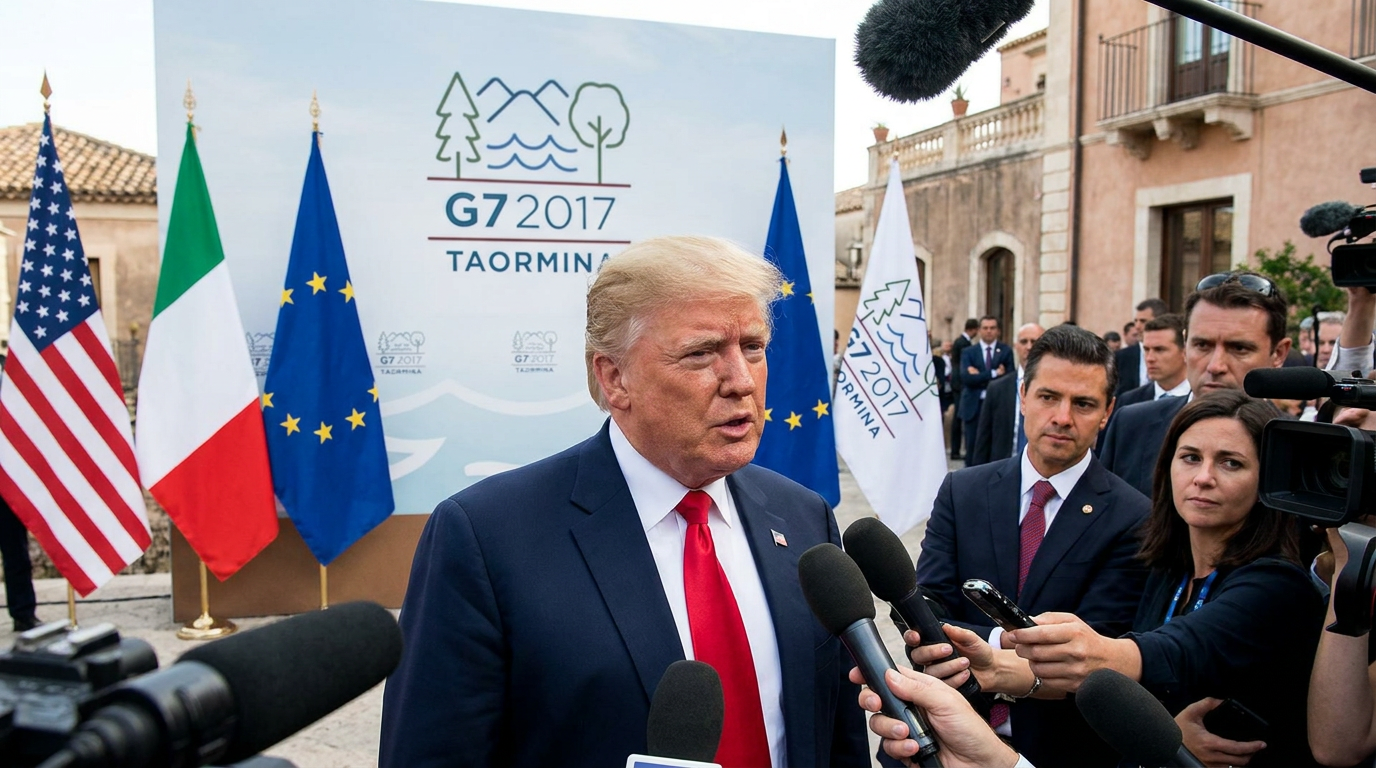
President Donald Trump touted the agreement upon his arrival at the G7 summit in Italy, framing the cease-fire as a definitive step toward lasting peace in the Middle East. Speaking to reporters, the president suggested that the diplomatic framework established with Tehran could serve as a blueprint for resolving other global conflicts, explicitly mentioning his ambitions to broker a similar resolution in Ukraine.[3][6]

The announcement has been met with fierce resistance from Israeli leadership, exposing a significant rift between Washington and its closest Middle Eastern ally. Prime Minister Benjamin Netanyahu quickly condemned the framework, stating that Israel is not bound by the U.S.-Iran agreement. He vowed that Israeli forces will not withdraw from occupied territories in Lebanon and Syria as long as regional threats from Iranian proxy networks persist.[3][5]
Hardline members of the Israeli cabinet echoed Netanyahu's sentiment, warning that the 60-day pause merely provides Tehran with an opportunity to regroup. Israeli officials argue that lifting military pressure allows Iran to accelerate its nuclear ambitions and resupply its allied militias without the immediate threat of American or Israeli airstrikes.[5]
Hardline members of the Israeli cabinet echoed Netanyahu's sentiment, warning that the 60-day pause merely provides Tehran with an opportunity to regroup.
Inside Iran, state media has portrayed the cease-fire as a strategic victory, emphasizing that the Islamic Republic successfully withstood American military pressure without capitulating on its core regional interests. Iranian officials have indicated they are prepared for the upcoming nuclear talks but have publicly reiterated their refusal to negotiate under the threat of force, framing the 60-day window as a test of American diplomatic sincerity.[8]
Global energy markets reacted cautiously to the diplomatic development. While the cessation of direct hostilities removes an immediate risk premium from crude oil prices, traders remain wary. Financial analysts note that the underlying structural conflicts—including heavy economic sanctions and the ongoing proxy warfare in the Red Sea and Levant—remain entirely unresolved, keeping market volatility in play.[4][7]

The framework intentionally leaves the most contentious issues for the upcoming 60-day window. Negotiators must now tackle the complex mechanics of sanctions relief, the verifiable capping of Iranian uranium enrichment levels, and the operational status of Iranian-aligned militias operating across Iraq, Syria, and Yemen. Failure to reach a consensus on these core issues could trigger an immediate resumption of hostilities.[1][6]
Domestic political reaction in the United States has been deeply polarized. While some foreign policy analysts view the pause as a necessary de-escalation that pulls both nations back from the brink of all-out war, critics across the political spectrum have expressed profound skepticism. Opinion writers and hawkish lawmakers argue that previous diplomatic engagements with Tehran have repeatedly failed to produce verifiable, long-term security guarantees.[1][2]

As the 60-day clock begins, the international community faces a precarious diplomatic sprint. The coming weeks will test whether this initial framework can evolve into a durable, binding treaty, or if it is merely a temporary tactical pause in a broader, escalating regional conflict that will inevitably resume once the deadline expires.[4][6]
How we got here
Early 2026
Military hostilities escalate between U.S. forces and Iranian-aligned groups in the region.
June 14, 2026
Diplomats finalize the text of a preliminary framework agreement.
June 15, 2026
The U.S. and Iran officially announce a 60-day cease-fire to pursue a permanent treaty.
Viewpoints in depth
U.S. Administration's View
The White House sees the framework as a crucial step toward stabilizing the Middle East.
The Trump administration is framing the 60-day pause as a major diplomatic victory that validates its strategy of maximum pressure combined with a willingness to negotiate. Officials argue that securing a halt to direct hostilities without immediately withdrawing the 50,000 U.S. troops in the region proves that America can negotiate from a position of strength. The administration hopes this framework will eventually lead to a comprehensive treaty that permanently caps Iran's nuclear ambitions.
Israeli Leadership's View
Israel views the cease-fire as a dangerous concession that leaves immediate threats intact.
Israeli officials, led by Prime Minister Benjamin Netanyahu, are deeply opposed to the framework. They argue that a 60-day pause relieves the military pressure on Tehran just when it was most effective, allowing Iran to accelerate its nuclear enrichment and resupply its proxy militias across Israel's borders. Consequently, Israel has declared it is not bound by the agreement and will continue its military operations in Lebanon and Syria to secure its northern frontier.
Iranian State's View
Tehran portrays the agreement as a validation of its endurance against U.S. pressure.
Iranian state media and government officials are presenting the cease-fire to their domestic audience as a triumph of the 'Axis of Resistance.' By securing a pause in hostilities without making immediate concessions on their nuclear program or regional influence, Tehran claims it has forced Washington to the negotiating table on equal terms. However, Iranian diplomats stress that any final treaty must include total sanctions relief.
What we don't know
- Whether Iran will agree to verifiable caps on its uranium enrichment during the 60-day window.
- How Israeli military operations in Lebanon might impact the broader U.S.-Iran negotiations.
- What specific sanctions relief the U.S. is willing to offer in exchange for a permanent treaty.
Key terms
- Framework Agreement
- A preliminary diplomatic deal that establishes the broad outlines and rules for future, more detailed negotiations.
- Proxy Warfare
- A conflict where major powers instigate or support allied militant groups to fight on their behalf, rather than engaging each other directly.
Frequently asked
What happens after the 60-day cease-fire?
If a permanent treaty is not reached within 60 days, the cease-fire expires, raising the risk of resumed military hostilities unless an extension is negotiated.
Are U.S. troops leaving the Middle East?
No. The Pentagon has confirmed that roughly 50,000 U.S. troops will remain deployed in the region throughout the negotiation period to maintain deterrence.
Does this deal stop Iran's nuclear program?
The current framework pauses direct military conflict but leaves the specifics of capping Iran's uranium enrichment to be negotiated during the 60-day window.
Sources
Source coverage
8 outlets
4 viewpoints surfaced








[1]The New York TimesGlobal Observers
U.S. and Iran Sign a Framework Deal, Leaving Major Issues for Future Talks
Read on The New York Times →[2]Fox NewsU.S. Administration
US won't move troops despite 'signed' Iran deal, as doubts linger over Tehran's next move
Read on Fox News →[3]Al JazeeraIsraeli Leadership
Trump touts Iran deal and Ukraine ambition as he arrives at G7
Read on Al Jazeera →[4]ReutersGlobal Observers
Oil markets stabilize as US, Iran announce 60-day truce
Read on Reuters →[5]The Times of IsraelIsraeli Leadership
Netanyahu rejects US-Iran framework, vows to maintain Lebanon buffer
Read on The Times of Israel →[6]BBC NewsGlobal Observers
US and Iran agree temporary truce, but path to nuclear treaty remains fraught
Read on BBC News →[7]The Wall Street JournalU.S. Administration
Pentagon to Keep 50,000 Troops in Middle East During Iran Talks
Read on The Wall Street Journal →[8]IRNAIranian State
Iran secures diplomatic pause, prepares for framework negotiations
Read on IRNA →

More in news politics
See all 7 stories →US-Iran Ceasefire
US and Iran Reach Tentative Agreement to End War and Reopen Strait of Hormuz
0 sources

Digital Provenance
The End of the Deepfake Arms Race: How C2PA and Cryptographic Provenance Are Rebuilding Digital Trust
0 sources

Strait of Hormuz
Potential End to U.S.-Iran War Tests Trump's Economic Promises as Dispute Over Strait of Hormuz Tolls Emerges
0 sources

US-Iran Relations
CIA Director Doubts Iran's Intentions in Peace Deal as White House Seeks Economic Rebound
0 sources
Every angle. Every day.
Get news politics stories with full source coverage and perspective breakdowns delivered to your inbox.