
Women's Club Soccer Shatters Global Viewership and US Attendance Records in 2026
The 2025/26 UEFA Women's Champions League season doubled its audience to 44.5 million viewers, while the NWSL set a new US attendance record with over 63,000 fans at a single match.
By Factlen Editorial Team
- Domestic Matchday Supporters
- Argues that massive stadium gambles and grassroots tailgates are the true measure of the sport's cultural footprint.
- Global Broadcast Advocates
- Argues that free-to-air partnerships and digital accessibility are the primary drivers of the sport's explosion.
- Competitive Ecosystem Analysts
- Highlights the structural and tactical maturation of the leagues as the foundation for sustainable growth.
What's not represented
- · Grassroots Youth Clubs
- · Independent Broadcasters
Why this matters
The simultaneous explosion of European broadcast ratings and American stadium attendance proves women's professional soccer is no longer a niche market. This commercial viability is driving massive infrastructure investments, ensuring better pay for athletes and permanent, high-quality venues for fans.
Key points
- The 2025/26 UEFA Women's Champions League season reached a record 44.5 million viewers.
- Barcelona defeated Olympique Lyonnais 4-0 in the Champions League final to secure their fourth title.
- The NWSL's Denver Summit broke the US attendance record with 63,004 fans at their inaugural match.
- Boston Legacy FC set an NWSL expansion debut record by drawing 30,207 fans.
- The USL Super League completed its first season, establishing a second Division I women's league in the US.
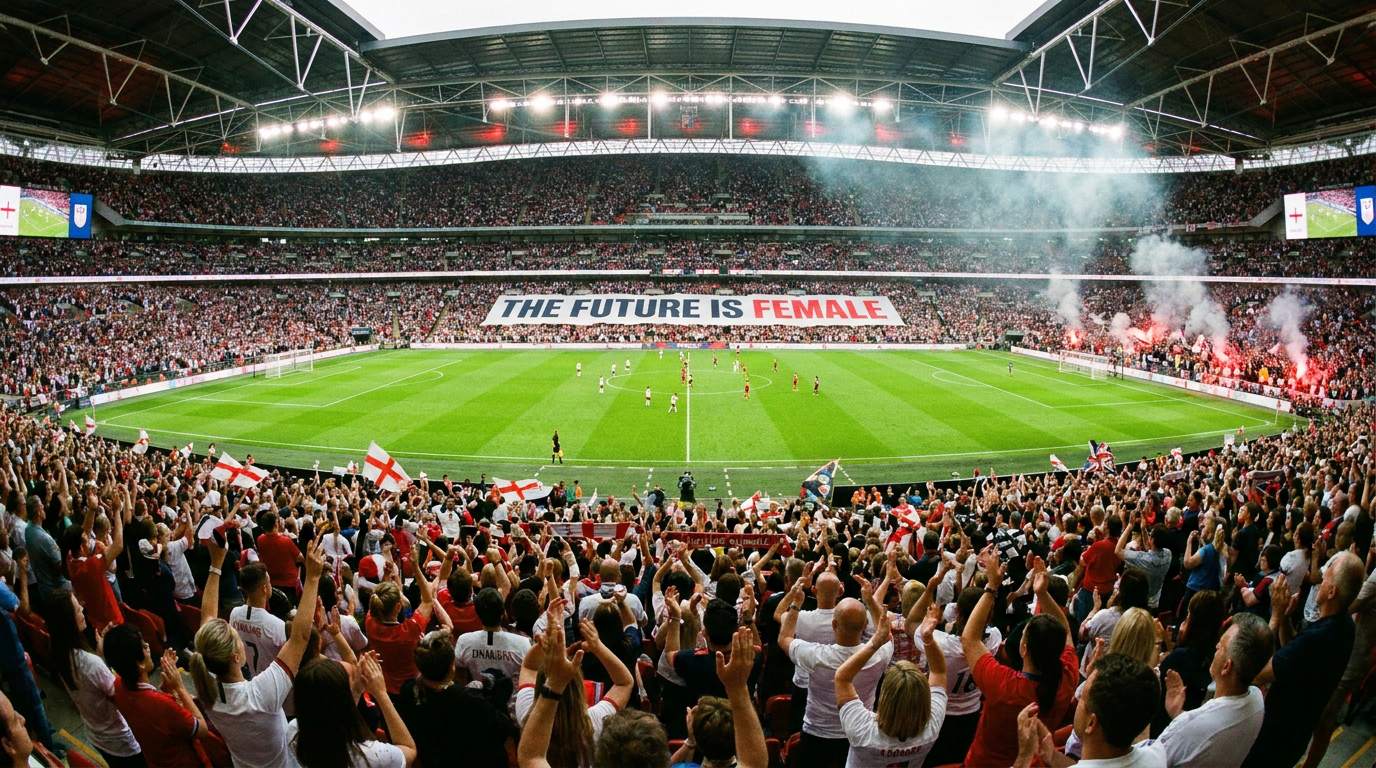
Women's club soccer has officially moved past its "proof of concept" phase and into an era of shattered ceilings. In mid-2026, the sport is celebrating a dual milestone: unprecedented global broadcast reach in Europe and staggering, NFL-sized stadium crowds in the United States.[2][3]
The scale of the boom was quantified in June when UEFA released its viewership report for the 2025/26 Women's Champions League season. The competition drew an audience of 44.5 million viewers, more than doubling its previous records. The season culminated in late May with a sold-out final at Norway's Ullevaal Stadion, where Barcelona dismantled historically dominant Olympique Lyonnais 4-0.[1][2]
The massive European audience was driven by a deliberate broadcast strategy. Matches aired in 207 territories, and UEFA partnered with 30 free-to-air broadcasters for the final, making it the most widely available title match in the competition's history. Digital engagement mirrored the broadcast boom, with social media video views surging by 50 percent over the previous year.[2]

On the pitch, Barcelona's decisive victory marked a tactical and historical shift. The Catalan club secured their fourth Champions League title and completed a rare continental quadruple. By defeating Lyon—a club that holds a record eight Champions League titles and had previously beaten Barcelona in two finals—Barça cemented their status as the new definitive dynasty in European women's football.[1][8]
Across the Atlantic, the domestic game is experiencing a parallel explosion, measured not just in screens, but in turnstiles. The National Women's Soccer League (NWSL) kicked off its 2026 campaign with unprecedented demand, averaging over 16,000 fans per match during its opening weekend.[6]
Across the Atlantic, the domestic game is experiencing a parallel explosion, measured not just in screens, but in turnstiles.
The crown jewel of that opening weekend was the debut of the league's 16th franchise, the Denver Summit. Hosting their inaugural match at Empower Field at Mile High, the Summit drew an astonishing 63,004 fans. The turnout obliterated the previous NWSL single-game attendance record of 40,091, set just a year prior by Bay FC.[3][4][5]

Denver's front office had gambled big by opening the 76,000-seat NFL stadium for the match, branded "The Kickoff." The atmosphere was electric, featuring a massive tailgate organized by the "14ers" supporters group and appearances by soccer legends like Brandi Chastain. While the match against the Washington Spirit ended in a 0-0 draw, the Summit's defensive resilience earned them a crucial point in front of the record-breaking crowd.[3][4][5]
Denver was not an isolated anomaly. The Boston Legacy FC, another 2026 expansion side, drew 30,207 fans for their inaugural match at Gillette Stadium. That figure set a new benchmark for the largest crowd ever for a club's first game in NWSL history, proving that the appetite for the women's game is expanding across multiple major media markets.[6]
The American soccer landscape is also expanding structurally to meet this demand. The USL Super League recently concluded its inaugural 2025-26 season, successfully establishing a second Division I women's professional league in the United States alongside the NWSL. Lexington SC claimed the first championship, defeating the Carolina Ascent.[7]

The USL Super League is already adapting its strategy to capitalize on the booming domestic market. The league announced it will transition to a spring-to-fall calendar by 2027, aligning its schedule with the NWSL. This shift prioritizes domestic synergy ahead of the 2031 FIFA Women's World Cup, which will be hosted on U.S. soil.[7]
This dual-engine growth—European broadcast dominance and American stadium sellouts—highlights a maturing professional ecosystem. Nearly half of the Champions League matches this season were decided by a single goal, reflecting an enhanced competitive balance that keeps viewers engaged week after week.[2]
The focus for the industry now shifts from simply proving it can draw crowds to sustaining this massive infrastructure. With clubs building permanent soccer-specific stadiums and leagues optimizing their broadcast rights, the 2026 milestones serve as the new baseline for a sport that is fundamentally rewriting its own commercial reality.[4][7]
How we got here
August 2024
The USL Super League kicks off its inaugural season, establishing a second Division I women's league in the US.
March 2026
The NWSL opens its season with record-breaking attendance, including 63,004 fans for the Denver Summit's debut.
May 2026
Barcelona defeats Lyon 4-0 in the UEFA Women's Champions League final in Oslo.
June 2026
UEFA reports that the 2025/26 Women's Champions League season shattered viewership records, reaching 44.5 million fans globally.
Viewpoints in depth
Global Broadcast Advocates
Focuses on the massive television and digital reach achieved by UEFA.
This camp argues that free-to-air partnerships and digital accessibility are the primary drivers of the sport's explosion. By pointing to the 44.5 million Champions League viewers and the 50 percent surge in social media video views, they contend that the women's game is now a premier global broadcast property that no longer relies solely on local gate revenue to survive.
Domestic Matchday Supporters
Focuses on the in-stadium experience and local community engagement.
Proponents of this view argue that massive stadium gambles, like Denver's 63,000-fan turnout, and grassroots tailgates are the true measure of the sport's cultural footprint. They believe that proving local markets can sustain NFL-sized crowds for women's soccer is the ultimate leverage for securing better broadcast deals and permanent, purpose-built infrastructure.
Competitive Ecosystem Analysts
Focuses on the structural and tactical maturation of the leagues.
This perspective highlights the rise of the USL Super League alongside the NWSL and Barcelona's tactical dominance over Lyon. They argue that the sport's success is now rooted in a deep, highly competitive professional infrastructure rather than novelty, pointing to the fact that nearly half of all Champions League matches were decided by a single goal.
What we don't know
- Whether the NWSL and USL Super League will eventually compete for the same domestic broadcast rights or find a synergistic partnership.
- How quickly expansion teams like the Denver Summit will transition from temporary NFL stadiums to their own permanent, soccer-specific venues.
Key terms
- Continental Quadruple
- Winning four major trophies in a single season, typically including the domestic league, domestic cup, league cup, and the continental championship.
- USL Super League
- A newly sanctioned Division I women's professional soccer league in the United States that launched to expand the professional pathway.
- Free-to-air
- Television broadcasts that are available to the public without a subscription, which UEFA utilized to expand the Champions League final's reach.
Frequently asked
Who won the 2026 UEFA Women's Champions League?
Barcelona defeated Olympique Lyonnais 4-0 in the final in Oslo, securing their fourth title and completing a continental quadruple.
What is the new NWSL attendance record?
The Denver Summit set a new record by drawing 63,004 fans to their inaugural home match at Empower Field at Mile High.
What is the USL Super League?
It is a new Division I professional women's soccer league in the US that recently concluded its inaugural season, operating alongside the NWSL.
Sources
Source coverage
8 outlets
3 viewpoints surfaced






[1]UEFAGlobal Broadcast Advocates
Women's Champions League winners and history
Read on UEFA →[2]DevdiscourseGlobal Broadcast Advocates
Record-Breaking Viewership for Women's Champions League 2025/26
Read on Devdiscourse →[3]The GuardianDomestic Matchday Supporters
NWSL newcomers attracted more than 60,000 fans to Mile High Stadium
Read on The Guardian →[4]National Soccer NetworkDomestic Matchday Supporters
Denver Summit Breaks NWSL Attendance Record with 63,004 Fans
Read on National Soccer Network →[5]Equalizer SoccerDomestic Matchday Supporters
Denver breaks NWSL attendance record in historic weekend
Read on Equalizer Soccer →[6]NWSL OfficialDomestic Matchday Supporters
NWSL Sets Opening Weekend Attendance Record to Kick Off 2026 Season
Read on NWSL Official →[7]3rd DegreeCompetitive Ecosystem Analysts
USL Super League moving to Spring/Fall calendar
Read on 3rd Degree →[8]OlympicsGlobal Broadcast Advocates
FC Barcelona vs OL Lyonnes head-to-head: French giants narrowly edge it
Read on Olympics →
More in sports
See all 8 stories →Standings
The Race to Hangzhou: Young Stars Disrupt BWF World Tour Standings at Mid-Season
0 sources
Injury
Global Table Tennis Injury Report: Sun Yingsha's Triumphant Return and the Tour's Shift Toward Player Longevity
0 sources
Standings
Global Table Tennis Standings Shake-Up: Lebrun and Harimoto Surge Ahead of United States Smash
0 sources

Injury
Paige Blake Completes Full-Circle Return to the Black Sticks for Home Nations Cup Following ACL Tear
0 sources

Every angle. Every day.
Get sports stories with full source coverage and perspective breakdowns delivered to your inbox.