
U.S. and Iran Sign Interim Peace Deal, Reopening Strait of Hormuz as 60-Day Nuclear Talks Begin
The United States and Iran have digitally signed a memorandum of understanding to halt a 100-day regional war and immediately reopen the Strait of Hormuz. The interim agreement establishes a 60-day window to negotiate Iran's nuclear program, though Israel insists it will continue military operations in Lebanon.
By Factlen Editorial Team
- U.S. Administration & Allies
- Argues the deal successfully halts the conflict, reopens global trade routes, and creates leverage to dismantle Iran's nuclear ambitions.
- Iranian & Regional Mediators
- Views the agreement as a diplomatic victory that breaks the U.S. naval blockade and preserves national sovereignty without capitulating to military pressure.
- Israeli Government
- Rejects the agreement's constraints on its northern front, insisting on absolute military freedom to neutralize Hezbollah in Lebanon.
- Geopolitical Analysts
- Cautions that the memorandum is merely a tactical pause that leaves the core nuclear dispute unresolved and proves the Iranian regime's resilience.
What's not represented
- · Lebanese civilians caught in the crossfire
- · Global shipping companies navigating the mined strait
- · Iranian citizens facing domestic economic hardship
Why this matters
The reopening of the Strait of Hormuz immediately relieves a massive bottleneck in global energy supply, lowering fuel and commodity prices worldwide. However, the fragile 60-day window means the threat of a renewed, nuclear-tinged conflict remains a looming risk for international markets and security.
Key points
- The U.S. and Iran digitally signed a memorandum of understanding to halt military operations and extend a ceasefire.
- The agreement immediately lifts the U.S. naval blockade, allowing the Strait of Hormuz to reopen to commercial shipping.
- Diplomats now have a 60-day window to negotiate a permanent settlement regarding Iran's nuclear program and U.S. sanctions.
- U.S. officials denied Iranian claims that frozen assets were released as part of the initial agreement.
- Israel rejected the deal's application to its northern border, vowing to continue military operations against Hezbollah in Lebanon.
After more than a hundred days of a devastating regional war that rattled the global economy and killed thousands, the United States and Iran have reached a preliminary agreement to halt hostilities and reopen the strategically vital Strait of Hormuz. The memorandum of understanding, which serves as a framework for a broader peace process, was digitally signed on Sunday by U.S. President Donald Trump, Vice President J.D. Vance, and Iranian Parliament Speaker Mohammad Bagher Ghalibaf. The breakthrough marks a sudden de-escalation in a conflict that had threatened to engulf the entire Middle East, pulling in multiple proxy groups and allied nations. By formalizing a pause in the fighting, Washington and Tehran have stepped back from the brink of a prolonged war of attrition, setting the stage for a highly anticipated formal signing ceremony scheduled to take place in Geneva, Switzerland, later this week.[1][2]
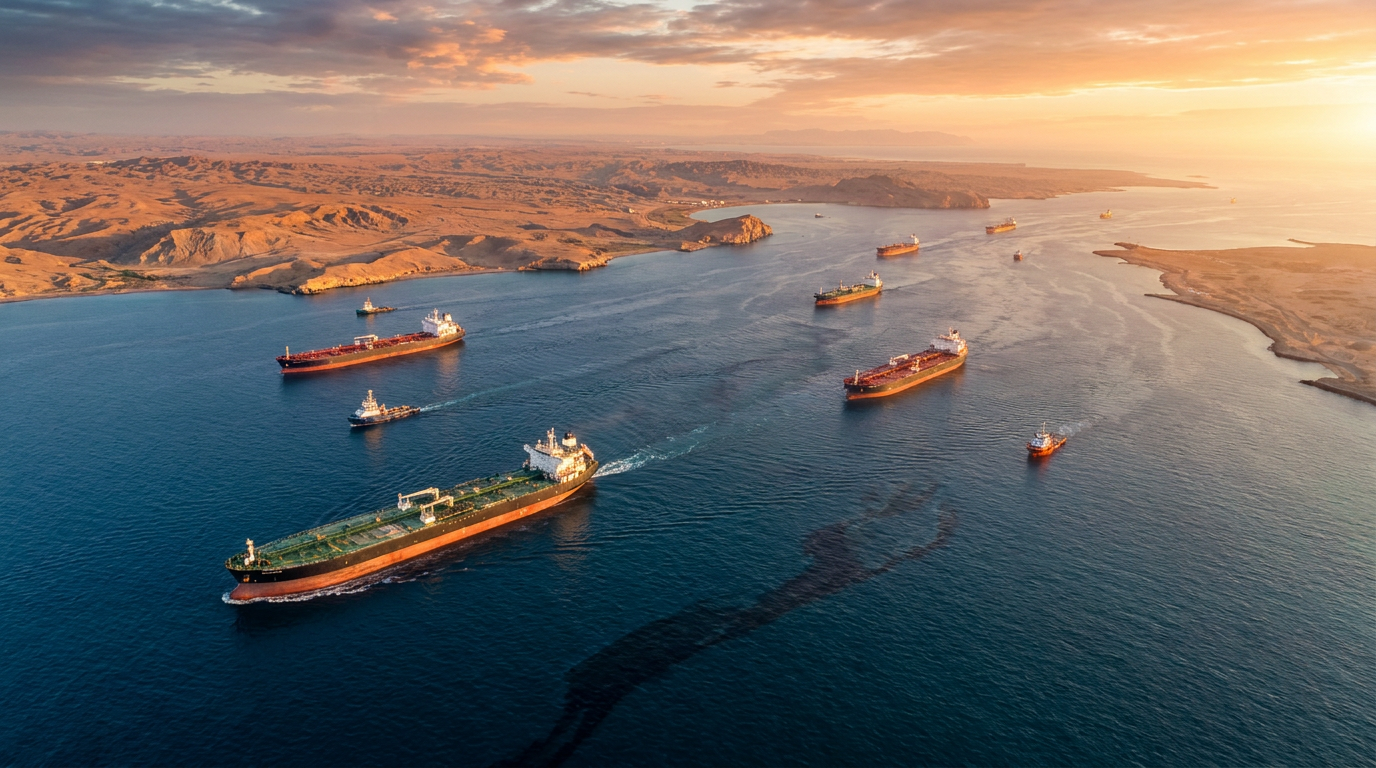
The immediate and most globally consequential centerpiece of the diplomatic breakthrough is the lifting of the U.S. naval blockade on Iranian ports and the resumption of commercial transit through the Strait of Hormuz. President Trump, posting on his Truth Social platform, declared that the waterway would be "completely open" and toll-free by Friday, urging the world's shipping industry to "start your engines" and "let the oil flow." The announcement signals an end to the military strangulation of one of the world's most critical maritime chokepoints, where naval forces and the threat of sea mines had brought international shipping to a standstill. Tracking firms reported that a small number of commodities carriers have already begun to navigate the strait with their transponders switched on, marking the first tentative steps toward normalizing global energy supply chains.[2][5]
The conflict, which erupted in late February following coordinated U.S. and Israeli strikes on Iranian military infrastructure, had effectively choked off a maritime corridor responsible for roughly a fifth of the globe's daily oil supply. The resulting energy shock rattled global markets, leaving nearly six hundred commodities carriers stranded in the Persian Gulf awaiting departure, while hundreds more idled on the other side. The blockade drove up the cost of fuel, food, and basic goods worldwide, forcing central banks and governments to grapple with sudden inflationary spikes. The economic fallout placed immense political pressure on Western leaders to find an off-ramp, particularly as the disruption threatened to derail global growth projections and disrupt domestic economies ahead of crucial election cycles in the United States and Europe.[3][8]

While the interim agreement successfully pauses the direct military confrontation between Washington and Tehran, officials caution that it is not a final, comprehensive peace treaty. Instead, the memorandum of understanding establishes a strict 60-day negotiating window for the two adversaries to hammer out a permanent settlement. During this two-month period, diplomats will be tasked with resolving the deeply entrenched issues that sparked the war, most notably the future of Iran's nuclear program and the potential lifting of primary and secondary U.S. sanctions. The framework essentially trades immediate maritime and economic relief for time, betting that a temporary cessation of violence will create the diplomatic space necessary to address the Islamic Republic's uranium enrichment capabilities and its funding of regional proxy militias.[1][4]
Disagreements over the exact terms and concessions of the memorandum surfaced almost immediately, underscoring the fragility of the new diplomatic track. While Iranian state media and government officials broadcasted that the deal included the immediate unfreezing of Iranian assets held abroad and the lifting of crippling economic sanctions, senior U.S. administration officials flatly denied the claim. In a briefing call with reporters, U.S. representatives stated unequivocally that "zero dollars" of frozen funds had been released to Tehran, framing any future sanctions relief as strictly conditional on Iran's verifiable compliance with nuclear restrictions. This early divergence in public messaging highlights the domestic political tightropes both governments are walking, as they attempt to sell the compromise to skeptical hardliners within their respective capitals.[2][3]
Disagreements over the exact terms and concessions of the memorandum surfaced almost immediately, underscoring the fragility of the new diplomatic track.
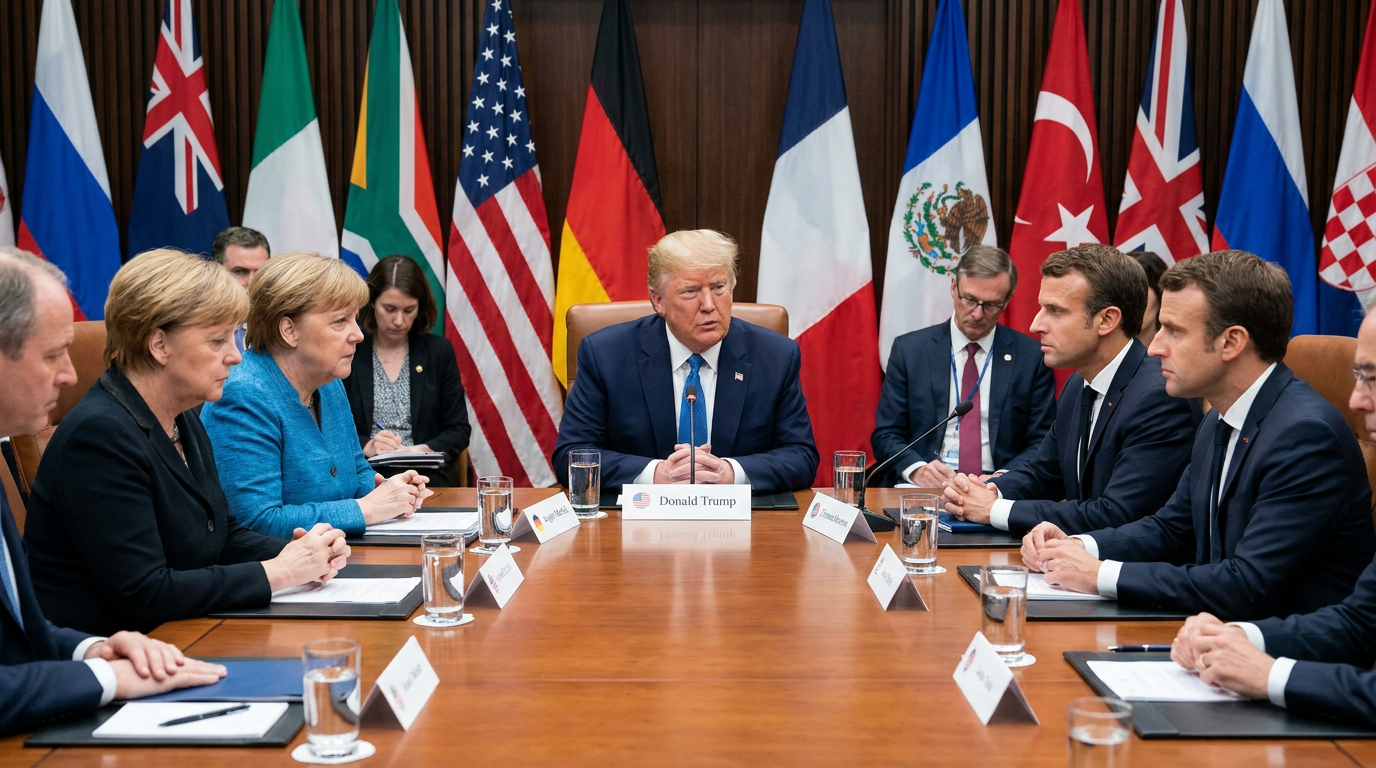
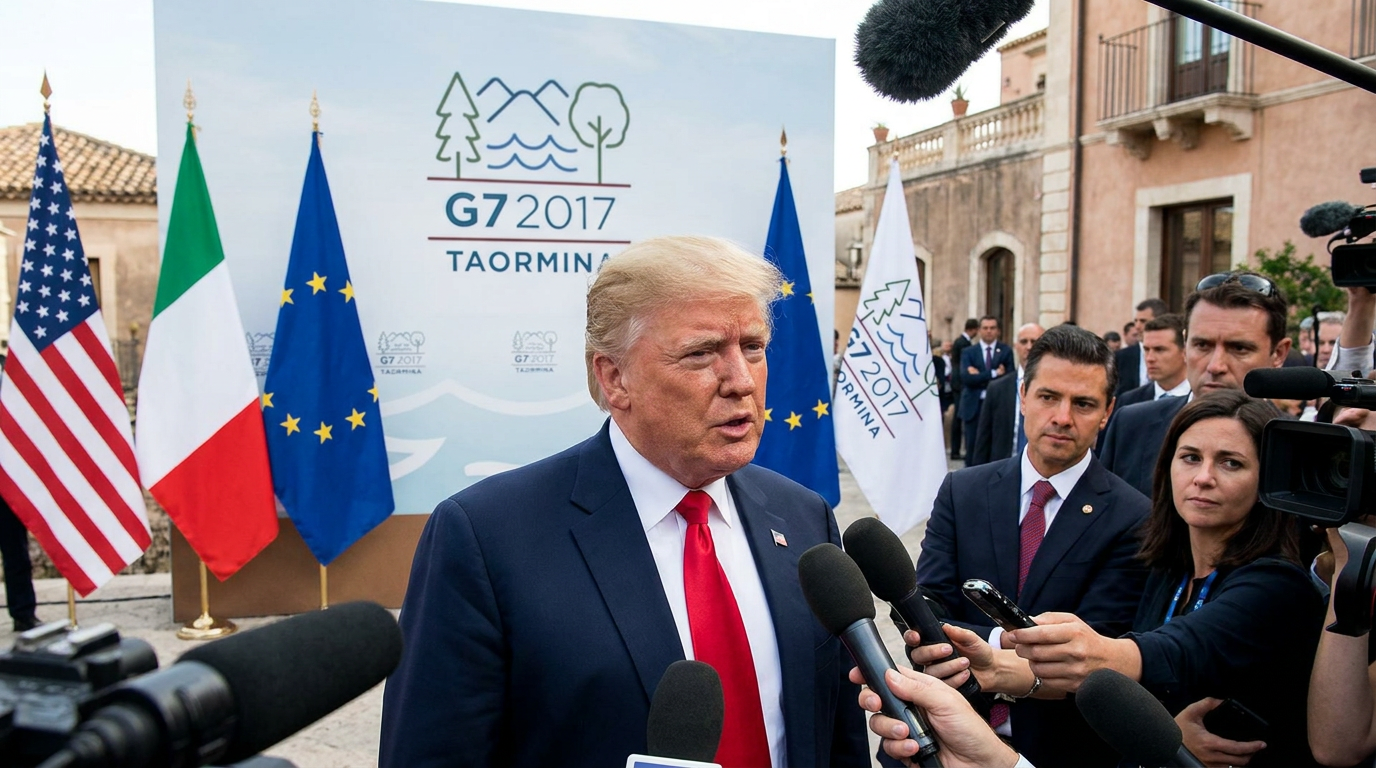
The diplomatic breakthrough was heavily mediated by third-party actors, with Pakistan playing a central role in bridging the gap between the warring nations. Pakistani Prime Minister Shehbaz Sharif formally announced the cessation of military operations on all fronts, describing the pact as a historic step toward lasting regional tranquility. The timing of the announcement provided a dramatic and triumphant backdrop for President Trump's arrival at the G7 summit in Evian-les-Bains, France. Stepping onto the world stage with the wind at his back, the U.S. president was greeted by allied leaders who were deeply relieved to see the global economic strain alleviated, allowing the summit to pivot from crisis management to discussions of post-war economic recovery and maritime security.[4][6]
European leaders, whose economies bore a significant brunt of the energy market volatility, were quick to publicly welcome the agreement and pledge their support for the upcoming negotiations. French President Emmanuel Macron and U.K. Prime Minister Keir Starmer issued statements praising the diplomatic effort, with Macron calling for the pact's "rapid and complete implementation by all belligerents." The European bloc has signaled a willingness to lift its own sanctions and normalize trade relations if the 60-day talks yield a verifiable mechanism to prevent Iran from acquiring a nuclear weapon. For the G7, the immediate reopening of the Strait of Hormuz represents a vital stabilization of the global energy market, prompting a sharp drop in Brent crude and agricultural commodity prices in early trading.[1][5]

However, the most volatile and potentially disruptive variable in the peace framework remains the State of Israel. The U.S.-Iran memorandum nominally calls for an end to military operations across all regional fronts, which implicitly includes the conflict in Lebanon, where Israeli forces have been engaged in a brutal ground and air campaign against the Iran-backed militant group Hezbollah. Because Israel is not a direct signatory to the bilateral pact between Washington and Tehran, the application of the ceasefire to the northern Levant remains highly contested, threatening to unravel the broader regional de-escalation before the ink on the memorandum is even dry.[3][8]
Israeli officials swiftly and forcefully rejected the notion that the Washington-Tehran pact dictates their national security posture or limits their military objectives. National Security Minister Itamar Ben-Gvir took to social media to state that Israel is "not party to this agreement" and that the deal does not safeguard the nation's security. Concurrently, a spokesperson for Prime Minister Benjamin Netanyahu confirmed that Israeli troops would not withdraw from the territory they have seized in southern Lebanon. The Israeli government remains steadfast in its commitment to dismantling Hezbollah's military infrastructure, arguing that any ceasefire that leaves the militant group intact on its northern border is an unacceptable strategic risk.[6][8]
Hezbollah, for its part, framed the U.S.-Iran ceasefire as a strategic victory for the "Axis of Resistance," stating that the pause in fighting could pave the way for the reconstruction of devastated Lebanese territories and the return of displaced civilians. The militant group credited Tehran with securing a major diplomatic achievement but issued a stark warning regarding the future of the conflict. Hezbollah leadership declared that there would be no return to the pre-war status quo, signaling that any continued Israeli military operations or airstrikes within Lebanese territory would be met with renewed resistance, thereby keeping the threat of a localized escalation very much alive despite the broader geopolitical settlement.[8]

Geopolitical analysts observing the fallout note that while the deal successfully averts a broader, catastrophic regional conflagration, it fundamentally alters the strategic calculus of the Middle East. Despite a punishing, months-long military campaign that severely degraded elements of Iran's armed forces and eliminated key proxy leaders, the Islamic Republic's government survived the maximum-pressure campaign intact. Experts at the Atlantic Council argue that this outcome effectively collapses the long-held assumption in Washington and Jerusalem that coordinated military strikes could force regime change or total capitulation in Tehran. Instead, Iran emerges from the conflict having demonstrated its undeniable ability to hold the global economy hostage by closing the Strait of Hormuz.[7]
As the immediate threat of a wider war recedes, negotiators now face a treacherous and highly compressed diplomatic sprint. Officials from both nations are scheduled to meet in Geneva on Friday for the formal signing ceremony, an event that will officially kick off the 60-day countdown. During this window, diplomats must find a way to resolve the deeply entrenched disputes over uranium enrichment, ballistic missile development, and regional proxy funding that have plagued U.S.-Iran relations for decades. While the world celebrates the resumption of maritime trade and the drop in oil prices, the underlying strategic conflicts remain entirely unresolved, leaving the ultimate success of the peace framework hanging in the balance.[1][7]
How we got here
Late Feb 2026
U.S. and Israeli strikes on Iran spark a multi-front regional war and the closure of the Strait of Hormuz.
June 14, 2026
U.S. and Iranian officials digitally sign a Memorandum of Understanding to halt hostilities.
June 15, 2026
President Trump announces the end of the U.S. naval blockade at the G7 summit in France.
June 19, 2026
Scheduled formal signing ceremony in Geneva, Switzerland, initiating a 60-day negotiation window.
Viewpoints in depth
The U.S. and Allied View
Western leaders view the agreement as a necessary stabilization measure that rescues the global economy.
For the Trump administration and European allies, the immediate priority is halting the severe economic damage caused by the closure of the Strait of Hormuz. By securing a 60-day ceasefire, Washington believes it has created a diplomatic window to address Iran's nuclear program through negotiations rather than kinetic strikes, while claiming credit for lowering global energy prices ahead of domestic elections.
The Israeli View
Israel views the bilateral pact as insufficient for its security, particularly regarding Hezbollah.
Israeli leadership fundamentally rejects the premise that a U.S.-Iran memorandum dictates their military operations in the Levant. Viewing Hezbollah as an existential threat on their northern border, Israeli officials insist that any ceasefire that leaves the militant group's infrastructure intact is a non-starter, signaling their intent to continue the offensive in Lebanon even if it risks fracturing the broader peace framework.
The Analyst View
Foreign policy experts warn that the underlying strategic conflicts remain entirely unresolved.
While the resumption of maritime trade is a tangible win, analysts caution that the 60-day window is a fragile band-aid over a gaping geopolitical wound. The war failed to achieve regime change in Tehran, and experts argue that the Islamic Republic emerges from the conflict emboldened, having demonstrated its ability to hold the global economy hostage. The core dispute over uranium enrichment remains as intractable as it was before the first shots were fired.
What we don't know
- Whether Israel's continued military operations in Lebanon will provoke Iran to abandon the 60-day negotiating window.
- What specific concessions Iran is willing to make regarding its nuclear enrichment program in exchange for permanent sanctions relief.
- How long it will take to fully clear the Strait of Hormuz of sea mines and restore pre-war shipping volumes.
Key terms
- Strait of Hormuz
- A narrow, strategically vital waterway between the Persian Gulf and the Gulf of Oman, through which a fifth of the world's oil supply passes.
- Memorandum of Understanding (MOU)
- A preliminary agreement outlining the framework for a ceasefire and a 60-day window to negotiate a permanent treaty.
- Naval Blockade
- A military operation that prevented commercial shipping from entering or leaving Iranian ports during the conflict.
Frequently asked
Is the war completely over?
The U.S. and Iran have signed a Memorandum of Understanding to halt hostilities, but it is an interim 60-day agreement, and Israel has stated it will continue its military operations in Lebanon.
When will the Strait of Hormuz reopen?
President Trump authorized the immediate removal of the U.S. naval blockade, and the waterway is expected to be fully open and cleared of mines by Friday, June 19.
Did the U.S. release frozen Iranian funds?
No. U.S. officials confirmed that zero dollars of frozen Iranian assets have been released so far, despite Iranian state media reports suggesting otherwise.
What happens to Iran's nuclear program?
The interim deal pauses the conflict to allow for 60 days of negotiations specifically aimed at addressing Iran's nuclear capabilities and the potential lifting of U.S. sanctions.
Sources
Source coverage
8 outlets
4 viewpoints surfaced








[1]TimeU.S. Administration & Allies
U.S. and Iran Sign Preliminary Agreement to End War, Reopen Strait of Hormuz
Read on Time →[2]The GuardianU.S. Administration & Allies
Trump declares US-Iran peace deal 'all signed' as G7 leaders battle to tie up loose ends
Read on The Guardian →[3]AxiosGeopolitical Analysts
The 8 unresolved questions in Trump's Iran deal
Read on Axios →[4]Al JazeeraIranian & Regional Mediators
World leaders welcome US-Iran 'peace deal' announcement
Read on Al Jazeera →[5]CBS NewsU.S. Administration & Allies
Iran peace deal to be signed Sunday and strait reopened immediately, Trump says
Read on CBS News →[6]The HinduU.S. Administration & Allies
Trump arrives at G7 summit looking for momentum after announcing deal to end Iran war
Read on The Hindu →[7]Atlantic CouncilGeopolitical Analysts
Experts react: The US and Iran just announced an interim peace deal. Here's what we know so far.
Read on Atlantic Council →[8]PBS NewsHourIsraeli Government
Iran and U.S. reach an initial deal to extend the ceasefire and open the Strait of Hormuz but challenges remain
Read on PBS NewsHour →

More in news politics
See all 8 stories →US-Iran Conflict
US and Iran Sign 60-Day Ceasefire Framework to Open Path for Peace Talks
0 sources
Middle East Diplomacy
U.S. and Iran Sign 60-Day Cease-Fire and Framework Agreement
0 sources
Voting Systems
Fact-Checking Ranked-Choice Voting: Does It Actually Fix Toxic Politics?
0 sources

Student Loans
House Advances 10% Education Cut as Strict New Student Loan Caps Loom
0 sources
Every angle. Every day.
Get news politics stories with full source coverage and perspective breakdowns delivered to your inbox.