
SpaceX's Record IPO and the Mechanics of the Emerging Space Economy
Following SpaceX's historic public debut and a subsequent $10.7 billion secondary raise, the commercial space sector is rapidly maturing into a mainstream asset class. This explainer breaks down how launch providers, satellite networks, and aerospace startups are monetizing the final frontier.
By Factlen Editorial Team
- Aerospace Bulls
- Investors and technologists who believe space infrastructure will yield massive returns akin to the early internet.
- Pragmatic Analysts
- Financial experts focused on the high capital costs, regulatory hurdles, and operational risks of spaceflight.
- Industry Researchers
- Organizations tracking the macroeconomic shift from government-led to commercial-led space spending.
What's not represented
- · Environmental groups concerned about atmospheric pollution from frequent rocket launches
- · Astronomers impacted by light pollution from satellite mega-constellations
Why this matters
The commercialization of space is transitioning from a billionaire passion project to a foundational sector of the global economy. Understanding how these companies generate revenue helps investors evaluate a frontier market that could define the next decade of technological growth.
Key points
- SpaceX's IPO raised an additional $10.7 billion through underwriter options, signaling massive institutional demand.
- The global space economy is currently valued at approximately $800 billion, driven largely by commercial activity.
- Satellite broadband and reusable launch services are the primary engines of near-term profitability.
- The successful public debut has created a halo effect, lifting the valuations of competing aerospace firms.
- Risks include high capital expenditures, regulatory uncertainty, and the physical dangers of orbital operations.
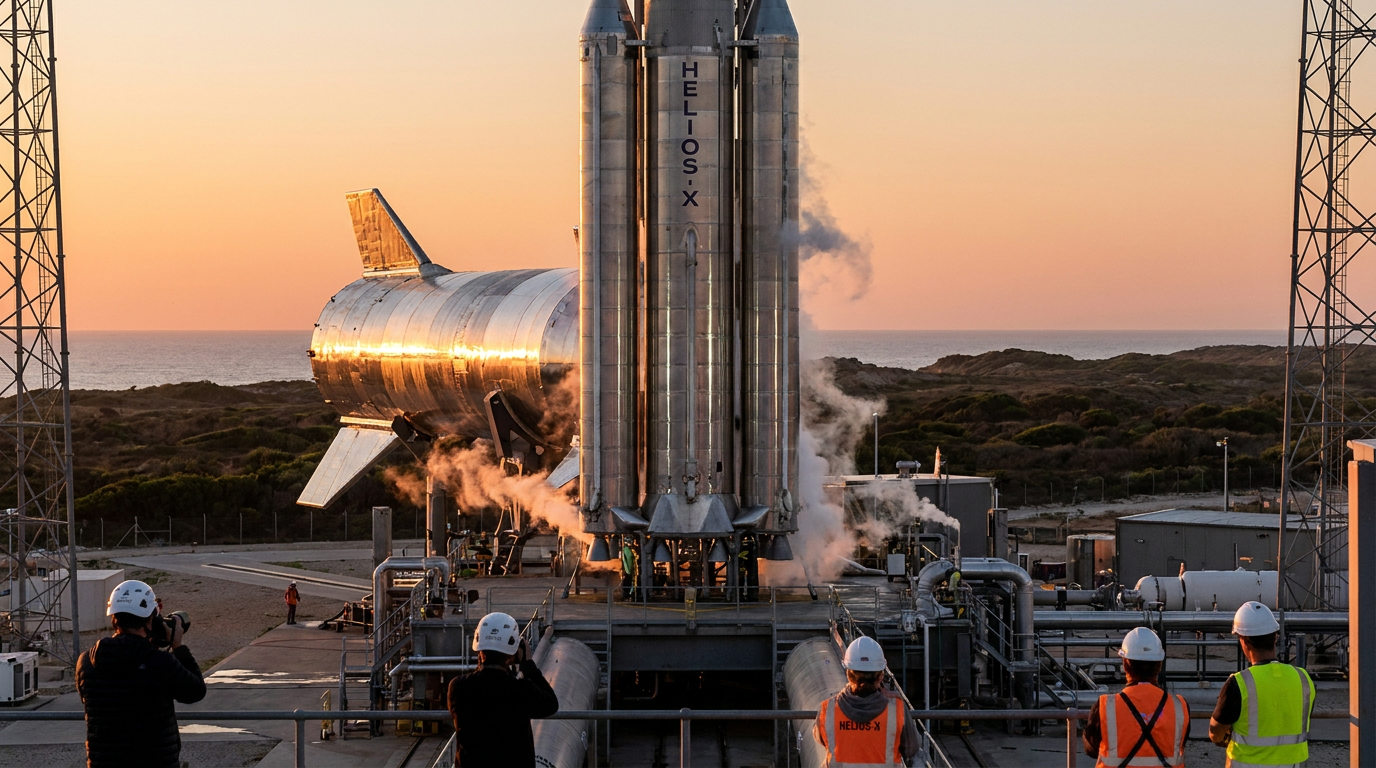
The public markets have officially crossed the Kármán line. Following its highly anticipated initial public offering, SpaceX revealed on Monday that underwriters exercised options to purchase an additional 83 million shares, injecting another $10.7 billion into the aerospace giant. The record-breaking debut has sent ripples through the financial world, cementing commercial spaceflight as a mainstream asset class rather than a speculative niche. For years, retail and institutional investors alike could only watch from the sidelines as private capital funded the rockets that are now reshaping global communications and logistics.[1][5]
The sheer scale of the capital raise demonstrates a voracious institutional appetite for space infrastructure. While early debates questioned whether a massive SpaceX public debut would drain liquidity from smaller competitors, the opposite appears to be happening. Shares of rival launch providers, such as Rocket Lab, rebounded sharply as analysts noted a halo effect lifting the entire sector's valuation multiples. Investors are increasingly viewing aerospace not as a zero-sum game, but as an expanding ecosystem where a rising tide lifts all viable orbital vehicles.[1][3]
At the heart of this financial enthusiasm is a bold claim about the future scale of orbital commerce. CEO Elon Musk recently issued a forecast projecting that SpaceX's annual revenue could eventually eclipse $1 trillion. While investment bankers initially modeled far more conservative figures during the IPO roadshow, the market is increasingly pricing in the possibility that space infrastructure will become as fundamental to the global economy as undersea internet cables, maritime shipping lanes, or terrestrial cellular networks.[2][6]
To understand how the space economy actually makes money today, investors must look beyond the spectacle of rocket launches. The foundational revenue stream is the launch service itself—acting as the freight rail of the cosmos. By pioneering reusable rocket architecture, companies have drastically lowered the cost per kilogram to low Earth orbit. This fundamental cost reduction unlocks entirely new business models for third-party satellite operators, academic institutions, and logistics companies who previously found space access prohibitively expensive.[4][6]

However, the true economic engine driving these astronomical valuations is data transmission. SpaceX's Starlink constellation represents the most lucrative near-term application of cheap space access. By blanketing the globe with thousands of low Earth orbit satellites, the company provides high-speed, low-latency internet to remote regions, maritime vessels, and commercial airlines. This shifts the core business model from episodic, capital-intensive hardware launches to recurring, high-margin software-as-a-service revenue, a transition that Wall Street traditionally rewards with premium valuation multiples.[3][5]
However, the true economic engine driving these astronomical valuations is data transmission.
The third pillar of the space economy relies on government and defense partnerships. National security apparatuses are increasingly pivoting away from legacy, bespoke military satellites toward distributed, commercially operated constellations. These lucrative government contracts provide a stable revenue floor, offsetting the high research and development costs associated with next-generation heavy-lift vehicles. By serving both civilian and defense needs, aerospace firms are effectively creating dual-use monopolies that offer immense downside protection for their investors.[4][6]
The data supports a rapid acceleration in sector-wide commercialization. According to the Space Foundation's latest industry reports, the global space economy is currently valued at roughly $800 billion, with commercial revenue—rather than government spending—accounting for nearly 80% of that total. This represents a structural inversion from the Apollo and Space Shuttle eras, where state agencies dictated all economic activity beyond the atmosphere. Today, private enterprise is the undisputed vanguard of orbital development.[4]
This influx of capital is not isolated to launch providers. A robust secondary ecosystem is emerging, comprising companies focused on satellite manufacturing, orbital debris removal, space-based solar power, and microgravity research. As the cost of access continues to fall, venture capital and public equity are flowing into these specialized niches, creating a diversified supply chain that mirrors the early days of the aviation industry. Investors are now able to build diversified portfolios entirely within the aerospace sector.[3][6]

Despite the optimism, the path to a trillion-dollar space economy is fraught with unique risks. Space remains an unforgiving operational environment where a single catastrophic anomaly can ground a fleet for months, instantly halting revenue generation and shattering investor confidence. Furthermore, the regulatory framework governing orbital traffic, spectrum allocation, and space debris mitigation is struggling to keep pace with the cadence of commercial launches, creating potential legal bottlenecks that could delay ambitious expansion plans.[5][6]
Financial analysts also caution against irrational exuberance. Valuing growth stocks in an emerging, hardware-heavy industry often leads to pricing them as mature, high-margin software entities. Skeptics argue that while the total addressable market for space services is undeniably vast, the capital expenditure required to maintain massive satellite constellations and develop interplanetary transport systems could compress long-term profit margins, leaving late-stage investors vulnerable to severe market corrections.[1][2]

Interestingly, macroeconomic and geopolitical developments are providing unexpected tailwinds for aerospace equities. Recent shifts in global security postures have prompted investors to seek growth opportunities in dual-use technologies that are insulated from traditional consumer spending downturns. Space infrastructure perfectly fits this thesis, offering commercial upside with sovereign backing. As nations race to secure their presence in orbit, commercial providers are perfectly positioned to act as the primary contractors for this new space race.[3][6]
As the dust settles on SpaceX's monumental public offering, the financial landscape has been permanently altered. The successful absorption of a multi-billion dollar IPO, coupled with strong secondary market performance, proves that public markets are ready to underwrite the next era of human expansion. For retail and institutional investors alike, the space economy is no longer science fiction; it is a tangible, rapidly scaling sector demanding serious portfolio consideration and rigorous financial analysis.[1][5]
How we got here
Early 2000s
Commercial spaceflight begins in earnest with the founding of private companies aiming to reduce launch costs.
2015
SpaceX successfully lands a first-stage orbital rocket booster, proving the financial viability of reusability.
2019
The first batch of Starlink satellites is launched, initiating the era of commercial mega-constellations.
June 2026
SpaceX completes a record-breaking IPO and secondary raise, cementing space as a major public asset class.
Viewpoints in depth
Aerospace Optimists
Proponents who view space as the next great infrastructure play.
This camp argues that reusable rockets have fundamentally broken the cost barrier to low Earth orbit, enabling entirely new industries to flourish. They view satellite broadband, space logistics, and eventual asteroid mining as the next great infrastructure play, akin to the laying of the early internet backbone. For these investors, the current valuations are entirely justified by the sheer size of the total addressable market.
Financial Skeptics
Analysts concerned with the immense capital requirements of spaceflight.
Cautious analysts point out that space remains a highly capital-intensive and physically risky business. They warn that sky-high valuations price in flawless execution, ignoring the potential for launch failures, orbital debris cascades, or regulatory bottlenecks that could delay revenue realization. This perspective emphasizes that hardware companies should not be valued with the same multiples as high-margin software firms.
Defense & Policy Strategists
Experts viewing the commercial boom through a national security lens.
This camp views the commercial space boom primarily through a geopolitical lens. They emphasize that robust commercial space capabilities are essential for national defense, advocating for continued government partnerships to ensure secure communications and orbital superiority. From this viewpoint, the commercial success of these companies is a vital component of modern statecraft.
What we don't know
- Whether the public market can sustain these high valuation multiples if a major launch anomaly occurs.
- How international regulators will manage the growing congestion and debris in low Earth orbit.
- The exact timeline for when emerging sectors like space manufacturing will become commercially viable.
Key terms
- Low Earth Orbit (LEO)
- An orbit relatively close to Earth's surface, typically at an altitude of 2,000 kilometers or less, which is ideal for communication satellites.
- Mega-constellation
- A network of hundreds or thousands of satellites working together to provide global coverage, such as broadband internet.
- Reusable Launch Vehicle (RLV)
- A rocket designed to be recovered and flown multiple times, drastically reducing the cost of accessing space.
- Dual-use technology
- Systems or hardware that have both civilian commercial applications and military capabilities.
Frequently asked
Why did SpaceX raise an additional $10.7 billion?
Underwriters exercised their option to buy more shares due to overwhelming institutional investor demand following the company's initial public offering.
How does the commercial space sector make money?
Currently, revenue is driven by commercial and government launch contracts, as well as recurring subscription fees from satellite internet services like Starlink.
Are other space companies benefiting from this IPO?
Yes, the successful debut has created a 'halo effect,' boosting the stock prices of rival aerospace firms by validating the sector's financial model to public markets.
Sources
Source coverage
6 outlets
3 viewpoints surfaced






[1]MarketWatchAerospace Bulls
SpaceX’s stock jumps as the company reveals its IPO has raised another $10.7 billion
Read on MarketWatch →[2]CNBCAerospace Bulls
Elon Musk makes sky-high trillion-dollar forecast for SpaceX revenue
Read on CNBC →[3]BloombergIndustry Researchers
Institutional Investors Flock to Aerospace as Space Economy Nears $1 Trillion
Read on Bloomberg →[4]Space FoundationIndustry Researchers
The Space Report 2026: Commercial Revenue Growth
Read on Space Foundation →[5]U.S. Securities and Exchange CommissionPragmatic Analysts
Space Exploration Technologies Corp. Form S-1 and Post-IPO Filings
Read on U.S. Securities and Exchange Commission →[6]Factlen Editorial TeamPragmatic Analysts
Synthesis by Factlen editorial team
Read on Factlen Editorial Team →


Every angle. Every day.
Get finance stories with full source coverage and perspective breakdowns delivered to your inbox.