
How Content Credentials Are Rebuilding Trust in Photography
As AI-generated images flood the internet, a new cryptographic standard called C2PA is embedding 'digital nutrition labels' directly into photos at the moment of capture.
By Factlen Editorial Team
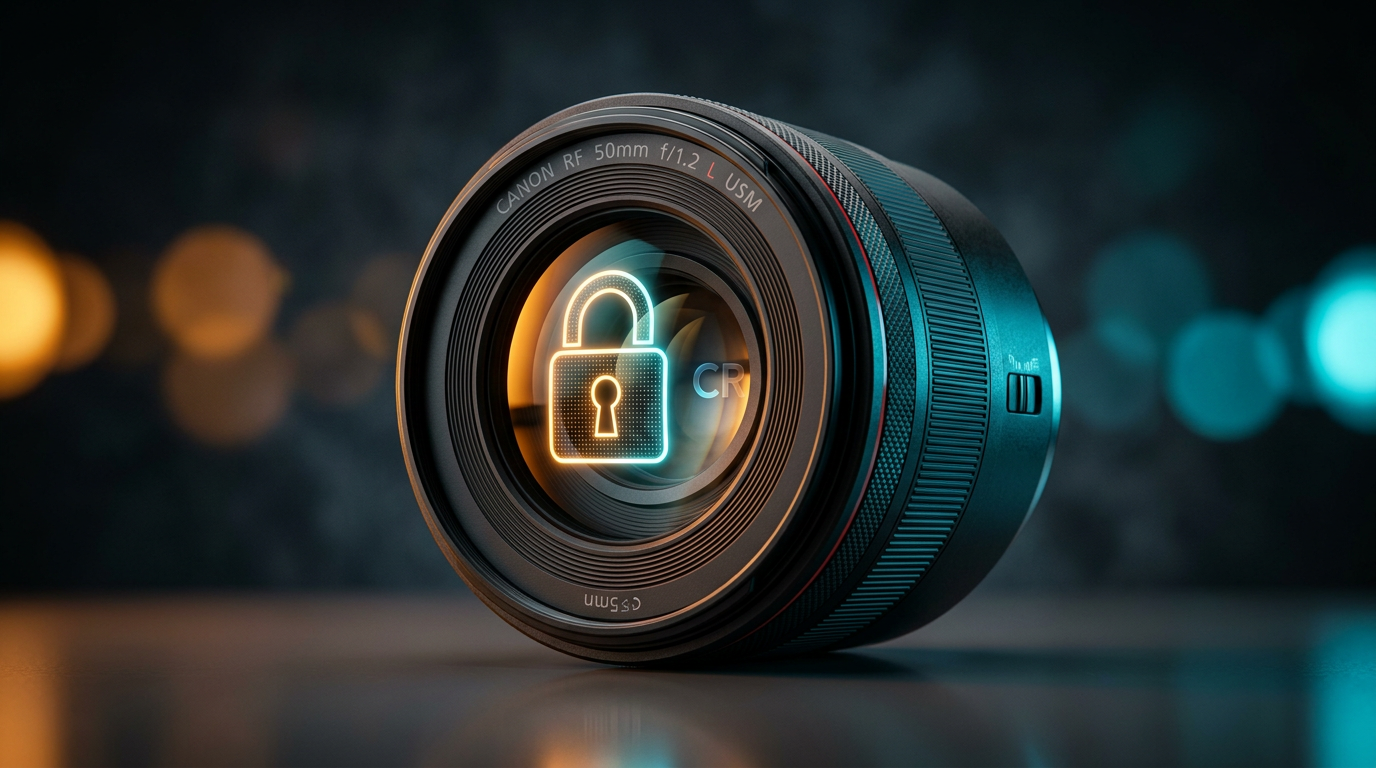
- Authenticity Advocates
- Tech and media coalitions pushing for a 'prove what's real' ecosystem.
- Hardware Manufacturers
- Camera and smartphone makers integrating the technology at the silicon level.
- Independent Analysts
- Observers synthesizing the impact of provenance technology on the broader media landscape.
What's not represented
- · Independent software developers adapting open-source tools to support the standard.
- · Social media platform engineers tasked with overhauling image-processing pipelines to preserve metadata.
Why this matters
As generative AI makes it effortless to create photorealistic fake images, traditional detection methods are failing. Content Credentials flip the script by mathematically proving what is real, offering a critical lifeline for trust in news, photography, and digital history.
Key points
- Content Credentials act as a 'digital nutrition label' for media, proving origin and edit history.
- The C2PA standard uses hardware-level cryptographic signing at the moment of capture.
- Leica pioneered the technology in 2023, followed by Sony, Canon, Nikon, and smartphone makers.
- The system does not forbid editing; it securely logs changes made in compliant software.
- The standard is opt-in and allows for secure redaction to protect photojournalist sources.
The internet is drowning in synthetic media. Between 2023 and 2025, tracked deepfake incidents surged by an estimated 900 percent, reaching over eight million cases globally. For years, the technology industry's primary response was to build artificial intelligence classifiers designed to detect fakes. But as generative models improved exponentially, detection became a losing battle. The paradigm needed to flip entirely: instead of trying to prove what is fake, the industry needed a reliable, mathematical way to prove what is real.[7]
Enter the Coalition for Content Provenance and Authenticity (C2PA), a joint standards effort founded by Adobe, Microsoft, Intel, the BBC, and others. Their solution is an open standard known to consumers as 'Content Credentials.' Think of it as a transparent digital nutrition label for media. Rather than forcing users to guess if a photo is authentic, Content Credentials provide a cryptographically secure, verifiable history of exactly where an image came from, who took it, and how it was subsequently altered.[1][4]
The authentication process begins the exact moment the camera's shutter clicks. In supported cameras, a dedicated hardware security chip generates a cryptographic signature and binds it to the image file before it ever hits the memory card. This signature locks in the 'assertions'—the date, time, location, camera model, and the photographer's identity. Because the signature is generated by an isolated hardware enclave rather than software, it is practically impossible for a bad actor to spoof the origin of the photo.[4][7]

The pioneer of this hardware-level authentication was Leica. In late 2023, the German manufacturer released the M11-P, the world's first camera with Content Credentials built directly into its internal processor. Leica framed the feature not merely as a technical novelty, but as a necessary evolution for the future of photojournalism. By embedding the certificate at the sensor level, Leica allowed photographers to create an unbroken, verifiable chain of authenticity from the point of capture all the way to publication.[6]
By 2026, the standard has moved from a niche luxury feature to an industry-wide baseline. Sony rolled out C2PA support across its professional hybrid and video lines, including the Alpha 1 II and Alpha 9 III. Canon followed suit with its flagship EOS R1 and R5 Mark II bodies. Nikon integrated the technology into models like the Z6 III, partnering directly with wire services like Agence France-Presse to ensure the credentials met the rigorous, fast-paced demands of global newsrooms.[3][5]
By 2026, the standard has moved from a niche luxury feature to an industry-wide baseline.
The technology is no longer restricted to high-end professional gear. Smartphone manufacturers have recognized the urgent need for provenance and begun embedding the technology at the chip level. Devices like the Google Pixel 10 and Samsung Galaxy S26 Ultra now support C2PA signing natively within their camera applications. By bringing cryptographic authenticity to the billions of photos captured daily by everyday consumers, these mobile integrations represent the most significant step toward making verifiable media the default standard across the entire internet.[2][3]

Crucially, Content Credentials do not forbid editing; they simply record it with total transparency. If a photographer takes a cryptographically signed raw file into Adobe Lightroom or Photoshop, the software reads the original signature and begins a new chain of custody. When the edited photo is exported, the C2PA manifest updates to show exactly which tools were used—whether that was a simple exposure adjustment, a color grade, or the introduction of a generative artificial intelligence fill to expand the frame.[4][7]
This transparent history is deliberately designed to be tamper-evident rather than tamper-proof. If a bad actor downloads a protected image, maliciously strips the metadata, or takes a screenshot to bypass the history, the cryptographic signature breaks permanently. The resulting file will simply show up to viewers as having 'no Content Credentials.' In a future where synthetic media is ubiquitous, the sudden absence of a credential on a highly sensational image becomes the immediate warning sign that the content cannot be trusted.[1][7]
Privacy remains a central, foundational concern for the coalition behind the standard. The system is strictly opt-in, ensuring that anonymous speech, casual photography, and activist documentation are not penalized. Furthermore, the system allows for secure, verified redaction. A photojournalist operating in a dangerous conflict zone can cryptographically redact their name or exact GPS coordinates to protect their safety. The manifest will log that a redaction occurred, but it will do so without breaking the underlying proof that the image originated from a real camera.[4]

The final, and perhaps most difficult, hurdle for the C2PA standard is widespread platform adoption. Historically, social media networks automatically stripped all metadata from uploaded images to save server space and protect user privacy. Now, a massive cross-industry push is underway to ensure platforms recognize, preserve, and prominently display the 'CR' Content Credentials pin on user feeds. This infrastructure overhaul is essential, as it allows everyday viewers to click and inspect the provenance of viral media with zero friction.[1][7]
As the volume of digital content continues to accelerate—with over 400 quintillion bytes generated daily around the globe—digital literacy must evolve alongside it. Content Credentials represent a fundamental, structural shift in how we consume information online. By providing a secure, transparent chain of custody from the camera sensor to the smartphone screen, the photography and technology industries are building a critical lifeboat of trust in an increasingly synthetic, AI-generated sea, ensuring reality can still be proven.[1][7]
How we got here
Feb 2021
Adobe, Microsoft, BBC, and others found the Coalition for Content Provenance and Authenticity (C2PA).
Oct 2023
Leica releases the M11-P, the world's first camera with built-in hardware support for Content Credentials.
Mid 2024
Major camera manufacturers including Sony, Canon, and Nikon begin rolling out C2PA support to their professional camera lineups.
2025–2026
Provenance technology expands to the consumer market, with chip-level integration arriving in flagship smartphones.
Viewpoints in depth
Authenticity Advocates
Tech and media coalitions pushing for a 'prove what's real' ecosystem.
Organizations like the Content Authenticity Initiative argue that the cat-and-mouse game of detecting AI deepfakes is unwinnable. Instead, they advocate for a zero-trust internet where media is assumed synthetic unless it carries cryptographic proof of origin. They view Content Credentials as the foundational infrastructure required to restore public trust in digital reality.
Hardware Manufacturers
Camera and smartphone makers integrating the technology at the silicon level.
For companies like Leica, Sony, and Nikon, hardware-level signing is both a premium feature for professionals and a necessary evolution of the camera itself. By embedding security certificates directly into the image processor, they ensure the chain of custody begins the millisecond light hits the sensor, making the resulting files virtually impossible to spoof.
Photojournalists & Newsrooms
Media organizations balancing authenticity with source protection.
Wire services and newsrooms rely on provenance to defend their reporting against accusations of 'fake news.' However, they emphasize that the standard must remain flexible. The ability to cryptographically redact sensitive metadata—such as the exact GPS coordinates of a vulnerable source—without breaking the image's overall authenticity signature is critical for frontline reporting.
Privacy Defenders
Advocates ensuring the standard does not become a surveillance tool.
Privacy and human rights groups support the fight against misinformation but warn against mandatory adoption. They stress that the C2PA standard must remain strictly opt-in. If platforms begin penalizing or suppressing images without Content Credentials, it could harm anonymous whistleblowers, activists, and casual users who simply wish to share photos without attaching a permanent, trackable identity.
What we don't know
- How quickly major social media platforms will update their infrastructure to preserve and display Content Credentials in user feeds.
- Whether consumers will actively check the provenance of viral images, or if the 'CR' pin will be ignored in fast-scrolling environments.
- How bad actors might attempt to exploit vulnerabilities in the signing infrastructure, as seen with temporary certificate revocations in early hardware rollouts.
Key terms
- C2PA
- The Coalition for Content Provenance and Authenticity, the cross-industry standards body that developed the technical framework for media authentication.
- Content Credentials
- The consumer-facing name and visual 'CR' pin that displays the provenance data attached to a digital file.
- Cryptographic Signature
- A secure digital fingerprint bound to a file that breaks if the file is altered by non-compliant tools, proving the data hasn't been tampered with.
- Manifest
- The secure bundle of metadata traveling inside the media file, containing the history of its creation, authorship, and edits.
- Tamper-evident
- A security design where interference cannot be physically prevented, but any unauthorized changes are immediately and clearly detectable.
Frequently asked
What happens if someone screenshots my protected photo?
The screenshot creates a brand new file without the cryptographic signature. The absence of the credential makes the tampering evident.
Does this technology prevent people from editing photos?
No. It simply records the edits. If you use compliant software like Photoshop, the manifest updates to log exactly what changes were made.
Is C2PA based on blockchain or cryptocurrency?
No. It uses standard public key cryptography to sign files, meaning it does not rely on a distributed ledger, cryptocurrency, or environmental energy drain.
Do I need to buy a new camera to use Content Credentials?
While hardware-level capture requires a supported device, anyone can attach Content Credentials to older files during the editing process using compliant software.
Sources
Source coverage
7 outlets
3 viewpoints surfaced





[1]Content CredentialsAuthenticity Advocates
Verify Media Authenticity
Read on Content Credentials →[2]Content Authenticity InitiativeAuthenticity Advocates
How it works - Content Authenticity Initiative
Read on Content Authenticity Initiative →[3]LumethicHardware Manufacturers
Every Camera That Supports C2PA Content Credentials in 2026
Read on Lumethic →[4]C2PAAuthenticity Advocates
C2PA and Content Credentials Explainer
Read on C2PA →[5]NikonHardware Manufacturers
Nikon Authenticity Service | C2PA Content Credentials Solution
Read on Nikon →[6]Adobe BlogAuthenticity Advocates
Leica Launches World's First Camera with Content Credentials Built-in
Read on Adobe Blog →[7]Factlen Editorial TeamIndependent Analysts
Synthesis by Factlen editorial team
Read on Factlen Editorial Team →


Every angle. Every day.
Get culture stories with full source coverage and perspective breakdowns delivered to your inbox.