
The Science of Koji: How the 'Magic Mold' is Transforming Modern Home Cooking
Once confined to traditional Asian fermentation, Aspergillus oryzae is now empowering home cooks to biologically unlock unprecedented umami and sweetness in their everyday meals.
By Factlen Editorial Team
- Modernist Chefs
- Pushing the boundaries of enzymatic flavor extraction on novel ingredients.
- Culinary Traditionalists
- Honoring the ancient, perfected techniques of Japanese fermentation.
- Food Scientists
- Analyzing the precise biochemical pathways of flavor creation.
- Home Cooks
- Seeking accessible, high-impact ways to elevate everyday meals.
What's not represented
- · Commercial MSG manufacturers
- · Industrial soy sauce producers
Why this matters
Understanding koji allows home cooks to harness biological enzymes rather than just heat, offering a natural, highly effective way to tenderize meats, accelerate browning, and build restaurant-quality umami without artificial additives.
Key points
- Koji (Aspergillus oryzae) is a domesticated mold that serves as the foundation for soy sauce, miso, and sake.
- Unlike bacterial ferments, koji acts as a biological flavor-extractor by releasing powerful digestive enzymes.
- Protease enzymes break down proteins into glutamic acid, naturally manufacturing intense umami flavors.
- Amylase enzymes convert complex starches into simple sugars, adding natural sweetness without refined additives.
- Shio koji, a simple mixture of koji rice, salt, and water, is becoming a staple marinade for home cooks.
- The free amino acids and sugars generated by koji dramatically accelerate the Maillard browning reaction during cooking.
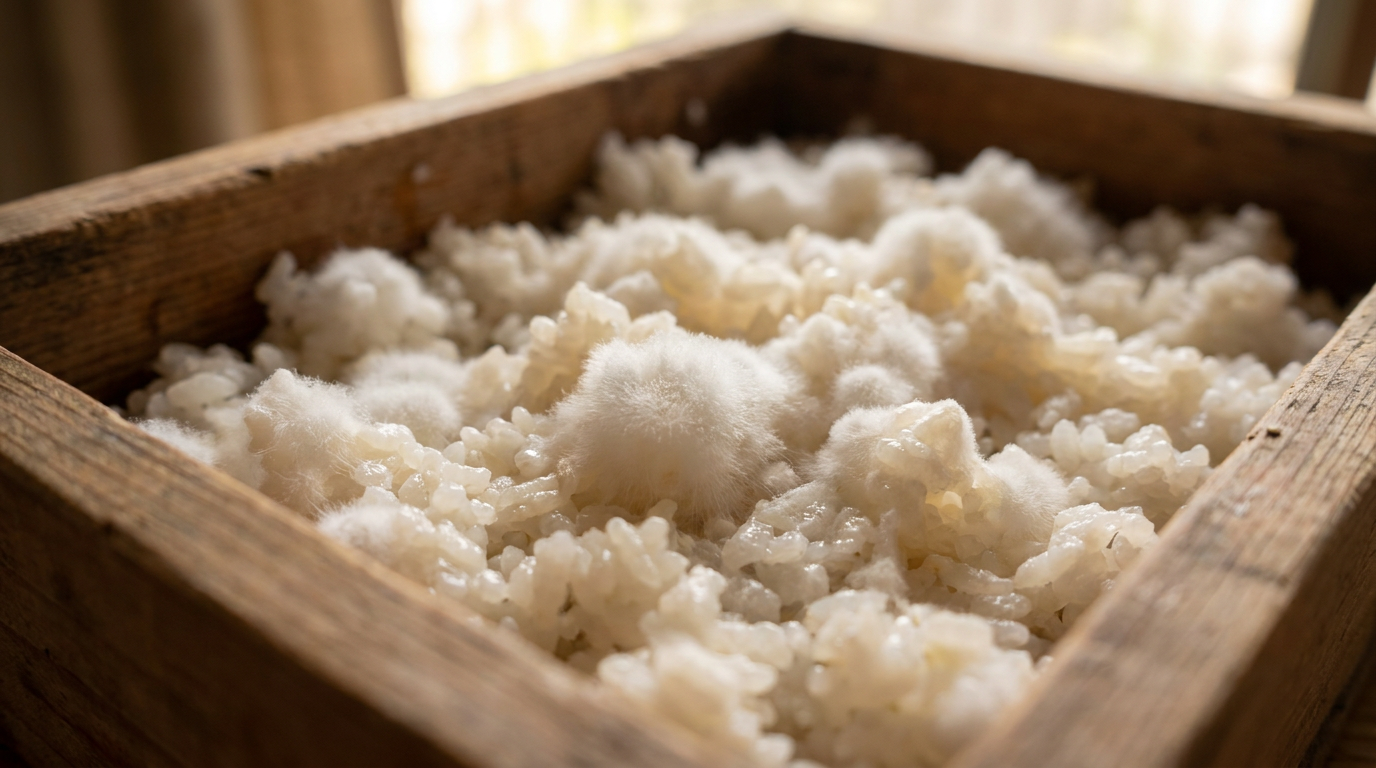
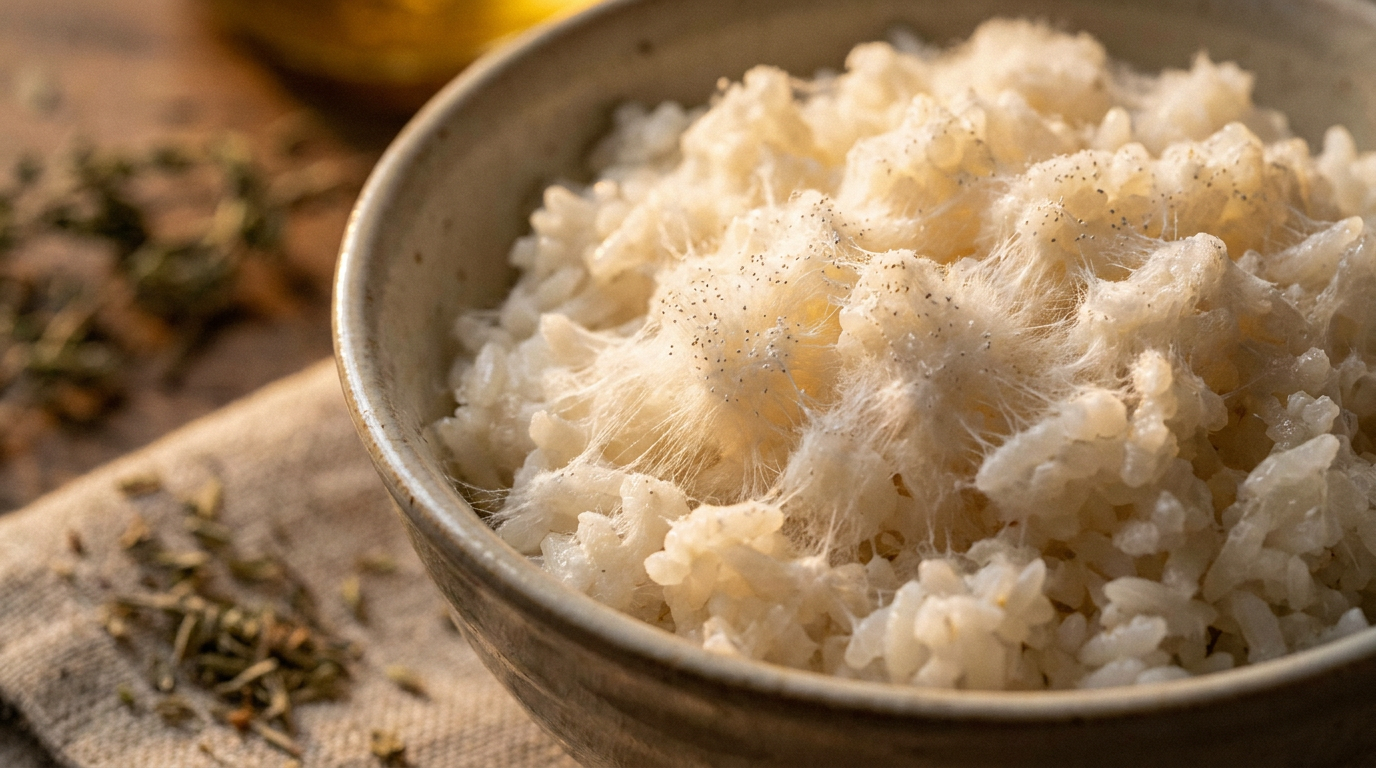
For most home cooks, the appearance of a fuzzy white mold in the kitchen is a signal to throw something away. But a growing movement of culinary enthusiasts is intentionally cultivating a specific, fluffy fungus to unlock flavors that traditional cooking methods simply cannot achieve. The organism is Aspergillus oryzae, better known by its Japanese name, koji. Described by chefs as having a tantalizingly floral, sweet, and woodsy aroma, this domesticated microbe is rapidly moving from the realm of professional restaurant laboratories into everyday home kitchens. By acting as a biological flavor-extractor, koji allows cooks to transform ordinary ingredients into hyper-real, deeply savory versions of themselves.[2][8]
While koji might feel like a modern culinary revelation in the West, it is the ancient, invisible architect of Asian cuisine. First isolated during the Shang dynasty in China, the mold has been meticulously cultured for thousands of years. In 2006, it was officially declared Japan's "national fungus" in recognition of its foundational role in the country's food culture. Without Aspergillus oryzae, there would be no soy sauce, no miso paste, no mirin, and no sake. For centuries, artisans have inoculated cooked grains—usually rice or barley—with koji spores, relying on the mold's natural life cycle to break down the complex structures of legumes and grains into the building blocks of flavor.[4][7]
The recent surge of interest among Western home cooks can be traced to a few highly influential culinary texts and innovators. René Redzepi and David Zilber’s The Noma Guide to Fermentation demystified the process, showing how the world's most acclaimed restaurant uses koji as the "secret sauce" behind its complex flavor profiles. Simultaneously, authors Rich Shih and Jeremy Umansky published Koji Alchemy, a comprehensive manual that encouraged cooks to apply the mold to non-traditional ingredients. Through these works, a technique once guarded by specialized artisans has been translated into an accessible framework for the adventurous home cook.[1][2]
To understand how koji works, it is crucial to distinguish it from other popular home ferments like sauerkraut, kimchi, or kombucha. Those foods rely primarily on bacteria or yeast to produce lactic acid or alcohol, which preserves the food and gives it a tangy flavor. Koji, on the other hand, is not primarily a microbial ferment in its culinary application; it is an enzymatic factory. As the filamentous fungus grows across its starchy substrate, it secretes a massive array of enzymes designed to digest the food around it. When cooks harness koji, they are actually harvesting these powerful enzymes to do the culinary heavy lifting.[5][8]

The most transformative of these enzymes are proteases, which target proteins. Proteins are essentially long, tightly coiled chains of amino acids that, in their intact form, have very little taste. Koji’s proteases act like microscopic scissors, snipping these long chains into individual, free amino acids. The most abundant of these is glutamic acid, the compound directly responsible for the sensation of umami—the deep, mouthwatering, savory taste found in rich broths and aged cheeses. By applying koji to protein-rich foods, cooks are biologically manufacturing umami from the inside out.[3][6]
Simultaneously, a second class of enzymes called amylases goes to work on carbohydrates. Just as proteins are chains of amino acids, starches are long, complex chains of sugar molecules that taste relatively bland on the human tongue. Amylases cleave these complex starches into simple monosaccharides, primarily glucose. This enzymatic action introduces a distinct, natural sweetness to the food without the addition of refined sugars. In traditional Japanese fermentation, this is the exact mechanism used to convert the starches in rice into the fermentable sugars needed to brew sake.[4][8]
Rounding out the enzymatic trifecta are lipases, which break down fats. Lipids are cleaved into free fatty acids, a process that contributes to what food scientists call "kokumi." While not a distinct taste like sweet or salty, kokumi translates to a sensation of richness, mouthfeel, and flavor continuity. When proteases, amylases, and lipases work in concert, they create a synergistic explosion of flavor. The resulting food is simultaneously sweeter, more savory, and richer than it was in its raw state, explaining why koji-treated ingredients are often described as tasting profoundly complex.[6][8]
Rounding out the enzymatic trifecta are lipases, which break down fats.
For home cooks looking to experiment, the undisputed gateway ingredient is shio koji, or salt koji. It requires only three ingredients: dried koji-inoculated rice (now widely available at Asian grocers or online), water, and salt. Mixed together and left at room temperature for seven to ten days, the rice breaks down into a chunky, porridge-like paste. The high salt concentration—typically between 8 and 12 percent—creates an environment that suppresses the growth of unwanted, spoilage-causing bacteria, while allowing the resilient koji enzymes to remain highly active and continue their work.[1][5]

While commercial bottles of shio koji are increasingly common on supermarket shelves, culinary experts strongly advocate for making it from scratch. To achieve shelf stability and prevent the bottles from exploding during transit, mass-market producers often pasteurize their shio koji or add alcohol. This heat treatment effectively denatures and destroys the very enzymes that make the ingredient so magical. A homemade batch, teeming with active proteases and amylases, acts as a living marinade that fundamentally alters the cellular structure of whatever it touches.[8]
When used as a marinade for meats, active shio koji performs multiple functions simultaneously. The enzymes lower the surface pH of the meat, which gently tenderizes the muscle fibers without turning them stringy, a common pitfall of highly acidic marinades like citrus or vinegar. Furthermore, the salt content draws moisture to the surface through osmosis, slightly dehydrating the exterior. This combination of tenderization and surface dehydration creates the perfect conditions for achieving a flawless, restaurant-quality sear in a home skillet.[5][8]
The true magic of a koji marinade reveals itself when the food hits a hot pan, thanks to the Maillard reaction. This chemical reaction between amino acids and reducing sugars is what gives browned food—from seared steaks to toasted bread—its distinctive, complex flavor. Because koji has already spent hours breaking down the food's proteins into free amino acids and its starches into simple sugars, the surface of the meat is essentially primed with Maillard fuel. When exposed to temperatures between 140 and 165 degrees Celsius, koji-marinated foods brown exponentially faster and develop a much deeper roasted flavor than untreated foods.[3][5]

Beyond simple marinades, modernist chefs are pushing koji into uncharted territory. Chef Jeremy Umansky famously pioneered a technique of rapidly dry-aging steaks by dusting them directly with koji spores or koji-inoculated rice flour. In a traditional dry-aging environment, naturally occurring enzymes take weeks or months to break down the meat's connective tissue and develop funky, complex flavors. By introducing the hyper-efficient enzymes of Aspergillus oryzae, Umansky achieved similar tenderization and flavor development in a matter of days, a technique that adventurous home cooks are now replicating in their own refrigerators.[2][3]
The mold is also being used to reinvent the concept of miso itself. Traditionally, miso is a solid-state fermentation of soybeans, salt, and koji. However, because koji's enzymes are agnostic to their substrate, they will break down the proteins and starches of almost any ingredient. Chef David Chang’s culinary laboratory famously developed "Hozon," a miso-style paste made by fermenting pistachios, chickpeas, and sunflower seeds with koji. Home cooks are now following suit, utilizing leftover bread, pumpkin seeds, or even coffee grounds to create bespoke, umami-rich pastes that reflect their local pantry rather than traditional Japanese ingredients.[3][7]
As home cooks become more advanced, they learn to manipulate the fermentation environment to favor specific flavor profiles. The balance between protease (savory) and amylase (sweet) activity is highly temperature-dependent. For instance, if a cook wants to produce a sweeter miso or a batch of amazake (a sweet, non-alcoholic rice drink), they will incubate the koji at a relatively high temperature of 35 to 38 degrees Celsius, which maximizes amylase production. Conversely, lower temperatures are utilized to favor protease activity, resulting in saltier, more savory ferments.[4]

Despite its near-magical properties, cooking with koji requires an understanding of its limits. The enzymatic breakdown is relentless, meaning marination times must be carefully monitored. While a thick steak might benefit from a 12-hour soak in shio koji, a delicate white fish fillet can turn to unappetizing mush in just a few hours as the proteases completely dissolve its structural integrity. Additionally, maintaining the correct salt ratios during fermentation is critical; too little salt, and the environment becomes hospitable to dangerous pathogens before the enzymes can do their work.[1][5]
Ultimately, the integration of koji into the modern home kitchen represents a fundamental paradigm shift in how we approach cooking. For generations, Western culinary tradition has relied primarily on the application of heat to extract and develop flavor. Koji introduces the concept of biological flavor extraction, utilizing the invisible machinery of enzymes to unlock the hidden potential within our food. Whether it’s a simple weeknight chicken breast elevated by a shio koji marinade, or a months-long experiment in custom pistachio miso, Aspergillus oryzae is proving that the most powerful tool in the kitchen might just be a microscopic mold.[7][8]
How we got here
4th Century B.C.
The process of making fermented bean paste using molds is first documented in China during the Shang dynasty.
725 AD
The Japanese book Harima no Kuni Fudoki first mentions koji outside of China, describing the cultivation of fungal spores from the air.
2006
The Brewing Society of Japan officially declares Aspergillus oryzae as the 'national fungus' of Japan.
2018
The publication of The Noma Guide to Fermentation brings koji techniques into the mainstream Western culinary consciousness.
Viewpoints in depth
Culinary Traditionalists
Honoring the ancient, perfected techniques of Japanese fermentation.
For traditionalists, koji is inseparable from the cultural heritage of Japan. They emphasize that the centuries of refinement that went into producing soy sauce, miso, and sake cannot be easily replicated in a weekend kitchen experiment. This camp argues that while modern applications are interesting, the true mastery of Aspergillus oryzae lies in the subtle, seasonal variations and deep, slow fermentations practiced by heritage artisans.
Modernist Chefs
Pushing the boundaries of enzymatic flavor extraction on novel ingredients.
Modernist chefs view koji not as a recipe, but as a biological tool. By divorcing the mold from its traditional substrates of rice and soybeans, they are discovering that its enzymes can transform almost anything. From rapid-aging steaks to fermenting pistachios into savory pastes, this camp champions experimentation, arguing that the future of gastronomy lies in understanding and manipulating these microscopic chemical reactions.
Food Scientists
Analyzing the precise biochemical pathways of flavor creation.
For food scientists, the magic of koji is purely chemical. They focus on the specific strains of Aspergillus oryzae and the exact temperatures required to optimize protease versus amylase production. This perspective is crucial for food safety and industrial scaling, ensuring that the delicate balance of salt, pH, and temperature prevents pathogenic growth while maximizing the release of glutamic acid and simple sugars.
Home Cooks
Seeking accessible, high-impact ways to elevate everyday meals.
The home cooking community is less concerned with the deep biochemistry or the strict traditions, and more focused on practical results. For them, shio koji is a revelation—a simple, three-ingredient mixture that can sit on the counter and subsequently make a Tuesday night chicken breast taste like it came from a high-end restaurant. This camp values the democratization of fermentation, turning a complex science into an everyday pantry staple.
What we don't know
- How the widespread home cultivation of various Aspergillus strains might lead to unintended cross-fermentations in domestic kitchens.
- The full extent to which koji enzymes remain active and provide prebiotic benefits within the human digestive tract after consumption.
- Whether industrial food producers will successfully scale modernist koji applications, like rapid dry-aging, without compromising the nuanced flavors achieved in small batches.
Key terms
- Aspergillus oryzae
- The scientific name for the koji mold, a domesticated fungus used for centuries in Asian fermentation.
- Protease
- An enzyme that breaks down long protein chains into individual amino acids, creating savory flavors.
- Amylase
- An enzyme that breaks down complex starches into simple, sweet-tasting sugars.
- Shio Koji
- A versatile Japanese marinade made by fermenting koji-inoculated rice with salt and water.
- Umami
- The fifth basic taste, characterized by a deep, savory, meaty flavor, primarily driven by glutamic acid.
- Maillard Reaction
- A chemical reaction between amino acids and reducing sugars that gives browned food its distinctive roasted flavor.
Frequently asked
What exactly is koji?
Koji is a domesticated, filamentous fungus (Aspergillus oryzae) that is grown on cooked grains. It secretes powerful enzymes that break down proteins and starches into flavorful amino acids and sugars.
Is it safe to eat mold?
Yes. Aspergillus oryzae has been safely cultivated for thousands of years. It is a non-pathogenic strain specifically domesticated for food production, much like the mold used in blue cheese.
What does shio koji taste like?
Shio koji is a savory, slightly sweet, and deeply umami-rich paste. It often carries a floral or fruity aroma, and acts as a natural flavor enhancer when added to other foods.
Can I over-marinate meat with koji?
Yes. Because koji contains highly active proteases, leaving delicate proteins like fish in the marinade for too long will break down the muscle fibers excessively, resulting in an unappetizing mushy texture.
Sources
Source coverage
8 outlets
4 viewpoints surfaced








[1]Food52Modernist Chefs
Yes, You Can Make Miso Paste at Home!
Read on Food52 →[2]Science FridayModernist Chefs
Koji: The Mold You Want In Your Kitchen
Read on Science Friday →[3]Science Meets FoodHome Cooks
Koji in the Kitchen
Read on Science Meets Food →[4]National Institutes of HealthFood Scientists
Enzymes in Koji and Miso Production
Read on National Institutes of Health →[5]Cosmos SocietyFood Scientists
The Science Behind Shio Koji
Read on Cosmos Society →[6]EdlongFood Scientists
Umami Fermentation in Soy-Based Foods
Read on Edlong →[7]Noma ProjectsCulinary Traditionalists
Miso, but not really...
Read on Noma Projects →[8]Factlen Editorial TeamHome Cooks
Synthesis by Factlen editorial team
Read on Factlen Editorial Team →
Every angle. Every day.
Get food drink stories with full source coverage and perspective breakdowns delivered to your inbox.