
How the U.S.-Iran Peace Deal Will Lower Gas Prices and Ease Global Inflation
The reopening of the Strait of Hormuz has triggered a sharp drop in global crude oil prices. While the 'rocket and feather' effect means pump prices will take weeks to fully adjust, the ceasefire offers a massive deflationary relief valve for the broader economy.
By Factlen Editorial Team
- Consumer & Retail Analysts
- Focused on the timeline for retail gas price drops and household budget relief.
- Global Energy Monitors
- Focused on crude oil supply chains, maritime chokepoints, and geopolitical risk premiums.
- Macroeconomic Policymakers
- Focused on how energy costs filter into broader inflation metrics and influence central bank decisions.
What's not represented
- · Alternative Energy Producers
- · Middle Eastern Logistics Operators
Why this matters
Energy costs act as a hidden tax on everything from household budgets to the price of groceries. The resumption of normal oil transit removes a major inflationary pressure, saving consumers money at the pump and giving central banks room to stabilize interest rates.
Key points
- A 60-day ceasefire between the U.S. and Iran has reopened the Strait of Hormuz, crashing global crude oil prices.
- The strait normally handles roughly 20 percent of the world's daily petroleum consumption.
- Retail gas prices will take several weeks to drop due to the 'rocket and feather' economic effect.
- The drop in energy costs will provide significant deflationary relief, lowering shipping costs and easing pressure on central banks.
The weekend announcement of a 60-day ceasefire and framework peace deal between the United States and Iran has triggered an immediate and profound recalibration across global financial markets. West Texas Intermediate and Brent crude prices plummeted within hours of the diplomatic breakthrough, signaling the potential end of a months-long geopolitical standoff that had severely disrupted global energy supply chains. For months, the escalating conflict had cast a dark shadow over international trade, forcing energy traders to price in worst-case scenarios and driving up the cost of raw materials worldwide. The sudden de-escalation has essentially popped the speculative bubble that had formed around oil futures, offering a sudden wave of relief to importing nations. As the geopolitical risk premium evaporates from the market, economists are rapidly adjusting their forecasts, shifting their focus from crisis management to the mechanics of economic recovery and inflation relief.[2][5]
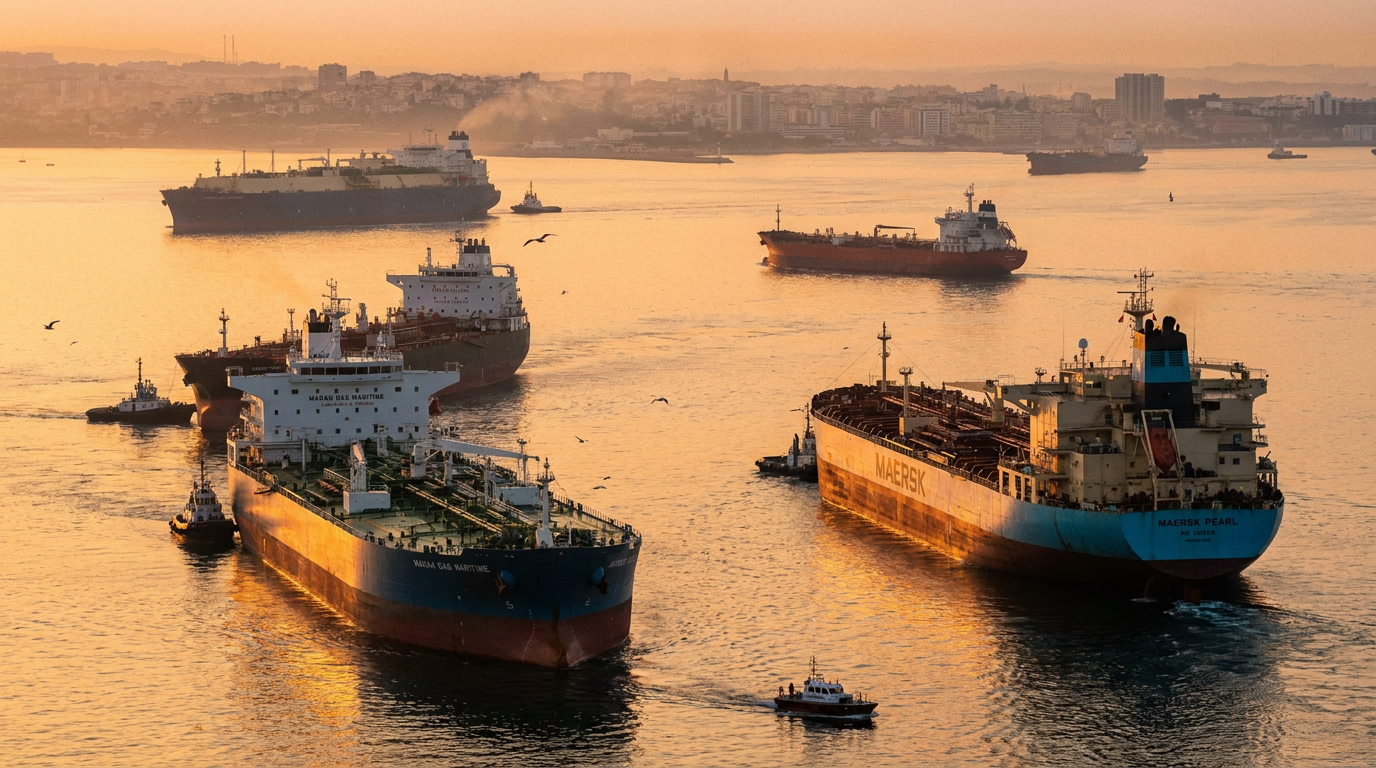
The defining economic bottleneck of the recent conflict was the effective closure of the Strait of Hormuz, a narrow and highly vulnerable maritime chokepoint situated between Oman and Iran. Under normal peacetime conditions, this vital waterway handles roughly 20 to 21 million barrels of crude oil and petroleum liquids per day. To put that volume into perspective, it represents approximately 20 percent of total global petroleum consumption and more than a quarter of all seaborne traded oil. The strait is the primary artery for exports from Saudi Arabia, the United Arab Emirates, Kuwait, and Iraq, making it the single most important energy transit route on the planet. When hostilities choked off this passage, the global economy suffered an acute and immediate supply shock, as millions of barrels of essential energy were suddenly trapped behind a wall of geopolitical risk.[3]
The consequences of that maritime blockade rippled outward with devastating speed, hitting consumer wallets long before the diplomatic negotiations began. Buyers in Asia, Europe, and the Americas were forced to scramble for alternative, significantly more expensive shipping routes, such as diverting tankers around the Cape of Good Hope. This sudden supply constraint and the associated spike in freight insurance premiums pushed retail gasoline prices well past the psychologically significant $4-per-gallon mark across much of the United States. For the average household, the surge in fuel costs acted as a regressive tax, eating into disposable income and forcing difficult choices at the grocery store. The sheer speed of the price increases highlighted the fragility of a global economy that remains deeply tethered to the uninterrupted flow of fossil fuels through a handful of narrow geographic corridors.[1][3]
Now, with the diplomatic breakthrough securing a resumption of safe transit through the Persian Gulf, the immediate question for everyday consumers is when the relief at the wholesale level will actually translate to cheaper fill-ups at the local gas station. While crude oil futures dropped instantly on the trading floors of New York and London, retail prices operate on a fundamentally different and much slower timeline. The disconnect often frustrates drivers, who see headlines about crashing oil prices but still face elevated totals at the pump. Understanding this delay requires looking past the geopolitical headlines and examining the localized mechanics of fuel distribution, where independent station owners, regional refiners, and complex supply contracts dictate the final price displayed on the roadside marquee.[1]

Economists and energy analysts refer to this delayed transmission mechanism as the "rocket and feather" effect, a well-documented phenomenon in retail fuel markets. When crude oil prices spike due to a crisis, retail gas stations raise their prices almost immediately—shooting up like a rocket. They do this not necessarily out of greed, but out of self-preservation; they must generate enough immediate cash flow to cover the anticipated higher replacement cost of their next underground tank delivery. If a station owner sells their current inventory at the old, cheaper price, they will not have enough capital to buy the new, more expensive fuel required to keep their business operational the following week.[6]
Conversely, when crude prices collapse—as they did following the ceasefire announcement—retail prices drift down slowly, descending like a feather. Station owners operate on notoriously thin margins during price spikes, often absorbing some of the wholesale cost increases to avoid driving away local customers. When wholesale costs finally drop, these retailers tend to hold their pump prices steady for as long as local competition allows. This deliberate lag allows them to absorb the wider profit spread and recoup the financial losses they sustained during the upward price shock. Only when a competing station across the street decides to lower its prices to capture more volume does the downward cascade truly begin, eventually bringing the local market back into equilibrium.[6][7]
The complex industrial refining process introduces yet another layer of delay into the pricing equation. The industry relies on a benchmark known as the 3-2-1 crack spread, which represents the theoretical profit margin of refining three barrels of crude oil into two barrels of gasoline and one barrel of distillate fuel, such as diesel. This spread dictates how efficiently wholesale price changes reach the end consumer. Even with cheaper crude oil suddenly available on the global market, refineries take weeks to physically process the raw material and distribute the newly priced inventory through pipelines and tanker trucks. Furthermore, if refining capacity is tight due to seasonal maintenance or unexpected outages, the bottleneck simply shifts from the crude supply to the refined product supply, keeping pump prices elevated.[6]
The complex industrial refining process introduces yet another layer of delay into the pricing equation.
Despite these structural lags and the frustrations they cause, the downward trajectory for consumer fuel costs is now firmly locked in. Industry analysts and market watchers expect the national average for a gallon of regular gasoline to steadily decline over the next four to eight weeks, providing a much-needed boost to consumer sentiment heading into the summer driving season. This optimistic forecast is entirely contingent on the 60-day ceasefire holding and the Strait of Hormuz remaining fully operational without further military harassment of commercial vessels. If the peace framework transitions into a durable, long-term agreement, the steady flow of Middle Eastern crude will ensure that the retail price drops are not just a temporary blip, but a sustained return to historical pricing norms.[1][5]
The implications of this anticipated price drop extend far beyond the gas pump, offering a powerful and unexpected relief valve for broader macroeconomic inflation. Energy is the foundational input cost for virtually every sector of the modern industrialized economy, acting as a hidden tax on everything from manufacturing to agriculture. When energy prices soar, the cost of producing and moving goods rises in tandem, forcing businesses to pass those expenses onto consumers in the form of higher retail prices. The reversal of this trend means that the inflationary pressure that has been squeezing the global economy is finally beginning to vent, setting the stage for a broader stabilization of the cost of living across multiple consumer categories.[8]

Directly, household energy and motor fuels account for roughly 7.5 percent of the total weighting in the United States Consumer Price Index, the primary metric used to track inflation. Because energy prices are highly volatile, they can disproportionately swing the headline inflation number from month to month. A sustained drop in these direct costs will immediately pull down the headline CPI figures in the coming reporting periods, providing a stark visual confirmation that the worst of the recent inflationary spike is over. For households that have been forced to dedicate an increasingly large share of their monthly budget to basic utilities and commuting costs, this direct reduction offers immediate and tangible financial relief.[4]
Indirectly, the economic relief provided by the ceasefire is even more profound and far-reaching. Diesel fuel is the lifeblood of global logistics; it powers the freight trucks, freight trains, and massive cargo ships that move consumer goods from factories to store shelves. When diesel prices fall in response to cheaper crude oil, the cost of transporting everything from fresh groceries to consumer electronics decreases significantly. This eases the intense margin pressure on retailers and logistics companies, who have spent the last several months passing their elevated fuel surcharges onto the end consumer. As shipping costs normalize, the prices of everyday goods are expected to stabilize, providing a secondary wave of deflationary relief that will ripple through the economy long after gas prices have settled.[4][8]
For central banks around the world, and particularly for the United States Federal Reserve, the timing of the geopolitical peace deal is incredibly fortuitous. Policymakers have been locked in a tense battle against sticky, persistent inflation, utilizing aggressive interest rate hikes to cool consumer demand. An energy-driven supply shock, like the one caused by the Strait of Hormuz closure, threatened to completely derail those efforts, potentially forcing central banks into the uncomfortable position of keeping interest rates higher for longer just to counteract the rising cost of oil. The sudden resolution of the conflict removes this massive external variable from their economic models, allowing them to refocus on domestic economic indicators.[8]
The sudden removal of the geopolitical risk premium from global oil markets gives the Federal Reserve crucial breathing room as it plots its monetary policy for the remainder of the year. With energy costs shifting rapidly from an inflationary driver to a deflationary tailwind, central bankers can evaluate core economic data without the distortion of a localized, unpredictable war. This newfound clarity reduces the likelihood of emergency rate hikes and increases the probability of a "soft landing" for the economy, where inflation is brought back to the target rate without triggering a widespread recession. The peace deal has effectively done the heavy lifting that monetary policy alone could not achieve.[8]

However, seasoned energy monitors and geopolitical analysts caution that the market has not entirely returned to its pre-conflict baseline, and a degree of vigilance remains necessary. Because the current diplomatic agreement is structured as a 60-day ceasefire framework rather than a finalized, permanent peace treaty, institutional traders are still pricing in a fractional risk premium. The memory of the recent supply shock is still fresh, and energy markets remain highly sensitive to any rhetoric or minor skirmishes that could threaten the fragile truce. Until a comprehensive, binding agreement is signed and sealed, a small portion of the recent price drop will be held back by the lingering possibility that hostilities could resume.[2][5]
Ultimately, the reopening of the Strait of Hormuz and the subsequent drop in crude oil prices represent one of the most significant and broadly positive economic developments of the year. As the "feather" effect slowly brings down retail pump prices over the coming weeks, consumers and businesses alike are poised to benefit from a broad-based reduction in the cost of living and operating. The resolution of this geopolitical crisis serves as a powerful reminder of how interconnected global diplomacy and local economies truly are. For the average citizen, the peace deal is not just a triumph of international relations; it is a tangible, measurable improvement in their daily financial reality.[1][8]
How we got here
Early 2026
Hostilities escalate, effectively closing the Strait of Hormuz to commercial oil transit.
Spring 2026
Global crude prices spike, pushing U.S. retail gasoline averages above $4 per gallon.
June 14, 2026
The U.S. and Iran agree to a 60-day ceasefire framework, immediately crashing crude oil futures.
Viewpoints in depth
Consumer & Retail Analysts
Focused on the timeline for retail gas price drops and household budget relief.
This camp emphasizes the friction between wholesale and retail markets. While they celebrate the crude price drop, they caution consumers not to expect overnight miracles at the pump. They point to the 'rocket and feather' phenomenon, noting that gas station operators will likely use the initial drop in wholesale costs to repair their own profit margins before passing the full savings onto drivers. Their primary metric of success is the eventual stabilization of the national average price over the next two months.
Global Energy Monitors
Focused on crude oil supply chains, maritime chokepoints, and geopolitical risk premiums.
Energy monitors view the ceasefire through the lens of maritime logistics and global supply security. They argue that the Strait of Hormuz is too critical to global stability to be used as a geopolitical bargaining chip, noting that the 20 million barrels per day it handles cannot be easily rerouted. While they acknowledge the immediate price relief, this camp remains cautiously focused on the fragility of the 60-day framework, warning that any breakdown in talks could instantly snap the risk premium back into the market.
Macroeconomic Policymakers
Focused on how energy costs filter into broader inflation metrics and influence central bank decisions.
For macroeconomic analysts and central bankers, the peace deal is a massive deflationary gift. This perspective looks past the gas pump to the broader supply chain, tracking how cheaper diesel lowers freight costs and eventually reduces the price of consumer goods. They argue that removing the artificial energy shock gives the Federal Reserve the clarity it needs to assess underlying economic health, potentially accelerating the timeline for interest rate normalization.
What we don't know
- Whether the 60-day ceasefire will successfully transition into a permanent, binding peace treaty.
- Exactly how long local gas stations will hold their prices steady to pad margins before local competition forces them to lower rates.
Key terms
- Strait of Hormuz
- A narrow maritime chokepoint between Oman and Iran that handles roughly 20 percent of the world's daily petroleum consumption.
- Rocket and Feather Effect
- An economic phenomenon where retail gas prices shoot up quickly when crude oil rises, but drift down slowly when crude falls.
- 3-2-1 Crack Spread
- An industry benchmark representing the profit margin of refining three barrels of crude oil into two barrels of gasoline and one barrel of distillate fuel.
Frequently asked
Why haven't gas prices dropped yet?
Retail gas stations operate on a delay. They must sell through their existing, more expensive fuel inventory before they can pass the savings of cheaper crude oil onto consumers.
How much oil goes through the Strait of Hormuz?
Under normal conditions, the strait handles between 20 and 21 million barrels of crude oil and petroleum liquids every single day.
Will this lower the cost of groceries?
Yes, eventually. Cheaper crude oil leads to cheaper diesel fuel, which significantly lowers the freight and shipping costs for transporting consumer goods to stores.
Sources
Source coverage
8 outlets
3 viewpoints surfaced







[1]MarketWatchConsumer & Retail Analysts
Here’s when gas prices will go down now that there’s a deal to end the Iran war
Read on MarketWatch →Oil prices decline after U.S.-Iran agree to framework of peace deal
Read on MarketWatch →[3]U.S. Energy Information AdministrationGlobal Energy Monitors
The Strait of Hormuz is the world's most important oil transit chokepoint
Read on U.S. Energy Information Administration →[4]Bureau of Labor StatisticsMacroeconomic Policymakers
Measuring Price Change in the CPI: Household energy
Read on Bureau of Labor Statistics →[5]ReutersGlobal Energy Monitors
Oil plunges as U.S.-Iran ceasefire eases Hormuz fears
Read on Reuters →[6]BloombergConsumer & Retail Analysts
The 'Rocket and Feather' Effect: Why Pump Prices Will Take Weeks to Reflect Crude Drop
Read on Bloomberg →[7]Federal Reserve Economic DataMacroeconomic Policymakers
US Regular All Formulations Gas Price
Read on Federal Reserve Economic Data →[8]Financial TimesMacroeconomic Policymakers
Iran peace framework offers unexpected inflation relief for central banks
Read on Financial Times →
More in finance
See all 7 stories →AI Infrastructure
Nvidia Taps Bond Market for $20 Billion to Fuel Next-Generation AI Buildout
0 sources

Stablecoins
How Near-Zero Fees and Stablecoins Finally Made Crypto Useful for Everyday Payments
0 sources

Social Security
How the Social Security Earnings Test Works in 2026
0 sources

Retirement Rules
How Working in Retirement Affects Your Social Security Benefits
0 sources

Every angle. Every day.
Get finance stories with full source coverage and perspective breakdowns delivered to your inbox.