
UK Announces Sweeping Social Media Ban for Children Under 16
The British government has unveiled landmark legislation to ban under-16s from major social media platforms by Spring 2027, alongside new restrictions on gaming and livestreaming.
By Factlen Editorial Team
- Government & Child Safety Advocates
- Argues that social media causes profound harm to children and requires strict state intervention to protect them.
- Technology Industry
- Warns that blanket bans will drive teenagers to unregulated, less-safe platforms and sever important social connections.
- Digital Privacy Advocates
- Raises concerns that enforcing the ban will require invasive age-verification systems that compromise anonymity for all users.
- Skeptics & Critics
- Questions the technical feasibility of the ban and argues it fails to address the root causes of algorithmic harm.
What's not represented
- · Teenagers directly affected by the ban
- · Mental health professionals treating social media addiction
Why this matters
This landmark legislation fundamentally changes how children interact with the internet, forcing major tech platforms to overhaul their age-verification systems and potentially ending online anonymity for all users.
Key points
- The UK will ban children under 16 from major social media platforms, including TikTok, Instagram, and YouTube, by Spring 2027.
- The legislation goes further than other nations by also blocking under-16s from livestreaming and communicating with strangers on gaming sites.
- Private messaging applications like WhatsApp and Signal are exempt from the restrictions.
- Tech companies will be responsible for enforcing the age limits and face substantial fines for non-compliance.
- Critics warn the ban could drive teenagers to unregulated sites and require invasive age-verification for adult users.
The United Kingdom has announced a sweeping ban on social media for children under 16, marking one of the world's most aggressive regulatory crackdowns on major technology platforms.[1][2]
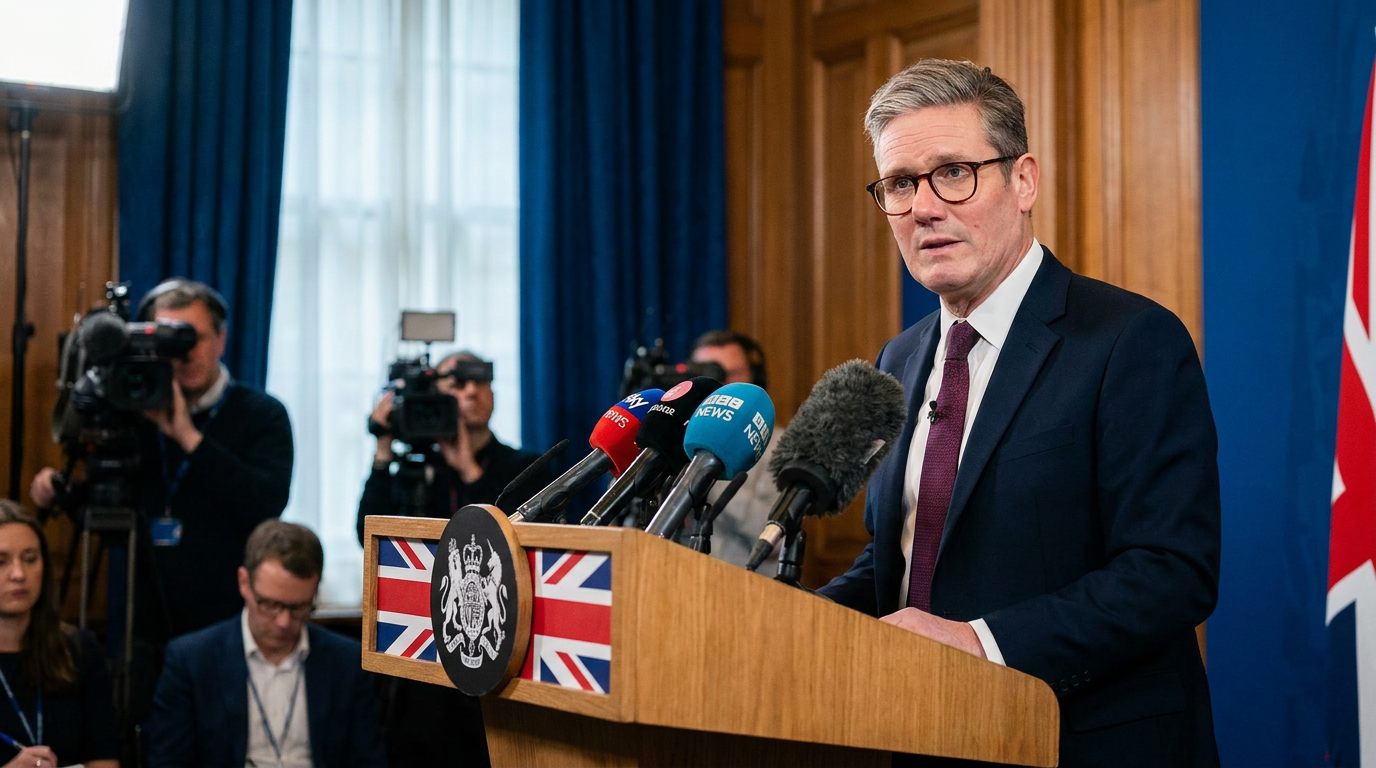
Prime Minister Keir Starmer unveiled the landmark policy on Monday, declaring that the state must step in to protect children from digital environments engineered to maximize engagement.[1][4]
The legislation, which is expected to be introduced to Parliament before Christmas, targets a Spring 2027 implementation. It will legally bar under-16s from creating or maintaining accounts on dominant platforms including TikTok, Instagram, Facebook, X, YouTube, and Snapchat.[1][5]
The UK's approach has been dubbed "Australia plus" by political insiders, building on the framework established by Australia's pioneering under-16 social media ban implemented in December 2025.[3][6]

However, the British legislation goes significantly further by imposing restrictions beyond traditional social networks. The government will mandate that gaming platforms and live-streaming services disable features that allow under-16s to communicate with strangers.[1][8]
Additionally, the policy includes novel provisions to ban under-18s from accessing artificial intelligence "romantic companions," and the government has indicated it is exploring overnight curfews and bans on "infinite scrolling" for older teenagers.[6][8]
Messaging applications such as WhatsApp and Signal are explicitly exempt from the ban. The government has drawn a sharp distinction between private communication tools used to contact known friends and family, and algorithmic, user-to-user broadcasting platforms.[1][5]
The announcement follows a massive national consultation that garnered more than 116,000 responses from parents, experts, and children. According to government data, nine out of ten parents supported a minimum age of 16 for social media access.[1][8]

The announcement follows a massive national consultation that garnered more than 116,000 responses from parents, experts, and children.
Starmer framed the intervention as a necessary corrective to a digital landscape that has outpaced parental control. "This is a line in the sand," he stated during a Downing Street press conference, arguing that the ban will give children "more time, more security, more freedom to grow up."[1][6]
The policy has drawn immediate pushback from the technology industry. Representatives from Meta, YouTube, and Snapchat warned that a blanket ban could prove counterproductive to child safety.[4][10]
Tech companies argue that completely barring teenagers from mainstream, moderated platforms will sever important social connections and drive young users toward unregulated, anonymous, and potentially more dangerous corners of the internet.[4][10]
Enforcement remains the most significant technical hurdle. The legislation shifts the burden of compliance entirely onto tech companies, requiring them to implement robust age-verification mechanisms or face substantial fines from the UK's communications regulator, Ofcom.[1][7]
Digital privacy advocates have raised alarms about the broader implications of age assurance. Organizations like the Open Rights Group warn that effectively screening out teenagers will likely require platforms to collect government-issued IDs or use facial estimation technology on all users.[2][3]

Critics argue this approach would effectively create "digital checkpoints," ending online anonymity for adults and creating massive new databases of sensitive personal information.[2]
Skeptics also question the practical feasibility of the ban. Critics point out that tech-savvy teenagers frequently bypass geographical and age restrictions using Virtual Private Networks (VPNs), making a strict prohibition difficult to enforce in practice.[7]
Some child welfare experts, including Scotland's Children's Commissioner Nicola Killean, have argued that a blanket ban fails to address the root causes of online harm, such as exploitative algorithms and business models driven by engagement.[8]
Despite these concerns, the policy has received strong backing from bereaved parents and online safety campaigners, who link unrestricted social media use to severe mental health crises, cyberbullying, and exposure to harmful content.[10]
The political context of the announcement has also drawn scrutiny. The sweeping policy shift arrives as Starmer faces mounting pressure within his Labour Party and a potential leadership challenge, prompting some observers to view the aggressive timeline as politically motivated.[2][9]
As the UK prepares to draft the specific regulations, the global technology sector is bracing for a highly fragmented regulatory landscape. With countries like Canada, France, and Spain developing their own age-based restrictions, the era of frictionless, global social media access for minors appears to be drawing to a close.[4][6]
How we got here
Dec 2025
Australia implements the world's first nationwide social media ban for children under 16.
Mar–May 2026
The UK government conducts a national consultation on children's online safety, receiving over 116,000 responses.
Jun 14, 2026
Reports leak that the UK will pursue an 'Australia plus' model for its own social media restrictions.
Jun 15, 2026
Prime Minister Keir Starmer officially announces the UK's sweeping ban on social media for under-16s.
Spring 2027
The ban and associated restrictions are scheduled to come into full legal effect.
Viewpoints in depth
Government & Child Safety Advocates
Argues that social media causes profound harm to children and requires strict state intervention.
Proponents of the ban, including Prime Minister Keir Starmer and bereaved parents, argue that social media platforms are fundamentally engineered to be addictive. They point to rising rates of anxiety, depression, and cyberbullying among teenagers as direct consequences of algorithmic feeds. From this perspective, tech companies have repeatedly failed to self-regulate, making a blanket legislative ban the only effective way to give children their childhoods back and restore parental authority.
Technology Industry
Warns that blanket bans will drive teenagers to unregulated platforms and sever social connections.
Representatives from major tech firms like Meta, YouTube, and Snapchat argue that an outright ban is a blunt instrument that ignores the nuanced ways teenagers use the internet. They contend that social media provides crucial avenues for learning, self-expression, and maintaining friendships. Furthermore, industry voices warn that barring access to mainstream, moderated platforms will simply push determined teenagers toward anonymous, less-safe corners of the internet where parental controls and safety features are non-existent.
Digital Privacy Advocates
Raises concerns that enforcing the ban will require invasive age-verification systems for all users.
Privacy organizations, such as the Open Rights Group, focus on the technical realities of enforcing an age limit. They argue that any system robust enough to screen out a tech-savvy 14-year-old will inevitably require age-verifying every adult user as well. This could mean mandating the upload of government-issued IDs or the use of facial estimation technology, effectively creating digital checkpoints that compromise online anonymity and data privacy for the entire population.
What we don't know
- It remains unclear exactly what age-verification technologies platforms will be required to use to enforce the ban.
- The government has not yet detailed how it will prevent tech-savvy teenagers from bypassing the restrictions using VPNs.
- It is unknown if the ban will survive potential legal challenges from major technology companies.
Key terms
- Age Assurance
- Technologies, such as facial age estimation or digital ID checks, used to verify a user's age before granting access to a platform.
- Infinite Scrolling
- A design feature that continuously loads new content as a user scrolls down, often criticized for encouraging addictive behavior.
- User-to-User Platforms
- Online services whose primary purpose is to enable social interaction and allow users to post and share material publicly.
- Virtual Private Network (VPN)
- A service that encrypts internet traffic and masks a user's location, frequently used to bypass geographical or age-based digital restrictions.
Frequently asked
Which apps are included in the ban?
The ban covers major platforms like TikTok, Instagram, Facebook, X, YouTube, and Snapchat.
Will messaging apps be banned?
No, private messaging services like WhatsApp and Signal are explicitly exempt from the ban.
How will the ban affect online gaming?
Under-16s will still be able to play multiplayer games, but features allowing them to communicate with strangers will be blocked.
How will the government enforce the age limit?
The legislation puts the onus on tech companies to implement robust age-verification systems, overseen by the regulator Ofcom.
Sources
Source coverage
10 outlets
4 viewpoints surfaced









[1]GOV.UKGovernment & Child Safety Advocates
Social media to be banned for under-16s in landmark government move
Read on GOV.UK →[2]The Washington PostDigital Privacy Advocates
Britain announces sweeping ban on most social media for children under 16
Read on The Washington Post →[3]The GuardianTechnology Industry
Starmer to announce 'Australia plus' ban on social media for under-16s
Read on The Guardian →[4]PBSTechnology Industry
UK bans children younger than 16 from using social media apps including TikTok and YouTube
Read on PBS →[5]CBS NewsGovernment & Child Safety Advocates
U.K. announces plan to ban social media for children under 16
Read on CBS News →[6]Al JazeeraSkeptics & Critics
Britain announces sweeping social media ban for under-16s
Read on Al Jazeera →[7]ITV NewsGovernment & Child Safety Advocates
Starmer announces social media ban for under-16s as part of sweeping reforms
Read on ITV News →[8]JURISTSkeptics & Critics
UK plans to restrict under‑16 access to 'high risk' social media features
Read on JURIST →[9]CNASkeptics & Critics
Britain announces sweeping social media ban for under-16s
Read on CNA →Social media firms hit back as Starmer announces ban for under-16s in UK
Read on The Guardian →

Every angle. Every day.
Get news politics stories with full source coverage and perspective breakdowns delivered to your inbox.