
The Solid-State Battery Era Arrives: How 2026 Became the Tipping Point for EV Range
After years of laboratory promises, solid-state and semi-solid batteries are finally entering mass production, promising to double electric vehicle ranges and slash charging times.
By Factlen Editorial Team
- Incumbent Automakers
- View solid-state as a strategic reset to dominate the next era of EVs.
- Battery Tech Startups
- Focus on licensing breakthrough chemistry rather than building gigafactories.
- Market Pragmatists
- Argue that high costs will limit solid-state to luxury vehicles, while LFP dominates the mass market.
What's not represented
- · Lithium mining communities
- · Independent EV repair shops
Why this matters
Battery chemistry dictates the cost, safety, and convenience of every electric vehicle on the road. The shift to solid-state technology removes the final major hurdles to EV adoption—range anxiety and slow charging—paving the way for lighter, safer cars that can recharge as quickly as pumping gas.
Key points
- Semi-solid batteries are entering mass production in 2026, offering up to 1,000 km of range for luxury EVs.
- True all-solid-state batteries have reached the pilot production phase, with mass market rollout expected by 2028.
- Solid-state technology replaces flammable liquid electrolytes with solid ceramics or polymers, eliminating fire risks.
- The solid barrier prevents dendrite growth, allowing for energy-dense lithium-metal anodes instead of heavy graphite.
- Startups like QuantumScape are licensing their solid-state technology to legacy automakers rather than building their own gigafactories.
- High manufacturing costs mean solid-state tech will remain a premium feature while standard lithium-ion dominates the entry-level market.
2026 is the year the electric vehicle industry crosses a critical threshold. For over a decade, the "solid-state battery" has been the automotive sector's holy grail—a mythical technology promised to double driving ranges, slash charging times, and eliminate the risk of battery fires. After years of delayed timelines and laboratory hype, the technology is finally fracturing into reality. Major automakers and specialized battery startups are moving these next-generation power cells off the testing bench and onto the assembly line. The transition is not a single, overnight flip of a switch, but rather a phased rollout that is already putting advanced vehicles on the road.[4]
The stakes for this transition are monumental. Despite surging global EV adoption, mainstream consumers continue to cite range anxiety, cold-weather performance drops, and charging times as primary barriers to entry. Current lithium-ion technology has been optimized to its physical limits, forcing automakers to build increasingly heavy and expensive vehicles just to squeeze out an extra fifty miles of range. Solid-state technology promises to break this cycle, offering a fundamental chemistry upgrade that could make electric vehicles lighter, cheaper, and vastly more capable than their combustion-engine predecessors.[5]
To understand the breakthrough, one must look at the internal mechanics of a standard EV battery. Traditional lithium-ion cells rely on a liquid electrolyte—a chemical soup that allows lithium ions to flow back and forth between the cathode and the graphite anode during charging and discharging. While effective, this liquid is highly flammable. Under extreme stress, such as a severe crash or a manufacturing defect, the liquid can ignite, triggering a cascading thermal runaway event. Furthermore, the liquid limits how fast the battery can accept a charge without degrading.[5]
The liquid electrolyte also creates a secondary problem: dendrites. When a battery is charged too quickly, microscopic, needle-like structures of lithium metal can form on the anode. Over time, these dendrites grow like stalactites, eventually piercing the thin separator between the battery's positive and negative sides. This causes a short circuit, which can instantly kill the cell or spark a fire. Because of the dendrite risk, traditional batteries cannot safely use pure lithium-metal anodes, forcing them to rely on heavier, less energy-dense graphite to store the ions.[5]

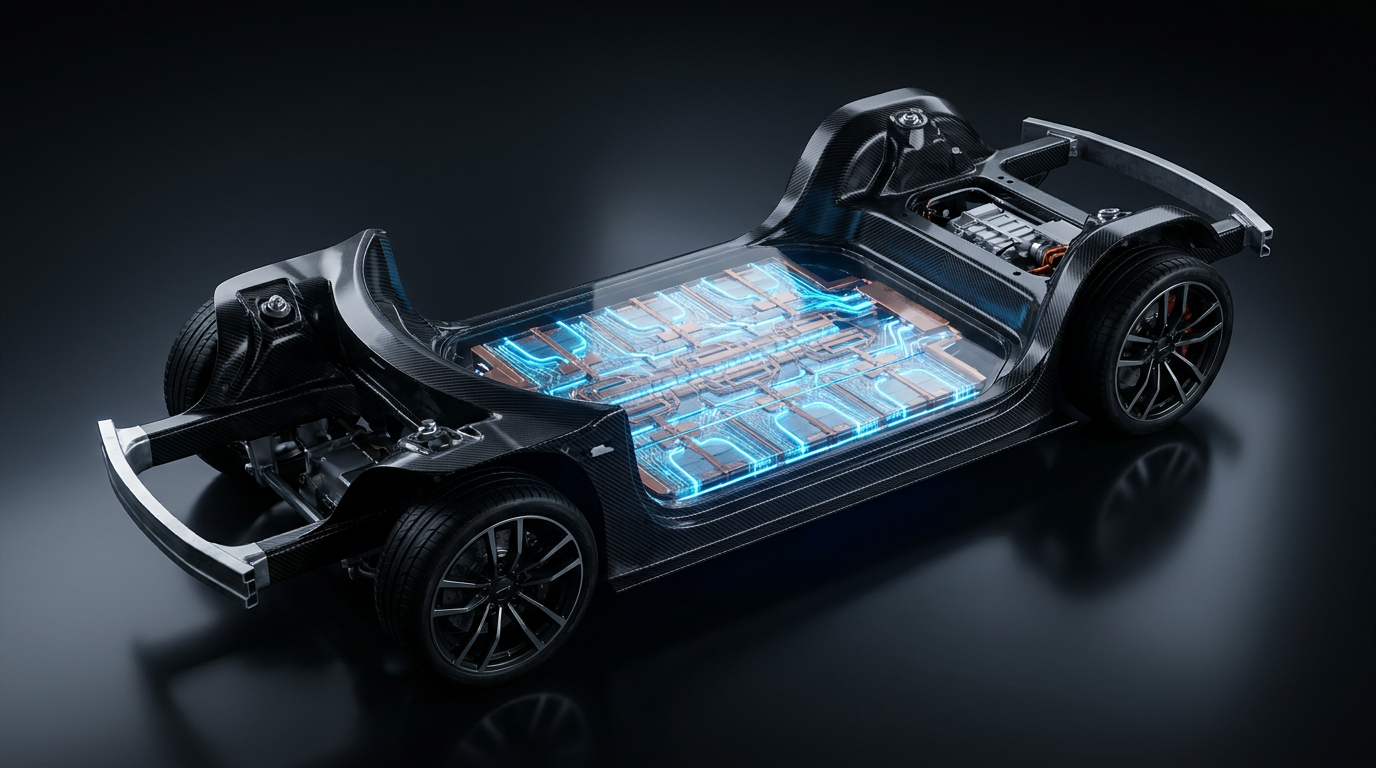
Solid-state batteries solve these physical limitations by replacing the flammable liquid with a solid material—typically a specialized ceramic, polymer, or sulfide glass. This solid barrier is physically tough enough to suppress dendrite growth entirely. By eliminating the dendrite threat, engineers can finally swap the heavy graphite anode for a pure lithium-metal anode. The result is a massive leap in energy density, allowing the battery to store significantly more power in a much smaller, lighter package, all while remaining fundamentally stable at high temperatures.[4][5]
The theoretical benefits are staggering, but manufacturing a flawless solid electrolyte at a commercial scale has proven incredibly difficult. The solid materials are brittle, and maintaining perfect contact between the solid layers as the battery expands and contracts during use is an engineering nightmare. Because of these hurdles, the 2026 battery landscape has officially split into two distinct commercialization paths: the immediate rollout of "semi-solid" batteries, and the pilot production of true "all-solid-state" cells.[7]
Semi-solid batteries represent the pragmatic stepping stone. Rather than eliminating the liquid entirely, these cells use a hybrid approach, suspending a small amount of liquid electrolyte within a solid polymer or gel matrix. This design captures many of the safety and energy-density benefits of a pure solid-state cell but remains flexible enough to be manufactured on existing lithium-ion assembly lines. By avoiding the need for entirely new, multi-billion-dollar gigafactories, semi-solid technology has rapidly accelerated to mass production.[7]
Semi-solid batteries represent the pragmatic stepping stone.
The real-world impact of semi-solid technology is already visible on the roads. Chinese automaker NIO recently deployed a massive 150-kilowatt-hour semi-solid battery pack across its vehicle lineup. In real-world testing, this pack propelled an ET7 luxury sedan to over 1,000 kilometers (roughly 620 miles) on a single charge. The cells, co-developed with supplier WeLion, achieve an energy density of 360 watt-hours per kilogram—a roughly 50 percent improvement over standard liquid lithium-ion packs. Other manufacturers, including SAIC and Chery, are aggressively following suit with their own semi-solid models this year.[6][7]

However, the semi-solid bridge is not without its economic friction. While cheaper to manufacture than pure solid-state cells, the advanced materials still carry a hefty premium over traditional lithium iron phosphate (LFP) batteries. NIO's CEO recently acknowledged that the company had to scale back production of the 150 kWh pack after an initial run. The battery was offered through NIO's battery-swapping subscription service, but the daily rental cost proved too high for average consumers, who found that China's dense charging network made such extreme ranges unnecessary for daily driving.[6]
While semi-solid batteries conquer the premium market, the race for true all-solid-state dominance is heating up in pilot facilities worldwide. In California, battery developer QuantumScape recently inaugurated its "Eagle Line," a highly automated pilot production facility. QuantumScape's cells utilize a proprietary ceramic separator that enables a lithium-metal anode. The company's latest testing data shows their solid-state cells can fast-charge from 10 to 80 percent in just 15 minutes, enduring 400 consecutive cycles with virtually zero capacity degradation.[1][3]
Rather than attempting to build massive gigafactories to compete with established battery giants, QuantumScape is pioneering a licensing model. The company plans to perfect the manufacturing blueprint—specifically its "Cobra" process for producing the ceramic separator—and license the technology to automotive partners like Volkswagen Group. This ecosystem approach allows the startup to leverage the immense capital and existing supply chains of legacy automakers, accelerating the timeline for getting all-solid-state cells into consumer driveways.[3]

European automakers are also proving the viability of all-solid-state technology on public roads. In a landmark demonstration, Mercedes-Benz partnered with US-based Factorial to test a prototype vehicle equipped with lithium-metal solid-state cells. The modified EQS sedan successfully drove 1,205 kilometers across three European countries on a single charge. Crucially, this was not a closed-track hyper-miling stunt, but a real-world highway test that validated the technology's stability and thermal management outside the laboratory.[4]
Meanwhile, the Asian battery powerhouse is moving aggressively to secure its dominance in the next generation of chemistry. Greater Bay Technology (GBT), a startup backed by China's GAC Group, announced that its first "A-sample" all-solid-state cells have rolled off the production line. These cells contain zero liquid electrolyte and successfully passed brutal safety tests—including needle penetration and thermal shock—without catching fire. GBT is targeting gigawatt-hour-level mass production by the end of 2026, pushing the technology directly into commercial vehicles and low-altitude electric aircraft.[1]
Toyota, the automaker holding the most solid-state battery patents globally, is taking a more measured approach. The Japanese giant recently received government approval to begin pilot production of its next-generation cells in 2026. Toyota claims its solid-state packs will eventually deliver a 750-mile range and a 10-minute recharge time. However, the company has revised its mass-market timeline, indicating that while pilot vehicles will emerge soon, large-scale deployment across its fleet will likely wait until the 2027–2028 window to ensure perfect reliability and cost parity.[2]

The financial implications of this chemical shift are staggering. Market analysts project that the global solid-state battery sector will explode into a $10 billion industry by 2036. This growth will fundamentally rewire the automotive supply chain, shifting demand away from the flammable solvents and heavy graphite that define today's market, and placing a massive premium on high-purity lithium metal and advanced ceramic manufacturing.[5]
Ultimately, the 2026 battery landscape proves that the era of the liquid lithium-ion monopoly is ending. While cheap, durable LFP batteries will continue to dominate the entry-level and mid-tier EV markets for years to come, solid-state and semi-solid technologies have successfully breached the premium sector. As pilot lines scale up and manufacturing costs inevitably fall, these ultra-dense, fireproof batteries will trickle down to everyday vehicles, finally delivering the uncompromising electric future the industry has promised for a decade.[4][5]
How we got here
2020
Toyota announces initial plans to develop a solid-state battery vehicle, later delayed due to manufacturing hurdles.
2024
Chinese automakers begin limited pilot rollouts of semi-solid battery packs in high-end sedans.
August 2025
Mercedes-Benz and Factorial successfully test a solid-state equipped EQS sedan over 1,205 km across Europe.
February 2026
QuantumScape inaugurates its Eagle Line pilot production facility in California.
April 2026
Greater Bay Technology rolls its first A-sample all-solid-state cells off the production line in China.
Viewpoints in depth
Incumbent Automakers
Legacy manufacturers view solid-state technology as a reset button for the EV race.
For legacy giants like Toyota and Mercedes-Benz, solid-state batteries represent an opportunity to leapfrog early EV pioneers. By delivering vehicles that can travel over 600 miles and recharge in the time it takes to pump a tank of gas, these automakers believe they can finally win over the vast majority of consumers who remain hesitant about electric vehicles. They are prioritizing in-house development and exclusive partnerships to ensure they control the intellectual property of this next-generation chemistry.
Battery Tech Startups
Specialized developers are focusing on intellectual property and licensing rather than mass manufacturing.
Companies like QuantumScape and Factorial argue that the true value lies in the fundamental chemistry—specifically the solid separators that prevent dendrite growth. Rather than raising the billions of dollars required to build their own gigafactories, these startups are adopting an 'ecosystem' approach. By licensing their technology to existing battery manufacturers and automakers, they aim to scale rapidly without taking on the immense capital risk of operating global assembly lines.
Market Pragmatists
Industry analysts caution that cost will keep solid-state batteries out of everyday cars for years.
While the performance metrics of solid-state and semi-solid batteries are undeniable, market pragmatists point to the brutal economics of automotive manufacturing. Upgrading a factory to produce all-solid-state cells can cost up to 50 times more than outfitting a standard lithium-ion line. Analysts argue that for the average commuter, cheap and highly durable Lithium Iron Phosphate (LFP) batteries are already 'good enough.' They predict solid-state will remain a luxury-only feature until at least the early 2030s.
What we don't know
- Exactly how quickly the manufacturing costs of true all-solid-state batteries will reach parity with traditional lithium-ion cells.
- Whether the global supply chain can produce enough high-purity lithium metal to meet the demands of a fully solid-state automotive industry.
- How well the solid ceramic separators will hold up to the physical vibrations of decades of real-world driving.
Key terms
- Electrolyte
- The medium inside a battery that allows ions to flow between the positive and negative sides during charging and discharging.
- Dendrites
- Microscopic, needle-like structures of lithium metal that can grow inside a battery, potentially causing short circuits and fires.
- Energy Density
- A measure of how much energy a battery can store relative to its weight, typically expressed in watt-hours per kilogram (Wh/kg).
- Lithium-metal anode
- A highly efficient battery component that replaces heavy graphite with pure lithium, made possible only by the protective barrier of a solid electrolyte.
- Thermal runaway
- A dangerous chain reaction inside a damaged or overheated battery where rising temperatures cause the liquid electrolyte to catch fire or explode.
Frequently asked
What is a solid-state battery?
A battery that replaces the flammable liquid electrolyte found in traditional lithium-ion cells with a solid material, like ceramic or polymer. This allows for higher energy density and eliminates the risk of battery fires.
What is a semi-solid battery?
A transitional technology that uses a hybrid gel or polymer matrix, keeping a small amount of liquid. It offers many of the safety and range benefits of solid-state but is cheaper to manufacture on existing assembly lines.
How fast can solid-state batteries charge?
Pilot tests from companies like QuantumScape show that all-solid-state cells can safely charge from 10% to 80% in roughly 15 minutes without degrading the battery's lifespan.
When will solid-state batteries be in affordable cars?
While semi-solid batteries are hitting luxury vehicles now, true all-solid-state batteries are expected to remain a premium feature until mass production scales up and costs drop, likely in the late 2020s or early 2030s.
Sources
Source coverage
7 outlets
3 viewpoints surfaced







[1]ElectrekBattery Tech Startups
China ramps up solid-state EV battery production
Read on Electrek →[2]Car and DriverIncumbent Automakers
Toyota Lays Out Its EV Battery Road Map, Including a Solid-State Battery
Read on Car and Driver →[3]Battery Tech OnlineBattery Tech Startups
QuantumScape CEO details commercialization progress, licensing strategy
Read on Battery Tech Online →[4]EleportIncumbent Automakers
New battery technologies 2026: what actually matters
Read on Eleport →[5]IDTechExMarket Pragmatists
Solid-State Batteries 2026-2036: Technology, Forecasts, Players
Read on IDTechEx →[6]ElectriveMarket Pragmatists
Nio drops 150 kWh battery with semi-solid electrolyte again
Read on Electrive →[7]Bonnen BatteriesMarket Pragmatists
Don't Get Fooled by Solid-State Hype: In 2026, Only Semi-Solid Batteries Are Hitting the Road!
Read on Bonnen Batteries →
Every angle. Every day.
Get transportation stories with full source coverage and perspective breakdowns delivered to your inbox.