
US and Iran Reach Agreement to End War and Reopen the Strait of Hormuz
The United States and Iran have agreed to a memorandum of understanding that permanently ends military operations, lifts the US naval blockade, and reopens the critical Strait of Hormuz to global shipping. The breakthrough initiates a 60-day ceasefire to negotiate Iran's nuclear program and broader sanctions relief.
By Factlen Editorial Team
- US Administration
- Frames the deal as a victory that reopens vital shipping lanes, ends a costly conflict, and secures a pathway to prevent a nuclear-armed Iran.
- Iranian Leadership
- Views the agreement as a successful defense of its sovereignty, securing the lifting of the US blockade and sanctions relief without surrendering its missile program.
- Regional Mediators
- Emphasizes the triumph of diplomacy over military escalation, prioritizing regional stability and the restoration of the global economy.
- Israeli Opposition
- Criticizes the framework for failing to dismantle Iran's proxy networks or ballistic missile capabilities, viewing it as a strategic loss.
- Shipping & Energy Markets
- Focuses on the practical logistics of clearing naval mines and the timeline for returning global oil supply chains to pre-war capacity.
What's not represented
- · Lebanese Civilians
- · Gulf State Oil Producers
Why this matters
The closure of the Strait of Hormuz choked off 20 percent of the world's oil and gas exports, driving up global energy costs and fueling inflation. This agreement not only averts a broader regional war but immediately stabilizes global markets, lowering the cost of fuel and goods for consumers worldwide.
Key points
- The US and Iran signed a digital memorandum of understanding to end military operations on all fronts.
- The agreement lifts the US naval blockade and reopens the Strait of Hormuz to global shipping.
- A 60-day ceasefire period will be used to negotiate Iran's nuclear program and sanctions relief.
- Oil prices fell 5 percent as markets reacted to the unblocking of the critical maritime chokepoint.
- The deal does not restrict Iran's ballistic missiles or proxy forces, drawing sharp criticism from Israeli opposition leaders.
- A formal in-person signing ceremony is scheduled for Friday in Geneva, Switzerland.
The United States and Iran have reached a sweeping memorandum of understanding (MOU) to end the military conflict that began in late February, signaling a dramatic de-escalation in the Middle East. The agreement mandates an immediate and permanent termination of military operations on all fronts, the lifting of the US naval blockade on Iranian ports, and the reopening of the Strait of Hormuz to commercial shipping.[1][5]
President Donald Trump announced the breakthrough on his Truth Social platform, declaring the deal "complete" and authorizing the immediate removal of the US naval blockade. "I hereby fully authorize the toll-free opening of the Strait of Hormuz," Trump wrote. "Ships of the World, start your engines. Let the oil flow!"[4][8]
The framework was signed digitally on Sunday by US and Iranian officials, with an in-person signing ceremony scheduled for Friday, June 19, in Geneva, Switzerland. The diplomatic breakthrough was heavily mediated by Pakistan and Qatar, with Pakistani Prime Minister Shehbaz Sharif first announcing that both sides had agreed to end hostilities, including the ongoing conflict in Lebanon.[3][6]
Iran's Supreme National Security Council confirmed the finalization of the text, issuing a statement that military operations across multiple fronts are ended "immediately and permanently." The council also confirmed that the US naval blockade against Iran is terminated, allowing the country to resume maritime trade.[4][6]

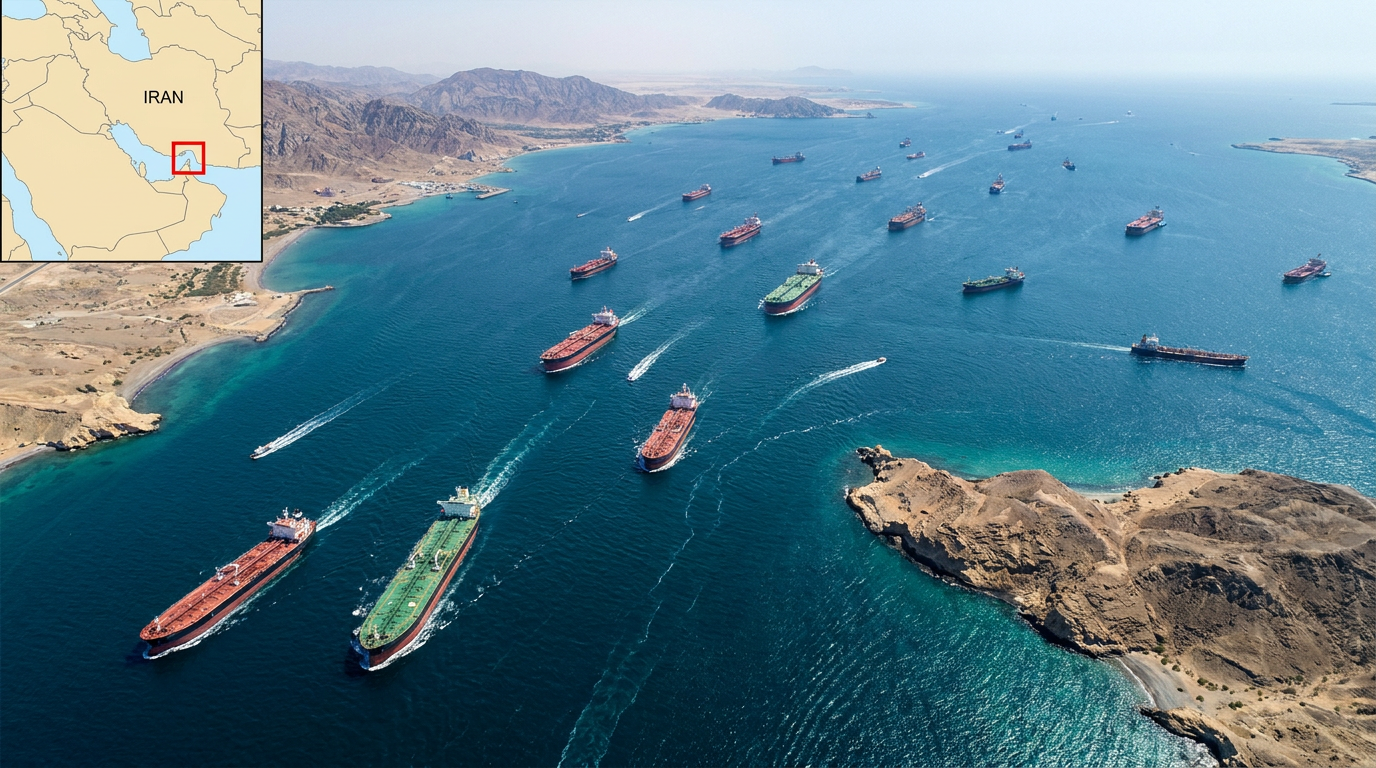
The immediate economic relief was felt globally, as oil prices fell roughly 5 percent following the announcement. The Strait of Hormuz, a critical maritime chokepoint through which a fifth of the world's oil and natural gas passes, had been effectively closed by Iran since the war began, prompting the US to launch a retaliatory blockade in the Gulf of Oman.[1][5][7]
While Trump proclaimed the strait open immediately, maritime and energy experts caution that the physical resumption of shipping will take time. Iranian state media reported that the reopening will take place "under Iranian arrangements" over the next 30 days, as the waterway must first be cleared of naval mines deployed during the conflict.[7]

While Trump proclaimed the strait open immediately, maritime and energy experts caution that the physical resumption of shipping will take time.
The MOU serves as a preliminary framework rather than a comprehensive treaty. It establishes a 60-day ceasefire period during which negotiators will tackle the conflict's core drivers: Iran's nuclear program and the complex web of Western sanctions crippling the Iranian economy. US officials have indicated that the US may abandon its previous requirement that all Iranian uranium stockpiles be exported, instead exploring options to down-blend highly enriched uranium inside Iran.[2][5]
However, the deal's parameters have already sparked fierce debate regarding what was left out. The agreement contains no restrictions on Iran's ballistic missile program, nor does it require Tehran to rein in its proxy forces, including Hamas, the Houthis, and Hezbollah. The omission of these demands—long sought by Israel—marks a significant shift from the pre-war status quo.[2]
The concessions have triggered a political firestorm in Israel. Israeli opposition leader Yair Lapid called for Prime Minister Benjamin Netanyahu to resign, arguing that Netanyahu mishandled diplomacy with Washington and allowed a deal that leaves Israel vulnerable. "The State of Israel won the battle, Netanyahu lost the war," Lapid stated, accusing the Prime Minister of collapsing at the moment of truth.[1]
In Lebanon, Hezbollah credited Iran with securing a "major achievement," suggesting the deal could lead to the liberation of Lebanese territory currently occupied by Israeli forces. However, with Israel not a direct party to the US-Iran MOU, analysts warn that localized skirmishes between the Israel Defense Forces and Hezbollah could still threaten the broader peace framework.[2]
A significant point of contention remains the unfreezing of Iranian assets. Iranian semi-official media reported that the agreement includes the immediate release of $12 billion—half of Iran's frozen overseas funds—before further negotiations begin. US Vice President JD Vance explicitly denied this on Monday, stating that while the deal was signed digitally, "there's been no money released and that won't change."[1][6]

Despite the friction, the international community has largely embraced the de-escalation. A joint statement from the leaders of the UK, France, Germany, Italy, and Canada welcomed the diplomatic breakthrough as a "moment of opportunity to restore regional stability and stabilise the global economy," urging all parties to ensure the unconditional freedom of navigation through the Strait of Hormuz.[3]
As delegations prepare to meet in Geneva on Friday, the focus shifts to the fragile 60-day window. Negotiators must now translate a temporary halt in hostilities into a durable architecture that addresses Iran's nuclear ambitions, unwinds layers of international sanctions, and prevents the Middle East from sliding back into open warfare.[2][5]
How we got here
Late February 2026
The US and Israel launch military strikes against Iranian infrastructure, sparking a broader regional war.
March 2026
Iran effectively closes the Strait of Hormuz to commercial shipping, severely disrupting global energy markets.
April 12, 2026
The US implements a naval blockade on Iranian ports in the Gulf of Oman.
June 14, 2026
US and Iranian officials digitally sign a memorandum of understanding to end the conflict.
June 15, 2026
President Trump and Pakistani PM Sharif publicly announce the peace framework, sending oil prices lower.
June 19, 2026
Delegations are scheduled to formally sign the agreement in person in Geneva.
Viewpoints in depth
US Administration's View
The deal is a necessary step to restore global economic stability while keeping leverage for nuclear negotiations.
For Washington, the immediate priority was unblocking the Strait of Hormuz, which had sent global energy prices skyrocketing and threatened domestic economic stability. The administration views the lifting of the naval blockade as a fair trade for the resumption of maritime commerce. By securing a 60-day ceasefire, the US believes it has created a controlled environment to negotiate the ultimate goal: a verifiable commitment that Iran will not acquire a nuclear weapon, without committing to a prolonged and costly regional war.
Iranian Leadership's View
The framework successfully ends the US blockade and secures economic relief without compromising core security strategies.
Tehran frames the memorandum as a diplomatic victory that forces the US to lift its crippling naval blockade and unfreeze billions in overseas assets. Crucially, Iranian officials emphasize that the preliminary agreement does not force them to dismantle their ballistic missile program or abandon their support for regional proxy forces like Hezbollah. For Iran, the deal provides vital economic breathing room while maintaining its strategic deterrence architecture in the Middle East.
Israeli Opposition's View
The agreement is a strategic failure that leaves Israel vulnerable to an unrestrained Iranian proxy network.
Critics in Israel, led by opposition figures like Yair Lapid, argue that the US-Iran deal abandons Israeli security interests. Because the framework does not address Iran's ballistic missiles or mandate the disarmament of Hezbollah and Hamas, Israeli officials fear the ceasefire merely allows Tehran to rebuild and rearm its network. They view the deal as a capitulation by Prime Minister Netanyahu, who they argue failed to secure Washington's backing for Israel's core security requirements.
What we don't know
- Whether the US will actually unfreeze $12 billion in Iranian assets during the 60-day ceasefire, as the two sides currently dispute this term.
- How quickly naval mine-clearing operations can make the Strait of Hormuz safe for pre-war levels of commercial shipping.
- Whether localized fighting between Israel and Hezbollah in southern Lebanon will derail the broader US-Iran ceasefire.
- What specific concessions Iran is willing to make regarding its nuclear enrichment program during the upcoming 60-day negotiation window.
Key terms
- Strait of Hormuz
- A narrow, strategically vital waterway between the Persian Gulf and the Gulf of Oman through which roughly 20 percent of the world's oil and natural gas passes.
- Memorandum of Understanding (MOU)
- A formal agreement between two or more parties that outlines the terms and details of an understanding, often serving as the foundation for a binding treaty.
- Naval Blockade
- An act of war in which a country uses its navy to prevent vessels from entering or leaving the ports of an enemy nation.
- Proxy Forces
- Armed groups that act on behalf of or receive support from a larger power, such as Hezbollah or the Houthis receiving backing from Iran.
- Down-blending
- The process of mixing highly enriched uranium with natural or depleted uranium to reduce its concentration, making it suitable only for civilian energy rather than weapons.
Frequently asked
What does the US-Iran memorandum of understanding do?
It establishes an immediate and permanent end to military operations, lifts the US naval blockade on Iranian ports, and reopens the Strait of Hormuz to commercial shipping.
When will the Strait of Hormuz actually reopen?
While the US authorized its opening immediately, Iranian and shipping sources estimate it will take up to 30 days to clear naval mines and restore pre-war traffic levels.
Does this deal solve the nuclear issue?
No. The agreement creates a 60-day ceasefire window during which the US and Iran will negotiate a comprehensive treaty regarding Iran's nuclear program and Western sanctions.
How did oil markets react?
Global crude oil prices dropped by approximately 5 percent immediately following the announcement, as fears of prolonged energy shortages eased.
Who mediated the peace deal?
Pakistan and Qatar served as the primary mediators for the agreement, facilitating indirect talks between Washington and Tehran.
Sources
Source coverage
8 outlets
5 viewpoints surfaced







[1]Fox NewsIsraeli Opposition
US, Iran agree on deal to end war, sending oil prices lower
Read on Fox News →[2]The Guardian
US-Iran peace deal hinges on shipping, sanctions relief and deferred nuclear talks
Read on The Guardian →[3]Al JazeeraRegional Mediators
Pakistan, Qatar applaud agreement as a step towards peace and lasting tranquillity in the region
Read on Al Jazeera →[4]The HinduIranian Leadership
Donald Trump said that a peace deal with Iran is 'now complete,' announcing the Strait of Hormuz is open
Read on The Hindu →[5]The National NewsShipping & Energy Markets
US and Iran agree framework for peace deal and reopening Strait of Hormuz
Read on The National News →[6]The Jerusalem PostIsraeli Opposition
Trump announces US-Iran peace deal has been completed, Strait of Hormuz to reopen
Read on The Jerusalem Post →[7]Seatrade MaritimeShipping & Energy Markets
Strait of Hormuz set to reopen under US – Iran peace deal
Read on Seatrade Maritime →[8]CBS NewsUS Administration
Trump says deal with Iran 'complete,' Strait of Hormuz blockade lifted
Read on CBS News →
Every angle. Every day.
Get news politics stories with full source coverage and perspective breakdowns delivered to your inbox.