
The 25W Wireless Revolution: How Qi2.2 Finally Killed the Charging Cable
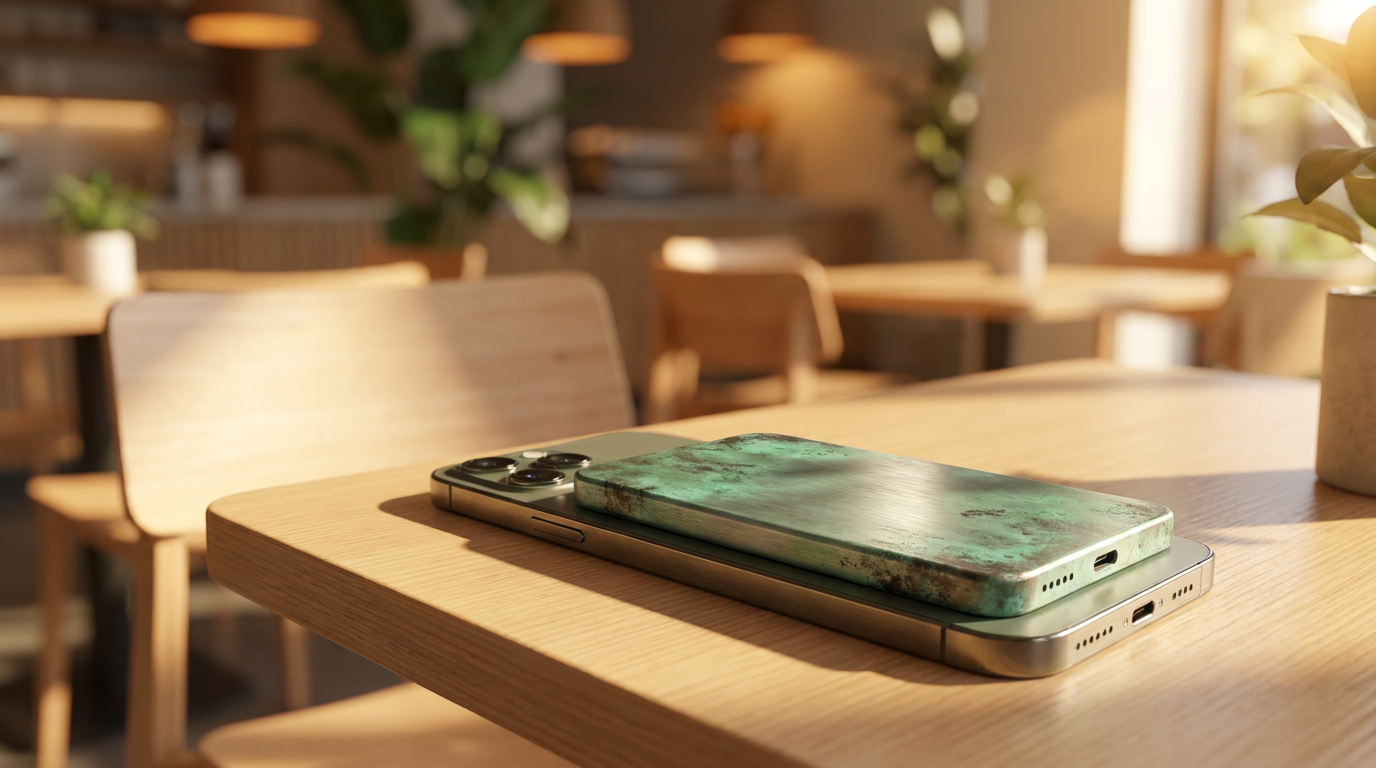
A new generation of magnetic power banks has adopted the 25W Qi2.2 standard, delivering wireless charging speeds that finally rival traditional cables while unifying the Apple and Android ecosystems.
By Factlen Editorial Team
- Hardware Reviewers
- Tech analysts evaluating the real-world performance, thermal management, and value of the new standard.
- Accessory Manufacturers
- The engineers and brands building the hardware around the new WPC standards.
- Travel & Everyday Carry Enthusiasts
- Frequent flyers and commuters who prioritize weight, reliability, and cable reduction.
What's not represented
- · Budget Android Users
- · Environmental Advocates (E-waste concerns)
Why this matters
For years, consumers had to choose between the convenience of a magnetic wireless charger and the speed of a traditional cable. The mass adoption of the 25W Qi2.2 standard finally eliminates this compromise, allowing users to rapidly charge their devices on the go while unifying the Apple and Android ecosystems under a single, interoperable standard.
Key points
- The new Qi2.2 standard increases magnetic wireless charging speeds from 15W to 25W.
- Compatible smartphones can now reach a 50% charge in approximately 30 minutes wirelessly.
- Advanced cooling systems, including graphene and aluminum, are required to prevent thermal throttling.
- The open standard unifies the Apple and Android ecosystems, working across all modern flagships.
- Prices for premium 10,000mAh magnetic power banks have dropped significantly in mid-2026.
The long-standing compromise of portable power—choosing between the frictionless convenience of wireless charging and the rapid speed of a cable—is quietly coming to an end. As the summer travel season kicks off in 2026, a new generation of magnetic power banks built on the Qi2.2 standard has flooded the market, fundamentally altering how consumers keep their devices powered on the go. By pushing wireless charging speeds to 25 watts, these new accessories are finally closing the performance gap that has historically relegated wireless pads to overnight nightstand duty.[1][7]
The leap from the previous 15-watt ceiling to 25 watts is transformative for daily use. Under the older Qi2 and original MagSafe standards, a quick 20-minute top-up at an airport gate barely moved the battery percentage needle. Now, certified Qi2.2 chargers can push a modern flagship smartphone to nearly a 50 percent charge in just half an hour. This velocity removes the psychological barrier that previously made carrying a tangled USB-C cable feel strictly necessary for travel and long workdays.[1][6]
Achieving this speed without melting the hardware required overcoming the fundamental enemy of inductive charging: heat. Pushing 25 watts of energy through the air generates significant thermal waste. If a battery pack gets too hot, the smartphone's internal software will aggressively throttle the charging speed to protect the device, instantly negating the benefits of the higher wattage. To solve this, manufacturers have had to completely rethink the internal architecture of portable power banks.[1][3]

The latest flagship models demonstrate how the industry is tackling the thermal challenge. Devices like the Baseus PicoGo AM52 utilize a triple-loop cooling system, incorporating a graphene heat-conduction layer and an aluminum alloy chassis to rapidly dissipate heat away from the magnetic coils. By actively monitoring temperatures and spreading the thermal load across a metal body, these banks manage to operate at around 102 degrees Fahrenheit—significantly cooler than the 118-degree norm of older, slower plastic models.[1][2]
Other manufacturers are taking even more aggressive approaches to thermal management. Sharge's ICEMAG 2 series integrates a miniaturized active cooling fan directly into the power bank, ensuring the magnetic pad remains chilled during extended charging sessions. This prevents the thermal throttling that typically plagues high-capacity banks when they are asked to deliver maximum power for more than a few minutes at a time.[4]
Other manufacturers are taking even more aggressive approaches to thermal management.
Beyond speed and cooling, the 2026 power bank lineup represents a triumph of miniaturization. Historically, high-capacity batteries were heavy, brick-like burdens that dragged down pockets and bags. Today, advancements in cell chemistry and intelligent power management have allowed companies to squeeze 10,000mAh capacities—enough for roughly two full smartphone charges—into incredibly slim profiles. Some of the newest 25W models measure just 15 to 16 millimeters thick and weigh under 8 ounces, making them roughly the size of a standard magnetic wallet.[2][3]

The true victory of the Qi2.2 rollout, however, is the unification of the mobile ecosystem. For years, Apple users relied on the proprietary MagSafe standard, while Android users navigated a fragmented landscape of competing wireless protocols. Because Qi2.2 is an open standard managed by the Wireless Power Consortium—which integrates Apple's Magnetic Power Profile—the walled garden has been dismantled. A single Qi2.2 power bank now snaps onto and rapidly charges an iPhone 17, a Pixel 10, or a Galaxy S25 with identical efficiency and magnetic alignment.[5][6]
This cross-platform compatibility is driving aggressive pricing competition. Recent holiday sales events have seen premium, certified Qi2.2 power banks drop well below the $80 mark, with some 10,000mAh models hitting $50. Meanwhile, older 15W Qi2 models are being heavily discounted to clear inventory, creating a buyer's market where uncertified, slow-charging knockoffs are no longer worth the minor savings.[4][7]

The shift is also changing how consumers approach everyday carry. Many of the top-tier 2026 models feature integrated, wrap-around USB-C cables that serve double duty as carrying lanyards. These built-in cables allow the power banks to deliver up to 45 watts of wired power, making them capable of emergency-charging a MacBook Air or an iPad Pro, while simultaneously charging a smartphone wirelessly via the magnetic pad.[2][6]
As the technology matures, the focus is shifting from raw power to refined utility. Integrated fold-out kickstands for media consumption, digital LED displays for precise battery monitoring, and airplane-safe watt-hour ratings have become standard features rather than premium upgrades. For consumers, the arrival of Qi2.2 means the portable power bank has finally evolved from a clunky, necessary evil into a seamless, high-performance extension of the smartphone itself.[3][5]
How we got here
2020
Apple introduces MagSafe, popularizing magnetic 15W wireless charging for iPhones.
2023
The Wireless Power Consortium announces Qi2, integrating Apple's magnetic profile into an open standard.
April 2025
The WPC introduces the Qi2.2 upgrade, raising the maximum wireless power limit to 25W.
Early 2026
The first wave of certified 25W Qi2.2 power banks hits the consumer market.
June 2026
Prices for premium 25W magnetic chargers drop significantly, signaling mass market adoption.
Viewpoints in depth
Hardware Reviewers
Tech analysts evaluating the real-world performance, thermal management, and value of the new standard.
Reviewers emphasize that the jump to 25W is the first time wireless charging has felt practically equivalent to wired charging for quick top-ups. However, they caution that sustained speeds depend entirely on a manufacturer's thermal management. They praise brands that use premium materials like aluminum and graphene to dissipate heat, noting that without these features, a 25W charger will quickly throttle down to 15W or lower, negating the premium price tag.
Accessory Manufacturers
The engineers and brands building the hardware around the new WPC standards.
For manufacturers, Qi2.2 represents a massive simplification of the supply chain and product development cycle. Instead of designing separate MagSafe products for Apple and standard Qi products for Android, they can now build a single, unified accessory that delivers maximum speed across all flagship devices. Their primary engineering focus has shifted from software handshakes to physical thermodynamics, racing to build the thinnest possible chassis that can safely vent the heat generated by 25W inductive transfer.
Travel & Everyday Carry Enthusiasts
Frequent flyers and commuters who prioritize weight, reliability, and cable reduction.
This demographic views the Qi2.2 standard as the ultimate "one-device" solution. The ability to carry a single 10,000mAh battery that magnetically attaches to a phone for a day of sightseeing, while also packing enough wired output (up to 45W) to emergency-charge a laptop, eliminates the need for a dedicated tech pouch. For travelers, the value isn't just in the charging speed, but in the physical reduction of cables, adapters, and heavy lithium bricks in their carry-on bags.
What we don't know
- Whether budget and mid-tier smartphone manufacturers will adopt the Qi2.2 standard, or if it will remain exclusive to premium flagships.
- How the increased heat generated by frequent 25W wireless charging will affect long-term battery degradation over several years.
Key terms
- Qi2.2
- The latest open wireless charging standard that delivers up to 25 watts of power using magnetic alignment.
- Magnetic Power Profile (MPP)
- The underlying technology, originally contributed by Apple, that ensures the charger and phone coils are perfectly aligned.
- Thermal Throttling
- A safety mechanism where a device intentionally slows down its charging speed to prevent the battery from overheating.
- Pass-through Charging
- A feature that allows a power bank to charge a connected device while the power bank itself is plugged into a wall outlet.
Frequently asked
Will a Qi2.2 power bank work with my older iPhone?
Yes. It will magnetically attach to any iPhone 12 or newer, though older models will charge at their maximum supported speed of 15W rather than the full 25W.
Does Qi2.2 work with Android phones?
Yes. Qi2.2 is an open standard. Recent Android flagships, such as the Galaxy S25 and Pixel 10, support the standard and will charge at maximum speeds.
Why do some 25W chargers slow down after a few minutes?
Wireless charging generates heat. If a power bank lacks proper cooling, the phone will automatically reduce the charging speed to protect its internal battery from thermal damage.
Can I bring a 10,000mAh power bank on an airplane?
Yes. A 10,000mAh battery is roughly 37 to 38 watt-hours, which is well below the 100-watt-hour limit enforced by most global aviation authorities.
Sources
Source coverage
7 outlets
3 viewpoints surfaced







[1]PCWorldHardware Reviewers
Baseus AM52 25W Qi2.2 Wireless Charging
Read on PCWorld →[2]MacworldHardware Reviewers
Baseus PicoGo AM52 review
Read on Macworld →[3]AppleInsiderHardware Reviewers
Baseus PicoGo AM52 review: features
Read on AppleInsider →[4]The GadgeteerTravel & Everyday Carry Enthusiasts
Memorial Day 2026 MagSafe Power Bank Deals
Read on The Gadgeteer →[5]HeyBMXAccessory Manufacturers
Best Qi2 Power Bank for All-Day Power
Read on HeyBMX →[6]UGREENAccessory Manufacturers
What is Qi2 25W (Qi2.2)?
Read on UGREEN →[7]The VergeHardware Reviewers
My favorite Qi2 power bank is cheaper than ever for Verge readers
Read on The Verge →
More in technology
See all 6 stories →Open-Source Security
JPMorgan and Cyber Firms Deploy AI to Hunt Down Decades-Old Software Flaws
0 sources

Qi2 Standard
The End of the Wireless Charging Wars: How Qi2 is Unifying Apple and Android
0 sources
Green Computing
Researchers Are Wiring 2,000 Retired Smartphones Together to Build a Low-Carbon Data Center
0 sources
Youth Tech Policy
UK Unveils Sweeping Social Media Ban for Under-16s: The Evidence and the Uncertainty
0 sources
Every angle. Every day.
Get technology stories with full source coverage and perspective breakdowns delivered to your inbox.