
UK Unveils Sweeping Social Media Ban for Under-16s: The Evidence and the Uncertainty
The UK government has announced a nationwide ban on social media access for children under 16, sparking a fierce debate over the scientific evidence linking digital platforms to the youth mental health crisis.
By Factlen Editorial Team
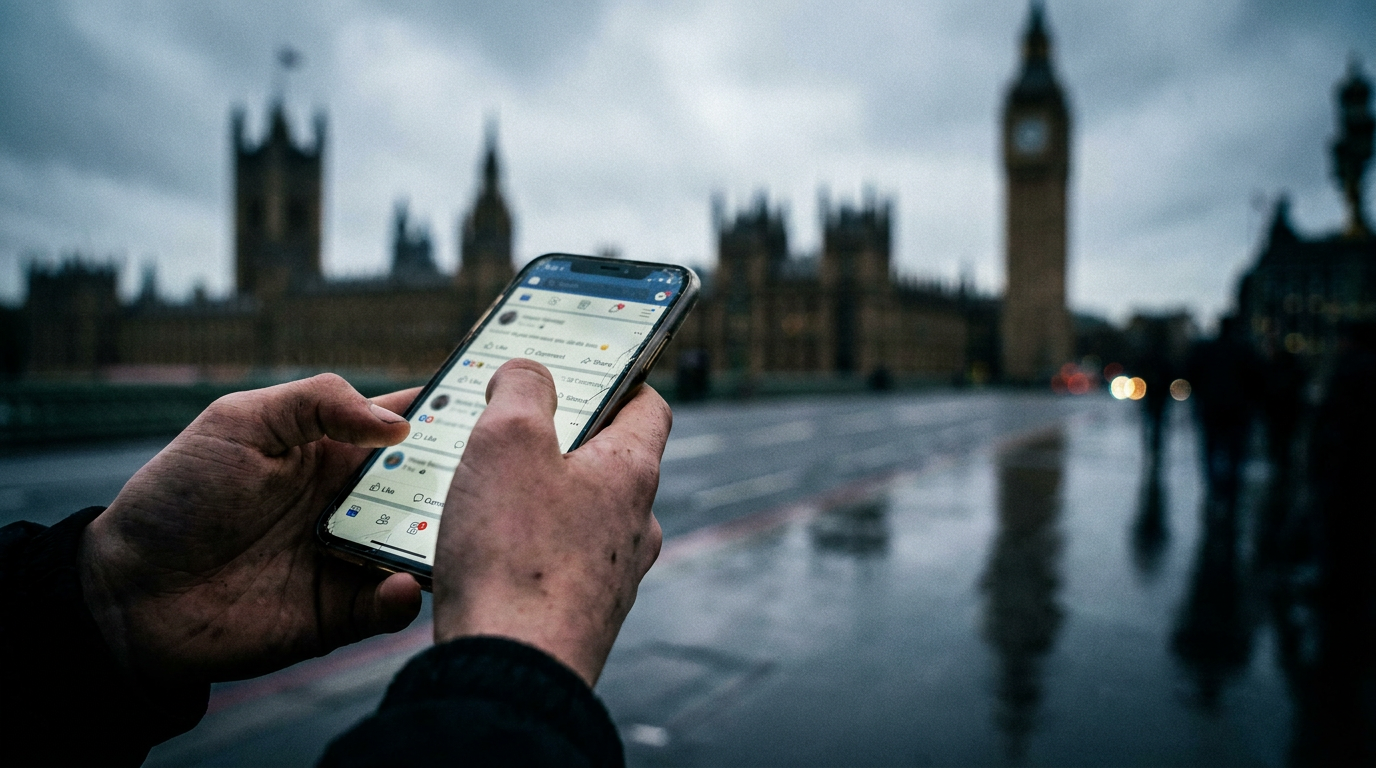
- UK Government & Parent Advocates
- Argues that the addictive design of social media platforms necessitates state intervention to protect children's mental health and restore traditional childhoods.
- Developmental Psychologists
- Contends that the evidence linking social media access to mental health decline is correlational, and that blanket bans fail to address the root causes of digital harm.
- Youth Mental Health Charities
- Highlights that while platforms need safer algorithms, outright bans risk severing crucial digital lifelines and support networks for marginalized and vulnerable youth.
- Digital Rights & Privacy Experts
- Warns that enforcing age restrictions requires invasive age-verification technologies, potentially compromising the data privacy of all users, including adults.
What's not represented
- · Teenagers directly affected by the ban
- · Social media platform engineers tasked with building the age gates
Why this matters
As governments worldwide rush to restrict children's access to social media, understanding the actual scientific evidence behind these bans is crucial for parents, educators, and policymakers trying to navigate the youth mental health crisis.
Key points
- The UK government has announced a nationwide ban on social media access for children under 16, taking effect in Spring 2027.
- The legislation covers major algorithmic platforms like TikTok and Instagram, but exempts private messaging apps such as WhatsApp.
- Going beyond similar international laws, the UK will also restrict livestreaming and stranger communication on gaming sites.
- Proponents argue the ban is necessary to protect youth mental health from the addictive design of modern digital platforms.
- Scientists and mental health charities caution that the evidence of harm is correlational and warn against severing vital online support networks.
- Enforcing the ban will require tech companies to implement robust age-verification systems, raising significant data privacy concerns.
On Monday, the United Kingdom announced one of the most sweeping digital regulations in Western history, declaring a nationwide ban on social media access for children under the age of 16. Prime Minister Keir Starmer framed the legislation as a necessary intervention to reclaim childhoods from the grip of big technology companies. The move places the UK at the forefront of a growing global movement, following closely on the heels of similar legislation passed in Australia and proposed in Canada. For parents and policymakers, the announcement represents a watershed moment in digital public health. However, as the legislative machinery gears up, the scientific and technological communities are intensely debating the evidence underpinning such a drastic measure.[1][3]
The scope of the UK's prohibition is vast, targeting the platforms that dominate modern adolescent social life. Under the new rules, under-16s will be legally barred from holding accounts on algorithmic, user-to-user networks including TikTok, Instagram, YouTube, Snapchat, Facebook, X, and Reddit. Crucially, the government has carved out specific exemptions for private messaging services such as WhatsApp and Signal, arguing that these tools do not rely on the same engagement-maximizing algorithms. The legislation places the burden of compliance entirely on the technology companies, threatening multimillion-dollar fines for platforms that fail to keep underage users off their networks.[4][9]
Beyond merely copying Australia's framework, the UK government has introduced what insiders are calling an "Australia plus" model. This expanded scope targets specific interactive features that officials deem high-risk, even on platforms not strictly categorized as social media. For example, the legislation will block under-16s from accessing livestreaming features and will disable functions that allow strangers to communicate with children on multiplayer gaming sites. Furthermore, the government plans to ban under-18s from interacting with artificial intelligence chatbots designed to simulate romantic or sexual relationships, reflecting growing concerns about the psychological impact of synthetic companionship.[2][4]

The central policy claim driving this legislative wave is that unrestricted access to social media directly fuels the current crisis in youth mental health. Proponents of the ban argue that the platforms are fundamentally unsafe for developing minds, pointing to rising rates of anxiety, depression, and self-harm among teenagers over the past decade. The government's stance is that the architecture of these digital spaces is inherently predatory, prioritizing user retention and advertising revenue over the psychological well-being of its youngest and most vulnerable consumers.[1][4]
To support this claim, advocates point to the mechanics of addictive design embedded within social media platforms. Features such as infinite scrolling, auto-playing videos, and variable algorithmic rewards are engineered to exploit the dopamine systems in the human brain. During adolescence, a critical period for neurological development, the brain is particularly susceptible to these dopamine loops. Critics argue that this constant neurological stimulation rewires teenagers to crave continuous digital validation, leading to compulsive usage patterns that displace sleep, physical activity, and in-person socialization.[4][9]
However, the scientific consensus regarding a direct causal link between social media access and mental health decline remains highly contested. Many developmental psychologists and researchers emphasize that the existing body of evidence is largely correlational. While data clearly shows that heavy social media use and poor mental health often occur together, it is notoriously difficult to prove that the platforms are the primary cause of the distress. Some researchers suggest that adolescents who are already struggling with their mental health may simply retreat into digital spaces as a coping mechanism.[5][6]
Clinical experts further argue that the impact of social media depends heavily on individual usage patterns and the specific content consumed, rather than mere exposure to the platforms. A teenager using Instagram to actively message close friends experiences a vastly different psychological impact than one passively doomscrolling through heavily edited images of unattainable body standards. Because of this nuance, many scientists warn that treating all social media use as uniformly toxic oversimplifies a complex digital ecosystem, making it difficult to predict whether a blanket ban will actually yield the desired public health outcomes.[5]

A second major claim underpinning the UK's strategy is that age-based bans are the most practical and effective tool for parental intervention. For years, the burden of policing digital consumption has fallen squarely on individual families, creating a stressful and often losing battle between parents and tech-savvy teenagers. By elevating the restriction to a matter of national law, the government aims to reset societal norms, removing the peer pressure that forces children onto these platforms simply because their friends are using them.[1][3]
A second major claim underpinning the UK's strategy is that age-based bans are the most practical and effective tool for parental intervention.
The government cites overwhelming public demand as evidence for this approach's necessity. Following a massive national consultation that generated over 116,000 responses, officials reported that 90 percent of parents supported a ban for under-16s. Prime Minister Starmer has vigorously defended the blunt nature of the policy, dismissing concerns about its feasibility. He likened the digital restriction to existing age limits on alcohol, noting that society does not abandon drinking age laws simply because some teenagers occasionally manage to acquire a drink.[3][4]
Yet, the evidence supporting the real-world efficacy of blanket digital bans is currently weak, and early observations from international peers suggest significant enforcement challenges. Australia, which pioneered the under-16 ban in December 2025, is already grappling with widespread circumvention. Because digital borders are inherently porous, tech-literate adolescents often find ways to bypass restrictions using virtual private networks (VPNs) or by simply lying about their birth dates on platforms with lax verification standards.[3][5]
Surveys conducted in the aftermath of the Australian rollout indicate that a large majority of teenagers have maintained their digital access. According to some polls, roughly 70 percent of parents reported that their children successfully bypassed the newly implemented age gates. This high failure rate raises questions about whether national bans actually reduce screen time, or if they merely force adolescent digital life underground, where it is even harder for parents and educators to monitor and guide.[3]

Furthermore, cybersecurity and legal experts warn that enforcing a strict age limit requires invasive technological solutions that introduce severe privacy risks. To reliably prove that a user is over 16, platforms cannot simply rely on self-reported birth dates. They must implement robust age-verification systems, which could involve collecting biometric data for facial age estimation, requiring government-issued digital ID checks, or analyzing credit card records. Privacy advocates argue that forcing tech companies to harvest this sensitive personal data from all users, including adults, fundamentally undermines data minimization principles.[8]
A third critical claim advanced by the government is that removing social media access will universally protect vulnerable children from the most severe online harms. The UK legislation specifically targets the vectors often used for digital exploitation, such as livestreaming and stranger communication in gaming environments. By cutting off these avenues, policymakers hope to shield children from cyberbullying, predatory grooming, and exposure to radicalizing or self-harm-promoting content that algorithms frequently amplify.[2][4]
The tragic real-world consequences of these digital harms have heavily influenced the political discourse. The UK announcement was strongly welcomed by children's advocates and grieving parents, including the family of Brianna Ghey, a teenager who was murdered in 2023 by peers who had reportedly consumed violent and harmful material online. For these advocates, the ban is not merely about reducing screen time; it is a vital safeguarding measure designed to prevent algorithmic amplification from facilitating real-world violence and exploitation.[2][4]
Conversely, youth mental health charities caution that this protective approach may inadvertently sever vital support networks for the very children it aims to help. The Centre for Mental Health has publicly warned that for many marginalized groups—including LGBTQ+ youth, disabled children, and young carers—digital communities provide essential lifelines and a sense of belonging that they cannot find in their physical environments. A blanket ban risks isolating these vulnerable adolescents, cutting them off from peer support and accessible mental health resources.[5][7]
Instead of outright access restrictions, many researchers and mental health professionals advocate for a structural redesign of the platforms themselves. They argue that the government should force technology companies to disable toxic algorithms, eliminate infinite scrolling, and prioritize user safety by default for all ages. By focusing on product safety rather than user age, regulators could mitigate the harms of the digital ecosystem without depriving young people of the connectivity and digital literacy skills they will need in adulthood.[5][7]

Despite these complex debates, the UK's legislative roadmap is set for a rapid pace. The government expects to lay the first set of regulations before Parliament by the end of 2026. Following the drafting of technical standards and a grace period for platforms to implement the necessary age-verification infrastructure, the ban is slated to come into full legal force around Spring 2027. Until that time, the current digital landscape remains unchanged, leaving platforms operating under existing online safety duties.[4][8]
As the United Kingdom joins Australia and Canada in this aggressive regulatory wave, the world is witnessing a massive, real-time experiment in digital public health. The coming years will provide crucial data on whether state-mandated digital abstinence can successfully reverse the youth mental health crisis, or whether the complexities of the internet will render these bans unenforceable. Ultimately, the success of the policy will depend not just on the letter of the law, but on the technological reality of how it is implemented.[1][9]
How we got here
Dec 2025
Australia becomes the first country to implement a nationwide social media ban for under-16s.
Mar 2026
The UK government launches a massive public consultation on children's online safety.
Jun 2026
Prime Minister Keir Starmer officially announces the sweeping UK ban.
Dec 2026
Target deadline for the UK to draft and pass the specific regulations.
Spring 2027
Expected date for the ban to come into full legal force.
Viewpoints in depth
UK Government & Parent Advocates
Argues that the addictive design of social media platforms necessitates state intervention to protect children's mental health.
This camp views the youth mental health crisis as a direct consequence of unregulated technology companies prioritizing engagement over safety. They point to the deliberate engineering of features like infinite scrolling and algorithmic recommendations, which they argue exploit the developing dopamine systems of adolescents. From this perspective, expecting individual parents to police digital borders is an impossible burden, making a nationwide, legally enforced ban the only practical way to reset societal norms and protect children from exposure to self-harm content, cyberbullying, and predatory behavior.
Developmental Psychologists
Contends that the evidence linking social media access to mental health decline is correlational rather than causal.
Researchers in this camp emphasize that while poor mental health and heavy social media use often co-occur, the data does not definitively prove that the platforms are the root cause. They argue that adolescents already struggling with anxiety or depression may simply retreat into digital spaces as a coping mechanism. Furthermore, they stress that the impact of social media is highly dependent on how it is used—active messaging with friends versus passive consumption of toxic content—and warn that treating all digital interaction as uniformly harmful oversimplifies a complex issue.
Digital Rights & Privacy Experts
Warns that enforcing age restrictions requires invasive age-verification technologies that compromise data privacy.
This perspective focuses on the technological reality of implementing a nationwide ban. Legal and cybersecurity experts argue that to reliably prevent under-16s from accessing platforms, tech companies will be forced to collect sensitive personal data from all users, including adults. Whether through facial age estimation, digital ID checks, or credit card verification, these systems introduce massive new privacy risks and honeypots for hackers. They also point to the high rate of circumvention in countries like Australia, suggesting that bans are largely unenforceable against tech-savvy teenagers using VPNs.
Youth Mental Health Charities
Highlights that outright bans risk severing crucial digital lifelines and support networks for marginalized youth.
While agreeing that platforms need to be made safer, advocacy groups warn that a blanket ban is a blunt instrument that could cause unintended harm. For many vulnerable adolescents—including LGBTQ+ youth, disabled children, and young carers—online communities provide essential peer support and a sense of belonging that they may lack in their physical environments. These charities advocate for forcing technology companies to redesign their algorithms and default safety settings, rather than cutting off access entirely and isolating the children who rely on these digital lifelines the most.
What we don't know
- Whether the required age-verification technologies can be implemented without compromising the data privacy of adult users.
- How effectively tech-savvy teenagers will be able to bypass the new restrictions using VPNs or other workarounds.
- Whether removing social media access will actually lead to measurable improvements in population-level youth mental health.
Key terms
- Age-gating
- Technological measures used to restrict access to digital content or services based on a user's age.
- Infinite scroll
- A design feature that continuously loads new content as a user scrolls down a page, eliminating natural stopping points.
- Correlational evidence
- Data showing that two variables occur together (e.g., heavy social media use and anxiety), without proving that one directly causes the other.
- Algorithmic feed
- A stream of content curated by artificial intelligence based on a user's past behavior, designed to maximize engagement.
Frequently asked
Which apps are included in the UK social media ban?
The ban covers major platforms featuring algorithmic feeds and user-to-user interaction, including TikTok, Instagram, YouTube, Snapchat, Facebook, and X.
Are messaging apps like WhatsApp banned?
No, private messaging services such as WhatsApp and Signal are currently exempt from the restrictions.
How will the government enforce the age limit?
The burden of enforcement falls on the tech companies, which will be required to implement robust age-verification systems, potentially using digital ID checks or facial age estimation.
When does the ban take effect?
The UK government plans to introduce the necessary regulations by the end of 2026, with full enforcement expected by Spring 2027.
Sources
Source coverage
9 outlets
4 viewpoints surfaced









[1]Washington PostDigital Rights & Privacy Experts
Britain will ban children under 16 from major social-media platforms
Read on Washington Post →[2]The GuardianUK Government & Parent Advocates
Keir Starmer to announce 'Australia plus' ban on social media for under-16s
Read on The Guardian →[3]CBS NewsUK Government & Parent Advocates
UK Prime Minister Keir Starmer Announces Social Media Ban for UK Teens
Read on CBS News →[4]UK GovernmentUK Government & Parent Advocates
The UK government will ban social media for under 16s
Read on UK Government →[5]Science Media CentreDevelopmental Psychologists
Scientists comment on speculation of a social media ban for under-16s
Read on Science Media Centre →[6]Frontiers in Developmental PsychologyDevelopmental Psychologists
'We cannot ban our way out of a youth mental health crisis'
Read on Frontiers in Developmental Psychology →[7]Centre for Mental HealthYouth Mental Health Charities
In response to the announcement of a social media ban for under 16s
Read on Centre for Mental Health →[8]Bratby LawDigital Rights & Privacy Experts
The UK's under-16 social media ban: what the Government announced
Read on Bratby Law →[9]Al JazeeraDigital Rights & Privacy Experts
Britain announces sweeping social media ban for under-16s
Read on Al Jazeera →
Every angle. Every day.
Get technology stories with full source coverage and perspective breakdowns delivered to your inbox.