
US and Iran Reach Tentative Deal to Reopen Strait of Hormuz, Easing Oil Markets
A fragile memorandum of understanding aims to dismantle Iran's nuclear program and reopen the world's most critical oil chokepoint, though disputes over transit tolls and regional conflicts threaten the 60-day framework.
By Factlen Editorial Team
- US & Allied Policy Consensus
- Argues the deal secures a permanently toll-free Strait and permanently dismantles Iran's nuclear ambitions.
- Regional Security Analysts
- Highlights the unresolved proxy conflicts, particularly in Lebanon, that threaten to derail the agreement.
- Global Economic Watchdogs
- Focuses on the lingering fragility of global energy supply chains and the risk of renewed inflation.
- Iranian Domestic Observers
- Emphasizes the desperate need for sanctions relief to stabilize a faltering domestic economy.
What's not represented
- · Commercial shipping conglomerates bearing the logistical costs
- · Lebanese civilians affected by the excluded ceasefire
Why this matters
The reopening of the Strait of Hormuz directly impacts global inflation and the price of energy worldwide. If the fragile 60-day agreement holds, consumers could see sustained relief at the gas pump; if it collapses over transit disputes or regional proxy wars, energy markets could face an unprecedented supply shock.
Key points
- The US and Iran have reached a tentative agreement to dismantle Iran's nuclear program and lift economic sanctions.
- The deal includes the immediate reopening of the Strait of Hormuz, causing global oil prices to drop sharply.
- Disputes remain over whether the Strait will be permanently toll-free or if Iran can charge fees after 60 days.
- Israel has stated it is not bound by the agreement and will continue its military operations in Lebanon.
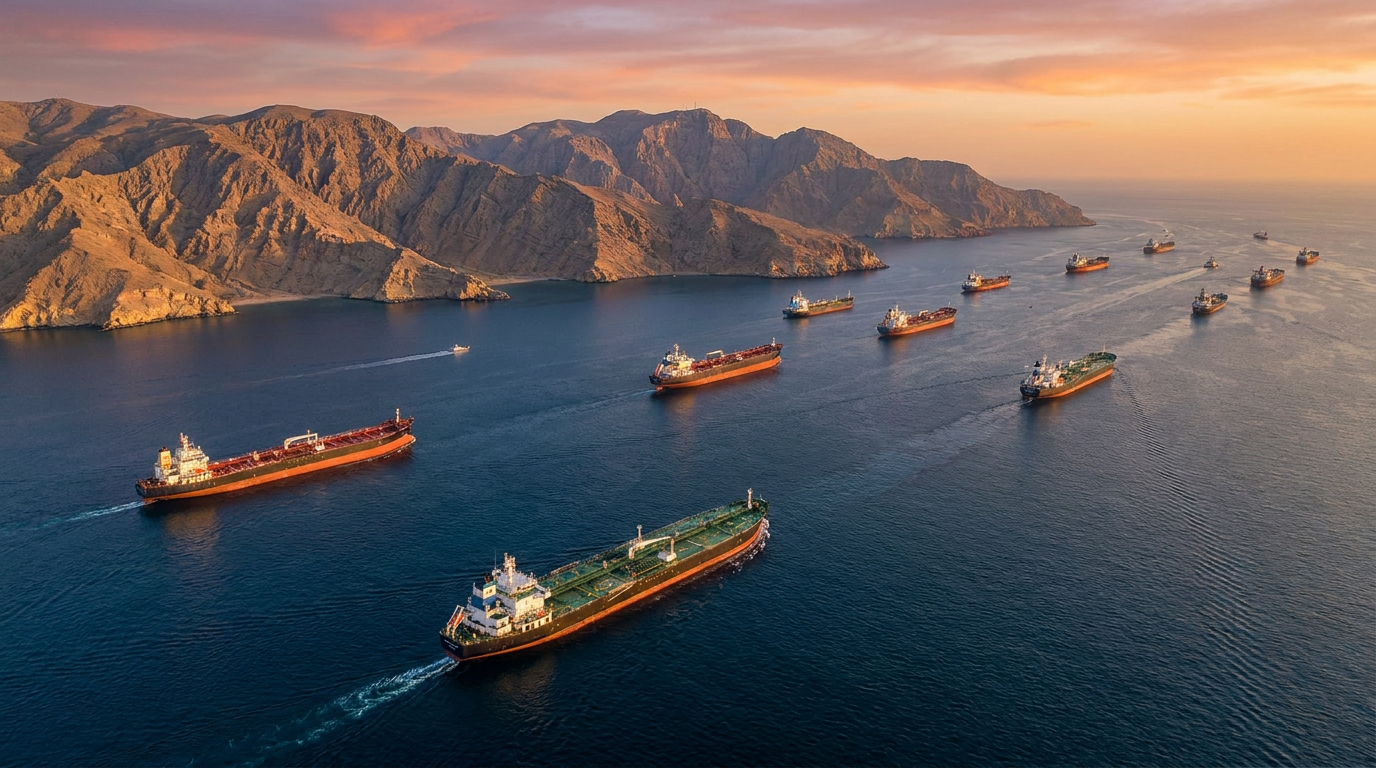
The announcement of a tentative peace agreement between the United States and Iran has sent immediate shockwaves through global energy markets and diplomatic channels. After months of escalating conflict and a crippling naval blockade, U.S. and Iranian negotiators have reached a memorandum of understanding designed to dismantle Tehran’s nuclear enrichment program in exchange for sweeping sanctions relief. At the center of the accord is the immediate reopening of the Strait of Hormuz, the world’s most critical maritime chokepoint, which has been effectively paralyzed by the hostilities.[4][6]
The economic stakes of the waterway cannot be overstated. Before the conflict intensified, roughly 20 percent of all global crude oil transit flowed through the narrow passage between the Persian Gulf and the Gulf of Oman. The blockade had severely constrained energy supplies, driving up global inflation and forcing shipping conglomerates to reroute vessels at massive logistical costs. Following the announcement of the deal, international markets reacted with immediate relief; Brent crude, the global oil benchmark, tumbled by more than $4 a barrel to settle near $83.11, while U.S. equities surged on hopes that the inflationary pressure of the war might finally break.[7]
However, the mechanics of reopening the Strait remain fiercely contested, revealing a significant gap between Washington’s public framing and Tehran’s domestic messaging. U.S. officials, including Vice President JD Vance, have asserted that the agreement guarantees the waterway will remain "permanently toll-free" for international shipping. This narrative suggests a total capitulation by Iran regarding its territorial waters and historical control over the shipping lanes, a framing that plays well to domestic American audiences but contradicts the realities of maritime law and Iranian sovereignty claims.[2][4]

Iranian state-affiliated media paints a starkly different picture of the operational reality. According to sources cited by the semi-official Fars news agency, the toll-free passage is strictly a temporary measure bound to a 60-day negotiation window established by the memorandum. Once that period expires, Tehran maintains it will reserve the right to levy transit fees on commercial vessels navigating its territorial waters. This discrepancy highlights the fragility of the initial framework, as both sides attempt to sell the compromise as a definitive victory while leaving the most contentious logistical details unresolved.[7]
The enforcement of the Strait's reopening will require a massive, coordinated international naval presence. Because the waters remain heavily mined and the risk of miscalculation is high, European allies are stepping in to provide the necessary security architecture. French President Emmanuel Macron confirmed that France and the United Kingdom are prepared to lead a multinational maritime mission, deploying frigates, deminers, and the nuclear-powered aircraft carrier Charles de Gaulle to ensure freedom of navigation. This European intervention is designed to provide a neutral buffer, reducing the likelihood of direct naval skirmishes between U.S. and Iranian forces during the delicate transition period.[6][7]
The enforcement of the Strait's reopening will require a massive, coordinated international naval presence.
Beyond the maritime dispute, the core of the agreement hinges on a complex sequence of nuclear concessions. A senior U.S. official confirmed that the draft deal requires the complete dismantling of Iran’s nuclear weapons program and the physical removal of enriched uranium from the country for destruction. In return, the United States will begin a phased lifting of economic sanctions that have devastated the Iranian economy. The International Monetary Fund recently projected Iran’s economic growth to hover at a sluggish 3.3 percent, a figure heavily propped up by government spending rather than organic industrial output, underscoring Tehran's urgent need for financial relief.[4][8]
The verification mechanism for these nuclear curbs will rely on an intrusive international inspection regime, likely spearheaded by the International Atomic Energy Agency (IAEA). However, the exact timeline for when sanctions relief will actually flow into Iranian state coffers remains a major sticking point. U.S. officials insist that no funds will be released until Tehran demonstrates verifiable compliance with the nuclear dismantling protocols, while Iranian negotiators are reportedly pushing for immediate liquidity to stabilize their domestic currency and quell rising internal unrest.[3][7]

Despite the market optimism, global financial watchdogs are urging extreme caution. The International Monetary Fund has explicitly stated that it remains on "high alert" regarding the broader economic fallout of the conflict. IMF Managing Director Kristalina Georgieva noted that while the global economy has managed to weather the initial shock without slipping into a recession, commodity prices and financial conditions have been fundamentally altered. The IMF warns that energy supply chains are deeply fractured and will take considerable time to normalize, even if the Strait of Hormuz reopens without incident.[1][5]
The geopolitical ramifications of the deal also extend far beyond the Persian Gulf, threatening to fracture existing regional alliances. A critical unresolved issue is the status of Lebanon and the ongoing conflict involving Hezbollah. Iranian negotiators have aggressively pushed to include a comprehensive cessation of hostilities in Lebanon as part of the broader memorandum. This demand attempts to leverage the U.S. desire for a nuclear deal to secure a protective umbrella for Iran's most powerful regional proxy, intertwining two distinct geopolitical crises into a single fragile framework.[4][7]
Israel, however, has categorically rejected this linkage. Israeli officials have publicly stated that they are not bound by any bilateral agreement between Washington and Tehran, and they refuse to halt their military operations in Lebanon or withdraw forces until their own security objectives are met. This localized defiance introduces a volatile wildcard into the peace process; continued Israeli strikes against Hezbollah could provoke retaliatory actions from Iran, potentially unraveling the fragile ceasefire before the final documents are even signed.[7]

Furthermore, the agreement notably excludes any restrictions on Iran’s ballistic missile program, a concession that has already drawn intense criticism from regional security analysts and neighboring Gulf states. By decoupling the nuclear issue from conventional missile capabilities, the deal addresses the existential threat of a nuclear-armed Iran but leaves its capacity to project conventional military power across the Middle East entirely intact. This omission guarantees that regional tensions will remain high, even if the immediate threat of a nuclear arms race is neutralized.[4]
As the 60-day negotiation window opens, the international community faces a precarious balancing act. The immediate priority is the physical clearing of the Strait of Hormuz and the resumption of global energy shipments, which requires unprecedented cooperation between adversarial navies. Yet, the long-term viability of the deal rests on resolving the deeply entrenched contradictions regarding transit tolls, sanctions sequencing, and the autonomous military actions of regional actors like Israel. The coming weeks will determine whether this memorandum serves as the foundation for lasting regional stability or merely a temporary pause in a broader, intractable conflict.[3][6]
How we got here
2018
The US withdraws from the original JCPOA nuclear agreement, reinstating heavy economic sanctions on Iran.
Late 2023 - 2025
Regional hostilities escalate, leading to a de facto naval blockade and severe disruptions in the Strait of Hormuz.
May 2026
Global inflation spikes as energy markets react to the prolonged closure of the critical waterway.
June 13, 2026
The US announces a tentative memorandum of understanding with Iran to dismantle the nuclear program and reopen the Strait.
June 15, 2026
Oil prices tumble as the 60-day negotiation window officially opens, though disputes over transit tolls immediately emerge.
Viewpoints in depth
US Administration's View
Focuses on the permanent dismantling of the nuclear program and the immediate reopening of the Strait.
U.S. officials are framing the memorandum as a definitive victory for global security and economic stability. They emphasize that the agreement physically removes enriched uranium from Iran and dismantles the infrastructure necessary for a nuclear weapon. Furthermore, the administration insists that the Strait of Hormuz will be permanently toll-free, rejecting any notion that Iran can leverage the waterway for future financial gain. Crucially, they maintain that no sanctions relief will be provided until the IAEA verifies full compliance, ensuring the U.S. retains maximum leverage during the 60-day window.
Iranian Negotiators' View
Emphasizes the 60-day window for toll-free transit and the demand for immediate financial liquidity.
For Tehran, the agreement is primarily a mechanism for economic survival. Iranian state media is carefully managing the domestic narrative, insisting that the toll-free passage through the Strait of Hormuz is a temporary concession limited strictly to the 60-day negotiation period. After this window, they argue, Iran retains its sovereign right to charge transit fees. Additionally, Iranian negotiators are pushing aggressively for immediate sanctions relief to stabilize the rial and quell domestic unrest, arguing that the U.S. must demonstrate good faith before the nuclear infrastructure is fully dismantled.
Global Markets' View
Relief over the drop in oil prices, tempered by warnings that energy supply chains remain fractured.
Financial markets and global economic watchdogs are reacting with cautious optimism. The immediate drop in Brent crude prices signals relief for inflation-weary consumers and central banks. However, institutions like the IMF remain on 'high alert,' noting that the physical reopening of the Strait does not instantly repair the logistical damage inflicted on global shipping over the past year. Analysts warn that the underlying geopolitical tensions—particularly the exclusion of Iran's ballistic missile program and the ongoing conflict in Lebanon—leave the agreement highly vulnerable to sudden collapse, which could trigger an even more severe energy shock.
What we don't know
- Whether Iran will actually attempt to enforce transit tolls on international shipping after the 60-day window expires.
- How quickly the IAEA can verify the dismantling of Iran's nuclear program to trigger sanctions relief.
- If continued Israeli military operations in Lebanon will provoke a retaliatory response that collapses the broader US-Iran agreement.
Key terms
- Strait of Hormuz
- A narrow, strategically critical waterway between the Persian Gulf and the Gulf of Oman through which roughly 20% of the world's oil passes.
- Brent Crude
- The primary international benchmark price for purchases of oil worldwide.
- Memorandum of Understanding (MoU)
- A formal agreement between two or more parties that establishes a framework for future negotiations, though often lacking binding legal enforcement.
- IAEA
- The International Atomic Energy Agency, the UN watchdog responsible for inspecting and verifying nuclear programs.
Frequently asked
Will gas prices go down because of this deal?
Yes, oil prices have already dropped significantly (with Brent crude falling over $4 a barrel), which typically translates to lower consumer gas prices, though the IMF warns supply chains will take time to fully recover.
Is the Strait of Hormuz permanently open now?
This is heavily disputed. The US claims it is permanently toll-free, while Iranian sources state the toll-free period only lasts for a 60-day negotiation window.
Does this deal end the fighting in Lebanon?
Not necessarily. While Iran wants Lebanon included in the ceasefire, Israel has explicitly stated it is not bound by the US-Iran agreement and will not withdraw its forces.
Sources
Source coverage
8 outlets
4 viewpoints surfaced








[1]BloombergGlobal Economic Watchdogs
IMF Says Still on ‘High Alert’ for War Impact After Iran-US Deal
Read on Bloomberg →[2]CNBCUS & Allied Policy Consensus
Vance says U.S. expects Strait of Hormuz to be open 'toll free' long term
Read on CNBC →[3]The GuardianRegional Security Analysts
What do we know about the US-Iran peace deal – and what questions remain?
Read on The Guardian →[4]The National NewsUS & Allied Policy Consensus
Trump says Strait of Hormuz will 'immediately open to all' after US-Iran deal is signed on Sunday
Read on The National News →[5]Insight EUUS & Allied Policy Consensus
US-Iran deal prompts global leaders' calls to reopen Strait of Hormuz toll-free
Read on Insight EU →[6]PBSRegional Security Analysts
Iran and U.S. reach an initial deal to extend the ceasefire and open the Strait of Hormuz but challenges remain
Read on PBS →[7]CBS NewsRegional Security Analysts
U.S.-Iran deal updates: Israel says no Lebanon withdrawal, Iran says funds expected before final talks
Read on CBS News →[8]Iran InternationalIranian Domestic Observers
Iran's economic growth stalls amid sanctions and regional conflict
Read on Iran International →
Every angle. Every day.
Get business stories with full source coverage and perspective breakdowns delivered to your inbox.