
US and Iran Reach Framework Peace Deal to End War and Reopen Strait of Hormuz
The United States and Iran have agreed to a tentative ceasefire that will lift the U.S. naval blockade and reopen the Strait of Hormuz. However, Israel has fiercely rejected provisions that would end military operations in Lebanon, threatening the broader regional de-escalation.
By Factlen Editorial Team
- U.S. and Iranian Negotiators
- Focus on immediate economic and military relief, prioritizing the unfreezing of assets and the reopening of global shipping lanes.
- Israeli Hardliners
- Reject the framework entirely, arguing it fails to dismantle Hezbollah and compromises Israeli security in exchange for global oil flow.
- Global Energy Markets
- Relieved by the diplomatic breakthrough, leading to an immediate drop in crude prices, though cautious about the 30-day implementation timeline.
- Regional Mediators
- View the deal as a crucial first step to ending the broader regional war, provided all parties comply with the ceasefire.
What's not represented
- · Lebanese Civilians
- · Commercial Shipping Companies
- · Iranian Domestic Opposition
Why this matters
The reopening of the Strait of Hormuz eases a massive bottleneck that had trapped 20% of the world's oil and LNG supply, immediately lowering global energy costs. However, Israel's refusal to halt its campaign in Lebanon means the risk of a wider Middle Eastern war remains dangerously high.
Key points
- The U.S. and Iran have agreed to a framework peace deal to end their direct military conflict.
- The agreement includes lifting the U.S. naval blockade and reopening the Strait of Hormuz within 30 days.
- Global oil prices dropped by over 4% following the announcement of the diplomatic breakthrough.
- The deal explicitly calls for an end to military operations in Lebanon, a provision Israel has fiercely rejected.
- A formal signing ceremony is scheduled for Friday, June 19, in Geneva, Switzerland.
The United States and Iran have reached a preliminary framework agreement to end the devastating war that has engulfed the Middle East since late February, signaling a potential halt to direct military hostilities and the reopening of the world's most critical energy chokepoint. The diplomatic breakthrough, announced early Monday by Pakistani Prime Minister Shehbaz Sharif and subsequently confirmed by U.S. President Donald Trump, outlines an immediate ceasefire and a phased roadmap designed to restore regional stability. If successfully implemented, the deal would conclude months of intense combat that reshaped global alliances and severely disrupted international trade.[4][5]
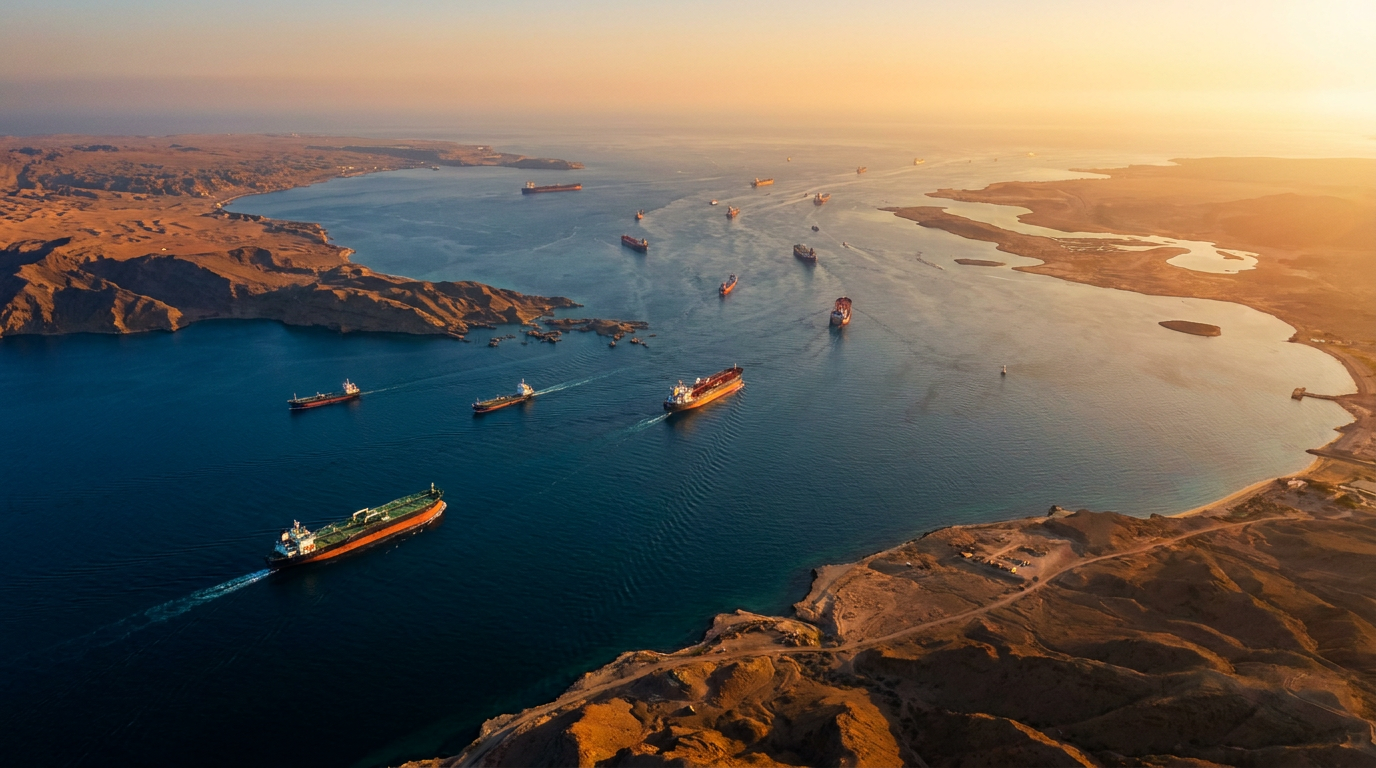
At the center of the memorandum of understanding is the Strait of Hormuz, a narrow and strategically vital waterway between the Persian Gulf and the Gulf of Oman. Under the terms of the newly minted deal, the United States will lift its crippling naval blockade on Iranian ports, while Tehran will simultaneously cease its military closure of the strait. President Trump declared on social media that he had authorized the immediate removal of the blockade, urging the 'ships of the world' to 'start your engines' and allow the oil to flow once again. This mutual stand-down represents the core transactional foundation of the truce.[4][8]
The formal signing ceremony for the agreement is scheduled to take place on Friday, June 19, in Geneva, Switzerland, following months of intensive, behind-the-scenes mediation led primarily by the governments of Pakistan and Qatar. To ensure the event proceeds without disruption, pre-implementation discussions are currently underway in Doha. These preparatory meetings are focused on finalizing the technical details of the maritime reopening, establishing verification mechanisms, and coordinating the precise sequencing of military drawdowns before ink is put to paper. Diplomats are working around the clock to prevent any last-minute derailments.[4][5]
The military closure of the Strait of Hormuz over the past three months has severely disrupted global energy markets, as the waterway typically accommodates roughly one-fifth of the world's total oil and liquefied natural gas supplies. The framework mandates immediate mine-clearing operations by Iranian forces, with the ambitious goal of returning maritime traffic to pre-war levels within a 30-day window. Shipping companies and international naval coalitions are already preparing to coordinate safe passage protocols, though the physical removal of explosive hazards will require meticulous and time-consuming execution.[5][6]

The prospect of economic relief was instantaneous. Global energy markets reacted to the diplomatic breakthrough with a sharp and immediate sell-off, sending oil prices tumbling to their lowest levels since March. Brent crude fell by 4.1 percent, while U.S. West Texas Intermediate dropped by 4.7 percent in early Monday trading, reflecting immense investor confidence that the worst of the supply bottleneck would soon ease. For importing nations that have struggled with soaring energy costs, the reopening of the strait offers a critical economic lifeline.[6]
However, the precise long-term governance of the strait remains a point of intense political contention. President Trump has publicly claimed that the new arrangement will make the waterway 'permanently toll-free,' marking a major shift in maritime policy. He has also suggested that the United States would assume the role of 'guardian of the Middle East' in exchange for 20 percent of the region's revenues, a framing that has raised profound questions among allies and adversaries alike about the exact concessions extracted during the closed-door negotiations. It remains unclear how regional powers will respond to this proposed financial arrangement.[4]

Beyond the maritime reopening, the framework includes a complex economic package designed to ensure compliance during the fragile early stages of implementation. The deal reportedly outlines a phased roadmap for sanctions relief and the unfreezing of Iranian state assets held in foreign accounts. Early estimates suggest that up to $24 billion in frozen funds could eventually be released to Tehran, with Iranian negotiators reportedly seeking an initial $12 billion tranche ahead of wider, more comprehensive talks. This financial injection is viewed as a critical domestic win for the Iranian government.[5]
Beyond the maritime reopening, the framework includes a complex economic package designed to ensure compliance during the fragile early stages of implementation.
The agreement deliberately separates the immediate cessation of military hostilities from the more intractable issue of Iran's nuclear ambitions. Rather than attempting to solve every dispute at once, the memorandum establishes a 60-day follow-up track dedicated to addressing Tehran's nuclear program, the lifting of broader international sanctions, and outstanding disputes with the International Atomic Energy Agency. By kicking the nuclear can down the road, negotiators prioritized the immediate restoration of global shipping over a comprehensive, permanent grand bargain.[5][8]
While the United States and Iran appear ready to halt their direct bilateral confrontation, the agreement's application to the broader regional conflict—specifically the ongoing war in Lebanon—has exposed deep and highly public fractures between Washington and its closest Middle Eastern ally. The draft text of the memorandum explicitly calls for the 'immediate and permanent termination of military operations on all fronts, including in Lebanon.' This inclusion was a key demand from Tehran, which sought to protect its regional proxy network as part of the ceasefire.[4][7]
Lebanese officials and Hezbollah, the heavily armed, Iran-backed militant group, have cautiously embraced the framework. A senior Hezbollah official stated that the group has not carried out any military operations since the deal was first announced, signaling a willingness to abide by the truce. However, they issued a stark warning that their continued adherence to the ceasefire is strictly contingent on Israel halting its own military activities and respecting Lebanese sovereignty. For Hezbollah, the deal represents a chance to regroup after months of punishing strikes.[3]

That condition appears highly unlikely to be met. The Israeli government has fiercely and unequivocally rejected the U.S.-Iran framework, with hardline officials insisting that Jerusalem is not a party to the agreement and will absolutely not be bound by its terms. Israeli National Security Minister Itamar Ben Gvir and Finance Minister Bezalel Smotrich both publicly condemned the deal, calling it a strategic disaster for the free world that fundamentally fails to safeguard Israeli security against the threat posed by Iranian proxies. Their rhetoric underscores a profound divergence in strategic priorities.[1][4]
Israeli officials have vowed to continue their aggressive military campaign in Lebanon until Hezbollah is entirely dismantled and its military infrastructure is permanently cleared from the northern border region. This outright refusal to participate in the Lebanon ceasefire provisions threatens to torpedo the broader regional de-escalation that the Geneva signing is meant to solidify. For Israel, allowing Hezbollah to survive the current conflict intact is viewed as an unacceptable existential risk, regardless of the global economic benefits of the U.S.-Iran truce.[1][7]
The diplomatic rift highlights the stark limits of American leverage over Israel's wartime decision-making. While the United States and Iran have successfully found a mutually acceptable off-ramp to end their direct bilateral war, Washington has so far been entirely unable to compel Israel to accept those same terms for its northern front. This dynamic creates a dangerous asymmetry, where the primary combatants have agreed to stop fighting, but their respective regional allies remain locked in an escalating cycle of violence.[2][7]
Despite the looming crisis in Lebanon, the broader international community has largely rallied behind the U.S.-Iran breakthrough. European Commission President Ursula von der Leyen, along with leaders from the G7 nations, issued strong statements welcoming the memorandum. They emphasized that the resumption of toll-free maritime traffic and the de-escalation of direct U.S.-Iran hostilities are essential conditions for global economic stability. European leaders are desperate to see energy prices stabilize and are urging all parties to ensure the swift and full implementation of the framework.[4][8]

The coming days will severely test the durability of the framework. As diplomats gather in Geneva for Friday's high-stakes signing ceremony, the immediate operational focus will be on executing the complex mine-clearance operations in the Strait of Hormuz and verifying the initial unfreezing of Iranian state assets. Any miscalculation, accidental skirmish, or delay in the lifting of the naval blockade could easily unravel the fragile trust that Pakistani and Qatari mediators have spent months painstakingly building.[4][5]
Yet the ultimate success of the peace deal hinges entirely on whether the United States and Iran can successfully compartmentalize their bilateral truce from the ongoing, intense violence between Israel and Hezbollah. If the Lebanon front continues to burn, and if Israeli strikes provoke a renewed response from Tehran's proxy network, the broader regional war that this agreement seeks to end may simply enter a new, highly volatile phase. The ink on the Geneva memorandum may stop the direct U.S.-Iran war, but true peace in the Middle East remains dangerously out of reach.[2][7]
How we got here
Late February 2026
Direct military conflict erupts between the United States and Iran, leading to the closure of the Strait of Hormuz.
June 14, 2026
Pakistani Prime Minister Shehbaz Sharif announces that a preliminary peace framework has been reached.
June 15, 2026
Global oil prices drop by over 4% as the U.S. authorizes the lifting of its naval blockade.
June 19, 2026
The formal signing ceremony for the memorandum of understanding is scheduled to take place in Geneva, Switzerland.
Viewpoints in depth
The U.S. and Iranian Negotiators
Prioritizing immediate economic relief and the restoration of global shipping.
For Washington and Tehran, the framework represents a pragmatic off-ramp from a devastating bilateral war. The U.S. secures the reopening of the Strait of Hormuz—easing domestic and global energy prices—while Iran gains critical sanctions relief and access to billions in frozen assets. Both sides have agreed to defer the most intractable issue, Iran's nuclear program, to a 60-day follow-up track, calculating that an immediate ceasefire is more valuable than holding out for a comprehensive grand bargain.
The Israeli Government
Fiercely rejecting the deal as a capitulation that leaves Hezbollah intact.
Israeli officials view the U.S.-Iran agreement as a betrayal that sacrifices Israel's northern security for the sake of global oil markets. Far-right ministers have explicitly stated that Israel is not bound by the framework and will continue its military operations in Lebanon until Hezbollah is dismantled. From their perspective, a ceasefire now would merely allow Iranian proxies to regroup and rearm, making the deal a strategic threat rather than a peace breakthrough.
Global Energy Markets
Reacting with immediate relief to the unblocking of a vital maritime chokepoint.
Energy analysts and commodities traders have spent months pricing in the risk of a prolonged closure of the Strait of Hormuz, which handles a fifth of the world's oil and LNG. The announcement of the peace deal triggered an immediate 4% drop in crude prices. However, market optimism is tempered by the logistical reality of clearing naval mines and the political fragility of the agreement. Traders are closely watching the 30-day timeline to see if pre-war shipping volumes can actually be restored.
What we don't know
- Whether Israel's refusal to halt operations in Lebanon will ultimately cause Iran to back out of the agreement.
- How the 60-day follow-up track will resolve the deeply entrenched disputes over Iran's nuclear program.
- The exact mechanisms and timeline for releasing the estimated $24 billion in frozen Iranian assets.
- How the international community will respond to President Trump's claim that the U.S. will take 20% of regional revenues.
Key terms
- Strait of Hormuz
- A narrow, strategically vital waterway between the Persian Gulf and the Gulf of Oman through which roughly 20% of the world's oil and LNG passes.
- Naval Blockade
- A military operation in which ships are used to prevent vessels, goods, or people from entering or leaving a specific port or region.
- Sanctions Relief
- The reduction or removal of economic penalties imposed on a country, often used as an incentive in diplomatic negotiations.
- Hezbollah
- An Iran-backed militant group and political party based in Lebanon, currently engaged in an ongoing conflict with Israel.
Frequently asked
When will the Strait of Hormuz reopen?
The framework calls for immediate mine-clearing operations following the formal signing on Friday, June 19. The goal is to restore pre-war shipping levels within 30 days.
Does this deal end the war in Lebanon?
The text of the agreement explicitly calls for an end to military operations in Lebanon. However, Israel has rejected this provision and vowed to continue fighting Hezbollah, making the ceasefire highly fragile.
What happens to Iran's nuclear program?
The immediate ceasefire does not resolve the nuclear issue. Instead, it establishes a 60-day follow-up track for further negotiations regarding Iran's nuclear ambitions and international sanctions.
Who mediated the peace agreement?
Pakistan and Qatar served as the primary mediators between the United States and Iran, hosting intensive negotiations and pre-implementation discussions.
Sources
Source coverage
8 outlets
4 viewpoints surfaced








[1]Al JazeeraIsraeli Hardliners
World welcomes US-Iran 'peace deal' criticised by Israel
Read on Al Jazeera →[2]BBCRegional Mediators
Bowen: Iran deal ends Trump's war that revealed limit of US dominance
Read on BBC →[3]The GuardianRegional Mediators
Lebanese president hopes US-Iran deal will put 'definitive end' to Israel's war on Lebanon
Read on The Guardian →[4]CBS NewsU.S. and Iranian Negotiators
Deal reached between U.S. and Iran, Trump and Pakistani prime minister say
Read on CBS News →[5]The NationalU.S. and Iranian Negotiators
US and Iran agree framework for peace deal and reopening Strait of Hormuz
Read on The National →[6]ICISGlobal Energy Markets
Oil prices fall by more than 4% on US-Iran peace deal
Read on ICIS →[7]L'Orient-Le JourRegional Mediators
US, Iran reach preliminary agreement to end war, signing set for Friday
Read on L'Orient-Le Jour →[8]The Journal
Details scant on US-Iran peace deal but world leaders and oil prices signal cautious optimism
Read on The Journal →
More in news politics
See all 5 stories →
Every angle. Every day.
Get news politics stories with full source coverage and perspective breakdowns delivered to your inbox.