
How Swimming Reshapes the Brain and Lowers Biological Age
Recent longevity and neuroscience studies reveal that swimming not only reduces cardiovascular mortality by 41% but actively grows new neurons and induces a restorative neurological state known as the 'Blue Mind.'
By Factlen Editorial Team
- Cardiologists & Exercise Physiologists
- Emphasizes the unique cardiovascular adaptations caused by hydrostatic pressure.
- Neuroscientists & Psychologists
- Focuses on how aquatic exercise alters brain chemistry and promotes neurogenesis.
- Public Health Advocates
- Values swimming for its zero-impact accessibility and potential for lifelong adherence.
What's not represented
- · Land-based physical therapists
- · Bone density researchers
Why this matters
While many forms of exercise improve physical fitness, swimming uniquely combines zero-impact cardiovascular conditioning with profound neurological benefits. Understanding how water alters brain chemistry and heart efficiency can help you build a sustainable, lifelong routine that protects against both physical aging and cognitive decline.
Key points
- A massive UK study found regular swimmers have a 41% lower risk of dying from cardiovascular disease.
- Swimming in a horizontal position eliminates gravity's burden on the heart, increasing stroke volume and cardiac efficiency.
- Aquatic exercise stimulates the release of BDNF, a protein that grows new neurons in the brain's memory center.
- Immersion in water triggers the 'Blue Mind' effect, shifting the nervous system from a stressed state to a restorative one.
- The zero-impact nature of water allows swimming to be sustained as a vigorous daily practice well into old age.
Humans have an innate, almost magnetic draw to water. From ancient Roman baths to modern Olympic pools, aquatic immersion has long been associated with healing, recovery, and vitality. But in recent years, the scientific community has moved beyond anecdotal praise, deploying large-scale epidemiological studies and advanced neuroimaging to understand exactly what happens to the human body when it moves through water. The findings suggest that swimming is not merely a form of exercise, but a profound biological intervention that alters everything from our cardiovascular architecture to the physical structure of our brains.[5]
The sheer scale of swimming's impact on human longevity was brought into sharp focus by a massive public health study analyzing over 80,000 British adults. Researchers tracked participants for nearly a decade, comparing the long-term mortality outcomes of various popular sports and exercises. The data revealed that regular swimmers experienced a 28 percent lower risk of premature death from any cause compared to those who remained sedentary or engaged in less protective activities. This established swimming as one of the most effective lifestyle interventions for extending the human lifespan.[1]
Even more striking than the overall survival rate was the specific cardiovascular data. According to the research, swimming was associated with a staggering 41 percent lower risk of dying from cardiovascular disease. This protective effect outpaced several other popular forms of aerobic exercise, including running and cycling. To understand why swimming offers such a dramatic shield against cardiovascular decline, exercise physiologists point to the unique physics of the aquatic environment and how the human body adapts to being submerged and horizontal.[1][4]

When a person swims, they are operating in a rare state of horizontal suspension. On land, the human heart must constantly pump blood against the relentless force of gravity to return it from the lower extremities back up to the chest. In the water, this gravitational burden is entirely neutralized. The horizontal posture allows venous blood to return to the heart with far less resistance, significantly increasing the volume of blood the heart pumps with each individual beat—a crucial cardiovascular metric known as stroke volume.[4]
Furthermore, the water itself exerts a constant hydrostatic pressure on the body. This gentle, uniform compression acts almost like a full-body compression garment, actively assisting circulation and improving vascular function. Over time, this unique cardiovascular demand lowers resting blood pressure and enhances the efficiency of the entire circulatory system. This is particularly vital for older adults, who may struggle with the high-impact nature of land-based cardio but can safely achieve maximum heart rates while suspended in the pool.[1][4]
But the benefits of swimming extend far above the neck. Neuroscientists are increasingly fascinated by how aquatic exercise actively reshapes the physical structure of the brain. While all aerobic exercise is known to benefit cognitive health by increasing general blood flow, swimming appears to trigger a uniquely potent cascade of neurochemical reactions. These structural adaptations not only improve daily mood, focus, and executive function, but they actively protect the brain against age-related cognitive decline, neurodegeneration, and memory loss as we grow older.[2]
At the cellular level, swimming stimulates the rapid release of Brain-Derived Neurotrophic Factor, commonly referred to as BDNF. Often described by neuroscientists as 'Miracle-Gro for the brain,' BDNF is a crucial protein that supports the survival of existing neurons and actively encourages the growth of entirely new ones—a biological process known as neurogenesis. The rhythmic, full-body exertion of swimming signals the body to flood the brain with this protective protein, effectively rebuilding neural networks that might otherwise degrade over time.[2]
At the cellular level, swimming stimulates the rapid release of Brain-Derived Neurotrophic Factor, commonly referred to as BDNF.
Animal studies and human cognitive tests have shown that regular swimming specifically targets the hippocampus, the brain region primarily responsible for memory consolidation and learning. In aging brains, swimming has been observed to suppress apoptosis—the programmed death of cells—and significantly reduce neuroinflammation, which is a key driver of cognitive fog. Furthermore, the complex, bilateral movements required for strokes like freestyle or backstroke force the brain's two hemispheres to communicate rapidly across the corpus callosum, further strengthening neural pathways and improving overall motor coordination and spatial awareness.[2][5]

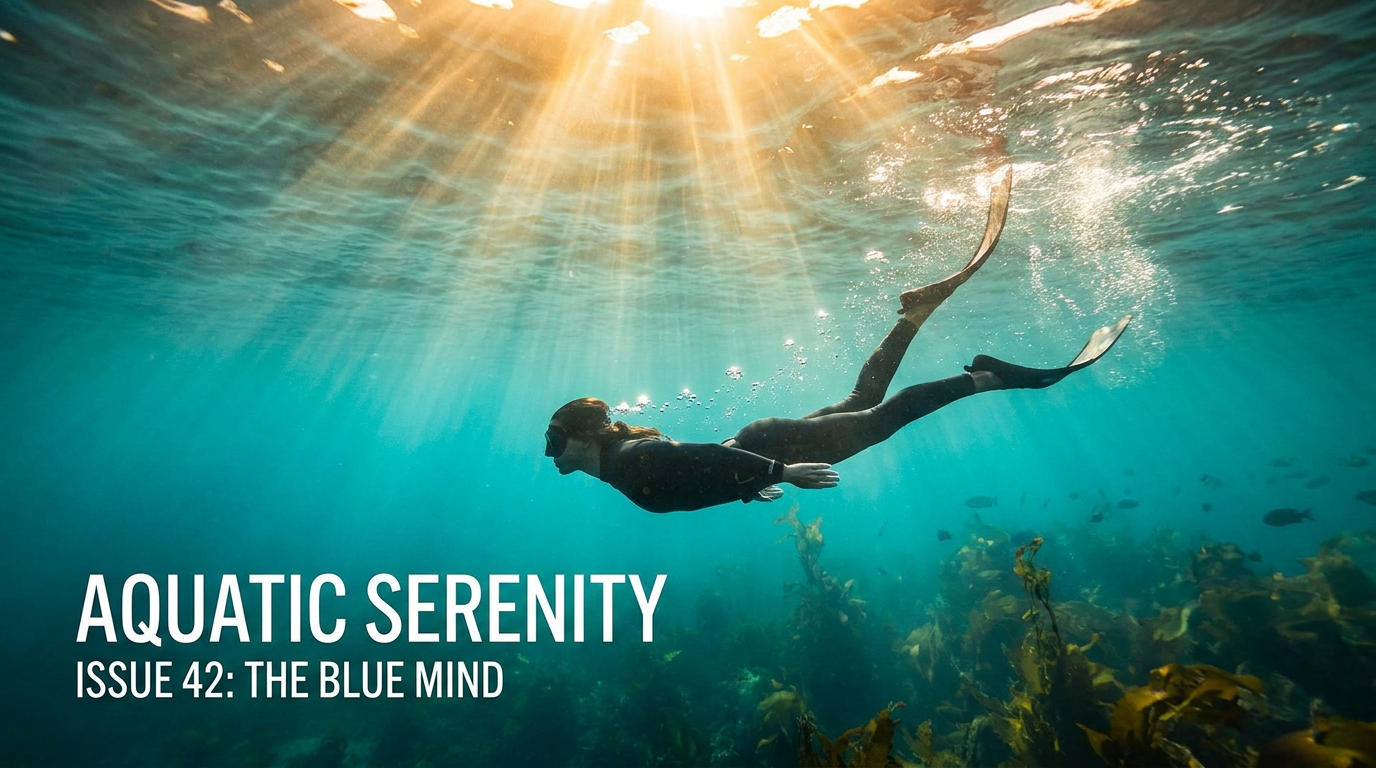
Beyond the mechanical and chemical changes occurring in the brain, there is a profound psychological dimension to swimming. Marine biologist Dr. Wallace J. Nichols coined the term 'Blue Mind' to describe the mildly meditative, deeply relaxed state people enter when they are near, in, on, or under water. This concept explains why humans are instinctively drawn to oceans, lakes, and pools when seeking relief from the overwhelming sensory input of modern life. The water provides a rare sanctuary of sensory isolation, muting digital notifications and the chaotic noise of the terrestrial world.[3]
The Blue Mind state is characterized by a measurable shift in the autonomic nervous system. The modern, hyper-connected world often keeps humans in a chronic state of low-grade 'fight or flight,' a state dominated by the sympathetic nervous system and elevated levels of the stress hormone cortisol. Immersion in water actively dampens this physiological stress response, shifting the body's control over to the parasympathetic nervous system—the biological network responsible for 'rest and digest' functions, cellular repair, immune system regulation, and deep, restorative relaxation.[3]
This neurological shift is accompanied by a highly favorable change in brain chemistry. The physical sensation of water moving across the skin, combined with the rhythmic sound of breathing and the dampening of external noise, lowers cortisol while simultaneously boosting the production of dopamine, serotonin, and oxytocin. The result is a measurable decrease in clinical anxiety, a lifting of depressive symptoms, and an overall increase in subjective well-being that often lasts for hours after the swimmer leaves the pool.[3]
The specific breathing patterns required for swimming further amplify this meditative, stress-relieving effect. Unlike running or cycling, where breathing is largely autonomic, continuous, and often shallow, swimming requires highly intentional breath control. The deliberate inhalation above the surface and the slow, extended exhalation underwater closely mimic the pranayama breathing techniques used in ancient yoga practices. These controlled breathing patterns are clinically proven to lower the resting heart rate, reduce blood pressure, and induce a state of profound mental calmness.[5]
At the microscopic level, swimming also appears to positively influence cellular aging and metabolic health. Regular aquatic exercise improves the number, size, and efficiency of mitochondria—the microscopic, energy-producing powerhouses located within human cells. By optimizing mitochondrial function and improving how the body utilizes oxygen, swimming reduces the overall metabolic stress on the body. This enhanced cellular efficiency effectively slows down the biological aging process, allowing regular swimmers to maintain a biological age significantly younger than their chronological age.[4]

The universal accessibility of swimming is perhaps its greatest public health asset. Because water's buoyancy supports roughly 90 percent of a person's body weight, the skeletal system is entirely spared the repetitive, high-impact forces that often lead to joint degradation, osteoarthritis, and chronic pain in runners and court-sport athletes. This zero-impact environment means that swimming can be safely sustained as a daily, vigorous practice well into a person's eighties and nineties, long after other forms of exercise become too painful.[1][5]
For those looking to harness these profound longevity and cognitive benefits, consistency is far more important than sheer intensity. Public health guidelines and exercise physiologists generally suggest that 150 minutes of moderate swimming per week—ideally broken down into three to five manageable sessions—is sufficient to trigger the cardiovascular adaptations and neuroplastic growth observed in the clinical studies. Even a relaxed, steady breaststroke or backstroke provides the necessary hydrostatic pressure, joint mobility, and breath control to initiate the Blue Mind effect and protect the aging brain.[4]

While the pool cannot entirely replace weight-bearing exercises—which remain biologically necessary for maintaining bone density and preventing osteoporosis—it stands alone as a uniquely holistic health intervention. By simultaneously preserving the delicate cartilage of the joints, optimizing the heart's stroke volume, building new neural networks in the hippocampus, and washing away the accumulated psychological stress of modern life, swimming offers a comprehensive, scientifically backed blueprint for a longer, sharper, and healthier life. It is the rare exercise that nurtures the mind just as fiercely as it trains the body.[5]
Viewpoints in depth
Neuroscientists & Psychologists
Focuses on how aquatic exercise alters brain chemistry, promotes neurogenesis, and induces the meditative 'Blue Mind' state.
For researchers studying the brain, swimming is viewed as a powerful neuroprotective tool. This camp emphasizes that the rhythmic movements and breath control of swimming stimulate the release of Brain-Derived Neurotrophic Factor (BDNF), which helps grow new neurons in the hippocampus. Psychologists also highlight the 'Blue Mind' effect, noting that the sensory isolation of water shifts the nervous system from a stressed sympathetic state to a restorative parasympathetic state, making swimming a dual physical and mental health intervention.
Cardiologists & Exercise Physiologists
Emphasizes the unique cardiovascular adaptations caused by hydrostatic pressure and horizontal movement.
Cardiovascular experts focus on the physics of the pool. Because swimmers are horizontal, the heart doesn't have to fight gravity to pump blood from the legs, which increases stroke volume and cardiac efficiency. Furthermore, the hydrostatic pressure of the water acts as a full-body compression suit, improving vascular function and lowering blood pressure. This camp frequently points to the landmark UK Biobank study showing a 41% reduction in cardiovascular mortality for swimmers, arguing it is one of the most efficient ways to protect the aging heart.
Public Health Advocates
Values swimming for its zero-impact accessibility and potential for lifelong adherence.
Public health officials look at exercise through the lens of long-term sustainability. While running and high-intensity interval training offer excellent cardiovascular benefits, they often lead to joint degradation and injury over decades of use. This camp champions swimming because the buoyancy of water supports 90% of body weight, eliminating the impact forces that cause osteoarthritis. They argue that the best exercise is the one a person can continue doing into their eighties and nineties, making swimming a critical pillar of healthy aging.
What we don't know
- Whether cold-water swimming provides significantly more neuroprotective benefits than swimming in standard heated pools.
- The exact minimum dosage of swimming required to trigger the 'Blue Mind' effect in highly stressed individuals.
- How the long-term cognitive benefits of swimming directly compare to those of complex, skill-based land sports like tennis.
Key terms
- Neurogenesis
- The biological process by which new neurons are formed in the brain, actively countering cognitive decline.
- BDNF (Brain-Derived Neurotrophic Factor)
- A crucial protein released during exercise that promotes the survival of nerve cells and encourages the growth of new neural networks.
- Blue Mind
- A mildly meditative, deeply relaxed state characterized by calm and peacefulness, triggered by being near or in water.
- Apoptosis
- Programmed cell death, which naturally occurs as the brain ages but can be slowed by neuroprotective exercises like swimming.
- Hydrostatic Pressure
- The gentle, uniform pressure exerted by water on a submerged body, which assists circulation and improves vascular function.
Frequently asked
How much swimming is required to see brain and heart benefits?
Public health experts generally recommend 150 minutes of moderate-intensity swimming per week, ideally broken into three to five sessions, to achieve significant cardiovascular and cognitive benefits.
Does the temperature of the water matter?
While cold water swimming has unique benefits like a sharp increase in endorphins, standard indoor pool temperatures are entirely sufficient for the cardiovascular adaptations and neuroplasticity benefits described in most longevity studies.
Is swimming better than running for longevity?
A major UK study found swimming was associated with a 41% lower risk of cardiovascular death. While running also offers strong cardiovascular benefits, swimming carries a near-zero risk of the joint degradation that often forces runners to stop as they age.
Sources
Source coverage
5 outlets
3 viewpoints surfaced



[1]British Journal of Sports MedicineCardiologists & Exercise Physiologists
Associations of specific types of sports and exercise with all-cause and cardiovascular-disease mortality
Read on British Journal of Sports Medicine →[2]National Center for Biotechnology InformationNeuroscientists & Psychologists
Swimming exercise improves short- and long-term memories: Time-course changes
Read on National Center for Biotechnology Information →[3]Wallace J. NicholsNeuroscientists & Psychologists
Blue Mind: The Surprising Science That Shows How Being Near, In, On, or Under Water Can Make You Happier
Read on Wallace J. Nichols →[4]University of Texas at Austin Cardiovascular Aging Research LaboratoryCardiologists & Exercise Physiologists
Cardiovascular Aging Research Laboratory
Read on University of Texas at Austin Cardiovascular Aging Research Laboratory →[5]Factlen Editorial TeamPublic Health Advocates
Synthesis by Factlen editorial team
Read on Factlen Editorial Team →
Every angle. Every day.
Get fitness stories with full source coverage and perspective breakdowns delivered to your inbox.