
The Dark Sky Movement: How National Parks Are Saving the Stars
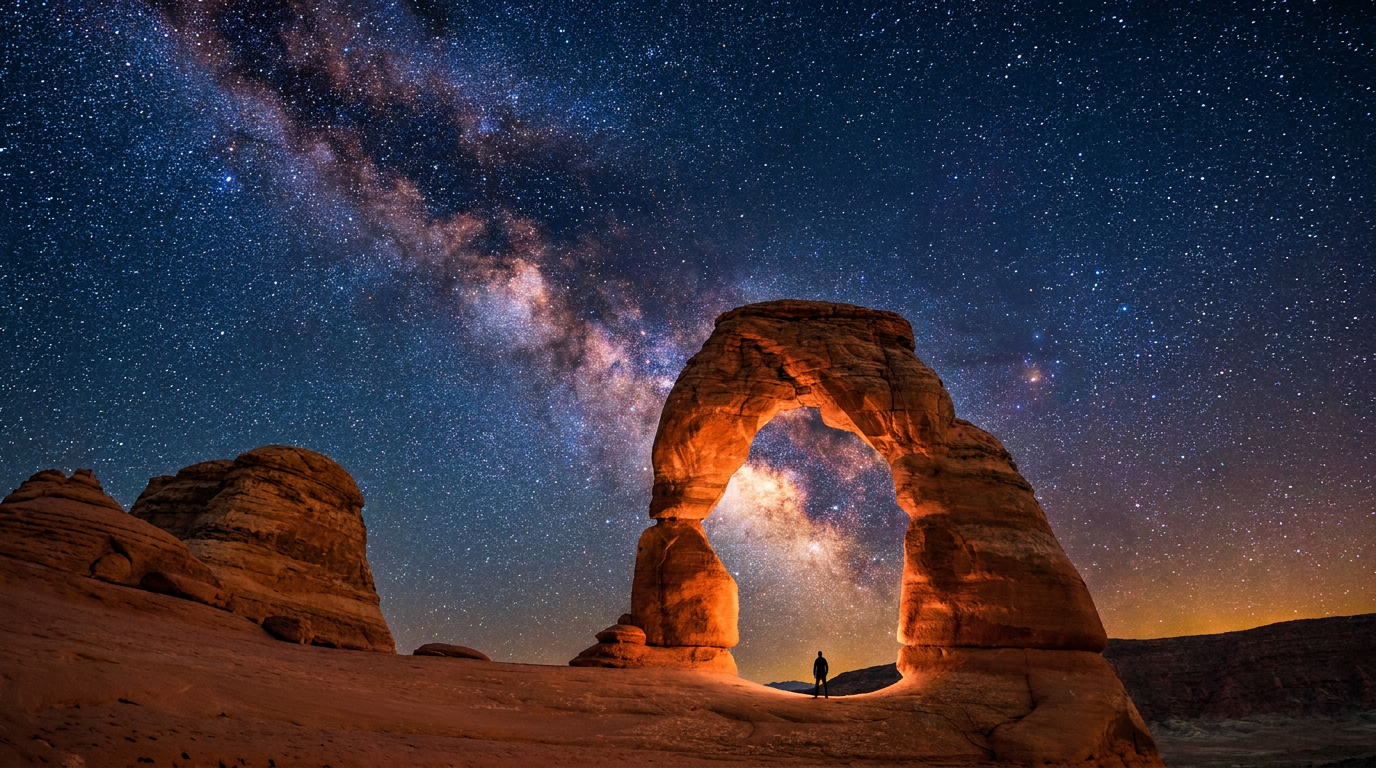
As light pollution erases the night sky for most Americans, a growing network of certified Dark Sky Parks is fighting back, sparking an astrotourism boom and protecting nocturnal ecosystems.
By Factlen Editorial Team
- Conservationists & Park Rangers
- Focus on restoring natural darkness to protect wildlife and human health.
- Astrotourists & Stargazers
- Seek out pristine night skies for recreation, photography, and connection with nature.
- Local Business Owners
- View dark skies as a lucrative, sustainable economic engine that drives year-round tourism.
- Dark Sky Advocates
- Campaign for policy changes and lighting standards to reverse global light pollution.
What's not represented
- · Satellite operators launching mega-constellations
- · Municipalities struggling with the cost of lighting retrofits
Why this matters
Light pollution disrupts wildlife and human circadian rhythms while erasing a fundamental human experience. The Dark Sky movement offers a blueprint for reclaiming the stars, proving that conservation can generate billions in sustainable tourism revenue.
Key points
- Light pollution currently prevents 80% of Americans from seeing the Milky Way from their homes.
- DarkSky International and the National Park Service are certifying protected areas that actively manage and reduce artificial light.
- Astrotourism is driving billions of dollars into rural economies, particularly during the colder off-season months.
- Reducing skyglow is critical for protecting the circadian rhythms and migratory patterns of nocturnal wildlife.
- Utah and Colorado lead the nation in certified Dark Sky locations, pioneering regional astronomy tourism routes.
The modern world has largely erased one of humanity's oldest shared experiences: the night sky. For roughly 80 percent of Americans, the Milky Way is no longer visible from their homes, obscured by a perpetual, artificial twilight known as skyglow.[1]
This phenomenon, driven by the unchecked expansion of artificial light at night, is more than just an aesthetic loss. Light pollution represents a profound disruption to the natural world, altering ecosystems and severing a connection to the cosmos that has guided human navigation, agriculture, and culture for millennia.[3]
In response, a quiet but powerful conservation movement is taking hold across the globe, led by the U.S. National Park Service and an organization called DarkSky International. They are establishing certified "Dark Sky Parks"—protected areas where the darkness is preserved just as fiercely as the land itself.[1][2][7]
Achieving this certification is no simple feat. A park cannot simply rely on its remote location; it must actively manage its "lightscape." This involves conducting rigorous audits of all existing light fixtures, replacing unshielded bulbs with downward-facing amber lights, and implementing strict lighting policies that prioritize darkness.[1][2]

The ecological stakes are remarkably high. Artificial light wreaks havoc on the circadian rhythms of both flora and fauna. For migratory birds that navigate by the stars, skyglow can cause fatal disorientation, drawing them off course and into urban hazards.[1][2]
In places like Badlands National Park, the preservation of darkness is critical for the survival of nocturnal predators, including the endangered black-footed ferret. When parks eliminate unnecessary lighting, they restore the natural predator-prey balance that has evolved over millions of years.[2][7]
But the movement is also driven by a surging human desire to reconnect with the cosmos, fueling a booming industry known as "astrotourism." Visitors are increasingly planning their vacations around celestial events, new moons, and meteor showers, seeking out the darkest corners of the country.[3][5]
The economic impact of this trend is staggering. A landmark study by Missouri State University focused on the Colorado Plateau—a region spanning parts of Utah, Colorado, Arizona, and New Mexico that boasts a remarkably high concentration of Dark Sky Parks.[4]
The researchers projected that astrotourists will spend $5.8 billion in the region over a ten-year period. This influx of capital is expected to generate $2.4 billion in higher wages and support more than 10,000 additional jobs annually in local gateway communities.[4][6]

The researchers projected that astrotourists will spend $5.8 billion in the region over a ten-year period.
Crucially, astrotourism alters the traditional cadence of park visitation. Because stargazing requires visitors to be present after dark, they are far more likely to book overnight lodging, eat at local restaurants, and purchase supplies in gateway towns rather than simply driving through during the day.[6]
Furthermore, the crispest, clearest night skies often occur during the colder, non-summer months when atmospheric humidity is low. This provides a much-needed economic boost to rural communities during what is typically their off-season, smoothing out the boom-and-bust cycle of summer tourism.[5][6]
Utah and Colorado have emerged as the undisputed leaders of this movement. Utah holds the highest number of certified Dark Sky Places in the world, while Colorado boasts 21 of its own, turning the American Southwest into a global destination for astronomy enthusiasts.[5]
The states are even collaborating on regional initiatives, such as the "Park to Park in the Dark" campaign, which promotes a dedicated astronomy route connecting Great Basin National Park in Nevada with Death Valley in California, touted as the starriest route in America.[5]

Inside the parks, the National Park Service has embraced the trend with its "Half the Park is After Dark" initiative. Ranger-led astronomy programs have become some of the most popular and heavily attended events on the public lands calendar.[2][3]
During these programs, rangers use high-powered green lasers to trace constellations and guide visitors through telescope viewings of distant nebulae and planets. For many urban visitors, these sessions mark the first time they have ever seen the Milky Way with their own eyes, often eliciting profound emotional responses.[3][7]
The movement is also expanding internationally. Parks from Warrumbungle in Australia to Aenos in Greece and Mayo in Ireland have recently earned Dark Sky certifications, proving that the desire to reclaim the night is a global phenomenon.[1]
Yet, challenges remain. Many parks lack the funding and staffing required to complete the rigorous DarkSky certification process. Additionally, parks are constantly threatened by the creeping skyglow of encroaching municipal development outside their borders.[2][3]

How we got here
2001
The National Park Service establishes the Night Skies Team to begin systematically measuring light pollution across public lands.
2006
The NPS issues a formal management policy directing parks to preserve natural lightscapes and minimize human-caused light.
2019
A landmark economic study reveals that astrotourism in the Colorado Plateau will generate $5.8 billion over the next decade.
April 2025
DarkSky International celebrates International Dark Sky Week, highlighting the growth of the movement to over 139 certified locations in the U.S.
Viewpoints in depth
Conservationists & Ecologists
Focus on restoring natural darkness to protect wildlife and human health.
For ecologists, light pollution is a rapidly growing environmental threat that disrupts the fundamental circadian rhythms of the planet. They argue that artificial light at night disorients migratory birds, alters predator-prey dynamics, and impacts insect populations. By establishing Dark Sky Parks, conservationists aim to create nocturnal sanctuaries that preserve the ecological integrity of these habitats, viewing the return of the stars as a secondary benefit to the primary goal of ecological restoration.
Gateway Community Businesses
View dark skies as a lucrative, sustainable economic engine that drives year-round tourism.
Local chambers of commerce and business owners in towns bordering national parks increasingly see darkness as a highly marketable commodity. Because stargazing requires visitors to stay after the sun goes down, astrotourism directly translates into increased overnight hotel bookings and restaurant spending. Furthermore, because winter skies are often the clearest, this demographic values dark sky initiatives for their ability to draw tourists during the traditionally slow off-season, stabilizing local economies.
Urban Planners & Lighting Engineers
Balance the need for public safety and visibility with the desire to reduce skyglow and energy waste.
Lighting professionals and municipal planners approach the dark sky movement from an infrastructure perspective. They emphasize that reducing light pollution does not mean turning off all the lights and compromising public safety. Instead, they advocate for "smart lighting"—using downward-facing shields, motion sensors, and warmer amber LEDs that minimize atmospheric scattering. For this camp, the transition to dark-sky-friendly lighting is primarily an exercise in energy efficiency and modernizing aging municipal grids.
What we don't know
- How fast satellite mega-constellations like Starlink will degrade ground-based stargazing even in protected areas.
- Whether smaller, underfunded state and local parks can afford the expensive lighting retrofits required for official certification.
Key terms
- Skyglow
- The brightening of the night sky over inhabited areas, caused by artificial light scattering in the atmosphere.
- Astrotourism
- A form of nature-based travel where the primary goal is observing celestial events, stargazing, or visiting astronomical facilities.
- Bortle Scale
- A nine-level numeric scale that measures the night sky's brightness of a particular location, with Class 1 being the darkest and Class 9 being an inner-city sky.
- Lightscape
- The natural resources and values of a park that exist in the absence of human-caused light, including the starry night sky.
Frequently asked
What exactly is a Dark Sky Park?
It is a protected public land, certified by DarkSky International, that possesses an exceptional quality of starry nights and has implemented strict lighting policies to prevent light pollution.
Why is light pollution harmful to animals?
Artificial light disrupts the natural circadian rhythms of wildlife. It can disorient migratory birds, expose nocturnal prey to predators, and interfere with the reproductive cycles of various species.
How do parks reduce their light pollution?
Parks conduct lighting audits to remove unnecessary fixtures, install downward-facing shields to prevent light from spilling upward, and switch to warmer, amber-colored bulbs that scatter less in the atmosphere.
Can I see the Milky Way from a Dark Sky Park?
Yes. In certified Dark Sky Parks, especially on clear, moonless nights, the Milky Way is clearly visible to the naked eye, along with thousands of individual stars and planets.
Sources
Source coverage
7 outlets
4 viewpoints surfaced







[1]DarkSky InternationalDark Sky Advocates
International Dark Sky Places
Read on DarkSky International →[2]National Park ServiceConservationists & Park Rangers
Night Skies: An Economic Value and Natural Resource
Read on National Park Service →[3]Undark MagazineConservationists & Park Rangers
As Light Pollution Spreads, National Parks Become Stargazing Sanctuaries
Read on Undark Magazine →[4]Missouri State UniversityLocal Business Owners
Dark sky tourism: economic impacts on the Colorado Plateau Economy, USA
Read on Missouri State University →[5]Visit UtahAstrotourists & Stargazers
Reclaiming the Stars: Utah's Dark Sky Initiative
Read on Visit Utah →[6]Miles PartnershipLocal Business Owners
Studying Dark Sky Tourism's Potential Economic Impacts
Read on Miles Partnership →[7]Factlen Editorial TeamDark Sky Advocates
Synthesis by Factlen editorial team
Read on Factlen Editorial Team →
Every angle. Every day.
Get travel stories with full source coverage and perspective breakdowns delivered to your inbox.