
US and Iran Reach Framework Peace Deal, Reopening Strait of Hormuz
The United States and Iran have agreed to a framework peace deal to end their 15-week conflict, triggering a 60-day negotiation window and the immediate reopening of vital global shipping lanes.
By Factlen Editorial Team
- U.S. Administration
- Focuses on economic relief, ending the war, and claiming victory over Iran's nuclear ambitions.
- Iranian Leadership
- Prioritizes sanctions relief, unfreezing assets, and preserving national sovereignty.
- Israeli Security Establishment
- Views the deal as a strategic failure that leaves Iran's proxy network and nuclear infrastructure intact.
- Global Markets & Allies
- Relieved by the de-escalation and the reopening of vital shipping lanes.
What's not represented
- · Lebanese civilians caught in the crossfire between Israel and Hezbollah.
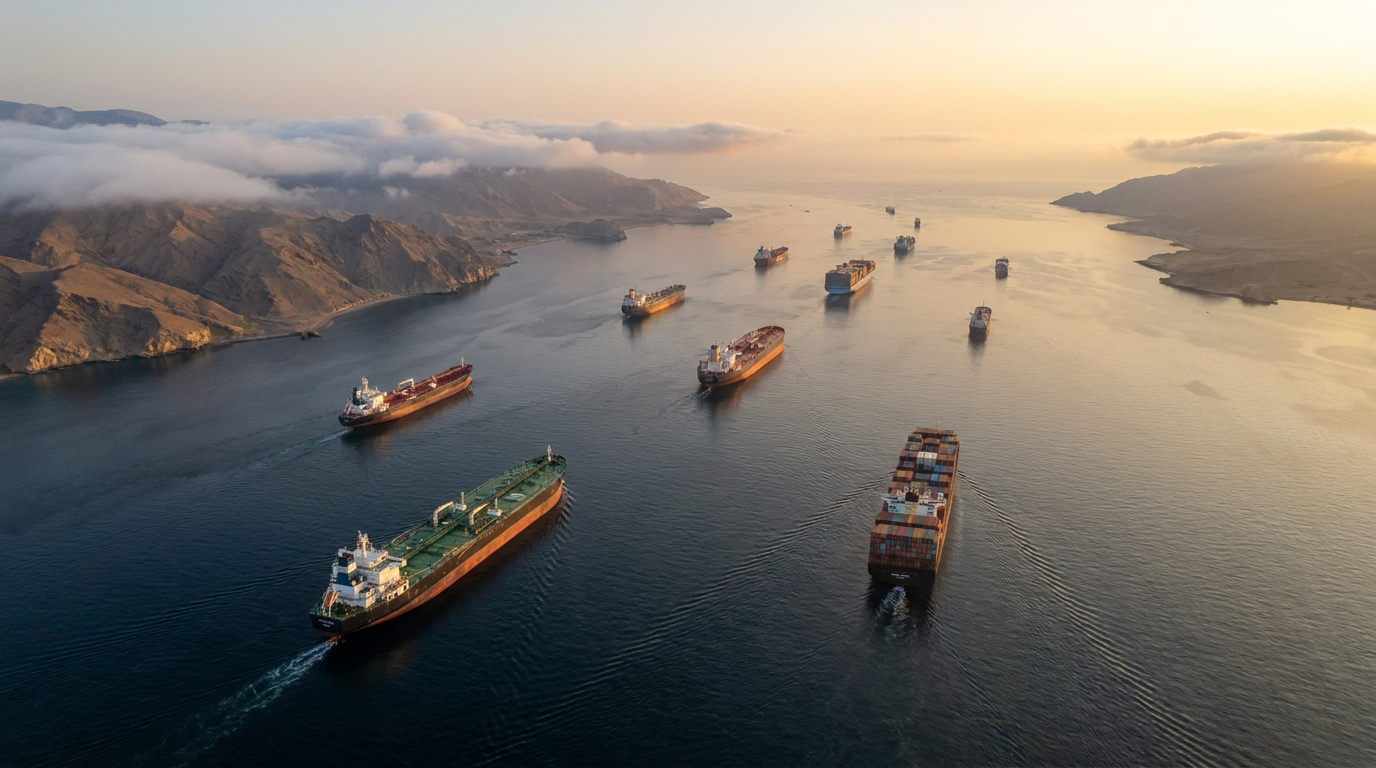
- · Commercial shipping companies navigating the newly reopened Strait of Hormuz.
- · Iranian citizens facing severe economic hardship under ongoing domestic inflation.
Why this matters
This framework agreement pauses a 15-week conflict that had severely disrupted global energy markets and threatened to engulf the entire Middle East. By reopening the Strait of Hormuz, the deal immediately lowers global oil prices and inflation pressures, though its ultimate success hinges on a fragile 60-day window to resolve deeply entrenched nuclear and geopolitical disputes.
Key points
- The U.S. and Iran have reached a framework peace deal to end their 15-week military conflict.
- The agreement immediately reopens the Strait of Hormuz and lifts the U.S. naval blockade on Iranian ports.
- A formal Memorandum of Understanding will be signed in Geneva, triggering 60 days of technical negotiations.
- Global oil prices dropped roughly 5% following the announcement of the restored shipping routes.
- Israeli leaders across the political spectrum have condemned the deal, calling it a strategic failure.
- Conflicting claims remain over Iran's nuclear program and the potential release of $25 billion in frozen assets.
After 15 weeks of escalating conflict that rattled the global economy and pushed the Middle East to the brink of a wider war, the United States and Iran have reached a framework peace deal. The agreement, announced late Sunday, aims to permanently halt military operations across all fronts and reopen critical international shipping lanes.[1][5]
U.S. President Donald Trump declared the deal "complete" in a social media post, announcing the immediate removal of the U.S. naval blockade on Iranian ports. "Ships of the World, start your engines. Let the oil flow!" he wrote, signaling an end to the maritime standoff that had choked global supply chains.[5][7]
The immediate economic relief was palpable. Global markets rallied, and oil prices tumbled by roughly 5 percent on Monday morning as traders reacted to the news that the Strait of Hormuz—a chokepoint for a fifth of the world's oil—would reopen toll-free.[1][8]
The diplomatic breakthrough was brokered with the help of international mediators, notably Pakistan and Qatar. Pakistani Prime Minister Shehbaz Sharif confirmed that the two sides are scheduled to formally sign a Memorandum of Understanding (MoU) on Friday in Geneva, Switzerland.[6][7]

However, the Geneva signing is not a final peace treaty. Instead, it triggers a 60-day window of intensive technical negotiations. During this period, diplomats must resolve the most intractable issues that sparked the war in February: Iran's nuclear program and the architecture of U.S. sanctions.[1][6]
On the nuclear front, both sides are already claiming victory while offering conflicting narratives. Trump asserted that the agreement ensures Iran will not acquire a nuclear weapon, suggesting the U.S. would eventually secure or destroy Iran's highly enriched uranium.[2][5]
Iranian officials, conversely, maintain that their nuclear program has always been peaceful. Tehran's negotiators have reportedly demanded that the 60-day talks focus strictly on sanctions relief, economic reconstruction, and the unfreezing of an estimated $24 to $25 billion in assets held abroad.[1][2]
Iranian officials, conversely, maintain that their nuclear program has always been peaceful.
The ambiguity of the framework leaves significant room for friction. While Iranian state media reported that the suspension of U.S. sanctions on Iranian oil is a core component of the deal, Trump has publicly claimed that no money will change hands, setting up a high-stakes clash for the upcoming technical talks.[5]

Beyond Washington and Tehran, the fiercest resistance to the pact is emerging from Israel. The framework agreement has triggered a political earthquake in Jerusalem, where Prime Minister Benjamin Netanyahu faces immense pressure from both his right-wing coalition and opposition leaders.[3][4]
Israeli opposition figures, including Yair Golan and Benny Gantz, have publicly disparaged the U.S.-Iran agreement, calling it the "greatest strategic failure" in Israel's history. Critics argue the deal leaves Iran's proxy network intact and fails to permanently dismantle its nuclear infrastructure.[3][4]
The tension between Washington and Jerusalem nearly derailed the negotiations in their final hours. In the days leading up to the announcement, Israel launched fresh airstrikes on the southern suburbs of Beirut, targeting the Iranian-backed militant group Hezbollah.[1][4]
The Beirut strikes reportedly infuriated the U.S. administration. Trump, who called Netanyahu a "very difficult guy" in a recent interview, allegedly engaged in a stormy phone call with the Israeli leader, warning him not to jeopardize the fragile U.S.-brokered ceasefire.[1][4]

The Lebanon front remains a volatile wildcard. The framework deal explicitly calls for the termination of military operations "on all fronts, including in Lebanon." A Hezbollah official stated that the group has paused its operations since the announcement but is closely monitoring Israel's adherence to the ceasefire.[1][6]
Internationally, the deal has been met with cautious optimism. A joint statement from the U.K., France, Germany, and Italy welcomed the diplomatic breakthrough and expressed a willingness to lift relevant sanctions, provided Iran takes "clear, verifiable steps" to limit its nuclear program.[5]
In a controversial addendum to the diplomatic victory lap, Trump suggested that the U.S. would assume the role of "guardian of the Middle East" going forward, claiming Washington should receive 20 percent of the region's revenues in exchange for its security umbrella.[2]

How we got here
Late Feb 2026
Joint U.S.-Israeli strikes on Iran trigger a 15-week regional conflict.
Spring 2026
Iran closes the Strait of Hormuz and the U.S. imposes a naval blockade, spiking global energy prices.
June 14, 2026
U.S. and Iranian officials announce a framework peace deal to halt military operations.
June 19, 2026
Expected signing of the Memorandum of Understanding in Geneva, Switzerland.
August 2026
Deadline for the 60-day intensive technical negotiations on nuclear limits and sanctions.
Viewpoints in depth
U.S. Administration's View
The deal is a historic victory that reopens global shipping and halts Iran's nuclear ambitions.
Washington frames the framework agreement as a triumph of maximum pressure and decisive military action. By lifting the naval blockade and reopening the Strait of Hormuz, the administration claims to have rescued the global economy from an energy crisis. U.S. officials assert that the upcoming 60-day window will force Tehran to accept stringent, verifiable limits on its nuclear program, effectively neutralizing the threat of an Iranian nuclear weapon without committing to massive financial payouts.
Iranian Leadership's View
The agreement is a necessary step to lift crippling sanctions and recover billions in frozen assets.
For Tehran, the framework is primarily an economic lifeline. Iranian negotiators emphasize that their nuclear program has always been for civilian purposes, framing the 60-day talks as a mechanism to secure the release of up to $25 billion in frozen funds and the permanent removal of U.S. sanctions on oil exports. Hardliners within Iran remain deeply skeptical of U.S. promises, insisting that the deal must respect Iranian sovereignty and not touch its ballistic missile program or regional alliances.
Israeli Security Establishment's View
The pact is a dangerous capitulation that leaves Israel vulnerable to an intact Iranian threat.
Across the political spectrum in Jerusalem, the deal is viewed with profound alarm. Israeli leaders argue that a 60-day pause merely gives Tehran time to regroup while leaving its proxy network—particularly Hezbollah in Lebanon—fully operational. Opposition figures have labeled the agreement a 'strategic failure,' warning that by prioritizing the global economy and oil prices, the U.S. has effectively abandoned its commitment to dismantling Iran's nuclear infrastructure and neutralizing its regional influence.
What we don't know
- Whether the 60-day technical negotiations will result in a permanent treaty or collapse over nuclear disagreements.
- How Israel will respond long-term, and whether it will continue military operations against Hezbollah in Lebanon.
- The exact mechanisms for verifying any limits placed on Iran's highly enriched uranium stockpiles.
- Whether the U.S. will actually release the $24–$25 billion in frozen Iranian assets demanded by Tehran.
Key terms
- Strait of Hormuz
- A narrow waterway between the Persian Gulf and the Gulf of Oman through which roughly a fifth of the world's oil passes.
- Memorandum of Understanding (MoU)
- A preliminary diplomatic agreement outlining the framework and conditions for future, more detailed negotiations.
- Highly Enriched Uranium
- Uranium processed to contain a high concentration of the U-235 isotope, which at 90 percent purity can be used to build nuclear weapons.
- Naval Blockade
- The use of military ships to cut off a specific maritime area, preventing the passage of commercial shipping and supplies.
Frequently asked
Is the war between the U.S. and Iran completely over?
The two sides have agreed to a framework peace deal and a cessation of military operations, but a final treaty depends on 60 days of upcoming technical negotiations.
Why did oil prices drop after the announcement?
The deal includes the immediate reopening of the Strait of Hormuz and the lifting of a U.S. naval blockade, easing fears of a prolonged global energy shortage.
How does this affect Israel's conflict with Hezbollah?
The agreement calls for an end to hostilities on all fronts, including Lebanon. Hezbollah has paused operations, but Israeli officials have expressed reluctance to halt their campaign.
What happens to Iran's nuclear program?
The exact terms are still being negotiated. The U.S. claims Iran will be prevented from obtaining a weapon, while Iran insists its program is peaceful and demands sanctions relief.
Sources
Source coverage
8 outlets
4 viewpoints surfaced








[1]The GuardianGlobal Markets & Allies
US and Iran reach framework peace deal to end war
Read on The Guardian →[2]The New York TimesGlobal Markets & Allies
On the Nuclear Issue, Each Side Finds a Way to Claim Victory
Read on The New York Times →[3]Al JazeeraIranian Leadership
‘Netanyahu’s life project failed with US-Iran deal’
Read on Al Jazeera →[4]The Washington PostIsraeli Security Establishment
Israelis disparage US-Iran peace deal as a 'catastrophe'
Read on The Washington Post →[5]TimeU.S. Administration
Trump Says U.S. and Iran Reach Deal to End War
Read on Time →[6]PBS NewsHourU.S. Administration
Deal is reached to end Iran war and Trump orders stop to U.S. naval blockade
Read on PBS NewsHour →[7]CBS NewsU.S. Administration
Trump says U.S. deal with Iran 'is now complete,' authorizes removal of Navy blockade
Read on CBS News →[8]The Irish TimesGlobal Markets & Allies
US-Iran peace deal includes the immediate reopening of the Strait of Hormuz
Read on The Irish Times →

Every angle. Every day.
Get news politics stories with full source coverage and perspective breakdowns delivered to your inbox.