
U.S. and Iran Reach Framework Peace Deal to Reopen Strait of Hormuz
The United States and Iran have agreed to a preliminary peace deal that would end a three-month war and reopen the critical Strait of Hormuz to global shipping. However, Israel has rejected the agreement's ceasefire provisions, vowing to maintain its military occupation in southern Lebanon.
By Factlen Editorial Team
- US & Mediators
- View the deal as a necessary economic and diplomatic breakthrough to end a devastating three-month war.
- Israeli Government
- Rejects the agreement's ceasefire terms, arguing it fails to address regional security threats and does not bind Israeli military operations.
- Global Markets
- Optimistic about the return of oil flows but cautious about the timeline for clearing mines and restoring full shipping capacity.
- Iranian Leadership
- Frames the deal as a forced American concession that lifts crippling sanctions, though deep distrust remains.
What's not represented
- · Lebanese civilians displaced by the ongoing occupation
- · Shipping insurers assessing the actual risk of the Strait
Why this matters
The closure of the Strait of Hormuz choked off 20% of the world's crude oil, driving up global inflation and energy costs. While this framework agreement has already sent oil prices tumbling, Israel's refusal to halt its operations in Lebanon threatens to unravel the fragile truce before it is even signed.
Key points
- The U.S. and Iran agreed to a 60-day ceasefire framework to end their three-month conflict.
- The deal includes reopening the Strait of Hormuz and lifting the U.S. naval blockade.
- Global oil prices tumbled nearly 5% following the announcement.
- Israel rejected the ceasefire, vowing to maintain its military occupation in southern Lebanon.
- The formal Memorandum of Understanding is scheduled to be signed Friday in Switzerland.
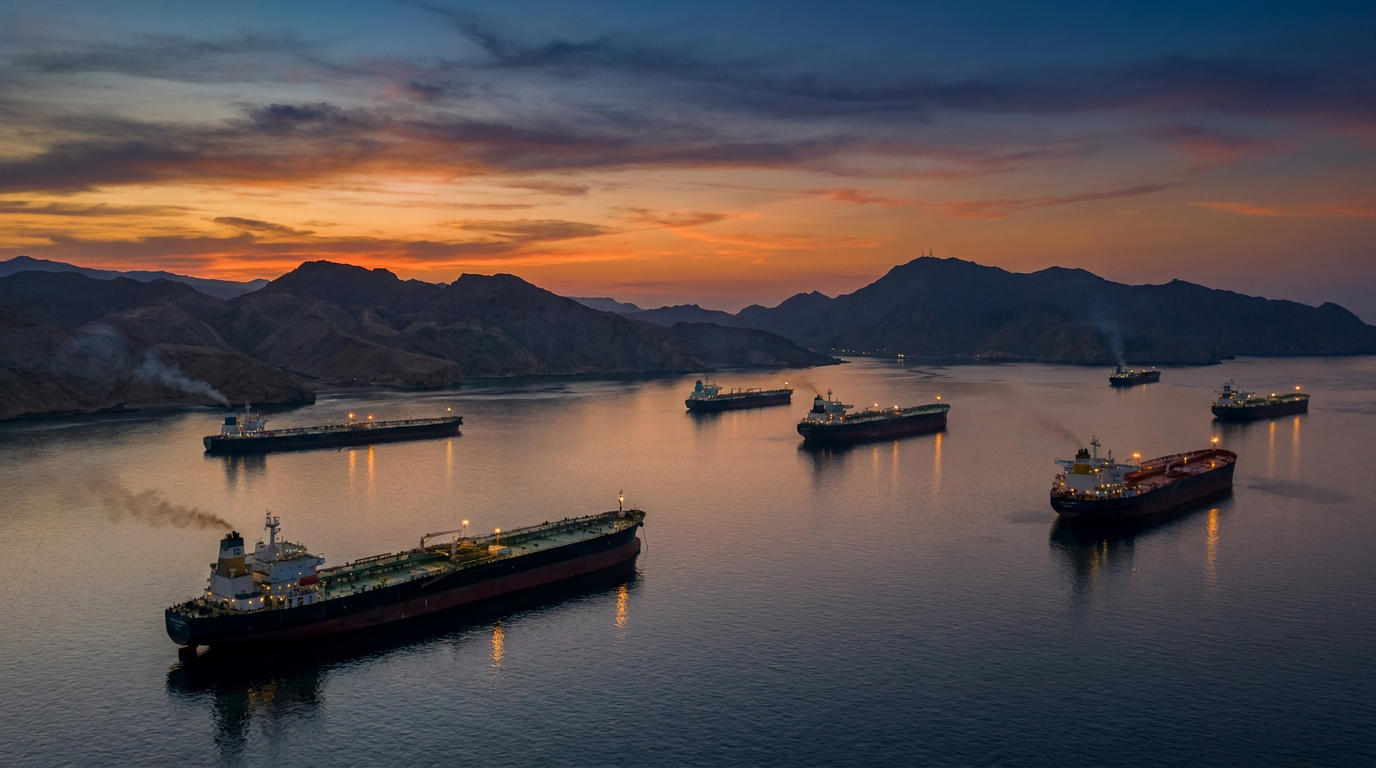
The United States and Iran have reached a preliminary framework agreement to end a devastating three-month war, signaling a potential close to a conflict that has choked off global energy supplies and driven up inflation. The deal, mediated by Pakistan, establishes a 60-day ceasefire and mandates the reopening of the Strait of Hormuz, a critical maritime chokepoint that handles roughly one-fifth of the world's crude oil.[1][4]
President Donald Trump announced the breakthrough on Sunday, declaring the deal "complete" and authorizing the immediate removal of the U.S. naval blockade on Iranian ports. "Ships of the World, start your engines. Let the oil flow!" Trump wrote on social media. The formal Memorandum of Understanding is scheduled to be signed on Friday in Switzerland.[2][8]
The geopolitical breakthrough immediately sent shockwaves through global financial markets. Brent crude, the international oil benchmark, tumbled nearly 5% to $83.11 a barrel, its lowest level since the conflict erupted in early March. U.S. stock markets surged in pre-market trading, reflecting widespread investor relief that the severe inflationary pressures caused by the energy squeeze might finally ease.[2][3]
However, the path from a diplomatic framework to a fully functioning global supply chain remains fraught with physical and political obstacles. The agreement is structured as a 60-day Memorandum of Understanding. During this window, the U.S. will suspend sanctions on Iranian oil and release frozen assets, while Iran has committed to reopening the strait within 30 days and halting all military operations.[1][8]

Crucially, the initial deal defers the most intractable issue—Iran's nuclear program—to a second phase of negotiations. U.S. Vice President JD Vance described the arrangement as a "two-step verification process," noting that Iran will only retain access to the global economy if it honors long-term commitments to never develop or procure a nuclear weapon. Iranian officials, meanwhile, emphasized that the agreement was drafted in an atmosphere of "deep mistrust" and framed it as a necessary step to end hostilities rather than a comprehensive reconciliation.[3][4]
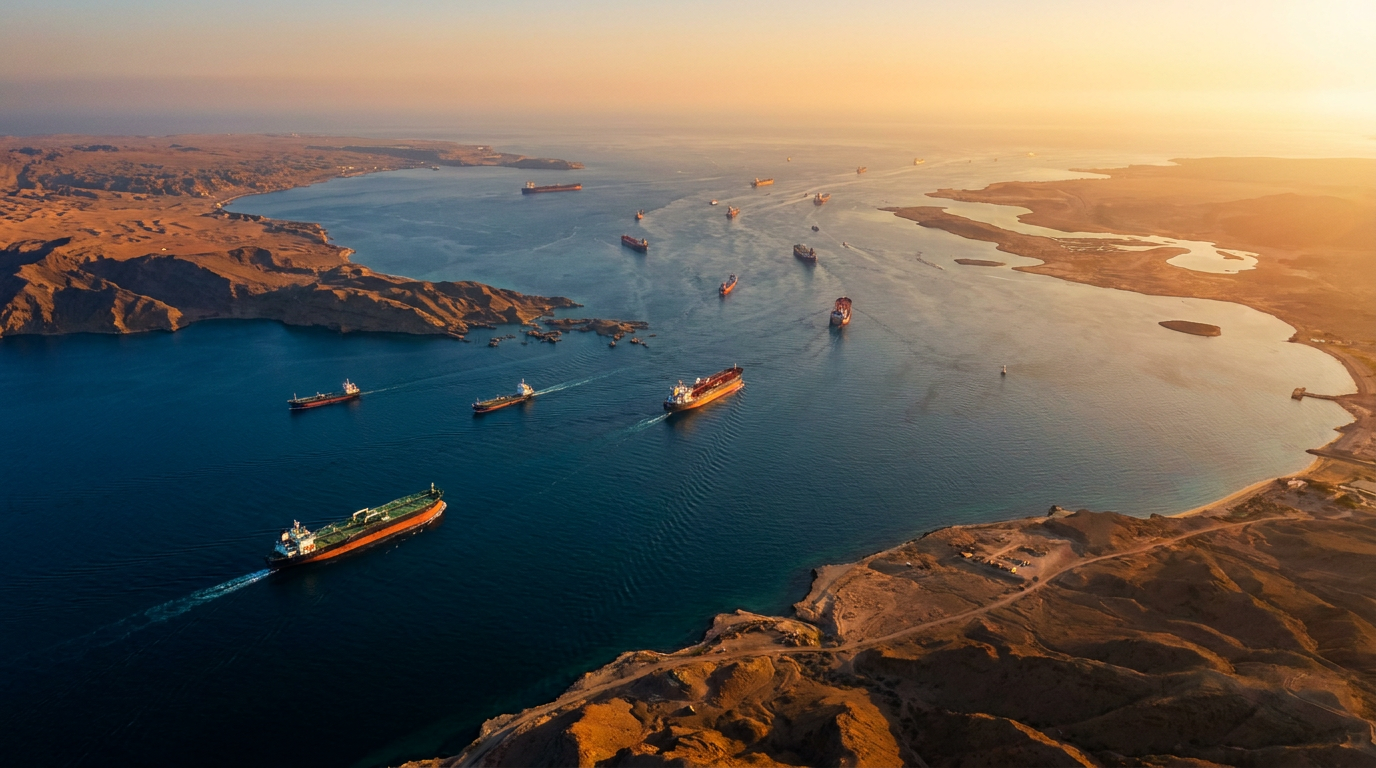
The most immediate global impact of the deal hinges on the Strait of Hormuz. Before the U.S. and Israel launched strikes against Iran on February 28, an average of 3,000 commercial vessels transited the 33-kilometer-wide channel each month. When Tehran retaliated by closing the waterway, tanker traffic plummeted by 95%, effectively removing millions of barrels of oil and liquefied natural gas from the daily global market.[5]
While the political blockade may be lifting, maritime experts warn that a return to normal shipping volumes will not happen overnight. The waters must be thoroughly swept for mines, and shipping companies will require ironclad assurances from insurers before risking multi-million-dollar vessels and crews. The Japanese Shipowners' Association noted Monday that 38 Japanese-linked vessels remain stranded in the channel, and the organization is waiting for "more concrete information" before resuming transit.[3]
While the political blockade may be lifting, maritime experts warn that a return to normal shipping volumes will not happen overnight.
Energy analysts also caution that while the "war premium" is unwinding, the market has not returned to its pre-war baseline. Brent crude sat at roughly $72 a barrel before the conflict began. The current $83 price reflects a lingering "structural disruption premium"—an acknowledgment by traders that the region's infrastructure has sustained damage and that the political truce remains highly fragile.[5]

That fragility is most evident in Israel, where the government has reacted to the U.S.-Iran deal with furious defiance. Sidelined from the Pakistani-mediated negotiations, Israeli officials view the bilateral framework as a dangerous concession that fails to address Iran's ballistic missile capabilities or its support for regional proxy groups.[6][7]
The most explosive point of contention is Lebanon. The U.S.-Iran agreement explicitly calls for the "immediate and permanent termination of military operations on all fronts, including in Lebanon." Yet Israel, which has launched extensive ground and air operations into southern Lebanon over the past three months, flatly rejects this condition.[1][7]
Israeli Defense Minister Israel Katz issued a stark statement on Monday, declaring that the Israeli military will not withdraw from the vast swaths of territory it has occupied in southern Lebanon, Syria, and the Gaza Strip. Katz stated that these areas will be held "indefinitely" as security zones and will be "cleared of local residents, and all terror infrastructure."[6][7]
"Prime Minister Netanyahu made these points clear to US President Trump and to other senior American officials," Katz said, adding that Israel would strike Iran "with full force" if Tehran attempts to retaliate for ongoing Israeli operations. National Security Minister Itamar Ben-Gvir echoed the sentiment, stating bluntly that "Trump's agreement does not bind us" and that Israel is not a party to the ceasefire.[6][7]

This stark divergence creates a perilous diplomatic tightrope. Iran has previously tied its willingness to halt hostilities directly to the cessation of Israeli attacks on Hezbollah in Lebanon. If Israel continues its campaign to clear southern Lebanon, Tehran could view the U.S. as failing to uphold its end of the ceasefire, potentially scuttling the entire 60-day framework before the ink is dry in Switzerland.[6][8]
The international community, meanwhile, is racing to solidify the fragile truce. U.K. Prime Minister Keir Starmer called the deal a "hugely important" step and offered British support for mine clearance operations in the Strait of Hormuz. United Nations Secretary-General Antonio Guterres praised the agreement as a critical move toward a peaceful settlement, though U.N. officials continue to express grave concern over the humanitarian crisis in Lebanon, where over 3,700 people have reportedly been killed since March.[4][7]
For the global economy, the stakes over the next 60 days are existential. The three-month closure of Hormuz triggered a massive release of emergency crude stockpiles by the International Energy Agency and pushed inflation to multi-year highs in several Western nations. A successful implementation of the deal would provide a desperately needed economic soft landing.[3][5]
Ultimately, the U.S.-Iran framework represents a triumph of economic pragmatism over ideological resolution. Both Washington and Tehran have calculated that the financial and political costs of a prolonged blockade outweigh the benefits of continued conflict. The question now is whether that bilateral pragmatism can survive the reality on the ground in Lebanon, where the war's most entrenched combatants refuse to lay down their arms.[1][6]

How we got here
Feb 28, 2026
US and Israel launch strikes against Iran; Tehran retaliates by closing the Strait of Hormuz.
Early March 2026
Tanker traffic through the Strait drops by 95%, sending global oil prices surging past $110 a barrel.
June 11, 2026
President Trump cancels planned strikes and signals a diplomatic deal is close.
June 14, 2026
US and Iran confirm an initial framework agreement, mediated by Pakistan.
June 19, 2026
Scheduled signing of the formal Memorandum of Understanding in Switzerland.
Viewpoints in depth
The US and Mediators' View
A vital off-ramp to stabilize the global economy.
For the United States and mediator Pakistan, the framework agreement is a necessary intervention to halt a war that was rapidly destabilizing the global economy. By securing a 60-day window to negotiate broader issues—including Iran's nuclear program—the US aims to immediately lower energy costs and curb inflation. Vice President JD Vance emphasized that the deal offers Iran access to the global economy only if it honors strict verification commitments regarding its nuclear capabilities.
The Israeli Government's View
A dangerous concession that ignores regional security.
Israel views the bilateral US-Iran negotiations as a profound betrayal that leaves its primary security concerns unaddressed. Defense Minister Israel Katz and National Security Minister Itamar Ben-Gvir have publicly declared that Israel is not bound by the agreement. They argue that halting operations in Lebanon would allow Hezbollah to rebuild, and have instead vowed to maintain an indefinite military occupation in southern Lebanon, Syria, and Gaza to dismantle terrorist infrastructure.
The Global Energy Market's View
Relieved but highly cautious about the timeline for recovery.
Energy traders aggressively unwound the 'war premium' built into crude prices, sending Brent down to $83 a barrel. However, industry analysts warn that a signed piece of paper does not instantly clear a maritime chokepoint. Shipping companies and insurers require concrete proof that the Strait of Hormuz is free of mines and safe from arbitrary seizures before they will resume the 3,000-vessel-per-month traffic seen before the war.
What we don't know
- Whether Israel's continued military operations in Lebanon will cause Iran to abandon the ceasefire.
- How quickly shipping insurers will clear commercial vessels to return to the Strait of Hormuz.
- The specific verification mechanisms that will be used to monitor Iran's nuclear commitments.
Key terms
- Strait of Hormuz
- A 33-kilometer-wide maritime chokepoint between Iran and Oman that typically handles 20% of the world's crude oil supply.
- Memorandum of Understanding (MOU)
- A formal, non-binding agreement outlining the broad terms of a deal before a final treaty is negotiated.
- War Premium
- The extra cost added to the price of oil by traders to account for the risk of supply disruptions during a conflict.
Frequently asked
When will the Strait of Hormuz reopen?
President Trump authorized the immediate removal of the US naval blockade, and the draft deal calls for Iran to reopen the strait within 30 days. However, clearing mines and restoring insurer confidence could take weeks.
Does this deal stop the fighting in Lebanon?
The US-Iran framework calls for a ceasefire on all fronts, including Lebanon. However, Israel has explicitly rejected this provision and stated it will not withdraw its forces.
Will Iran be allowed to pursue nuclear weapons?
No. According to US officials, the agreement includes a commitment from Iran not to pursue nuclear weapons, with a two-step verification process tied to sanctions relief.
Why did oil prices fall?
Markets reacted to the prospect of restored oil flows. Brent crude dropped roughly 5% to around $83 a barrel following the announcement.
Sources
Source coverage
8 outlets
4 viewpoints surfaced








[1]Associated PressUS & Mediators
US, Iran reach agreement to end war, open Strait of Hormuz
Read on Associated Press →[2]CBS NewsUS & Mediators
Oil prices sink, stocks soar after Trump announces deal with Iran
Read on CBS News →[3]The GuardianGlobal Markets
Oil prices hit three-month low and markets rally amid Iran deal breakthrough
Read on The Guardian →[4]Al JazeeraIranian Leadership
US-Iran 'peace deal' announced; Trump says Strait of Hormuz reopening
Read on Al Jazeera →[5]ReutersGlobal Markets
Oil slips 4% as US, Iran reach peace deal to reopen Strait of Hormuz
Read on Reuters →[6]The NationalIsraeli Government
Israel insists it will not leave Lebanon as Netanyahu flounders over US-Iran deal
Read on The National →[7]Anadolu AgencyIsraeli Government
Israel says its army to remain in areas it occupied in southern Lebanon despite US-Iran deal
Read on Anadolu Agency →[8]TIMEUS & Mediators
Trump claims US-Iran deal complete, Strait of Hormuz to reopen
Read on TIME →
More in news politics
See all 5 stories →Middle East Peace
US and Iran Reach Tentative Deal to End War and Reopen Strait of Hormuz
0 sources
Climate Policy
EPA Rescinds Foundational Greenhouse Gas 'Endangerment Finding,' Sparking Historic Legal Battle
0 sources
Middle East Peace
US and Iran Reach Framework Peace Deal to End War and Reopen Strait of Hormuz
0 sources
Every angle. Every day.
Get news politics stories with full source coverage and perspective breakdowns delivered to your inbox.