
Summer Games Done Quick 2026 Shatters Records, Raising $4.2 Million for Doctors Without Borders
The annual week-long speedrunning marathon concluded with its highest donation total to date, driven by groundbreaking gameplay feats and massive community turnout.

Share this story
The roar of the crowd in the Minneapolis ballroom was deafening as the final donation tracker ticked over the $4.2 million mark. Summer Games Done Quick (SGDQ) 2026 concluded late Sunday night, shattering its previous fundraising records and cementing its status as one of the most potent philanthropic engines in the digital age. Over the course of 168 uninterrupted hours, thousands of in-person attendees and over 350,000 concurrent online viewers watched gamers dismantle their favorite titles with surgical precision, all in the name of global medical aid.[1]
For the uninitiated, Games Done Quick is a biannual speedrunning marathon where players attempt to complete video games as fast as humanly possible, often utilizing mind-bending glitches and frame-perfect exploits. What began in 2010 as a small group of friends in a basement raising $10,000 has evolved into a highly produced, stadium-scale event. This year's summer iteration featured 145 different games, ranging from retro classics on the Super Nintendo to modern blockbusters, played continuously by a rotating cast of elite volunteers.[1]
The sole beneficiary of the summer marathon is Médecins Sans Frontières, widely known as Doctors Without Borders. The $4.2 million raised comes entirely from viewer donations, which are given directly to the charity without passing through the event organizers. Representatives from the organization noted that this influx of unrestricted funding is vital, allowing them to rapidly deploy emergency medical teams, surgical units, and epidemic response resources to conflict zones and disaster areas worldwide without waiting for earmarked grants.
The marathon is as much a showcase of technical mastery as it is a charity drive, and SGDQ 2026 delivered several historic gaming moments. The undisputed highlight was a blindfolded, glitchless run of Elden Ring: Shadow of the Erdtree. Relying entirely on audio cues, muscle memory, and rhythmic counting, the runner navigated the notoriously punishing game in under two hours. The tension in the room was palpable, erupting into a standing ovation as the final boss fell, a feat that quickly went viral across mainstream social media platforms.[2]
Another beloved staple of the marathon—live developer commentary—provided some of the week's most entertaining segments. During a highly optimized run of a recent critically acclaimed indie platformer, the original game developers joined the broadcast via video link. Viewers were treated to the creators' real-time reactions as they watched the speedrunner completely bypass entire levels they had spent months designing, using a newly discovered physics exploit. The developers' mix of mock-outrage and genuine awe highlighted the symbiotic, deeply affectionate relationship between those who make games and those who break them.[2]
Behind the scenes, executing a 168-hour continuous live broadcast is a logistical triumph. The event requires a small army of volunteer audio engineers, camera operators, donation readers, and network technicians to ensure zero downtime. This year, the technical team implemented a new automated transition system that cut the setup time between games from fifteen minutes down to under five, keeping the momentum high and viewer retention steady throughout the grueling overnight shifts.[1]
Beyond the staggering financial total, the success of SGDQ 2026 serves as a powerful counter-narrative to lingering stereotypes about gaming culture. While the broader video game industry frequently grapples with issues of toxicity and online harassment, the speedrunning community has cultivated an ethos of radical inclusivity and support. The marathon explicitly champions accessibility, featuring runners with disabilities and enforcing strict codes of conduct that prioritize a welcoming environment for marginalized gamers.
As the venue clears out and the volunteer staff finally get some much-needed sleep, the impact of the week will ripple outward for months. The funds raised will immediately go toward purchasing medical supplies and supporting frontline healthcare workers in some of the world's most vulnerable regions. Meanwhile, speedrunners are already returning to their consoles and emulators, hunting for the next glitch, the next sequence break, and the next saved second, preparing to do it all again at Awesome Games Done Quick in early 2027.
Viewpoints in depth
Speedrunning Community
A focus on the dedication to the craft and the joy of sharing exploits for a good cause.
For the runners and the broader community, SGDQ is the culmination of thousands of hours of solitary practice. The event validates speedrunning not just as a legitimate form of digital performance art, but as a powerful tool for social good. Community members often emphasize that the marathon's success relies heavily on a culture of open information sharing, where new glitches and strategies are freely distributed rather than hoarded, allowing the collective skill level to rise.
Medical Aid Organizations
An appreciation for non-traditional, unrestricted funding sources.
Charities like Doctors Without Borders highly value the type of funding generated by GDQ. Unlike government grants or corporate sponsorships, which are often earmarked for specific projects or regions, the millions raised by the gaming community are largely unrestricted. This flexibility allows MSF to direct funds immediately to sudden emergencies, such as natural disasters or unexpected conflict outbreaks, where rapid response times save lives.
Game Developers
A mix of awe and amusement at seeing their carefully designed games broken.
Game developers increasingly view speedrunning as a badge of honor for their titles. While it can be jarring to see a level that took months to design bypassed in three seconds using a physics exploit, developers often express deep admiration for the runners' intimate understanding of the game's underlying code. Many studios now actively support the speedrunning community, providing early access to games or participating in live commentary during charity marathons.
Key points
- SGDQ 2026 raised a record $4.2 million for Doctors Without Borders.
- The week-long marathon featured 145 games played continuously over 168 hours.
- Peak viewership hit 350,000 concurrent viewers during the marathon's finale.
- Standout moments included a blindfolded run of Elden Ring and live developer commentary.
What we don’t know
- The exact dates and location for the winter counterpart, Awesome Games Done Quick (AGDQ) 2027.
- Whether the $4.2 million record will be surpassed in the upcoming winter event.
How we got here
2010
The first Classic Games Done Quick raises $10,000 for CARE.
2015
GDQ events begin regularly surpassing the $1 million mark per marathon.
2020
The event successfully pivots to an all-online format during the pandemic, maintaining high donation levels.
2022
GDQ returns to in-person events, breaking the $3 million threshold for the first time.
June 14, 2026
SGDQ 2026 concludes, setting a new all-time record of $4.2 million raised.
- Speedrunning Community
- Values the showcase of extreme skill, community bonding, and the ability to turn a niche hobby into a massive charitable force.
- Medical Aid Organizations
- Values the massive, unrestricted financial support that allows for rapid deployment of medical resources in global crises.
- Game Developers
- Values the deep, albeit unconventional, appreciation of their work, often marveling at the technical ingenuity required to break their games.
Perspectives this story doesn't cover
- Local host city businesses benefiting from the influx of attendees
- Casual gamers who discover new titles through the marathon
Sources
Source coverage
2 outlets
3 viewpoints surfaced


- [1]The VergeGame Developers
The $27 million Al proxy war over Alex Bores ends in a draw
Read on The Verge → - [2]GameSpotGame Developers
Developers React to Mind-Bending Speedruns at SGDQ 2026
Read on GameSpot →
More in Entertainment
See all →Labor Rights
Rockstar Developers Allege Systemic 'Crunch' Is Contractually Required for 'Grand Theft Auto 6'
2 sources

Citizen Science
Millions of Gamers Are Solving Real-World Scientific Data Through Blockbuster 'Citizen Science' Integrations
7 sources

Live Service Economics
The End of the Endless Game: What Bungie's Restructuring Means for the Live-Service Era
4 sources
Consumer Rights
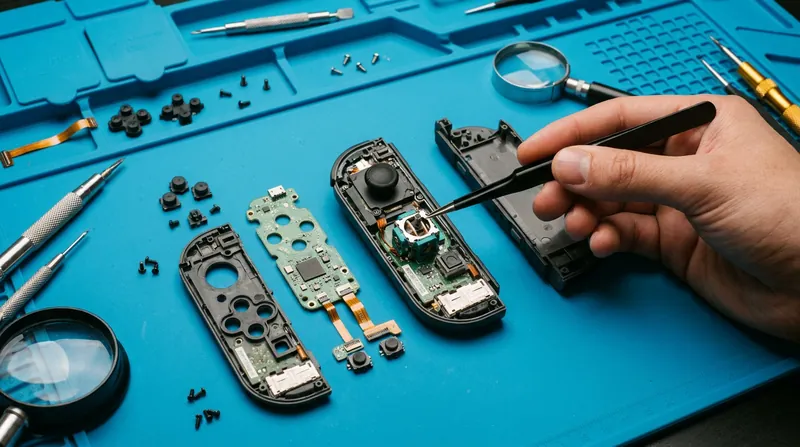
Nintendo Fined $39.9 Million in France as Internal Documents Reveal Company Knew About Joy-Con Drift in 2018
2 sources
Comments
Every angle. Every day.
Get Entertainment stories with full source coverage and perspective breakdowns, free every day.