
The Rise of the 'Slow Internet' and the Cozy Web
As the public internet becomes increasingly dominated by algorithmic feeds and AI content, users are retreating to private digital spaces and cultivating 'digital gardens.' This movement represents a profound reclamation of digital agency and a rejection of the attention economy.
By Factlen Editorial Team
- Digital Gardeners
- Advocates for treating the web as a topological space for evolving, interconnected knowledge rather than a chronological feed.
- Cozy Web Builders
- Proponents of private, gatekeeper-bounded digital spaces that prioritize intimacy and safety over viral reach.
- Slow Internet Advocates
- Champions of intentional, low-friction digital consumption that rejects the 24-hour news cycle and engagement metrics.
- Public Web Defenders
- Critics who warn that retreating into private digital silos fragments society and accelerates the decay of the open internet.
What's not represented
- · Social media platform executives
- · Digital advertisers
Why this matters
As algorithmic feeds and AI-generated content overwhelm the public internet, understanding the shift toward the 'Cozy Web' reveals how we can reclaim our digital agency. This movement offers a blueprint for building healthier, more intentional online spaces that prioritize human connection over corporate metrics.
Key points
- Users are increasingly abandoning the algorithmic public web for private, gatekeeper-bounded spaces known as the 'Cozy Web.'
- The 'Slow Internet' movement champions intentional, mindful digital consumption over the 24-hour news cycle and endless scrolling.
- Digital Gardens offer an alternative to chronological blogs by organizing evolving ideas through contextual hyperlinks.
- Platforms like Are.na, mymind, and Neocities are gaining popularity by prioritizing personal curation and DIY aesthetics over engagement metrics.
- This cultural shift represents a profound reclamation of digital agency and a rejection of the attention economy.
The feeling that the internet is broken has become pervasive. Algorithmic feeds, the proliferation of AI-generated content, and the exhaustion of the attention economy have made the 'Dead Internet' theory feel less like a conspiracy and more like a lived reality. For many users, the public square of the internet has transformed into a 'Dark Forest'—a hostile environment where individuals are constantly hunted by advertisers, data scrapers, bots, and bad-faith trolls. In this hyper-visible space, every post is scrutinized, every interaction is monetized, and the sheer volume of noise drowns out genuine human connection. The promise of the early web—a decentralized utopia of free information and community—seems to have been replaced by a corporate mall designed to extract maximum engagement at the cost of user well-being.[7]
But rather than logging off entirely, a quiet and profound migration is taking place across the digital landscape. Millennials and Gen Z users are increasingly abandoning the performative, high-stakes arenas of the public web for something smaller, slower, and vastly more intentional. They are not rejecting the internet; they are rejecting the architecture of the platforms that currently dominate it. This exodus is giving rise to a new digital paradigm, one focused on intimacy, curation, and personal agency. Instead of broadcasting their lives to thousands of strangers, users are seeking out digital third places—environments that foster genuine community without the pressure of metrics, viral algorithms, or the constant need to perform for an invisible audience.[3]
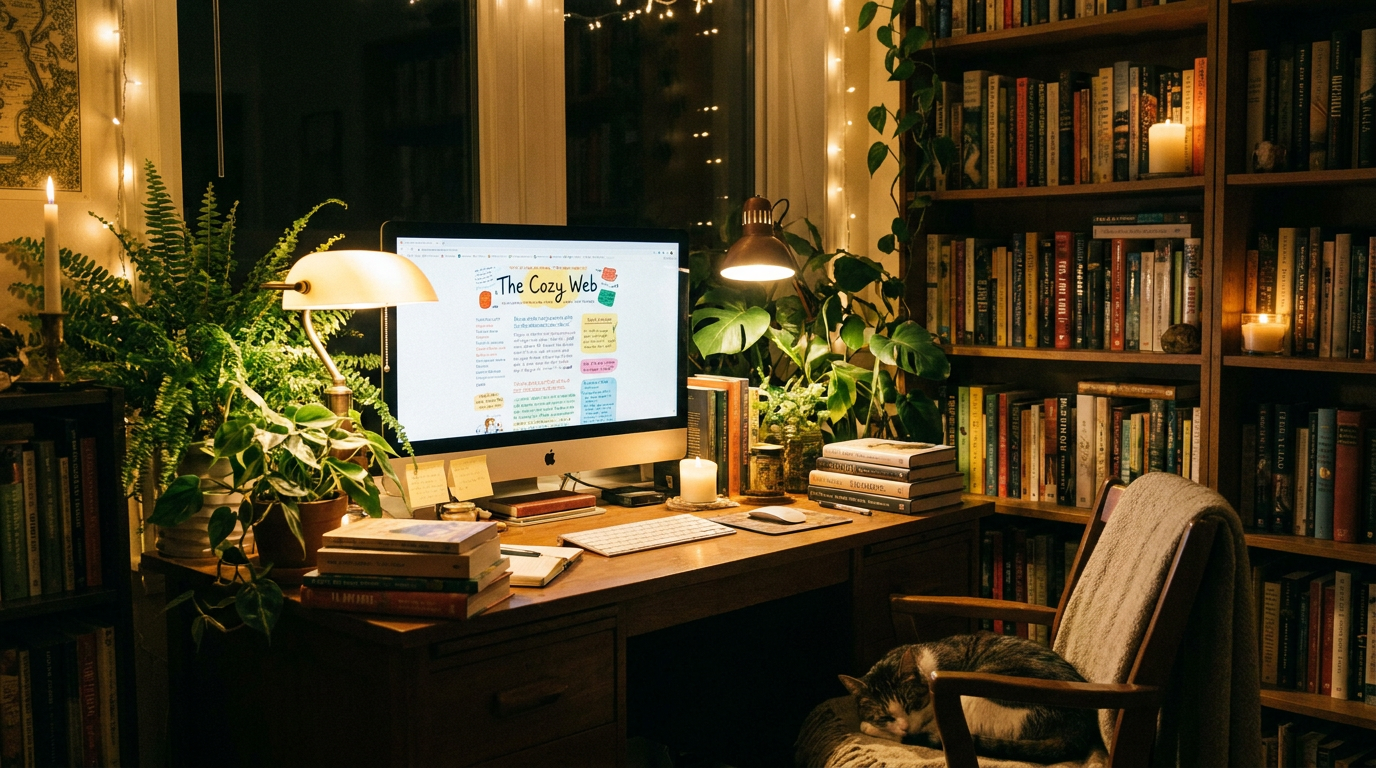
Welcome to the 'Cozy Web.' Coined by technology writer Venkatesh Rao, the term describes the private, gatekeeper-bounded spaces of the internet where people have increasingly retreated over the last few years. If the public internet is a bustling, neon-lit metropolis, the Cozy Web is the dimly lit, comfortable living room. It is the informal, untracked, and messily human space that bots and algorithms haven't yet managed to fully infiltrate or commodify. In these spaces, the primary currency is not attention or influence, but trust and shared context.[2]
The infrastructure of the Cozy Web consists of Slack channels, Discord servers, Telegram groups, private subreddits, and intimate group chats. These are digital environments that require an invitation or a shared interest to enter, creating a natural barrier against the chaos of the open internet. Because these spaces are bounded, they allow for a level of vulnerability and authentic expression that is nearly impossible on major social media platforms. Users can share half-formed thoughts, niche interests, and personal struggles without the fear of context collapse—the phenomenon where a message intended for one audience is intercepted and misinterpreted by a completely different one.[2][7]

In these digital third places, the architecture of engagement is fundamentally different from the public square. There are no algorithmic feeds designed to maximize outrage, retention, or endless scrolling. Instead, interaction relies on chronological messaging, active participation, and human moderation. The absence of a 'For You' page means that content is not pushed onto users based on behavioral profiling; rather, users must actively choose to engage with the community. This shift returns the locus of control to the individual, transforming the digital experience from a passive consumption of algorithmic slop into an active, intentional social practice.[4][6]
This migration is a direct response to the exhaustion of the 'game of approval' that defines modern social media. On major platforms, users are subjected to continuous partial attention, constantly monitoring the digital sphere for likes, retweets, and validation. This metric-driven environment encourages 'Main Character Syndrome'—the platform-induced tendency to view one's life as a narrative arc performed for an audience of strangers. The Cozy Web offers a sanctuary from this exhausting dynamic. In private spaces, users can simply exist, converse, and share without the underlying pressure to optimize their digital presence for maximum reach or engagement.[7]
Adjacent to the rise of the Cozy Web is the broader 'Slow Internet' movement. If the Cozy Web is about where we socialize online, the Slow Internet is about how we consume, process, and publish information. It champions the philosophy of 'rhythm not random' and 'timely not real-time.' The Slow Internet is a rejection of the 24-hour news cycle, the endless scroll, and the demand for instant reactions. It advocates for a digital lifestyle that prioritizes depth over breadth, contemplation over reaction, and long-term knowledge building over ephemeral content consumption.[3]
Adjacent to the rise of the Cozy Web is the broader 'Slow Internet' movement.
A cornerstone of the Slow Internet movement is the revival and popularization of 'Digital Gardens.' Unlike a traditional blog, which is strictly organized by publication date and presented in a reverse-chronological feed, a digital garden is a collection of evolving ideas connected by contextual associations. Coined in the late 1990s but heavily popularized in recent years by designers and developers, the digital garden is an alternative to the performative nature of modern content creation. It is a space where ideas are planted, cultivated, and allowed to grow over time, rather than being published once and quickly buried under an avalanche of new posts.[1]
Designer and anthropologist Maggie Appleton describes digital gardens as spaces that are inherently exploratory and forgiving. In a digital garden, notes are often published as half-finished thoughts or rough concepts that will be refined and expanded as the creator learns more. They are less rigid, less performative, and less perfect than the polished personal websites or viral threads we are accustomed to seeing. This approach removes the friction of perfectionism, allowing creators to share their learning process publicly without the expectation of delivering a flawless, definitive take on a subject.[1][5]

This topological approach to information harkens back to the early days of the web, before the dominance of the chronological feed. It treats the internet as a spatial environment—an arrangement of things relative to one another, much like hopping through interconnected Wikipedia articles. By utilizing extensive hyperlinking and bidirectional references, digital gardens encourage readers to actively choose which curiosity trail to follow, rather than defaulting to an algorithmically filtered stream. It is an ethos that is both classically old and newly imagined, blending the raw, experimental spirit of the 1990s web with modern tools for networked thought.[1]
The tools enabling this movement are deliberately anti-viral and anti-engagement. Platforms like Are.na, mymind, and Obsidian prioritize personal curation, spatial organization, and private knowledge management over public metrics. They are designed for contemplation, not consumption. For instance, the creators of mymind describe their platform as a private retreat—a version of the internet where the user controls their attention without feeds, ads, or notifications wasting their time. It is a digital extension of the mind, free from the manipulative nudges of the attention economy.[4][5]
Similarly, the platform Are.na functions less like a traditional social network and more like a public reading room at a library. It is a space for gathering, organizing, and connecting ideas, images, and texts without the pressure of productivity or the noise of self-promotion. Users can collaborate on mood boards and research channels, but the focus remains squarely on the content itself rather than the identity or follower count of the person who posted it. This creates a calm, nourishing environment that stands in stark contrast to the frenetic energy of mainstream platforms.[5]
The resurgence of platforms like Neocities also highlights a growing desire for the unapologetically naive, experimental web of the past. Users are trading sleek, corporate minimalism and standardized templates for quirky, highly individualized digital spaces. By writing their own HTML and CSS, creators are reclaiming ownership over their digital environments. This DIY ethos is not merely about nostalgia; it is a political act of resistance against the homogenization of the web, proving that the internet can still be a canvas for genuine self-expression rather than a sterile corporate storefront.[6]

Critics of the Cozy Web and the Slow Internet argue that retreating into private silos and personal gardens fragments the internet and creates isolated echo chambers. When communities are gated and information is decentralized, it becomes harder for serendipitous discovery, cross-cultural exchange, and shared public discourse to occur. There is a valid concern that abandoning the public square leaves it entirely to bad actors, bots, and extreme voices, further degrading the quality of the open internet for those who cannot or do not wish to retreat behind digital gates.[6][7]
However, proponents counter that the public web is no longer a safe or productive space for genuine exchange anyway. The 'Dark Forest' of the open internet is simply too hostile, making gated communities and private gardens a necessary survival tactic for digital mental health. Furthermore, digital gardens are often public-facing, allowing for serendipitous discovery without the toxic dynamics of a viral feed. They offer a model of 'protopia'—a state that is simply better today than it was yesterday—focusing on small, slow progress rather than attempting to fix the unfixable scale of global social media.[2][7]
Ultimately, the rise of the Slow Internet and the Cozy Web represents a profound reclamation of digital agency. It is a firm rejection of the idea that the internet must be a hyper-optimized, algorithmically driven marketplace of attention. By building digital gardens, embracing friction, and retreating to cozy digital third places, users are proving that the internet can still be a nourishing, human-centric space. They are demonstrating that a better web is possible—not through massive technological disruption, but through intentional, quiet, and deeply personal choices about where and how we spend our digital lives.[1][4]
How we got here
1990s
The early web is characterized by quirky, highly individualized personal homepages and a topological approach to hyperlinking.
Late 2000s
The rise of Web 2.0 introduces the chronological feed and the 'game of approval' through likes and retweets.
2019
Venkatesh Rao coins the term 'Cozy Web' to describe the migration of users into private, gatekeeper-bounded spaces.
2020
The concept of 'Digital Gardens' gains mainstream traction among designers and developers seeking alternatives to traditional blogging.
2022–2026
The proliferation of AI-generated content accelerates the 'Dead Internet' feeling, driving a broader cultural shift toward the Slow Internet.
Viewpoints in depth
Digital Gardeners
Advocates for treating the web as a topological space for evolving, interconnected knowledge rather than a chronological feed.
Proponents of digital gardens argue that the chronological feed is a flawed architecture for human knowledge. By forcing all information into a time-bound stream, platforms ensure that ideas are quickly buried and forgotten. Digital gardeners advocate for a return to the early web's topological structure, where extensive hyperlinking allows users to explore concepts contextually. They believe that publishing half-finished thoughts and allowing them to evolve over time removes the friction of perfectionism and fosters a more authentic, exploratory digital environment.
Cozy Web Builders
Proponents of private, gatekeeper-bounded digital spaces that prioritize intimacy and safety over viral reach.
Those building and retreating to the Cozy Web argue that the public square of the internet has become fundamentally unsafe for genuine human connection. They point to the 'Dark Forest' theory, suggesting that the open web is overrun by bots, data scrapers, and bad-faith actors. For these users, gatekeeper-bounded spaces like Discord servers and private group chats are not just preferences, but necessary survival tactics for digital mental health. They value the trust, shared context, and human moderation that can only exist in smaller, bounded communities.
Slow Internet Advocates
Champions of intentional, low-friction digital consumption that rejects the 24-hour news cycle and engagement metrics.
The Slow Internet movement focuses on the psychological toll of the attention economy. Advocates argue that platforms designed to maximize engagement through continuous partial attention are degrading our ability to focus, reflect, and engage deeply with the world. They champion tools and practices that prioritize 'rhythm not random'—such as RSS feeds, read-it-later apps, and spatial organization platforms like Are.na. Their goal is to shift the locus of control back to the user, transforming digital consumption from a passive, algorithmic experience into an active, intentional choice.
Public Web Defenders
Critics who warn that retreating into private digital silos fragments society and accelerates the decay of the open internet.
While acknowledging the flaws of the current social media landscape, critics of the Cozy Web warn against the dangers of mass digital retreat. They argue that when users abandon the public square for private silos, it fragments the internet and creates isolated echo chambers. This fragmentation makes serendipitous discovery and cross-cultural exchange significantly harder. Furthermore, they caution that abandoning the open web leaves it entirely in the hands of bad actors and extreme voices, further degrading the quality of public discourse for those who cannot or do not wish to retreat behind digital gates.
What we don't know
- Whether the Cozy Web will remain a niche movement or fundamentally reshape how the majority of users interact online.
- How the fragmentation of the internet into private silos will impact serendipitous discovery and shared public discourse in the long term.
- If major social media platforms will attempt to co-opt the features of the Slow Internet to retain users seeking more intimate spaces.
Key terms
- Cozy Web
- Private, gatekeeper-bounded spaces on the internet, such as group chats and private servers, that offer refuge from the algorithmic public web.
- Digital Garden
- A personal website where ideas are published as evolving, interconnected notes rather than strictly chronological blog posts.
- Dark Forest Theory of the Internet
- The concept that the public internet has become a hostile environment filled with bots and bad actors, causing real humans to hide in private spaces.
- Context Collapse
- A phenomenon where a piece of content intended for a specific audience is viewed and misinterpreted by a completely different, unintended audience.
- Main Character Syndrome
- The platform-induced tendency to view one's life as a narrative arc performed for an audience of strangers online.
Frequently asked
What is the 'Cozy Web'?
Coined by Venkatesh Rao, the Cozy Web refers to private, gatekeeper-bounded online spaces like Discord servers, Slack channels, and group chats where people retreat from the public internet.
How is a digital garden different from a blog?
A blog is organized chronologically by publication date, while a digital garden is organized contextually through hyperlinks, allowing ideas to evolve and grow over time rather than being buried by new posts.
What does the 'Slow Internet' movement advocate?
The Slow Internet movement promotes intentional, mindful digital consumption. It rejects algorithmic feeds, the 24-hour news cycle, and engagement metrics in favor of deeper, slower interactions.
Why are people leaving the public web?
Many users feel the public web has become a 'Dark Forest' dominated by bots, algorithmic feeds, and performative metrics, making it a hostile environment for genuine human connection.
Sources
Source coverage
7 outlets
4 viewpoints surfaced






[1]maggieappleton.comDigital Gardeners
A Brief History of Digital Gardens
Read on maggieappleton.com →[2]dokumen.pubCozy Web Builders
The Extended Internet Universe
Read on dokumen.pub →[3]The Slow InternetSlow Internet Advocates
The Slow Internet
Read on The Slow Internet →[4]mymindSlow Internet Advocates
Bring back the slow internet
Read on mymind →[5]Early MagazineDigital Gardeners
The Cozy Web and Digital Gardens
Read on Early Magazine →[6]Factlen Editorial TeamPublic Web Defenders
Synthesis by Factlen editorial team
Read on Factlen Editorial Team →[7]MediumCozy Web Builders
The Rise of the Dark Forest and the Cozy Web
Read on Medium →
Every angle. Every day.
Get culture stories with full source coverage and perspective breakdowns delivered to your inbox.