
The Rise of the Cozy Web and Digital Gardens
Exhausted by algorithmic feeds and performative social media, users are retreating to intimate digital spaces and cultivating evolving personal knowledge bases.
By Factlen Editorial Team
- Privacy Advocates & Users
- Users actively migrating away from algorithmic public squares in favor of intimate, high-trust communities.
- Digital Gardeners
- Advocates for moving away from chronological feeds toward evolving, interconnected knowledge spaces.
- Brand Strategists
- Professionals adapting to the loss of mass public engagement and the fragmentation of the social web.
What's not represented
- · Major Social Media Executives
- · Algorithmic Feed Developers
Why this matters
As the internet transitions from the 'Engagement Era' to the 'Intentionality Era,' understanding these new digital spaces is crucial for anyone looking to build healthier online habits, foster genuine communities, or escape the anxiety of the algorithmic feed.
Key points
- Users are increasingly abandoning massive, algorithm-driven social platforms in favor of smaller, private communities known as the 'Cozy Web'.
- The 'Dark Forest' of the public internet—filled with ads, tracking, and trolls—is driving a desire for high-trust, low-performance spaces.
- Digital gardens are replacing traditional chronological blogs by organizing information topologically and allowing ideas to evolve over time.
- This shift marks a transition from the 'Engagement Era' to the 'Intentionality Era,' prioritizing human-scale connection.
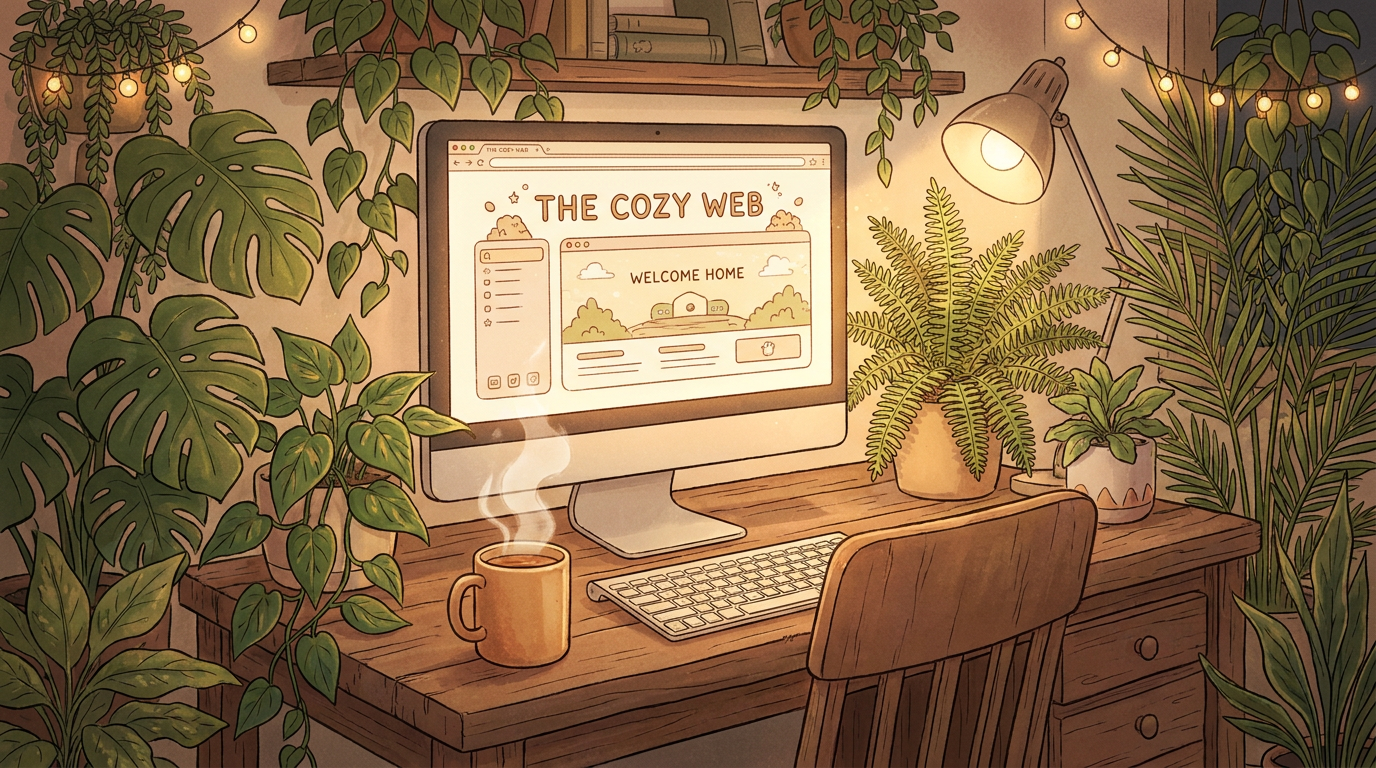
The era of the "universal timeline" is quietly coming to a close. For over a decade, the internet was defined by the massive public square: billions of users gathered on a handful of platforms, broadcasting their lives to algorithmic feeds designed to maximize engagement and reach.[3]
But a profound cultural shift is underway in 2026. Exhausted by performative posting, algorithmic manipulation, and the relentless pace of the chronological feed, users are packing up and moving out.[2][7]
They are retreating into what internet theorists call the "Cozy Web"—a fragmented landscape of private group chats, Discord servers, and invite-only forums.[4]
Alongside this migration, a parallel movement is redefining how we publish and consume personal knowledge: the resurgence of "Digital Gardens."[1]
Together, these twin trends represent a fundamental renegotiation of the social contract between users and the internet. It is a transition from the "Engagement Era" to the "Intentionality Era," prioritizing human-scale connection over algorithmic virality.[6][7]
To understand the Cozy Web, one must first understand what users are fleeing. In 2019, writer Yancey Strickler coined the term "The Dark Forest" to describe the modern public internet—a space fraught with tracking, trolling, hyper-targeted ads, and performative outrage.[3]
In response to the predatory nature of the Dark Forest, users learned to keep their heads down. The Cozy Web, a concept originated by writer Venkatesh Rao, emerged as the natural antidote.[2][4]
The Cozy Web consists of gatekeeper-maintained communities where the scale is human and the pace is deliberately slow. In these spaces—Slack channels, WhatsApp groups, Geneva, and Telegram—authenticity and emotional safety trump visibility.[4][7]
You do not perform for a massive, invisible audience in the Cozy Web; you converse with a known community. Success is measured by the depth of a conversation, not the reach of a post.[7]
You do not perform for a massive, invisible audience in the Cozy Web; you converse with a known community.
The data bears out this quiet exodus. According to 2025 polling from the BBC, nearly a third of all social media users post less publicly than they did a year prior.[3][8]
Similarly, Pew Research Center found that 48% of U.S. teens now say social media has a mostly negative effect on people their age, a sharp increase from 32% in 2022.[2][5]

But younger demographics are not logging off entirely; they are simply bifurcating their digital lives. The public feed has become a "storefront"—a highly curated, sterile space for professional updates or broad announcements. The actual socializing happens in the back room.[2]
If the Cozy Web changes where we interact, Digital Gardens change how we share our thoughts. For years, the dominant metaphor for online publishing was the "stream."[1]
Blogs and social feeds present information in reverse-chronological order. The newest thought is deemed the most important, and old ideas are quickly washed away by the rushing current of the timeline.[1]
Digital gardens reject the stream. Popularized by researchers like Mike Caulfield and designer Maggie Appleton, a digital garden is a personal knowledge space organized by topical connection rather than publication date.[1][4]
In a digital garden, notes and essays are published in various stages of development. Appleton uses a botanical taxonomy: "seedlings" for rough ideas, "budding" for developing thoughts, and "evergreen" for mature concepts.[1]

This approach encourages "learning in public." It removes the pressure to publish a flawless, finished piece, allowing ideas to evolve openly over time as the author learns and revises.[1]
Navigation in a garden relies on bidirectional links and contextual associations, much like Wikipedia. Readers wander through the topography of the author's mind, choosing their own curiosity trails rather than defaulting to an algorithmically filtered feed.[1]
This broader shift toward slowness and intentionality is a direct response to the frictionless, infinite scroll of Big Social. Users are actively choosing platforms that respect their time and protect their privacy.[7]

How we got here
1990s
The early web is characterized by personal homepages, webrings, and topological exploration.
2006–2015
The rise of the 'Stream' as chronological feeds on Facebook and Twitter become the dominant way to consume the internet.
2015
Researcher Mike Caulfield popularizes the concept of 'The Garden and the Stream,' advocating for interconnected knowledge spaces.
2019
Writers Yancey Strickler and Venkatesh Rao coin 'The Dark Forest' and 'The Cozy Web' to describe the retreat from public platforms.
2024–2026
A mass migration occurs as Gen Z and privacy advocates abandon public feeds for Discord, Geneva, and personal digital gardens.
Viewpoints in depth
Digital Gardeners & Creators
Advocates for moving away from chronological feeds toward evolving, interconnected knowledge spaces.
This camp argues that the 'stream' format of traditional blogs and social media forces creators into a performative, high-pressure cycle of constant output. By embracing digital gardens, they prioritize 'learning in public' and topological exploration. They believe that allowing ideas to sit, breathe, and evolve over time creates a healthier relationship with knowledge and reduces the anxiety of having to publish perfectly polished takes on breaking news.
Privacy Advocates & Gen Z Users
Users actively migrating away from algorithmic public squares in favor of intimate, high-trust communities.
For this demographic, the public internet has become a 'Dark Forest' filled with surveillance, targeted advertising, and bad-faith arguments. They argue that true connection can only happen in spaces where the audience is known and the scale is human. By retreating to Discord servers, group chats, and private forums, they are reclaiming their digital autonomy and rejecting the tech industry's core assumption that maximum engagement equals a better user experience.
Brand & Marketing Strategists
Professionals adapting to the loss of mass public engagement and the fragmentation of the social web.
Marketing analysts acknowledge that the era of easy viral reach is ending. As users bifurcate their lives—using public feeds merely as 'storefronts' while socializing in private—brands are forced to pivot. This camp emphasizes the need to act 'less like broadcasters and more like hosts,' finding ways to foster genuine community and trust in smaller spaces without violating the intimate, ad-free nature of the Cozy Web.
What we don't know
- Whether the fragmentation of the internet into private group chats will inadvertently increase ideological echo chambers.
- How independent creators will build audiences and discoverability without the viral reach provided by algorithmic feeds.
Key terms
- The Dark Forest
- A metaphor for the public internet, characterized by predatory behaviors like tracking, targeted ads, and trolling, which forces users to hide their true selves.
- The Cozy Web
- Smaller, intimate, and semi-private online spaces (like group chats and Discord servers) where users interact with high trust and low performative pressure.
- Digital Garden
- A personal website or knowledge base organized by contextual links rather than publication dates, where ideas are cultivated and updated over time.
- The Stream
- The dominant format of modern social media and blogs, where information flows in a reverse-chronological feed and old content is quickly buried.
- Bidirectional Links
- Hyperlinks that make both the destination page and the source page visible, allowing readers to see how different concepts connect within a digital garden.
Frequently asked
What is the 'Cozy Web'?
The Cozy Web refers to private, gatekeeper-maintained digital spaces like group chats, Discord servers, and Slack channels. Users retreat here to escape the algorithmic feeds and public scrutiny of major social media platforms.
How is a digital garden different from a blog?
A blog presents finished articles in reverse-chronological order, like a stream. A digital garden is organized by topic and connection, featuring notes and ideas in various stages of development that evolve over time.
Why are people leaving public social media?
Many users, particularly Gen Z, are experiencing 'algorithm fatigue.' They are exhausted by performative posting, targeted ads, and the negative mental health impacts of highly public, engagement-driven platforms.
What does 'learning in public' mean?
It is the practice of publishing rough, unfinished ideas and allowing them to grow and change openly. It removes the pressure of perfection and invites collaboration and feedback.
Sources
Source coverage
8 outlets
3 viewpoints surfaced








[1]Maggie AppletonDigital Gardeners
A Brief History of Digital Gardens
Read on Maggie Appleton →[2]Beauty IndependentBrand Strategists
Why Consumers Are Retreating To The 'Cozy Web'
Read on Beauty Independent →[3]Empower AgencyBrand Strategists
Audiences are walking out of the dark forest into the cosy web
Read on Empower Agency →[4]Early MagazineDigital Gardeners
Burrowing into the Cozy Web
Read on Early Magazine →[5]Pew Research CenterPrivacy Advocates & Users
Teens, Social Media and Technology 2025
Read on Pew Research Center →[6]Factlen Editorial TeamDigital Gardeners
Synthesis by Factlen editorial team
Read on Factlen Editorial Team →[7]SynQ SocialPrivacy Advocates & Users
From Scroll To Soul: Why Gen Z Is Abandoning Big Social For The Cozy Web
Read on SynQ Social →[8]BBC R&DPrivacy Advocates & Users
BBC R&D Foresight Report 2025
Read on BBC R&D →
Every angle. Every day.
Get culture stories with full source coverage and perspective breakdowns delivered to your inbox.