
The Rise of Astrotourism: How the Search for Dark Skies is Reshaping Travel
As light pollution obscures the stars for most of the world, travelers are flocking to certified Dark Sky Sanctuaries, driving a billion-dollar industry that protects nocturnal ecosystems.
By Factlen Editorial Team
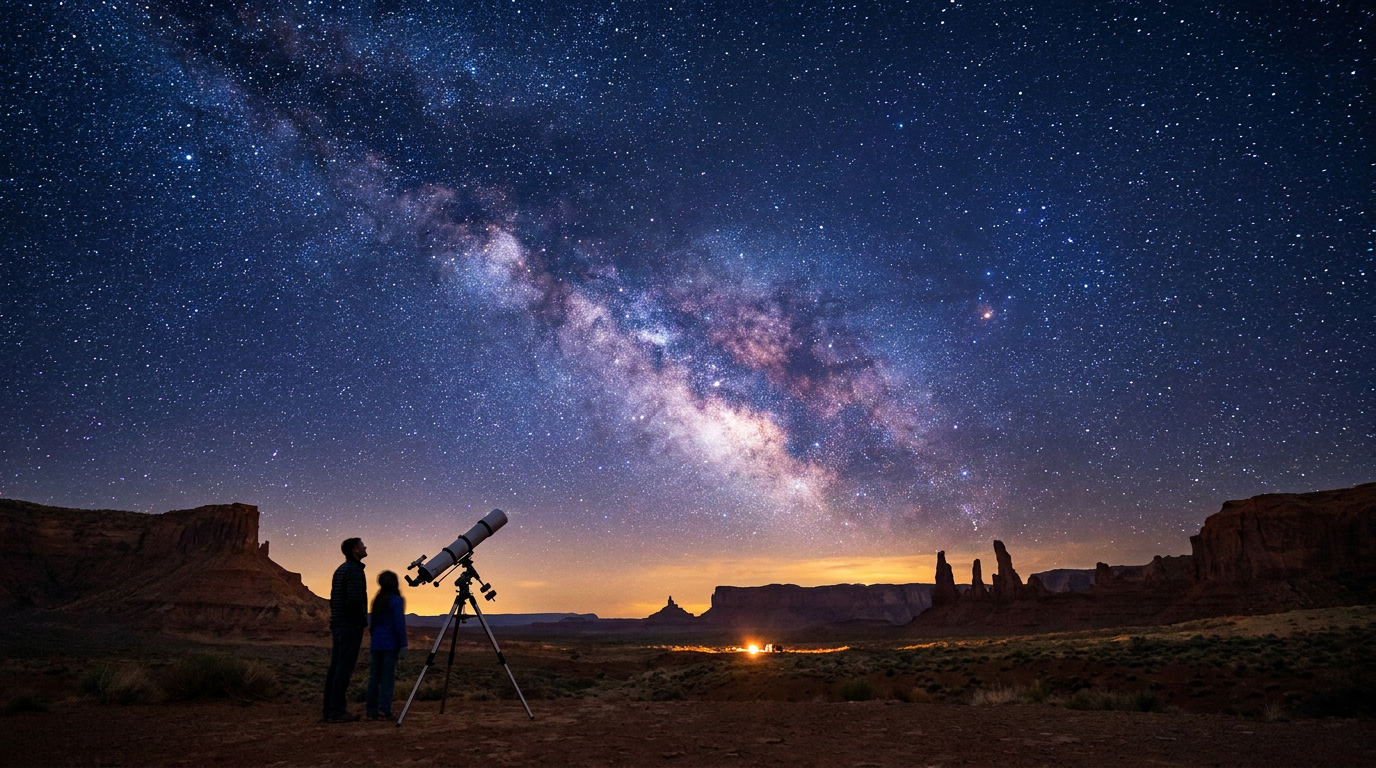
- Tourism & Hospitality Industry
- Viewing dark skies as a premium, monetizable asset that drives off-season travel and rural economic growth.
- Conservationists & Ecologists
- Using the economic value of astrotourism to fund the protection of nocturnal ecosystems and reduce light pollution.
- Indigenous Knowledge Keepers
- Reclaiming the night sky as a cultural text and sharing ancestral astronomical traditions with travelers.
- Astronomers & Dark Sky Advocates
- Focusing on scientific observation and the implementation of strict lighting ordinances to preserve the cosmos.
What's not represented
- · Local residents in newly popular dark-sky towns facing increased traffic
- · Urban planners balancing safety lighting with dark sky ordinances
Why this matters
As light pollution erases the night sky for 83% of the global population, the search for pristine darkness is reshaping the travel industry and rural economies. By turning the absence of light into a highly monetizable asset, astrotourism is providing a powerful financial incentive to protect nocturnal ecosystems and conserve energy.
Key points
- Astrotourism has become a $1.18 billion global industry as travelers seek out pristine night skies.
- 83% of the global population lives under light-polluted skies, making true darkness a rare commodity.
- DarkSky International certifies Sanctuaries and Reserves that enforce strict lighting ordinances.
- The trend is driving significant economic growth in rural areas, funding vital conservation efforts.
- Indigenous guides are increasingly sharing ancestral astronomical knowledge through 'two-eyed seeing'.
- Protecting dark skies is critical for the survival of the 69% of mammal species that are nocturnal.
In 2026, the ultimate luxury in travel isn't a private infinity pool or a five-star spa—it is the simple, profound absence of artificial light. Astrotourism has surged from a niche hobby for amateur astronomers into one of the defining travel trends of the decade, reshaping how and where people spend their vacations. Rather than chasing the sun, a growing demographic of travelers is chasing the dark, journeying to the most remote corners of the globe to witness celestial phenomena that have been erased from modern cities. The driving force behind this movement is sheer scarcity. Approximately 83% of the global population, and a staggering 99% of people in the United States and Europe, live under light-polluted skies. For billions of people, the Milky Way is entirely invisible, obscured by the persistent orange haze of urban skyglow. As true darkness becomes increasingly rare, it has transformed into a highly sought-after commodity, prompting travelers to seek out environments where the night sky looks exactly as it did thousands of years ago.[2][3][7]
The economics reflect this massive cultural shift toward the cosmos. The global astrotourism market reached $1.18 billion in 2025 and is projected to nearly triple by 2034, growing at a robust 12.7% annually. Recent travel industry data indicates that 62% of travelers are now actively seeking out "noctourism" experiences and darker-sky destinations for their next trip. This influx of capital is transforming rural economies, proving that the absence of development can be just as lucrative as building new attractions. At the center of this boom is DarkSky International, a nonprofit organization that certifies the world's remaining pristine nightscapes. The group designates International Dark Sky Sanctuaries, Reserves, and Parks based on rigorous environmental criteria. To earn and maintain these coveted titles, communities must adopt strict lighting ordinances, such as shielding outdoor fixtures to direct light downward, utilizing warm-colored bulbs, and minimizing overall lumen output to protect the nocturnal environment.[1][2][3]

Achieving this certification is not merely a symbolic environmental victory; it is a powerful economic engine. Rural and remote areas are discovering that their lack of infrastructure—once viewed as a developmental disadvantage—is actually a highly monetizable asset. By preserving their darkness, these regions can attract high-value, low-impact tourists who tend to stay longer, spend more per night, and travel during the off-season when winter skies are often clearer and longer. The financial returns for these communities are compelling. Destinations like Canada's Jasper National Park and New Zealand's Aoraki Mackenzie Dark Sky Reserve have reported 30% increases in tourism following their certifications. Economic modeling for proposed sanctuaries, such as those in Tasmania, suggests that every dollar invested in dark sky preservation generates over four dollars in regional economic benefits, supporting local hospitality, transportation, and specialized guiding jobs.[6]

The luxury hospitality sector has aggressively pivoted to meet this soaring demand, recognizing that darkness has become the ultimate premium amenity. Telescopes in hotel rooms are no longer just decorative touches meant to evoke a sense of exploration. High-end resorts in the Atacama Desert, the Maldives, and the American Southwest are building permanent private observatories, hiring resident astrophysicists to guide guests through the cosmos, and designing suites with retractable glass ceilings so visitors can stargaze directly from their beds. Properties are hosting "lights out" evenings where all non-essential power is cut, allowing the natural starlight to illuminate the grounds. For these operators, the night sky is a differentiator that creates a stronger sense of place and gives travelers a unique, unrepeatable reason to visit their specific longitude and latitude.[5][7]
The luxury hospitality sector has aggressively pivoted to meet this soaring demand, recognizing that darkness has become the ultimate premium amenity.
However, the astrotourism movement is also evolving well beyond Western scientific paradigms. A growing number of destinations are embracing the concept of "two-eyed seeing," an approach that combines high-powered telescope observations with deep Indigenous cultural knowledge. This dual perspective enriches the traveler's experience, offering a more holistic understanding of humanity's relationship with the cosmos. In places like New Mexico, Navajo guides lead tours that teach visitors to read the night sky not just as a collection of burning gas spheres, but as a living cultural text filled with ancestral stories, navigational tools, and seasonal markers. Similar initiatives in Australia and Canada are centering Aboriginal and First Nations astronomy, ensuring that the booming astrotourism industry respects and elevates the original stewards of these dark skies, rather than simply commodifying their land for scientific observation.[4][7]

Beyond the cultural and economic benefits, the dark sky movement is fundamentally an environmental crusade. Protecting the sky inherently protects the ground. Artificial Light At Night (ALAN) is a severe, though often overlooked, pollutant that disrupts global ecosystems, alters predator-prey dynamics, and wastes massive amounts of energy. With 69% of mammal species being nocturnal, natural darkness is absolutely critical for ecological survival. Strict dark sky ordinances help maintain the circadian rhythms of local wildlife, protect the navigational routes of millions of migratory birds, and ensure that sea turtle hatchlings are not drawn inland to their deaths by coastal streetlights. In this way, the revenue generated by astrotourism directly funds vital conservation work, creating a financial incentive for municipalities to enforce lighting regulations that benefit the entire ecosystem.[1][3][7]

Yet, the rapid growth of astrotourism presents a difficult paradox: the very act of traveling to remote, dark places threatens to bring the development and light pollution that ruins them. Increased vehicle traffic, new hotel construction, and expanded infrastructure can quickly degrade a fragile Class 1 dark sky, destroying the core attraction that brought visitors in the first place. To mitigate this risk, DarkSky International recently released the "Principles for Responsible Astrotourism." These guidelines urge operators to adopt Responsible Outdoor Light At Night (ROLAN) standards, ensure tourism does not disrupt nocturnal wildlife, and prioritize the well-being of local residents over unchecked commercial expansion. Sustainable growth, managed through strict capacity limits and community-led planning, is the only way the industry can survive its own popularity.[1][7]
Ultimately, the rise of astrotourism reflects a deeper human need for perspective. In a hyper-connected, constantly illuminated world, looking up at a pristine night sky offers a rare sense of awe and grounding that cannot be replicated on a screen. It forces travelers to disconnect and engage with a timeline that stretches billions of years into the past. By assigning a tangible economic value to darkness, the travel industry may be providing the strongest incentive yet to finally turn off the lights. As more destinations realize the profound worth of their unspoiled skies, the movement to preserve the night offers a rare, uplifting model of tourism where the best way to develop a destination is to leave it exactly as it is.[3][7]
How we got here
1988
The International Dark-Sky Association is founded to combat light pollution.
2001
Flagstaff, Arizona becomes the world's first certified International Dark Sky Community.
2011
Jasper National Park is certified, proving the massive economic potential of dark sky festivals.
2024
DarkSky International releases the 'Principles for Responsible Astrotourism' to manage the booming sector.
2026
Astrotourism is named a top global travel trend, with the market surpassing $1.18 billion.
Viewpoints in depth
The Tourism & Hospitality Industry
Viewing dark skies as a premium, monetizable asset that drives off-season travel.
For the travel sector, astrotourism represents a highly lucrative pivot. Destinations that previously struggled to attract visitors—particularly in remote or rural areas—are finding that their lack of development is a major draw. Luxury hotels and local tour operators are investing heavily in observatories and specialized guides, capitalizing on the willingness of 'noctourists' to pay a premium for pristine, unpolluted views of the cosmos.
Conservationists & Ecologists
Using the economic value of astrotourism to fund the protection of nocturnal ecosystems.
Environmental advocates see astrotourism as a Trojan horse for broader ecological protection. By attaching a dollar value to darkness, they can convince municipalities to enact strict lighting ordinances. These regulations—such as shielding streetlights and banning blue-spectrum LEDs—are crucial for protecting the 69% of mammal species that are nocturnal, as well as mitigating the devastating effects of artificial light on migratory birds and insect populations.
Indigenous Knowledge Keepers
Reclaiming the night sky as a cultural text and sharing ancestral astronomical traditions.
For many Indigenous communities, the night sky is not just a scientific canvas, but a living repository of history, navigation, and spirituality. Through the framework of 'two-eyed seeing,' First Nations and Aboriginal guides are ensuring that astrotourism isn't solely dominated by Western astrophysics. By leading stargazing tours, they are preserving their cultural heritage and providing travelers with a more profound, story-driven connection to the universe.
What we don't know
- Whether the rapid influx of tourists will ultimately degrade the fragile dark skies they are traveling to see.
- How climate change and increased cloud cover might impact the reliability of astrotourism in certain regions.
Key terms
- Astrotourism
- Travel focused on experiencing pristine night skies, stargazing, and celestial events.
- Artificial Light At Night (ALAN)
- Human-made illumination that causes light pollution and disrupts nocturnal ecosystems.
- Skyglow
- The brightening of the night sky over inhabited areas, caused by scattered artificial light.
- Bortle Scale
- A nine-level scale used to measure the brightness of the night sky and the visibility of celestial objects.
- Two-Eyed Seeing
- The practice of viewing the world through both Indigenous cultural knowledge and Western scientific frameworks.
Frequently asked
What is the Bortle Scale?
It is a nine-level numeric scale that measures the night sky's brightness, ranging from Class 1 (pristine darkness) to Class 9 (inner-city skyglow).
What is the difference between a Dark Sky Reserve and a Sanctuary?
Sanctuaries are typically the most remote and darkest places on Earth, while Reserves have a dark core surrounded by populated areas that actively protect it.
When is the best time of year for astrotourism?
It depends on the hemisphere, but generally winter months offer longer, clearer nights, and traveling during a new moon phase is essential for Milky Way viewing.
What is 'two-eyed seeing'?
An approach that combines Western scientific astronomy with Indigenous cultural knowledge and storytelling about the stars.
Sources
Source coverage
7 outlets
4 viewpoints surfaced







[1]DarkSky InternationalAstronomers & Dark Sky Advocates
DarkSky International releases guiding principles for responsible astrotourism
Read on DarkSky International →[2]Market InteloTourism & Hospitality Industry
Astro Tourism Market Research Report 2034
Read on Market Intelo →[3]Outside MagazineAstronomers & Dark Sky Advocates
The World's Best Destinations for Astrotourism in 2026
Read on Outside Magazine →[4]National GeographicIndigenous Knowledge Keepers
5 stargazing destinations where you can see the sky with 'both' eyes
Read on National Geographic →[5]ForbesTourism & Hospitality Industry
The Rise Of Astrotourism: 25 Hotels Leading The Stargazing Trend
Read on Forbes →[6]Wilderness SocietyConservationists & Ecologists
Southwest Sky Country - Dark Sky Sanctuary Proposal
Read on Wilderness Society →[7]Factlen Editorial TeamAstronomers & Dark Sky Advocates
Synthesis by Factlen editorial team
Read on Factlen Editorial Team →
Every angle. Every day.
Get travel stories with full source coverage and perspective breakdowns delivered to your inbox.