
The Hidden Digital Wealth of Your Local Library Card
Public libraries have transformed into digital powerhouses, offering patrons thousands of dollars in free streaming, audiobooks, and professional courses.
By Factlen Editorial Team
- Public Library Advocates
- Viewing digital resources as essential civic infrastructure for equity.
- Digital Content Distributors
- Balancing public access with the need to compensate creators and publishers.
- Municipal Budget Planners
- Struggling to balance infinite digital demand with finite local funding.
What's not represented
- · Independent Authors
- · Rural Library Systems
Why this matters
A library card is no longer just for borrowing physical books; it is a tax-funded passport that can save you hundreds of dollars a year on streaming subscriptions, audiobooks, and career-advancing educational platforms.
Key points
- Modern library cards unlock premium digital services like ad-free streaming, audiobooks, and professional certification courses.
- Library value calculators show that regular users can save over $1,000 annually by replacing commercial subscriptions.
- Unlike physical books, libraries lease digital media through metered licenses, which expire and must be repurchased.
- Streaming platforms like Kanopy charge libraries a per-view fee, forcing administrators to balance high demand with finite budgets.
- Despite rising costs and ideological censorship challenges, digital libraries remain a massive return on taxpayer investment.
For generations, the local public library was defined by its physical space: quiet reading rooms, rows of Dewey Decimal-sorted stacks, and the distinct smell of aging paper. But over the last decade, and accelerating rapidly in the post-pandemic era, the library card has quietly transformed into something entirely different. It is no longer just a borrowing credential for physical books; it is a digital skeleton key. Today, a standard public library card unlocks a vast, invisible infrastructure of premium digital services, streaming media, and professional development platforms that would otherwise cost a consumer thousands of dollars a year in subscription fees. This shift represents one of the most significant, yet under-discussed, democratizations of digital access in the modern economy.[6]
The sheer economic value of these digital portals is staggering. To quantify this shift, many municipal library systems have deployed "Library Value Calculators" on their websites, allowing patrons to input their monthly digital and physical usage to see their equivalent retail savings. A patron who listens to two audiobooks a month, streams a handful of independent films, and takes a single professional certification course can easily generate over $1,000 in annual value. For students, job seekers, and avid readers, the local library has effectively become a localized, tax-funded competitor to tech giants like Amazon, Netflix, and LinkedIn.[4][7]
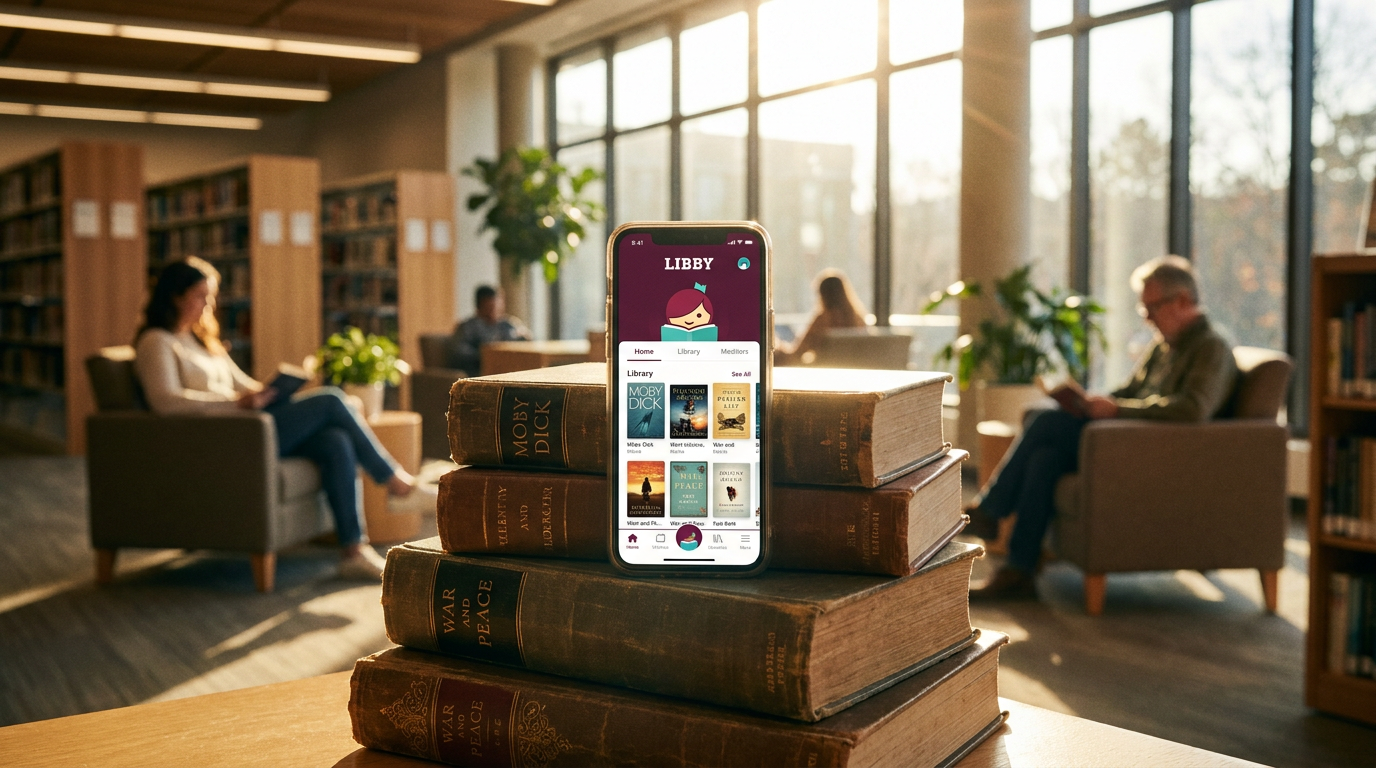
The most popular entry point into this digital ecosystem is the e-book and audiobook market, dominated by platforms like OverDrive and its user-friendly app, Libby. Through these portals, patrons can download bestsellers directly to their e-readers or smartphones without ever setting foot in a physical branch. For heavy readers, this seamlessly replaces the need for a $15-per-month Audible subscription or a la carte Kindle purchases. The user experience is designed to mirror commercial platforms, complete with personalized recommendations, adjustable playback speeds, and automatic returns that eliminate the concept of late fees entirely.[6]

However, the mechanism powering this convenience often confuses new users: if a book is purely digital, why is there a waitlist? The answer lies in the complex licensing agreements between publishers and libraries. Unlike physical books, which a library buys once and owns forever under the First Sale Doctrine, digital books are leased. Publishers typically sell libraries "metered licenses" for e-books and audiobooks. A single digital copy might cost the library three to four times the retail price and expire after 26 checkouts or two years, forcing the library to repurchase the title. This artificial scarcity ensures publishers continue to generate revenue, but it requires libraries to carefully manage their digital acquisition budgets to balance popular demand with long-term collection building.[6]
Beyond literature, libraries have aggressively expanded into premium streaming video. Services like Kanopy and Hoopla have partnered with thousands of library systems to offer ad-free streaming of over 30,000 films. Unlike mainstream algorithms that push blockbuster content, these platforms specialize in the Criterion Collection, award-winning documentaries, foreign cinema, and educational programming. For cinephiles and parents looking for high-quality, commercial-free children's programming, these services offer a curated alternative to the increasingly fragmented and expensive landscape of commercial streaming networks.[3][4]
Beyond literature, libraries have aggressively expanded into premium streaming video.
The economic mechanism behind this free streaming is a pay-per-use or bulk-licensing model. On platforms like Kanopy, libraries traditionally operate on a ticket system. When a patron presses play on a film, the library is charged a fee—often ranging from $1 to $2 per view. To prevent budget overruns, libraries cap the number of tickets a patron can use each month. Recently, to provide more predictable budgeting, some platforms have introduced fixed-price subscription packs, allowing libraries to pay a flat annual fee for unlimited access to specific curated bundles. This behind-the-scenes financial architecture allows patrons to enjoy on-demand media while municipalities absorb the wholesale cost.[2][3]

Perhaps the most economically empowering facet of the modern digital library is its professional development and educational tier. Many library systems provide free, unlimited access to premium learning platforms like LinkedIn Learning, Coursera, and Grow with Google. Patrons can earn professional certificates in data analytics, project management, and software development—credentials that typically cost hundreds of dollars and are directly applicable to career advancement. Additionally, language learning apps like Mango Languages and Rosetta Stone are frequently available, transforming the library into a comprehensive hub for adult education and workforce upskilling.[6]
For researchers, historians, and hobbyists, the digital library extends deep into the past. Local libraries increasingly serve as portals to massive digital archives, including the Internet Archive, the Digital Public Library of America, and localized historical collections. Patrons can access digitized newspapers, historical maps, and primary source documents from their living rooms. Furthermore, many branches offer remote access to expensive genealogical databases like Ancestry.com's Library Edition, allowing families to trace their heritage without paying the steep monthly consumer subscription fees.[5][6]

Despite the immense public benefit, this digital golden age is fraught with financial uncertainty. The core tension lies in the fact that digital access is fundamentally more expensive for libraries to maintain than physical collections. Because libraries do not own their digital assets, they are locked into perpetual subscription and licensing fees. When a digital service becomes wildly popular, it can paradoxically threaten a library's budget. In 2019, the New York Public Library system had to drop Kanopy entirely because the service's pay-per-view model became too successful among its massive user base, making the costs unsustainable compared to other core services.[2][6]
These financial pressures are compounded by an increasingly hostile political environment surrounding library collections. According to the American Library Association's 2026 State of America's Libraries report, the institution is facing unprecedented ideological headwinds. In 2025 alone, the ALA tracked attempts to censor 4,235 unique titles—the second-highest number ever recorded. The vast majority of these challenges were initiated by organized pressure groups rather than individual concerned parents. Library workers are simultaneously fighting to secure funding for expensive digital licenses while defending their fundamental mandate to provide equitable, unrestricted access to information for all community members.[1][6]

Ultimately, the digital transformation of the public library represents a profound evolution of civic infrastructure. By pooling taxpayer resources, communities are able to negotiate wholesale access to the digital economy, redistributing that immense value to anyone with a library card. While the backend economics of digital licensing remain a persistent challenge for municipal budgets, the return on investment for the public is undeniable. In an era defined by digital paywalls and rising subscription fatigue, the local library stands as one of the last remaining spaces where world-class knowledge, entertainment, and opportunity are genuinely free to the user.[6]
How we got here
Pre-2010s
Libraries primarily focus on physical media, with early, limited experiments in digital cataloging.
2010s
The rise of platforms like OverDrive and Kanopy begins shifting library budgets toward digital licensing.
2019
Major systems like the New York Public Library drop Kanopy, highlighting the unsustainable costs of pay-per-view streaming.
2020-2022
Pandemic lockdowns cause a massive, permanent surge in digital library checkouts and remote learning.
2025
The ALA records a near-record 4,235 unique titles challenged, adding political pressure to strained library budgets.
Viewpoints in depth
Public Library Advocates
Viewing digital resources as essential civic infrastructure for equity.
Advocates argue that the library's transition to digital is a vital public good that levels the economic playing field. By pooling community tax dollars, libraries can negotiate wholesale access to educational and cultural resources that lower-income patrons could never afford individually. They view the high costs of digital licensing as a necessary investment in community workforce development, digital literacy, and equitable access to information.
Digital Content Distributors
Balancing public access with the need to compensate creators and publishers.
Publishers and streaming platforms maintain that their licensing models—such as metered e-books and pay-per-view streaming—are necessary to protect the commercial value of their content. If libraries could buy a digital book once and lend it infinitely to thousands of patrons simultaneously, it would collapse the retail market for authors and filmmakers. They argue that library pricing models are fair compromises that allow public access while ensuring creators get paid.
Municipal Budget Planners
Struggling to balance infinite digital demand with finite local funding.
City planners and library administrators face the harsh reality of finite budgets. Because digital licenses expire and streaming costs scale with usage, a highly successful digital program can paradoxically bankrupt a library's acquisitions budget. These planners are increasingly forced to make difficult trade-offs, sometimes capping patron streaming limits or dropping popular services entirely to ensure they can still afford to keep physical branches open and staffed.
What we don't know
- How publishers might adjust digital licensing models as physical book checkouts continue to decline relative to digital.
- Whether federal or state governments will step in to subsidize the high costs of digital media licenses for smaller, rural library systems.
- How the ongoing surge in organized book challenges will impact the availability of diverse digital titles in local catalogs.
Key terms
- Metered License
- A digital purchasing agreement where a library buys an e-book or audiobook that expires after a set time period or number of checkouts.
- First Sale Doctrine
- A legal concept allowing the purchaser of a physical book to lend or resell it freely, which does not apply to leased digital media.
- Pay-Per-Use Model
- A billing system where the library is charged a small fee every time a patron streams a piece of digital content.
Frequently asked
Why do I have to wait in line for a digital e-book?
Libraries do not own digital books; they lease them. Publishers restrict how many patrons can read a digital copy simultaneously to protect retail sales.
Does it cost the library money when I stream a movie?
Yes. On platforms like Kanopy, libraries often pay a per-view fee (usually $1 to $2) each time a patron watches a film, though some use flat-fee bundles.
Can I access professional certification courses for free?
Many library systems provide free access to platforms like Coursera, LinkedIn Learning, and Grow with Google, allowing you to earn certificates at no cost.
Sources
Source coverage
7 outlets
3 viewpoints surfaced







[1]American Library AssociationPublic Library Advocates
State of America's Libraries 2026
Read on American Library Association →[2]ForbesMunicipal Budget Planners
How Much Is Your Library Paying For The Kanopy Video Streaming Service?
Read on Forbes →[3]Clark.comDigital Content Distributors
Kanopy Review: How Your Library Card Provides Free Streaming
Read on Clark.com →[4]Capital Area District LibraryPublic Library Advocates
Library Value Calculator
Read on Capital Area District Library →[5]Internet ArchiveDigital Content Distributors
Internet Archive: Digital Library of Free & Borrowable Texts
Read on Internet Archive →[6]Factlen Editorial TeamPublic Library Advocates
Synthesis by Factlen editorial team
Read on Factlen Editorial Team →[7]Stillwater Public LibraryPublic Library Advocates
Try our Library Value Calculator
Read on Stillwater Public Library →


Every angle. Every day.
Get guides stories with full source coverage and perspective breakdowns delivered to your inbox.