
The 'Green Premium': How Sustainable Retrofits Are Reshaping Global Real Estate
Driven by corporate climate goals and a looming wall of debt refinancing, the commercial real estate market is heavily rewarding sustainable buildings while penalizing inefficient ones. This financial shift is sparking a global wave of deep building retrofits.

Share this story
In short
- Corporate tenants are driving a 'green premium,' paying up to 11.6% more in rent for sustainable, energy-efficient office spaces.
- Inefficient buildings are facing a 'brown discount,' losing value and struggling to secure financing as a $2.4 trillion debt maturity wall approaches.
- Because 80% of the buildings that will exist in 2050 are already built, retrofitting is essential to meet global climate targets.
The skylines of global cities are undergoing a quiet but radical transformation. For decades, the value of commercial real estate was dictated by a single, unwavering mantra: location, location, location. Today, a new metric is rapidly reshaping the market, and it has nothing to do with geography. It is all about carbon.[2]
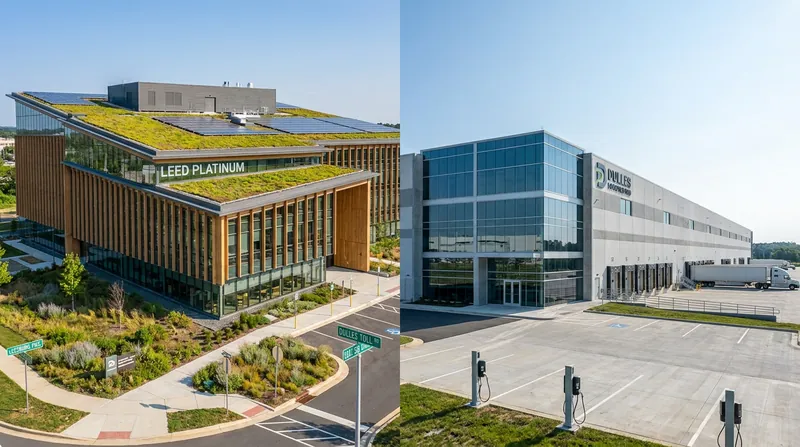
Investors and corporate tenants are actively paying more for buildings with strong environmental credentials, a phenomenon the industry calls the "green premium." Rather than viewing sustainability as a costly regulatory burden, property owners are realizing that energy-efficient, climate-resilient buildings are the most reliable way to secure long-term asset value.[1]
The financial data paints a compelling picture. According to global research by JLL, green-certified offices command average rental premiums of 7.1% in major North American cities, 9.9% across the Asia Pacific region, and up to 11.6% in London. In highly competitive urban markets, buildings boasting top-tier LEED or BREEAM certifications can see even higher uplifts.[1]
This premium is driven largely by corporate occupiers. Companies across the globe are under immense pressure from shareholders and regulators to meet their own Environmental, Social, and Governance (ESG) targets. Because real estate often represents a massive portion of a company's carbon footprint, leasing a net-zero or highly efficient office is one of the fastest ways to slash operational emissions.
Beyond the higher rent yields, these buildings simply cost less to run. Energy-efficient properties spend roughly 20% to 23% less on daily operations and maintenance than older, conventional buildings. Advanced analytics platforms and smart building controls can reduce energy consumption by an additional 5% to 10%, creating a compounding financial advantage.
However, the market is a double-edged sword. While the green premium rewards sustainability, a parallel force known as the "brown discount" is actively penalizing inefficiency. Buildings with poor energy performance are beginning to suffer a marked decline in value, struggling to attract tenants and facing longer, costlier vacancy periods.
The brown discount is not just theoretical; it is playing out in real time on the balance sheets of property owners. In London and New York, older office stock with low energy ratings is being bypassed by a new wave of occupiers who refuse to compromise on their climate commitments. Landlords stuck with energy-guzzling buildings are watching their once-prized assets slide toward obsolescence.
This divide is now extending deeply into capital markets. Between 2026 and 2027, an estimated $2.4 trillion in commercial property debt is set to mature globally. As mid-market owners face tightening refinancing conditions, sustainability has emerged as a critical lifeline to secure capital.
Banks and institutional lenders, facing their own regulatory pressures to decarbonize their portfolios, are offering preferential rates for green loans. Conversely, they are applying higher yield assumptions and stricter terms to inefficient buildings. For some older assets, securing traditional financing is becoming prohibitively expensive, effectively forcing the owner's hand.
Faced with this reality, the real estate industry is coming to a stark realization: we cannot simply build our way out of the climate crisis with new, green skyscrapers. The math of the built environment simply does not allow it.[2]
Approximately 80% of the buildings that will be in use by the year 2050 have already been built. If the world is to meet the emissions reductions targets laid out in the Paris Agreement, the focus must shift aggressively from new construction to the transformation of existing stock.[1]
Building from scratch carries a massive "embodied carbon" penalty—the vast greenhouse gas emissions generated by manufacturing steel, pouring concrete, and transporting heavy materials. Deep retrofits, by contrast, can reduce whole-life carbon emissions by 50% to 75% compared to new construction, preserving the structural shell while upgrading the systems inside.
The financial case for retrofitting is equally strong. Upgrading an existing structure is often 40% cheaper than demolishing and rebuilding it. It also allows upgraded spaces to be brought to the market faster, minimizing the time during which rental income is interrupted.
A deep retrofit goes far beyond changing lightbulbs or adding a coat of low-VOC paint. It involves comprehensive, systemic upgrades: replacing fossil-fuel heating with electrified heat pumps, installing smart metering, drastically improving the building's thermal envelope with high-performance windows, and integrating on-site renewable energy like solar panels.[1]
Governments are accelerating this shift through aggressive policy. In Europe, the Energy Performance of Buildings Directive (EPBD) is tightening standards significantly by 2026, forcing landlords to upgrade or face severe penalties. In the United States, cities like New York and Boston are implementing strict local laws that fine buildings for exceeding strict carbon caps.
JLL estimates that 70% of potentially obsolete building stock—roughly 1.5 billion square feet—sits in cities with aggressive sustainability targets. This represents a massive, untapped market for investors who are ready to capitalize on the convergence of regulatory pressure and tenant demand.
Despite the clear financial and environmental incentives, the current pace of retrofitting remains sluggish. Globally, the retrofit rate hovers between 1% and 2.4% annually. To meet mid-century net-zero targets, industry experts warn that this pace needs to at least triple.[1]
The capital required for this global overhaul is staggering, with some projections suggesting $30 trillion will be needed to fully decarbonize the built environment. Yet, the momentum is undeniably building as the cost of inaction begins to outweigh the expense of modernization.[1][2]
The commercial real estate sector has crossed a definitive tipping point. Sustainability is no longer a niche amenity, a temporary add-on, or a marketing brochure buzzword. It has become the fundamental baseline for preserving asset value, securing financing, and attracting the next generation of tenants.[1][2]
Key terms
- Green Premium
- The higher rent or sale price that tenants and investors are willing to pay for buildings with strong sustainability credentials.
- Brown Discount
- The reduction in a building's financial value because it fails to meet modern energy efficiency standards or climate regulations.
- Deep Retrofit
- A comprehensive upgrade of a building's core systems—such as HVAC, insulation, and windows—designed to drastically reduce energy consumption.
- Embodied Carbon
- The total greenhouse gas emissions generated during the manufacturing, transportation, and assembly of building materials.
- Stranded Asset
- A property that has suffered from unanticipated or premature write-downs, devaluations, or conversion to liabilities, often due to failing to meet new climate regulations.
Reader questions
Why not just tear down old buildings and build new green ones?
Building from scratch carries a massive 'embodied carbon' penalty from manufacturing and transporting materials like steel and concrete. Retrofitting an existing building saves 50% to 75% of whole-life carbon emissions and is often 40% cheaper.
What happens to buildings that refuse to upgrade?
They face the 'brown discount.' These buildings lose rental value, experience longer vacancy periods, struggle to secure affordable financing, and risk becoming 'stranded assets' that cannot legally be leased under new city mandates.
Who pays the upfront cost for a deep retrofit?
Property owners and landlords bear the initial capital costs. However, they recoup this investment through higher rental yields (the green premium), significantly lower daily operating costs, and access to cheaper green financing.
Where opinion splits
Institutional Investors & Landlords
Viewing sustainability as a core strategy for capital protection and asset valuation.
For major property owners, the transition to green real estate is no longer viewed as an environmental charity project; it is a hard-nosed financial imperative. Landlords are acutely aware of the 'brown discount' and the risk of holding stranded assets that cannot be leased or sold. With trillions in commercial debt maturing, securing favorable refinancing rates hinges entirely on a building's ESG metrics. Consequently, capital is flowing aggressively toward deep retrofits to protect long-term yields and capture the rental premiums offered by top-tier corporate tenants.
Corporate Tenants
Using real estate footprints to achieve aggressive internal net-zero commitments.
Corporate occupiers are the primary demand engine driving the green premium. Facing intense scrutiny from shareholders, regulators, and their own employees, companies are racing to decarbonize their operations. Because office space represents a significant portion of a company's Scope 2 emissions, leasing a highly efficient, green-certified building is a rapid way to make progress on climate pledges. Furthermore, these tenants view sustainable, healthy workspaces featuring high air quality and natural light as essential tools for employee retention and productivity.
Urban Policy & Climate Advocates
Pushing for rapid, mandatory decarbonization of the existing built environment.
Environmental advocates and city planners emphasize that voluntary market forces are moving too slowly. With the built environment responsible for 40% of global emissions, they argue that the current 1% to 2% annual retrofit rate is a failure. This camp champions strict regulatory frameworks—like the EU's Energy Performance of Buildings Directive and New York's Local Law 97—to force the hands of reluctant landlords. They also heavily prioritize retrofitting over new construction to avoid the massive 'embodied carbon' emissions associated with manufacturing new steel and concrete.
- Institutional Investors & Landlords
- Focused on protecting long-term asset value, securing favorable green financing, and avoiding the financial penalties of the brown discount.
- Corporate Tenants
- Driven by internal ESG commitments, seeking highly efficient, healthy workspaces to reduce their operational carbon footprint and attract talent.
- Urban Policy & Climate Advocates
- Prioritizing the rapid decarbonization of the built environment through strict regulations and the preservation of embodied carbon via retrofits.
Perspectives this story doesn't cover
- Small-scale commercial landlords
- Construction material suppliers
- Local municipal planners
Sources
Source coverage
2 outlets
3 viewpoints surfaced


- [1]JLLInstitutional Investors & Landlords
Decarbonizing the Built Environment: The Green Tipping Point
Read on JLL → - [2]Factlen Editorial Team
Synthesis by Factlen editorial team
Read on Factlen Editorial Team →
More in Real Estate
See all →Data Center Boom
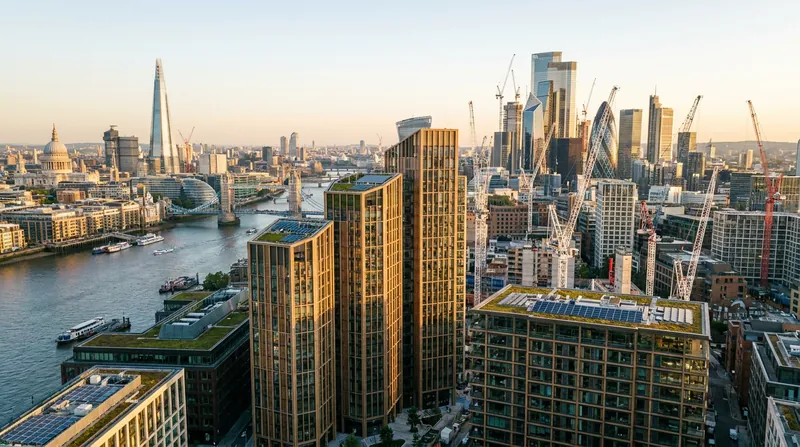
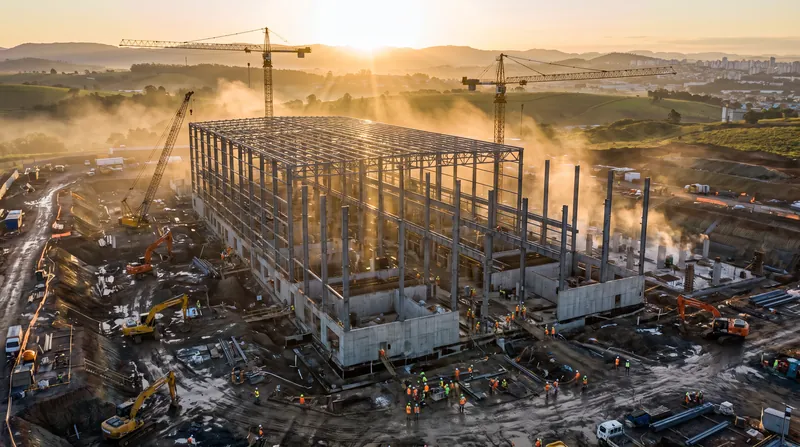
Barclays Reports $2.3 Trillion Committed to Global Data Center Real Estate in 2026 Amid AI Boom
6 sources
Retail Real Estate
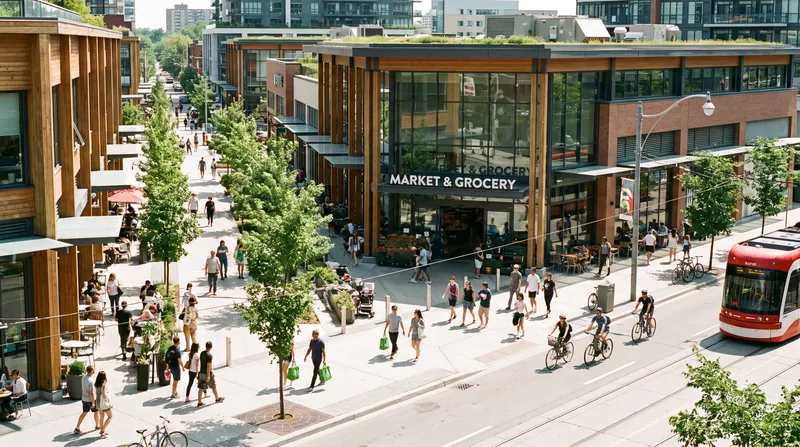
KingSett Capital and Choice Properties Acquire First Capital REIT in $9.4 Billion Deal, Creating Canada's Largest REIT
6 sources
State-Led Housing
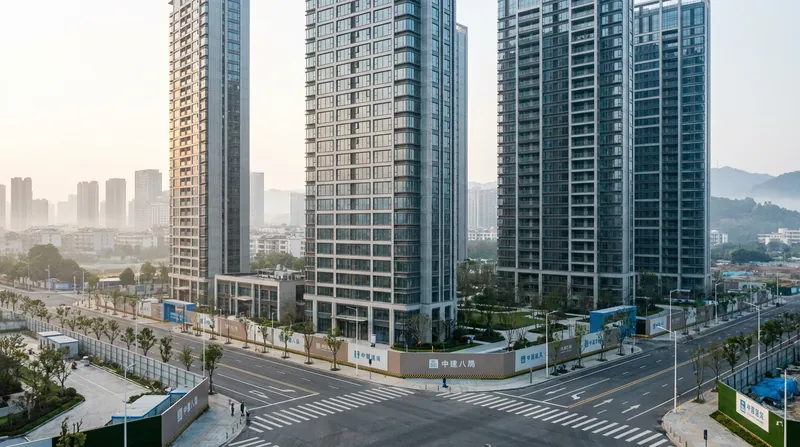
China Commits to State-Led Housing Model, Using Central Bank Funds to Buy Millions of Unsold Homes
3 sources
Commercial Property
Global Commercial Real Estate Shifts to 'Defensive Consolidation' Amid Office Market Stress
5 sources
Comments
Every angle. Every day.
Get Real Estate stories with full source coverage and perspective breakdowns, free every day.