
The Evidence on LED Red Light Therapy Masks: What Clinical Studies Actually Show
At-home LED face masks promise to reduce wrinkles and clear acne using NASA-developed light technology. Clinical evidence confirms the biological mechanism works, but dermatologists warn that consumer devices require months of consistent use to achieve modest results.
By Factlen Editorial Team
- Dermatological Consensus
- Views red light therapy as a safe, evidence-backed supplementary treatment that yields modest, gradual results.
- Clinical Researchers
- Focuses on the cellular mechanisms of photobiomodulation and the statistical efficacy of specific light wavelengths.
- Consumer Safety Advocates
- Warns about the lack of regulation, low power of at-home devices, and the risk of placebo effects or eye strain.
What's not represented
- · Device Manufacturers
- · Aestheticians and Spa Owners
Why this matters
Consumers are spending hundreds of dollars on at-home LED masks based on viral marketing. Understanding the actual clinical evidence and power limitations of these devices helps buyers separate proven dermatological science from expensive placebos.
Key points
- At-home LED masks use photobiomodulation to stimulate cellular energy and boost collagen production.
- Clinical studies confirm the biological mechanism works, but results are modest compared to in-office procedures.
- Consumer masks deliver significantly lower power than clinical devices, requiring much longer treatment times.
- Visible improvements in skin texture and acne reduction typically require 8 to 12 weeks of consistent use.
- FDA clearance indicates the devices are safe for public use, not that they are guaranteed to be effective.
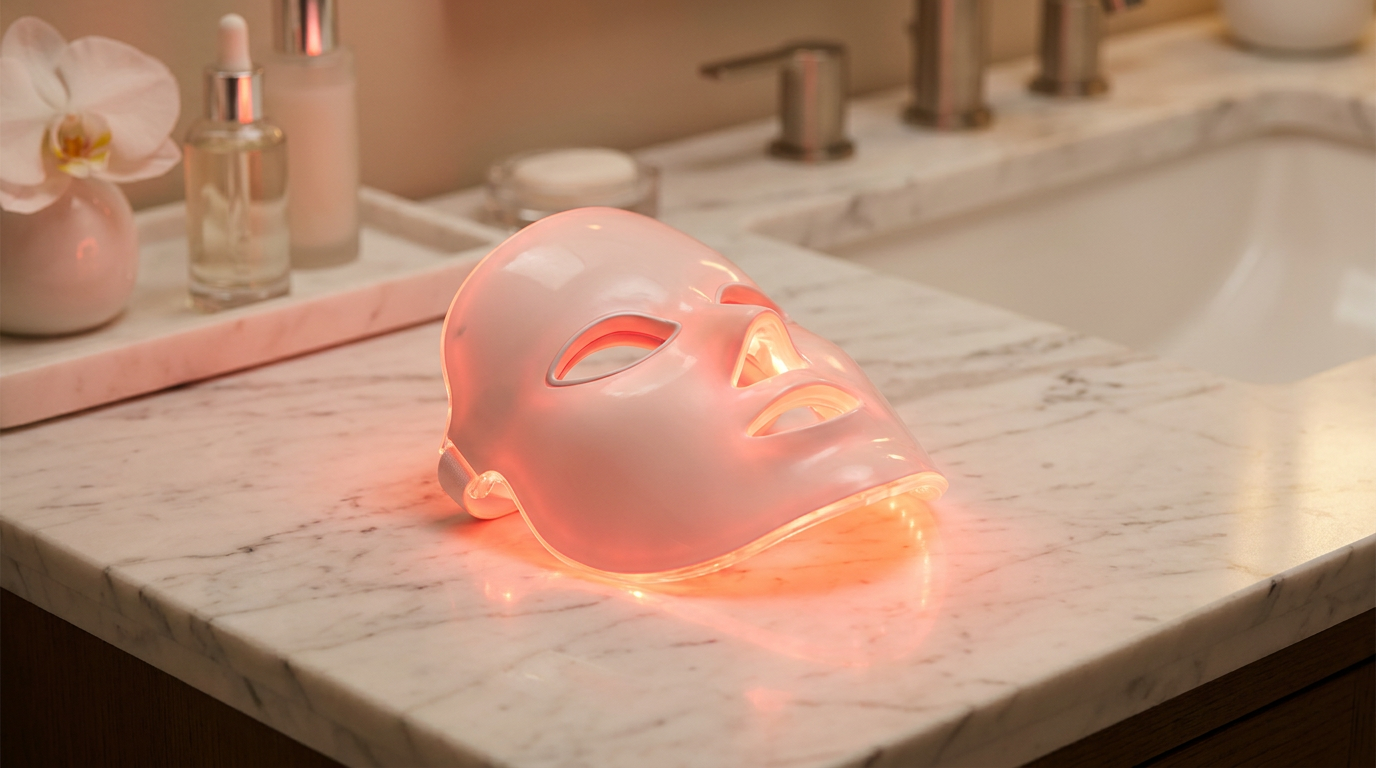
Introduction to the glowing masks taking over social media feeds and bathroom vanity tables. They look like props from a science fiction film, but the technology behind them—formally known as photobiomodulation—has a surprisingly rigorous scientific pedigree. The concept originated with NASA in the 1990s, when scientists utilized light-emitting diodes to promote plant growth on space shuttle missions and subsequently discovered the light's ability to accelerate wound healing in astronauts. Today, the consumer beauty industry has miniaturized this technology into at-home LED masks that promise to reduce wrinkles, clear stubborn acne, and rejuvenate aging skin without the need for needles, chemicals, or recovery downtime. As the market for these devices explodes, consumers are left wondering if the steep price tags are justified by actual dermatological science or merely fueled by viral marketing.[1][4]
The core mechanism of these devices relies on specific wavelengths of light penetrating the human skin barrier to enact cellular changes. Red light, typically calibrated between 630 and 660 nanometers, is designed to reach the upper dermis, while near-infrared light at 830 nanometers penetrates even deeper into the underlying tissue. When these highly specific light waves make contact with the skin, they do not burn, ablate, or damage the surface in the way that ultraviolet rays from the sun or tanning beds do. Instead, they trigger a non-thermal photochemical reaction inside the cells themselves. This process is fundamentally different from traditional dermatological treatments that rely on controlled injury—like chemical peels or microneedling—to force the skin to heal itself.[6]
According to the Cleveland Clinic, this photochemical process acts directly on the mitochondria, which function as the microscopic power plants of human cells. By absorbing the specific wavelengths of light energy, the mitochondria are stimulated to produce higher levels of adenosine triphosphate, commonly known as ATP. With this sudden surplus of cellular energy, the skin cells are empowered to work much more efficiently. They can accelerate the repair of environmental damage, boost the rate of new cell growth, and, crucially, stimulate the fibroblasts. Fibroblasts are the specialized cells responsible for producing collagen and elastin, the structural proteins that give youthful skin its firmness and elasticity.[1]

The clinical evidence supporting these anti-aging claims is well-documented, though medical experts consistently emphasize that consumer expectations must be carefully managed. A landmark 2019 study published in the Journal of the American Academy of Dermatology demonstrated that low-level red and infrared light successfully stimulated the specific biological markers linked to anti-aging. In clinical trials, participants who underwent consistent light therapy showed statistically significant improvements in overall collagen density, a smoothing of skin texture, and a measurable reduction in the depth of fine lines and wrinkles. The data confirms that the biological mechanism is not a placebo; the skin genuinely responds to the light.[3]
However, the operative keyword across all dermatological literature regarding at-home light therapy is "modest." Red light therapy is not a magic wand, nor is it a direct substitute for aggressive medical interventions like prescription retinoids, deep chemical peels, or fractional laser resurfacing. It is a gradual, cumulative biological process that requires weeks of consistent, dedicated application to yield visible changes. Users expecting the dramatic, overnight transformation of a surgical facelift or injectable fillers will be disappointed. The therapy works by slowly optimizing the skin's natural regenerative capabilities, meaning the results are subtle and build upon themselves over a prolonged period of time.[6]
Beyond anti-aging applications, the strongest and most consistent evidence for light therapy lies in the treatment of acne. Many high-end masks incorporate a blue light setting, typically calibrated at 465 nanometers, which operates on an entirely different biological mechanism than red light. Blue light has a well-established, highly effective antimicrobial property. It specifically targets and destroys Cutibacterium acnes, the microscopic bacteria that become trapped in pores and serve as the central catalyst for inflammatory breakouts. By eliminating the bacteria at the source, blue light acts as a preventative measure against future blemishes.[6][7]
When this antibacterial blue light is combined with the potent anti-inflammatory properties of red light, the therapeutic results can be substantial. A clinical trial highlighted by UCLA Health followed a cohort of patients suffering from mild to severe acne who underwent a structured series of dual-light treatments. The researchers recorded a significant decrease in the overall secretion of skin oil and a marked reduction in the size and severity of active acne lesions. Crucially, these improvements were achieved without the severe dryness, peeling, or adverse side effects that are commonly associated with harsh topical acne medications like benzoyl peroxide or oral isotretinoin.[4]
When this antibacterial blue light is combined with the potent anti-inflammatory properties of red light, the therapeutic results can be substantial.
Despite the proven science, there is a critical variable that separates professional dermatology treatments from the at-home masks sold online: power density. Also known as irradiance, power density is measured in milliwatts per square centimeter and dictates how much actual light energy is being delivered into the tissue. Clinical devices used in a dermatologist's office are highly powerful, typically delivering between 100 and 200 milliwatts per square centimeter. This allows the medical professional to drive a massive, highly effective dose of light energy deep into the patient's skin in a session lasting just a few minutes.[6]
In stark contrast, the vast majority of consumer LED masks deliver only a fraction of that clinical power, usually hovering somewhere between 10 and 50 milliwatts per square centimeter. Because the power output of these consumer devices is so much lower, achieving a comparable therapeutic dose requires significantly more time under the lights. A ten-minute session under a high-powered clinical panel might require a month of daily twenty-minute sessions with an at-home mask to replicate the exact same energy delivery. This fundamental difference in hardware limits the ceiling of what at-home devices can achieve quickly.[6]

This severe power discrepancy explains why consistency is the absolute most important factor for anyone using an at-home device. Clinical literature and dermatological guidelines suggest that meaningful, visible changes to the skin typically require a minimum of eight to twelve weeks of dedicated, near-daily use. Users who treat their LED mask as an occasional spa-day novelty or only use it once a week will simply not accumulate enough cellular energy to trigger the lasting collagen remodeling they desire. The therapy demands a level of routine commitment that many consumers struggle to maintain over the long term.[6][7]
From a safety perspective, the American Academy of Dermatology considers short-term red light therapy to be exceptionally safe for the vast majority of the population. Because the devices strictly utilize visible and near-infrared spectrums, they do not emit any ultraviolet light. Consequently, they do not carry the severe skin cancer risks, cellular DNA damage, or premature photoaging associated with tanning beds or unprotected sun exposure. The most commonly reported side effects in clinical trials are incredibly mild, typically limited to temporary redness, slight dryness, or minor irritation that resolves shortly after the session ends.[2]
However, consumers must be acutely aware of what regulatory labels actually mean in the beauty tech industry. Many at-home masks proudly advertise being "FDA-cleared" on their packaging, a phrase that is frequently misinterpreted by buyers as a government guarantee of spectacular results. In reality, FDA clearance simply means the agency has evaluated the device and determined it poses a low risk of physical harm to the public when used as directed. It is a baseline safety certification, not a rigorous endorsement of the product's clinical efficacy or its ability to actually reduce wrinkles.[2][5]

There are still genuine safety precautions that users must observe to prevent accidental injury. Dermatologists strongly advise using proper, opaque eye protection during every single session, as the intense, prolonged exposure to bright LEDs can cause severe retinal strain or cumulative ocular injury over time. Additionally, individuals with darker skin tones or those suffering from conditions like melasma must proceed with extreme caution. Certain wavelengths of light, or the ambient heat generated by the LED bulbs, can inadvertently trigger hyperpigmentation or worsen existing dark spots if the device is not calibrated correctly.[4][5]
The medical community is also still actively searching for the exact optimal dosage required for maximum benefit. Researchers frequently refer to a "Goldilocks" window for photobiomodulation: too little light exposure fails to adequately stimulate the mitochondria, while too much exposure can overwhelm the cells, cause localized inflammation, and actually diminish the therapeutic returns. Because the consumer market remains largely unregulated regarding output standards, many cheaper devices lack the engineering precision to guarantee they consistently hit this exact therapeutic window, leaving users guessing about their actual dosage.[5]

Ultimately, the comprehensive evidence pack confirms that LED red light masks are not a baseless marketing gimmick; they are a legitimate, miniaturized delivery system for a scientifically proven photochemical process. For consumers who are willing to invest in a high-quality, reputable device and commit to months of consistent, daily use, the science firmly supports gradual, measurable improvements in skin firmness, texture, and acne reduction. But for those seeking overnight transformations or dramatic structural changes, traditional in-office dermatology remains the undisputed gold standard.[1][2][8]
How we got here
1990s
NASA begins experimenting with red light therapy to promote plant growth in space and accelerate wound healing for astronauts.
2018
The Journal of the American Academy of Dermatology publishes findings supporting the use of combined red and blue light for acne treatment.
2019
Clinical studies confirm that low-level red and infrared light can stimulate biomarkers linked to anti-aging and collagen production.
2024
The FDA clears dozens of at-home LED masks for consumer use, classifying them as low-risk devices for cosmetic skin treatment.
Viewpoints in depth
Dermatological Consensus
Views red light therapy as a safe, evidence-backed supplementary treatment that yields modest, gradual results.
Major medical bodies like the American Academy of Dermatology and the Cleveland Clinic acknowledge the biological efficacy of photobiomodulation. They emphasize that while the underlying science is sound, red light therapy should be viewed as a complementary tool rather than a standalone cure. Their primary concern is managing patient expectations, noting that the results are subtle compared to in-office procedures like chemical peels or laser resurfacing. They also stress the importance of baseline safety, particularly regarding eye protection and the risk of hyperpigmentation in darker skin tones.
Clinical Researchers
Focuses on the cellular mechanisms of photobiomodulation and the statistical efficacy of specific light wavelengths.
The academic and research community is primarily interested in the precise photochemical reactions occurring within the mitochondria. Studies published in dermatology journals focus on quantifying the exact wavelengths—such as 630nm for red light and 830nm for near-infrared—that successfully stimulate fibroblasts and increase ATP production. Researchers often highlight the gap between the controlled, high-irradiance environments of clinical trials and the highly variable power outputs of consumer devices, advocating for more rigorous standardization in the industry.
Consumer Safety Advocates
Warns about the lack of regulation, low power of at-home devices, and the risk of placebo effects.
Skeptics and consumer protection advocates point out that the at-home LED mask market is largely unregulated regarding efficacy. They highlight that 'FDA-cleared' is frequently used as a misleading marketing term to imply guaranteed results, when it only certifies a low risk of physical harm. This camp warns that many cheaper devices on the market lack the necessary power density to penetrate the skin barrier effectively, meaning consumers may be paying hundreds of dollars for what amounts to a placebo effect.
What we don't know
- The exact 'Goldilocks' dosage of light energy required for optimal results, as too much exposure may diminish therapeutic returns.
- The long-term effects of daily, multi-year use of high-powered LED masks on facial tissue and ocular health.
- How effectively at-home devices maintain their stated wavelength accuracy and power output as the LED bulbs age over time.
Key terms
- Photobiomodulation
- A form of light therapy that utilizes non-ionizing light sources, like LEDs, to trigger photochemical changes within cellular structures.
- Mitochondria
- The structures within cells that generate most of the chemical energy needed to power the cell's biochemical reactions.
- Fibroblasts
- Cells in the connective tissue that produce collagen and other fibers, playing a critical role in skin elasticity and wound healing.
- Irradiance
- The power density of a light source, typically measured in milliwatts per square centimeter, which determines how much energy reaches the tissue.
- Adenosine Triphosphate (ATP)
- The primary carrier of energy in cells, which increases in production when mitochondria are stimulated by red light.
Frequently asked
Do at-home red light masks actually work?
Yes, but results are modest and gradual. Clinical studies show they can improve collagen density and reduce acne, provided they are used consistently for 8 to 12 weeks.
Is red light therapy safe for the eyes?
The intense light can cause retinal strain or injury over time. Dermatologists strongly recommend wearing proper opaque eye protection during every session.
Does FDA-cleared mean the mask is effective?
No. FDA clearance only indicates that the device poses a low risk of harm to the public. It is a baseline safety measure, not a guarantee of medical efficacy.
Can red light therapy cause skin cancer?
No. Unlike tanning beds, red light therapy does not use ultraviolet (UV) light, which is the wavelength responsible for cellular damage and skin cancer.
Sources
Source coverage
8 outlets
3 viewpoints surfaced








[1]Cleveland ClinicDermatological Consensus
Red Light Therapy: Benefits, Side Effects & Uses
Read on Cleveland Clinic →[2]American Academy of DermatologyDermatological Consensus
Is red light therapy right for your skin?
Read on American Academy of Dermatology →[3]Journal of the American Academy of DermatologyClinical Researchers
Low-level red and infrared light stimulate biomarkers linked to anti-aging
Read on Journal of the American Academy of Dermatology →[4]UCLA HealthDermatological Consensus
What is red light therapy and does it work?
Read on UCLA Health →[5]MultiCare Health SystemConsumer Safety Advocates
Do red light therapy masks actually work?
Read on MultiCare Health System →[6]DoctronicClinical Researchers
The Evidence Base: What Studies Actually Show on Red Light Therapy
Read on Doctronic →[7]HealthlineClinical Researchers
Red Light Therapy: Benefits, Side Effects, and Uses
Read on Healthline →[8]Factlen Editorial TeamConsumer Safety Advocates
Synthesis by Factlen editorial team
Read on Factlen Editorial Team →
More in shopping
See all 57 stories →Electric Bikes
The 2026 E-Bike Buying Guide: How to Choose the Right Electric Bicycle
7 sources

Used EVs
How to Buy a Used EV in 2026: Battery Health, Tax Credits, and What to Look For
6 sources
Luggage Choice
Travel Backpack vs. Rolling Carry-On: Which Luggage Fits Your Trip?
7 sources

Summer Sales
The 2026 Summer Retail Price War: Amazon, Walmart, and Target Launch Massive June Sales Events
7 sources

Every angle. Every day.
Get shopping stories with full source coverage and perspective breakdowns delivered to your inbox.