
The 2026 E-Bike Buying Guide: How to Choose the Right Electric Bicycle
Electric bikes have evolved into a mainstream transportation solution, offering eco-friendly commutes and accessible fitness. This comprehensive guide breaks down motors, batteries, and frame styles to help buyers navigate the complex e-bike market.
By Factlen Editorial Team
- Urban Commuters
- Prioritize reliability, cargo capacity, and replacing car trips.
- Recreational & Off-Road Riders
- Focus on motor torque, suspension, and trail performance.
- Safety & Regulatory Advocates
- Emphasize battery certification, braking power, and legal compliance.
What's not represented
- · Traditional cycling purists who prefer non-motorized bikes
- · Urban planners designing infrastructure for heavier, faster micro-mobility vehicles
Why this matters
Purchasing an e-bike is a significant investment that can dramatically reduce your commuting costs, lower your carbon footprint, and improve your cardiovascular health. Understanding the underlying technology ensures you buy a safe, reliable machine that genuinely fits your daily routine.
Key points
- E-bikes use a battery-powered motor to assist pedaling, making cycling accessible and sweat-free.
- Hub motors are affordable and reliable for city riding, while mid-drive motors excel on steep hills.
- Battery capacity is measured in watt-hours (Wh); a 400-500 Wh battery is ideal for standard commutes.
- Torque sensors provide a smoother, more natural riding experience compared to basic cadence sensors.
- Hydraulic disc brakes are essential for safely stopping the heavier weight of an electric bike.
- Insisting on UL or EN 15194 safety certifications protects against lithium-ion battery fire risks.
The e-bike revolution has matured. In 2026, electric bicycles are no longer a niche novelty or a clunky experiment; they have evolved into a primary mode of transportation for millions. With sales surging globally, riders are swapping stuffy car commutes and expensive transit passes for the sheer joy and efficiency of pedal-assist travel. But stepping into a showroom today can feel like walking into a consumer electronics convention. Buyers are immediately bombarded with technical jargon—watt-hours, mid-drive motors, torque sensors, and class regulations. Navigating this landscape requires looking past the marketing hype and understanding the core mechanics of how these machines actually work.[1][7]
At its most basic level, an electric bike is a traditional bicycle augmented by a battery-powered motor that assists the rider's pedaling effort. This mechanism, known as pedal-assist, does not do all the work for you; rather, it amplifies your own physical output, making steep hills feel flat and long distances feel manageable. This synthesis of human and electric power is what makes e-bikes so appealing across different age groups and fitness levels. Riders still reap the cardiovascular benefits of cycling, but without the exhausting sweat that typically accompanies a long commute to the office.[2][4]
Before comparing specific models, buyers must first understand the legal classifications that govern where and how e-bikes can be ridden. In the United States, the industry generally follows a three-class system. Class 1 e-bikes provide assistance only when the rider is pedaling and stop assisting at 20 miles per hour. Class 2 models feature a throttle, allowing the bike to move without any pedaling at all, also capped at 20 mph. Class 3 bikes are pedal-assist only but can reach speeds up to 28 mph, making them popular for longer road commutes. Meanwhile, in the UK and Europe, strict Electrically Assisted Pedal Cycle regulations cap motors at 250 watts and limit assistance to 15.5 mph without requiring a license.[3][4]

The heart of any electric bike is its motor, and the industry is currently divided into two primary architectures: hub motors and mid-drive motors. Hub motors are encased within the center of the front or rear wheel. They are generally more affordable, require less maintenance, and provide a sensation of being pushed or pulled along the road. Rear hub motors are particularly common on entry-level and commuter models, offering reliable traction and a straightforward riding experience. However, because their weight is concentrated at the wheel, they can make the bike feel slightly unbalanced on technical, off-road terrain.[2][3]
Mid-drive motors, by contrast, are positioned at the bike's bottom bracket, directly between the pedals. This placement lowers the center of gravity, resulting in a highly stable and natural-feeling ride. More importantly, mid-drive systems leverage the bicycle's existing gears. When you shift into a lower gear to climb a steep hill, the motor also benefits from that mechanical advantage, making mid-drives vastly superior for mountainous terrain or heavy cargo hauling. While they command a premium price, their efficiency and balanced handling make them the gold standard for premium commuter and mountain e-bikes.[5][6]

The way a motor delivers its power is dictated by its sensors, a detail that dramatically impacts the ride quality. Entry-level e-bikes often rely on cadence sensors, which simply detect whether the pedals are turning. This can result in a slightly jerky, all-or-nothing power delivery. Premium models utilize torque sensors, which measure exactly how hard the rider is pushing on the pedals and deliver motor assistance proportionally. If you pedal lightly, the motor whispers; if you stand up and mash the pedals, the motor surges to match your effort. This creates a seamless, bionic sensation that cadence sensors cannot replicate.[5][7]
The way a motor delivers its power is dictated by its sensors, a detail that dramatically impacts the ride quality.
Powering these motors is the battery, typically the single most expensive component on the bike. Battery capacity is measured in watt-hours, a metric calculated by multiplying the battery's voltage by its amp-hours. Simply put, watt-hours represent the size of your fuel tank. A compact 250 watt-hour battery is sufficient for short, flat city trips, keeping the bike lightweight and nimble. For a standard daily commute, a 400 to 500 watt-hour battery is the sweet spot, offering a realistic range of 25 to 45 miles. Riders tackling long touring routes or steep off-road trails often look for 700 watt-hour or dual-battery setups to eliminate range anxiety entirely.[2][3]
However, buyers must approach manufacturer range claims with a healthy dose of skepticism. Advertised maximum ranges are often achieved under ideal conditions: a lightweight rider, flat terrain, zero wind, and the lowest possible assist setting. In the real world, factors like steep hills, headwinds, cargo weight, and relying heavily on the motor will drain the battery much faster. Industry experts advise calculating your required round-trip distance and adding a 30 to 40 percent buffer to ensure you never run out of juice halfway home, especially as the battery naturally degrades over years of use.[3][4]

Beyond capacity, battery safety has become a paramount concern in 2026. Following high-profile incidents involving cheap, uncertified lithium-ion packs, regulators and consumer advocates are urging buyers to insist on certified safety standards. In North America, this means looking for UL certification, while European and Australian markets rely on the EN 15194 standard. Purchasing a bike with a battery from a reputable manufacturer—such as Bosch, Shimano, or Yamaha—not only guarantees rigorous safety testing but also ensures that replacement parts and firmware updates will be available years down the line.[6][7]
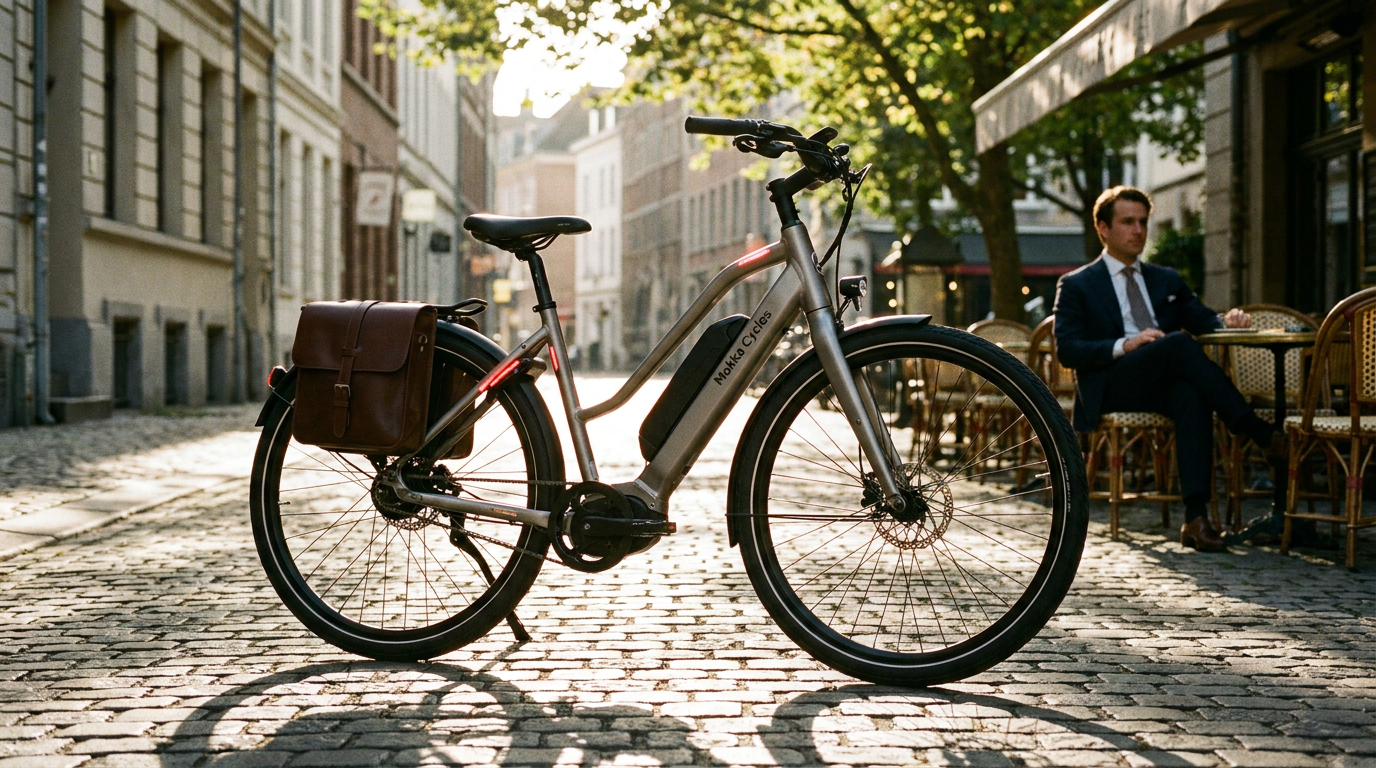
With the electronics sorted, the physical geometry of the frame dictates how the bike will fit into a rider's daily life. The traditional step-over frame, featuring a high top tube, offers excellent structural stiffness and a sporty aesthetic. However, step-through frames—where the top tube drops down near the pedals—have surged in popularity across all demographics. They allow riders to easily mount and dismount without swinging a leg high in the air, a crucial feature when the bike is loaded with groceries, when wearing restrictive work clothing, or for riders with limited mobility.[4][5]
Because e-bikes are inherently heavier and faster than traditional bicycles, robust stopping power is non-negotiable. A standard e-bike can easily weigh between 45 and 70 pounds, carrying significant momentum into every intersection. Hydraulic disc brakes are universally recommended over mechanical rim or disc brakes. Hydraulic systems use fluid to transfer force from the lever to the brake pad, providing immense stopping power with minimal finger effort. They also self-adjust as the pads wear down, ensuring consistent performance and safety in wet or unpredictable weather conditions.[1][5]

Ultimately, choosing the right e-bike requires matching the machine to its primary mission. Urban commuters should prioritize practical features: integrated front and rear lights, full-coverage fenders to block rain spray, and sturdy rear racks for pannier bags. Folding e-bikes are the perfect solution for multi-modal commuters who need to carry their ride onto a train or store it under an office desk. Conversely, recreational riders looking to explore dirt trails should focus on front or full suspension systems, wider tires for traction, and the high-torque climbing ability of a mid-drive motor.[2][4]
Budgeting for an e-bike requires a long-term perspective. While ultra-cheap models available online might seem tempting, they often rely on proprietary electronic components that local bike shops cannot source or repair. When a generic controller fails, the entire bike can become a heavy, useless paperweight. Investing in a mid-range model from an established brand ensures access to a network of mechanics, warranty support, and replacement batteries. Buyers must also factor in the cost of essential accessories, particularly a high-security lock, as the high resale value of e-bikes makes them prime targets for theft.[3][6]
The final and most critical step in the buying process is the test ride. Specifications on a screen cannot convey how a bike actually feels underneath you. A test ride reveals whether the motor's acceleration feels smooth or jerky, whether the saddle supports your posture, and whether the frame size allows you to comfortably reach the ground. By taking the time to test different motor types and frame styles at a local dealer, riders can confidently select an electric bike that transforms their daily transit from a chore into a genuinely uplifting experience.[4][7]
How we got here
Early 2000s
Heavy lead-acid batteries and clunky hub motors limit e-bike appeal to niche hobbyists.
2010s
Lithium-ion batteries become standard, dramatically reducing weight and increasing range.
2015
The three-class regulatory system begins adoption in the US, standardizing e-bike laws.
2020
Pandemic-driven outdoor booms cause global e-bike sales to skyrocket, mainstreaming the technology.
2026
Strict UL battery safety certifications become standard requirements in major markets.
Viewpoints in depth
Urban Commuters
Prioritize reliability, cargo capacity, and replacing car trips.
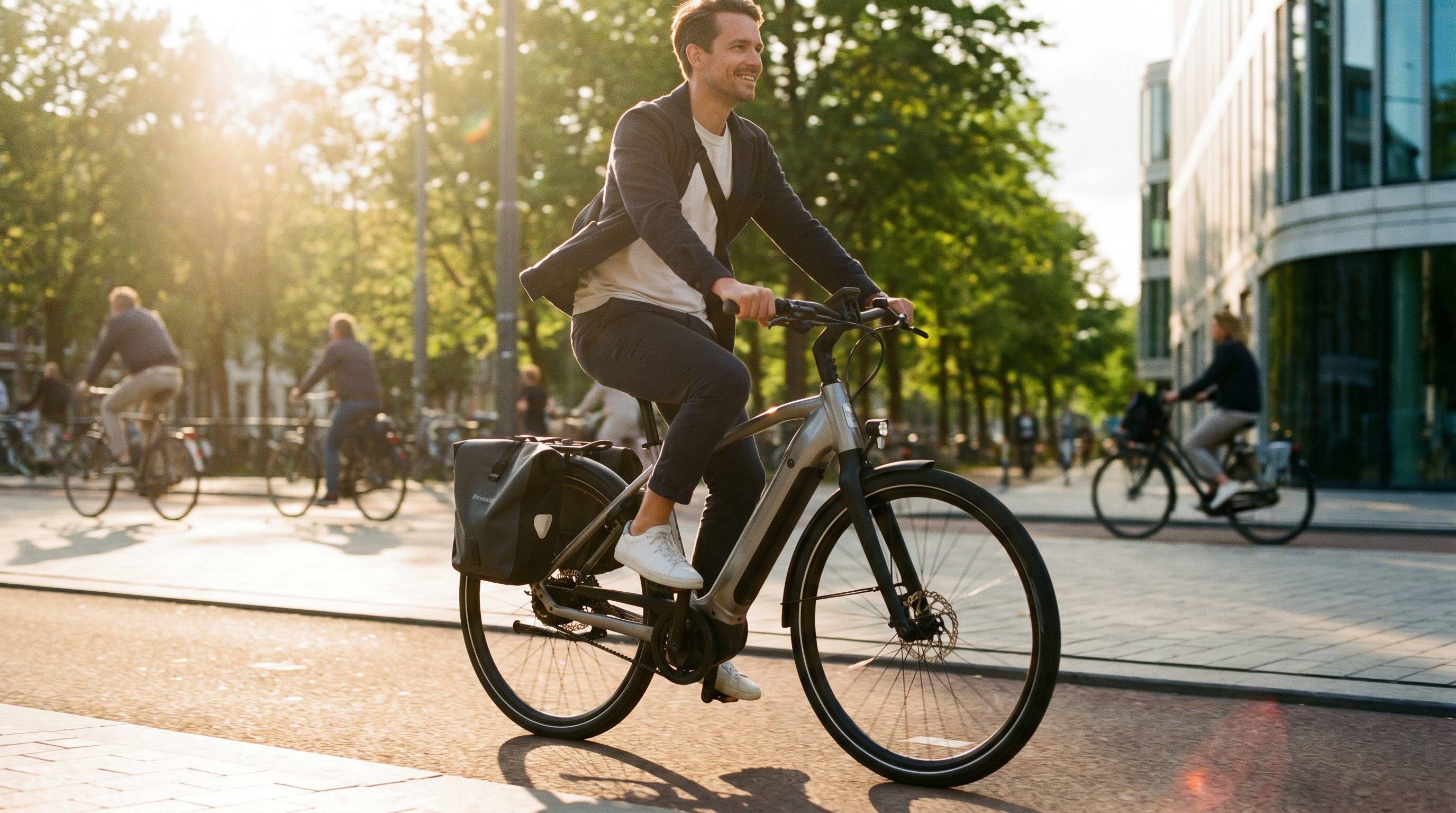
For daily commuters, an e-bike is viewed primarily as a utility vehicle rather than a piece of sporting equipment. This camp values low-maintenance components, integrated lighting, and step-through frames that accommodate work attire. They often advocate for robust rear racks and prioritize battery ranges that can comfortably handle a round-trip commute without needing a mid-day charge at the office.
Recreational & Off-Road Riders
Focus on motor torque, suspension, and trail performance.
Riders taking their e-bikes onto gravel paths or mountain trails look for entirely different specifications. This group strongly favors mid-drive motors for their superior weight distribution and high-torque climbing capabilities. They are willing to accept heavier bikes and higher price tags in exchange for full-suspension frames, wide knobby tires, and high-capacity batteries that can sustain heavy motor assistance over steep, rugged terrain.
Safety & Regulatory Advocates
Emphasize battery certification, braking power, and legal compliance.
With the rapid influx of cheap, direct-to-consumer e-bikes, safety advocates and mechanics stress the importance of certified electrical systems. This viewpoint argues that uncertified lithium-ion batteries pose severe fire risks, and that heavy e-bikes equipped with inadequate mechanical brakes are a danger to both the rider and pedestrians. They urge consumers to invest in reputable brands that adhere to UL or EN 15194 standards and offer long-term serviceability.
What we don't know
- How future local regulations might further restrict where higher-speed Class 3 e-bikes can be ridden.
- Whether solid-state battery technology will significantly reduce e-bike weight in the next few years.
Key terms
- Watt-hour (Wh)
- A measure of battery capacity indicating how much energy the battery can store; higher Wh means longer range.
- Pedal-assist
- A system where the electric motor only provides power while the rider is actively pedaling.
- Mid-drive motor
- An electric motor positioned at the bike's pedals, offering better balance and utilizing the bike's gears for hill climbing.
- Hub motor
- An electric motor housed inside the center of the front or rear wheel, common on entry-level and commuter e-bikes.
- Torque sensor
- A sensor that measures how hard the rider is pedaling and adjusts motor power proportionally for a smooth ride.
- Cadence sensor
- A basic sensor that detects whether the pedals are turning, often resulting in a more abrupt delivery of motor power.
Frequently asked
Do I need a license to ride an e-bike?
In most regions, Class 1 and Class 2 e-bikes (and EAPCs in the UK/EU) do not require a license, registration, or insurance. However, local laws vary, especially for faster Class 3 models.
Can I ride an electric bike in the rain?
Yes. Modern e-bikes from reputable brands are highly water-resistant and designed to handle normal rain and puddles, though they should never be fully submerged or pressure-washed.
How long does an e-bike battery last?
A quality lithium-ion e-bike battery typically lasts between 3 to 5 years, or roughly 500 to 1,000 full charge cycles, before its capacity significantly degrades.
Are e-bikes heavier than regular bikes?
Yes, significantly. Due to the motor and battery, a typical e-bike weighs between 45 and 70 pounds, which is important to consider if you need to carry it up stairs.
Sources
Source coverage
7 outlets
3 viewpoints surfaced





[1]PolicybazaarUrban Commuters
Complete Electric Bike Buying Guide 2026
Read on Policybazaar →[2]CanyonRecreational & Off-Road Riders
How to choose the best electric bike: Your ultimate buying guide
Read on Canyon →[3]VeryUrban Commuters
Best electric bikes 2026: complete UK buyer's guide
Read on Very →[4]Riding 5Safety & Regulatory Advocates
How To Choose An E-Bike
Read on Riding 5 →[5]Onyx MotorsRecreational & Off-Road Riders
How To Choose An E-Bike: A Buyer's Guide
Read on Onyx Motors →[6]BikelineSafety & Regulatory Advocates
E-bike buying guide for beginners
Read on Bikeline →[7]Factlen Editorial TeamSafety & Regulatory Advocates
Synthesis by Factlen editorial team
Read on Factlen Editorial Team →

More in shopping
See all 56 stories →Used EVs
How to Buy a Used EV in 2026: Battery Health, Tax Credits, and What to Look For
6 sources

Luggage Choice
Travel Backpack vs. Rolling Carry-On: Which Luggage Fits Your Trip?
7 sources

Summer Sales
The 2026 Summer Retail Price War: Amazon, Walmart, and Target Launch Massive June Sales Events
7 sources

E-Bike Tech
The 2026 E-Bike Buying Guide: Motors, Batteries, and Finding Your Perfect Ride
8 sources
Every angle. Every day.
Get shopping stories with full source coverage and perspective breakdowns delivered to your inbox.