
The Deep-Sea 'Dark Oxygen' Discovery Faces Fierce Scientific Scrutiny
A bombshell 2024 study claiming that metallic nodules produce oxygen at the bottom of the ocean is facing intense pushback from critics who argue the findings are an experimental artifact.

In short
- Researchers discovered oxygen being produced 13,000 feet deep in the Pacific Ocean, where sunlight cannot reach.
- The original study proposed that metallic seafloor nodules act as 'geobatteries,' splitting seawater to create oxygen.
- The findings challenge the long-held assumption that all of Earth's oxygen originates from photosynthesis.
For decades, biology textbooks have presented a simple, unbreakable rule: Earth's oxygen is the exclusive byproduct of photosynthesis. From the vast algal blooms of the oceans to the dense canopies of terrestrial rainforests, light has always been the prerequisite for the air we breathe. But 13,000 feet below the surface of the Pacific Ocean, in a realm of crushing pressure and absolute darkness, that fundamental assumption is being challenged.[3]
In the abyssal plains of the Clarion-Clipperton Zone (CCZ)—a massive submarine ridge stretching 4,500 miles between Hawaii and Mexico—researchers have detected oxygen being produced where no sunlight can possibly reach. The phenomenon, dubbed "dark oxygen," has captivated the scientific community, offering a tantalizing new mechanism for how life-sustaining elements might be generated on Earth and potentially on other ocean worlds.
The discovery was initially made by Andrew Sweetman, a deep-sea ecologist at the Scottish Association for Marine Science. While conducting ship-based fieldwork to measure oxygen consumption by seafloor organisms, his team’s benthic chambers recorded something impossible: oxygen levels were rising rather than falling. "When we first got this data, we thought the sensors were faulty," Sweetman noted, explaining that every previous deep-sea study had only ever observed oxygen being consumed.
After repeatedly recalibrating their instruments over several years and seeing the same anomalous readings, the researchers realized they were documenting a genuine phenomenon. The source of this oxygen, they hypothesized, was not biological, but geological. The CCZ seafloor is littered with polymetallic nodules—potato-sized mineral deposits that take millions of years to form.
These nodules are incredibly rich in metals like cobalt, nickel, copper, lithium, and manganese. To understand how inert rocks could produce oxygen, Sweetman shipped several pounds of the nodules to Franz Geiger, an electrochemist at Northwestern University. Geiger’s laboratory experiments yielded a startling conclusion: the nodules were acting as natural "geobatteries."[1]
The Northwestern team discovered that a single polymetallic nodule could carry a surface charge of up to 0.95 volts. When multiple nodules are clustered together on the seafloor, their combined electrical potential can easily exceed the 1.5 volts required to split seawater into hydrogen and oxygen—a process known as seawater electrolysis.[1]
The implications of the dark oxygen hypothesis are profound. If oxygen can be generated geologically in the deep ocean, it forces a reevaluation of how aerobic life might have begun on Earth. "For aerobic life to begin on the planet, there had to be oxygen, and our understanding has been that Earth's oxygen supply began with photosynthetic organisms," Sweetman explained, suggesting that life could have originated in the deep sea rather than in shallow, sunlit waters.
The findings also ripple outward into astrobiology. If natural geobatteries can split water in the dark oceans of Earth, similar processes could theoretically occur on the ice-covered moons of Jupiter and Saturn, such as Europa and Enceladus, potentially providing oxygenated habitats for extraterrestrial life.[3]
Back on Earth, the discovery immediately collided with a multi-billion-dollar geopolitical race. The Clarion-Clipperton Zone is the primary target for the emerging deep-sea mining industry. Sixteen international mining firms currently hold exploration claims in the CCZ, eyeing the polymetallic nodules as a massive, untapped source of the critical metals needed for electric vehicle batteries and renewable energy infrastructure.
Conservation advocates and marine biologists have warned that harvesting these nodules could irreparably damage fragile benthic ecosystems. If the nodules are also the primary source of oxygen for deep-sea life, removing them could create vast, suffocating dead zones. Geiger pointed to previous test-mining sites from the 1980s where, decades later, not even bacterial life had recovered.
However, the scientific method is defined by rigorous skepticism, and the dark oxygen hypothesis is currently undergoing a fierce stress test. Following the publication of the findings in the summer of 2024, a coalition of electrochemists and marine scientists began scrutinizing the data, leading to a highly public scientific debate.[3]
In late 2025, critics published a formal rebuttal in the journal Frontiers in Marine Science, arguing that the dark oxygen theory is "fundamentally at odds with thermodynamics." The skeptics assert that the electrical potential of the nodules would quickly deplete without an external energy source to recharge them, making sustained electrolysis impossible.[2]
Furthermore, the critics highlighted potential methodological flaws. They argued that the original study lacked sufficient "negative control" experiments—specifically, incubations conducted without the polymetallic nodules present. According to the rebuttal, unpublished data from the same expeditions allegedly showed oxygen production even in the absence of the nodules, strongly suggesting that the readings were an experimental artifact rather than a natural phenomenon.[2]
The controversy reached a boiling point in April 2026, when the journal Nature Geoscience attached an Editor's Note to the original paper, alerting readers that the findings were subject to ongoing editorial review. Independent scientists have even called for the paper's retraction, underscoring the high stakes of the debate.[1][3]
Sweetman and his co-authors have vigorously defended their work. In recent communications, Sweetman stated that the team has "more than enough evidence to quash" the critics' claims, noting that additional supporting data is currently under peer review. They maintain that the unique electrochemical environment of the deep sea cannot be easily dismissed by standard laboratory thermodynamics.
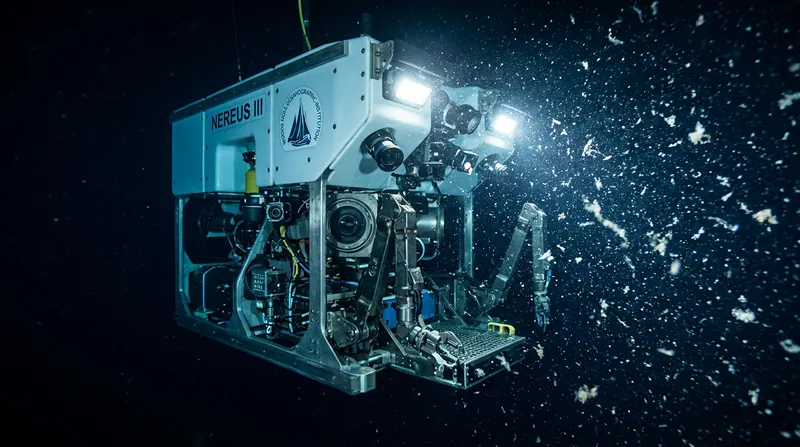
To settle the debate, the scientific community is returning to the source. In May 2026, a new expedition was scheduled to deploy advanced robotics to the seafloor between Mexico and Hawaii. This mission aims to conduct highly controlled, in-situ experiments to definitively confirm or refute the presence of dark oxygen.[3]
This unfolding saga represents science functioning exactly as it should. A paradigm-shifting claim was made, the evidence was published, and the global scientific community immediately set to work attempting to replicate, verify, or debunk it. Whether dark oxygen is a groundbreaking reality or a complex instrumental illusion, the rigorous process of finding out is pushing marine technology to its limits.[3]
Ultimately, the debate over polymetallic nodules highlights a critical vulnerability in our stewardship of the planet. As humanity prepares to lower massive mining machines into the abyss to fuel the green energy transition, the dark oxygen controversy proves just how little we truly understand about the deep ocean's fundamental chemistry.[3]
Key terms
- Polymetallic nodules
- Potato-sized mineral deposits found on the deep ocean floor, rich in metals like cobalt, nickel, and manganese.
- Seawater electrolysis
- A chemical process that uses an electrical current to split water molecules into hydrogen and oxygen gases.
- Clarion-Clipperton Zone (CCZ)
- A vast submarine ridge in the Pacific Ocean between Hawaii and Mexico, known for its high concentration of polymetallic nodules.
- Benthic chamber
- A scientific instrument placed on the seafloor to enclose a section of sediment and measure chemical changes in the water over time.
- Negative control
- An experimental setup where the variable being tested (like the nodules) is removed to ensure the observed effect isn't caused by something else.
Reader questions
What is dark oxygen?
Dark oxygen refers to oxygen produced in the deep ocean where there is no sunlight, challenging the assumption that all of Earth's oxygen comes from photosynthesis.
How could rocks produce oxygen?
Researchers hypothesized that polymetallic nodules act as 'geobatteries,' generating enough electrical voltage to split seawater into hydrogen and oxygen through a process called electrolysis.
Why is the discovery being questioned?
Critics argue that the findings violate the laws of thermodynamics and that the rising oxygen levels were likely an experimental artifact caused by flawed testing methods.
How does this affect deep-sea mining?
The nodules are highly sought after for metals used in EV batteries. If they are crucial for producing oxygen for deep-sea life, mining them could create massive ecological dead zones.
Where opinion splits
Dark Oxygen Proponents
Researchers who argue that polymetallic nodules act as natural batteries, splitting seawater to produce oxygen.
This camp, led by the original study authors, points to repeated sensor readings over a decade that consistently showed oxygen levels rising in benthic chambers. They argue that the high electrical voltages measured on the surface of polymetallic nodules—up to 0.95 volts per nodule—provide a clear mechanism for seawater electrolysis. If validated, they believe this discovery forces a complete rewrite of how aerobic life could have originated on Earth and potentially on other ocean worlds.
Methodological Skeptics
Scientists who argue the oxygen readings are likely an experimental artifact.
A coalition of electrochemists and marine scientists strongly contests the findings, arguing they are 'fundamentally at odds with thermodynamics.' They assert that a natural battery would quickly discharge without an external energy source to replenish it. Furthermore, they point to unpublished data suggesting that oxygen production was recorded even when nodules were absent from the test chambers, indicating that the sensors themselves or the experimental setup may be generating the anomalous readings.
Conservation Advocates
Environmental groups focused on the ecological risks of deep-sea mining.
For this camp, the exact mechanism of dark oxygen is secondary to the broader ecological warning. They argue that the Clarion-Clipperton Zone is a fragile, poorly understood ecosystem that could be irreparably damaged by the extraction of polymetallic nodules. They cite previous test-mining sites from the 1980s that remain barren decades later, arguing that the deep sea should be protected from industrial exploitation regardless of whether the nodules are actively producing oxygen.
- Dark Oxygen Proponents
- Researchers who argue that polymetallic nodules act as natural batteries, splitting seawater to produce oxygen.
- Methodological Skeptics
- Scientists who argue the oxygen readings are likely an experimental artifact.
- Conservation Advocates
- Environmental groups focused on the ecological risks of deep-sea mining.
- Scientific Synthesis
- Focuses on the rigorous, self-correcting nature of the scientific method as the debate unfolds.
Perspectives this story doesn't cover
- Deep-sea mining corporations
- International Seabed Authority regulators
Sources
Source coverage
3 outlets
4 viewpoints surfaced



- [1]Nature GeoscienceDark Oxygen Proponents
Evidence of dark oxygen production at the abyssal seafloor
Read on Nature Geoscience → - [2]Frontiers in Marine ScienceMethodological Skeptics
Concerns regarding the dark oxygen hypothesis
Read on Frontiers in Marine Science → - [3]Factlen Editorial TeamScientific Synthesis
Synthesis by Factlen editorial team
Read on Factlen Editorial Team →

More in Science
See all →Ocean Carbon Sink
Deep-Sea Pressure 'Juices' Nutrients from Marine Snow, Rewriting Global Carbon Cycle Models
4 sources
Martian Organics
Curiosity Rover Discovers Seven New Organic Molecules on Mars, Deepening Search for Past Life
4 sources

Bioelectronics
Artificial Neurons Successfully Interact with Real Brain Cells, Signaling New Era for Bio-Electronics
2 sources

Astrobiology
Scientists Unveil First Evidence of Extraterrestrial Intelligence and Complex Life
4 sources

Comments
Every angle. Every day.
Get Science stories with full source coverage and perspective breakdowns, free every day.