
Sweeping Federal Student Loan Overhaul Takes Effect July 1
New federal regulations will impose strict borrowing caps, eliminate Grad PLUS loans for new borrowers, and overhaul income-driven repayment plans starting this summer.
By Factlen Editorial Team
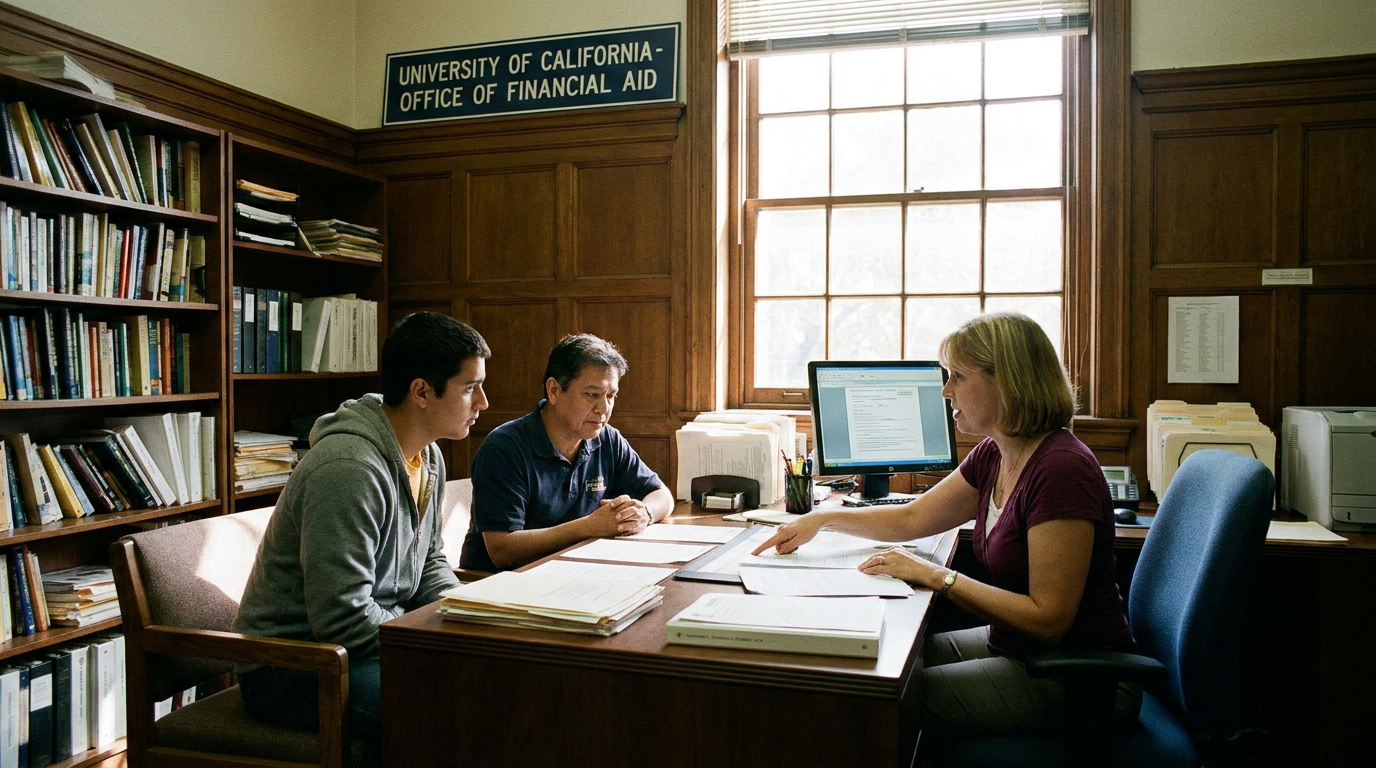
- Financial Aid Administrators
- Focused on the logistical hurdles of implementation, advising students to reassess their timelines and warning of funding gaps.
- Graduate & Professional Students
- Expressing deep concern over the elimination of Grad PLUS loans, which forces reliance on the private market.
- General Borrowers & Advocates
- Concerned that strict caps and full-time enrollment requirements will disproportionately harm low-income and non-traditional students.
- Policy Analysts
- Analyzing the macroeconomic impact of the legislation on federal spending and university revenues.
What's not represented
- · Private Student Loan Lenders
- · University Administrators managing enrollment drops
Why this matters
Millions of current and prospective college students will face strict new limits on federal borrowing, forcing families to cover tuition gaps with private loans or out-of-pocket funds. Graduate students and parents of undergraduates will see the most drastic reductions in available federal aid.
Key points
- The 2025 One Big Beautiful Bill Act introduces strict new limits on federal student borrowing starting July 1, 2026.
- Grad PLUS loans will be eliminated for most new borrowers, forcing graduate students to seek alternative financing.
- Parent PLUS loans will be capped at $20,000 annually and $65,000 over the lifetime of a student's undergraduate education.
- Borrowers currently on the SAVE repayment plan will have 90 days to transition to the new Repayment Assistance Plan (RAP).
Sweeping changes to the federal student loan system will take effect on July 1, fundamentally altering how American families finance higher education. The new regulations, born from the 2025 One Big Beautiful Bill Act (OBBBA), impose strict borrowing caps, eliminate a popular graduate loan program, and overhaul income-driven repayment options.[5][6]
For decades, the federal government allowed graduate students and parents of undergraduates to borrow up to the full cost of attendance through the PLUS loan programs. That era is coming to an abrupt end. Under the new rules, Grad PLUS loans will be eliminated entirely for most new borrowers.[2][5]
Graduate and professional students, such as those in law, medicine, and veterinary programs, have historically relied on Grad PLUS loans to bridge the gap between standard federal loan limits and the high cost of advanced degrees. Without this option, financial aid administrators warn that students will be forced to turn to the private loan market, which often carries higher interest rates and fewer borrower protections.[3][4]
Parents financing their children's undergraduate education will also face unprecedented restrictions. Parent PLUS loans, previously uncapped up to the cost of attendance, will now be limited to $20,000 annually per student, with a strict lifetime cap of $65,000 per child.[1][2]

The legislation also establishes a new lifetime aggregate limit for all federal student loans combined. Across all levels of education—from undergraduate through doctoral studies—a single borrower can now access a maximum of $257,500 in federal student debt.[3]
The legislation also establishes a new lifetime aggregate limit for all federal student loans combined.
Beyond borrowing limits, the new regulations change how students qualify for aid based on their course load. Previously, students enrolled at least half-time could receive their full annual federal loan allotment. Starting this summer, students must maintain full-time enrollment to access maximum funding; those taking part-time course loads will see their loan eligibility pro-rated.[1][4]
This shift has sparked concern among non-traditional students and those who work while attending school. Students who rely on loans to cover basic living expenses during unpaid internships or part-time semesters may find themselves short on funds for rent and textbooks.[1]

Repayment plans are also undergoing a massive restructuring. The Biden-era Saving on a Valuable Education (SAVE) plan is being phased out in favor of a new program called the Repayment Assistance Plan (RAP).[2][3]
Borrowers currently enrolled in the SAVE plan will receive notices from their loan servicers starting in July, giving them a 90-day window to select a new repayment option. Those who fail to actively choose a new plan will be automatically transferred into a Tiered Standard Plan, which may result in significantly different monthly obligations.[2][3]
The RAP program calculates monthly payments based on a borrower's adjusted gross income, offering a $50 credit for each dependent, and promises forgiveness of any remaining balance after 30 years of payments. However, financial aid experts note that while lower-income borrowers may see reduced payments, those in higher income brackets might face steeper monthly bills than they did under previous income-driven plans.[2]

The new law also eliminates the ability to use income-based repayment plans or Public Service Loan Forgiveness (PSLF) for any Parent PLUS loans taken out on or after July 1, removing a key safety net for parents working in the public sector.[2]
As the deadline approaches, university financial aid offices are scrambling to advise students on how to navigate the transition. While existing students who borrowed before the cutoff may be grandfathered into certain legacy provisions, any change in their academic program or a drop in enrollment status could trigger the new, more restrictive rules.[4][5]
How we got here
July 2025
Congress passes the One Big Beautiful Bill Act (OBBBA), mandating sweeping changes to higher education financing.
May 2026
The Department of Education publishes final regulations detailing the implementation of the new loan limits and repayment plans.
July 1, 2026
The new borrowing caps take effect, and the 90-day transition window opens for borrowers on the SAVE repayment plan.
July 1, 2028
Legacy income-driven repayment plans like PAYE and ICR will be fully phased out.
Viewpoints in depth
Financial Aid Administrators
University officials are focused on the logistical hurdles of implementation and advising students to reassess their timelines.
Financial aid offices across the country are working overtime to communicate the impending changes to their student bodies. Administrators warn that the shift to pro-rated loans for part-time students will require meticulous academic planning. Because even a slight drop in course load could trigger a reduction in federal aid, advisors are urging students to map out their entire degree paths now. They also caution that grandfathered provisions for existing students are fragile; transferring schools or taking a leave of absence could instantly subject a student to the new, stricter borrowing caps.
Student Advocates
Advocates warn that strict caps and full-time enrollment requirements will disproportionately harm low-income and non-traditional students.
Groups representing students argue that the elimination of Grad PLUS loans and the new caps on Parent PLUS borrowing will widen the educational wealth gap. Without access to federal gap funding, they argue, low-income families will be forced into the private loan market, which often requires co-signers and lacks the income-driven safety nets of the federal system. Furthermore, advocates point out that requiring full-time enrollment for maximum aid penalizes working adults and non-traditional students who must balance part-time coursework with full-time jobs or family obligations.
Federal Policymakers
Supporters argue the changes are necessary to curb excessive federal lending and simplify the repayment process.
Architects of the One Big Beautiful Bill Act maintain that the previous system encouraged universities to endlessly raise tuition, knowing the federal government would issue uncapped PLUS loans to cover the difference. By imposing strict lifetime and annual borrowing limits, policymakers aim to force institutions to lower costs and prevent students from taking on insurmountable debt. Additionally, they argue that consolidating multiple confusing income-driven repayment plans into the single Repayment Assistance Plan (RAP) will streamline loan servicing and provide a clearer path to eventual forgiveness.
What we don't know
- How private student loan lenders will adjust their interest rates and approval criteria in response to the sudden influx of graduate and parent borrowers.
- Whether the Department of Education has the administrative capacity to seamlessly transition millions of borrowers from the SAVE plan to the new RAP program within the 90-day window.
- How universities will alter their tuition pricing and institutional financial aid packages now that uncapped federal PLUS loans are no longer available to cover the gap.
Key terms
- Grad PLUS Loan
- A federal student loan previously available to graduate and professional students to cover education expenses not met by standard federal loans.
- Parent PLUS Loan
- A federal loan that parents of dependent undergraduate students can use to help pay for college or career school.
- Repayment Assistance Plan (RAP)
- The new federal income-driven repayment plan that replaces the SAVE plan, calculating payments based on income and family size.
- Public Service Loan Forgiveness (PSLF)
- A program that forgives the remaining balance on federal student loans after 120 qualifying monthly payments while working full-time for a qualifying employer.
Frequently asked
Are existing student loans affected by the new borrowing caps?
No. The new borrowing limits and the elimination of Grad PLUS loans apply to new borrowers and new loans disbursed on or after July 1, 2026.
What happens to borrowers currently on the SAVE repayment plan?
Borrowers on the SAVE plan will have 90 days from receiving notice to choose a new plan, such as the Repayment Assistance Plan (RAP). If they do not choose, they will be moved to a Tiered Standard Plan.
Can parents still take out Parent PLUS loans?
Yes, but they are now capped at $20,000 per year and $65,000 over the lifetime of the student's undergraduate education.
Do part-time students still get federal loans?
Yes, but starting in the summer of 2026, loan amounts will be pro-rated based on course load. You must be enrolled full-time to receive the maximum annual amount.
Sources
Source coverage
6 outlets
4 viewpoints surfaced






[1]CBS NewsGeneral Borrowers & Advocates
Student loans are changing once again, with new federal rules set to take effect
Read on CBS News →[2]Connecticut Public RadioGeneral Borrowers & Advocates
The student loan landscape will look a lot different starting in July
Read on Connecticut Public Radio →[3]AVMA NewsGraduate & Professional Students
Major student loan changes taking effect soon
Read on AVMA News →[4]Albany Law SchoolFinancial Aid Administrators
Grad plus Loans: Changes Beginning in 2026
Read on Albany Law School →[5]Columbia International UniversityFinancial Aid Administrators
The One Big Beautiful Bill Act is reshaping federal student loans starting July 1, 2026
Read on Columbia International University →[6]Brookings InstitutionPolicy Analysts
Tracking the administration's education policy and funding disruptions
Read on Brookings Institution →

More in news politics
See all 6 stories →Middle East Conflict
Israel Strikes Beirut as U.S.-Iran Peace Deal Nears, Drawing Sharp Rebuke from Trump
0 sources

Title IX
Supreme Court Declines California Parental Notification Case, Leaving Schools in Legal Limbo
0 sources
Electoral Reform
Does Ranked-Choice Voting Actually Work? Fact-Checking the Evidence
0 sources
US-Iran Diplomacy
US-Iran Peace Deal Nears Sunday Deadline Amid Fresh Beirut Airstrikes
0 sources

Every angle. Every day.
Get news politics stories with full source coverage and perspective breakdowns delivered to your inbox.