
Solid-State Batteries Are Still Years Away, But 'Gel' Batteries Are Already Transforming EVs
Semi-solid-state batteries have quietly bridged the gap between traditional lithium-ion and fully solid-state technology. By replacing liquid electrolytes with a stable gel, they are delivering 500-mile ranges, superior safety, and cold-weather reliability today.
By Factlen Editorial Team
- Battery Manufacturers
- Focused on bridging the gap with scalable, cost-effective technology.
- Automakers
- Focused on eliminating consumer range anxiety and improving vehicle margins.
- EV Consumers & Advocates
- Eager for immediate solutions to range, charging, and cold-weather limitations.
- Industry Analysts
- Cautiously optimistic but monitoring the long-term solid-state race.
What's not represented
- · Legacy automakers heavily invested in traditional lithium-ion gigafactories
- · Solid-state pure-play startups whose timelines are being undercut
Why this matters
As electric vehicle adoption faces headwinds over range anxiety and cold-weather reliability, semi-solid-state batteries offer an immediate, scalable solution. By delivering 500-mile ranges and superior safety without waiting for the 2030s, this bridge technology is poised to make EVs practical for a much broader segment of drivers today.
Key points
- Semi-solid-state batteries replace flammable liquid electrolytes with a stable, paste-like gel.
- The technology significantly reduces fire risks and prevents thermal runaway.
- Energy density jumps to 350-420 Wh/kg, enabling ranges of over 500 miles.
- Gel electrolytes resist freezing, improving cold-weather performance by up to 20%.
- Unlike fully solid-state batteries, semi-solid cells can be built on existing lithium-ion assembly lines.
- Automakers like MG, Nio, and SVOLT are already bringing the technology to market.
For the better part of a decade, the electric vehicle industry has chased a singular holy grail: the solid-state battery. Promised to deliver massive range, lightning-fast charging, and complete immunity to battery fires, solid-state technology has consistently remained "five years away" in the minds of optimistic executives.[1]
The engineering hurdles of removing all liquid from a battery and relying entirely on solid materials have proven immensely difficult to scale outside of laboratory conditions. But while the world waited for a revolution, a highly practical compromise quietly entered mass production.[1][6]
Enter the semi-solid-state battery—often referred to as a "gel" or solid-liquid hybrid battery. Rather than waiting for the 2030s to perfect fully solid architectures, battery manufacturers have developed a bridge technology that solves the most pressing problems of current EVs right now.[2][7]
To understand why this matters, one must look at the anatomy of a standard lithium-ion cell. Conventional EV batteries rely on a liquid electrolyte to carry lithium ions back and forth between the anode and cathode during the charging and discharging process.[6]

While effective, this liquid is inherently flammable and highly sensitive to temperature. It is the primary culprit behind "thermal runaway"—the dangerous chain reaction that causes battery fires if a cell is punctured, overheats, or short-circuits.[6][7]
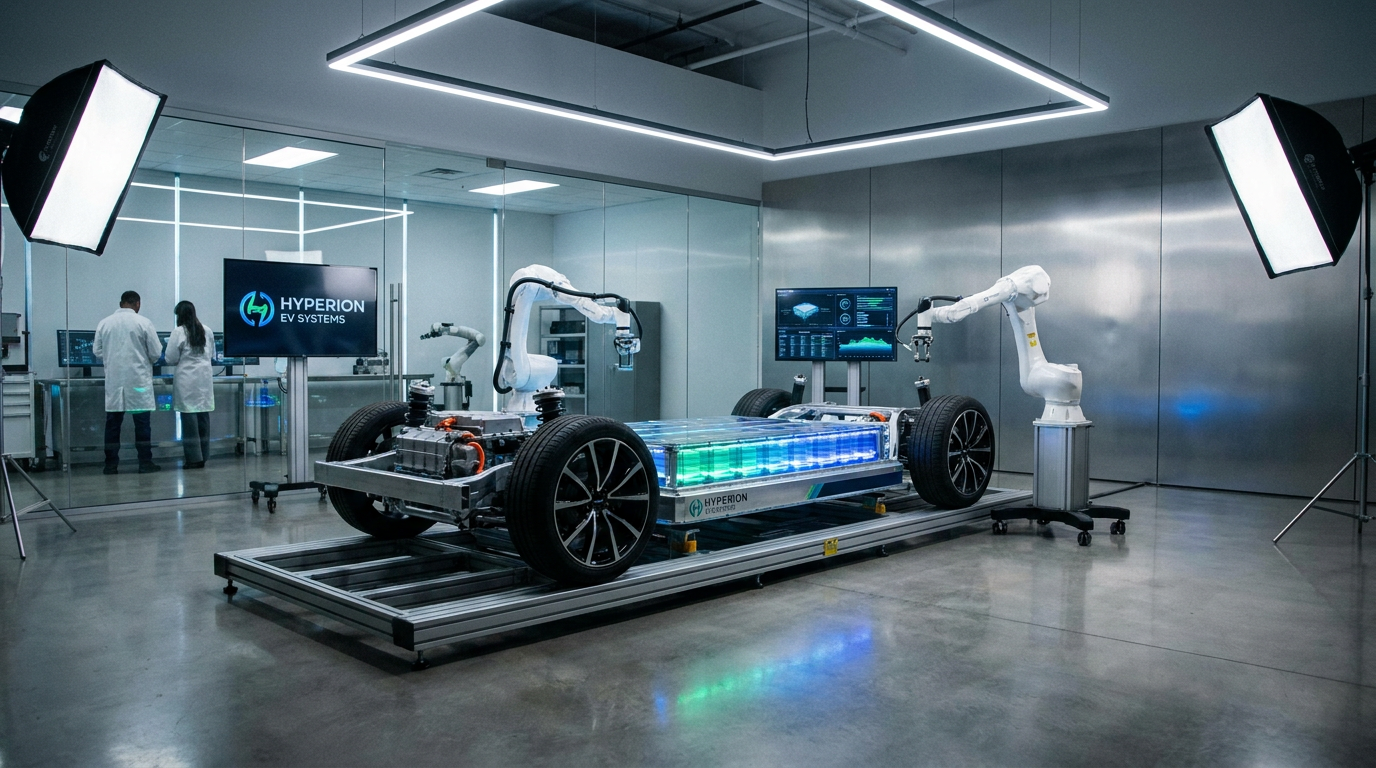
A semi-solid-state battery replaces this volatile liquid with a thick, paste-like gel. By reducing the liquid content to anywhere from 5 to 15 percent, the battery retains enough fluidity to allow ions to move freely, but gains the structural stability of a solid.[3][6]
The safety implications are profound. The gel electrolyte acts as a physical barrier against dendrites—microscopic, needle-like structures that can grow inside a battery and pierce the separator, causing an internal short circuit. In rigorous nail-penetration tests, semi-solid cells have consistently avoided catching fire or emitting smoke.[7][8]
Beyond safety, the semi-solid architecture unlocks a massive leap in energy density. Standard liquid lithium-ion batteries typically top out around 250 to 300 watt-hours per kilogram (Wh/kg). Semi-solid cells currently rolling off assembly lines are achieving between 350 and 420 Wh/kg.[3][8]

For drivers, that density translates directly to range. Automakers can pack significantly more power into the same physical footprint, or maintain current ranges while drastically reducing the weight of the vehicle, which improves handling and efficiency.[3][5]
Chinese automaker Nio has already deployed a 150-kilowatt-hour semi-solid-state pack, manufactured by WeLion, which has demonstrated real-world driving ranges exceeding 1,000 kilometers (620 miles) on a single charge.[8]
Cold weather performance—a notorious weak point for traditional EVs—also sees a dramatic improvement. In sub-zero temperatures, liquid electrolytes become viscous and sluggish, severely cutting range and charging speeds.[6]
Cold weather performance—a notorious weak point for traditional EVs—also sees a dramatic improvement.
Because the gel in a semi-solid battery is already highly stable, it is far less affected by freezing temperatures. Manufacturers report that these batteries retain up to 20 percent more range in extreme cold compared to their liquid counterparts, allowing for immediate start-up and acceleration without the need for extensive battery pre-conditioning.[3][6]

But the true genius of the semi-solid-state battery lies not just in its chemistry, but in its economics. A brand-new factory designed to build fully solid-state batteries requires billions of dollars in capital expenditure and entirely new manufacturing techniques.[6][8]
Conversely, semi-solid batteries are roughly 90 percent compatible with existing lithium-ion assembly lines. Transitioning a gigafactory to produce gel batteries requires an equipment retrofitting cost of just 10 to 15 percent of a new build, allowing the industry to scale the technology rapidly without stranding billions in legacy assets.[7][8]
This manufacturing reality has accelerated the timeline from the lab to the driveway. SAIC Motor's British sub-brand, MG, is currently introducing its "SolidCore" semi-solid battery to the European market in the MG4 EV Urban, bringing the technology to an affordable, mass-market price point.[2][3]

The commercial sector is also adopting the technology. Battery maker CALB has achieved mass production of semi-solid cells for Chery Automotive's light electric trucks, capitalizing on the battery's lighter weight and superior durability for fleet operations.[2]
Meanwhile, SVOLT Energy is preparing to supply semi-solid-state batteries for the next generation of BMW's Mini brand, with series production slated to begin in late 2026.[4]
Even American performance brands are taking notice. Stellantis is actively testing semi-solid-state cells for integration into the Dodge Charger Daytona, seeking the high discharge rates and thermal stability required for sustained track performance.[5]
How we got here
Jan 2021
Nio announces plans for a 150 kWh semi-solid-state battery pack for its flagship ET7 sedan.
Nov 2022
The first semi-solid-state cells roll off the production line at WeLion's factory in China.
Aug 2025
SAIC Motor launches the MG4 in China, deeming it the world's first mass-produced semi-solid-state EV.
Apr 2026
MG Motor announces it will bring its "SolidCore" semi-solid battery technology to the European market.
Late 2026
SVOLT Energy plans to begin series production of semi-solid batteries for the next generation of BMW Mini vehicles.
Viewpoints in depth
Battery Manufacturers
Focused on bridging the gap with scalable, cost-effective technology.
Companies like WeLion and SVOLT argue that while fully solid-state is the ultimate goal, the immediate priority is utilizing existing gigafactories. By retrofitting current lithium-ion assembly lines, they can deliver 80 percent of the benefits of solid-state technology today without the billion-dollar capital expenditures required for entirely new manufacturing processes.
Automakers
Focused on eliminating consumer range anxiety and improving vehicle margins.
Brands like MG Motor and Nio view semi-solid batteries as a critical marketing advantage. By offering vehicles that can exceed 500 miles of range and charge rapidly without thermal degradation, they can attract buyers who have previously hesitated due to range anxiety or cold-weather performance concerns.
Industry Analysts
Cautiously optimistic but monitoring the long-term solid-state race.
Technology analysts note that while semi-solid batteries are a brilliant stopgap, they are still a transitional technology. They caution that automakers heavily invested in gel batteries must ensure they don't fall behind when true solid-state cells—which promise even greater density and zero liquid—finally achieve commercial viability in the 2030s.
What we don't know
- How quickly Western legacy automakers will pivot from traditional lithium-ion to semi-solid architectures.
- Whether the eventual arrival of fully solid-state batteries will render semi-solid technology obsolete, or if the two will coexist.
Key terms
- Electrolyte
- The medium inside a battery that allows electrical charge (ions) to flow between the cathode and anode.
- Thermal Runaway
- A dangerous chain reaction within a battery cell where overheating causes adjacent cells to ignite, leading to a fire.
- Energy Density
- The amount of energy a battery can store relative to its weight or size, typically measured in watt-hours per kilogram (Wh/kg).
- Dendrites
- Microscopic, needle-like lithium structures that can grow inside a battery over time, potentially piercing internal barriers and causing short circuits.
- Solid-State Battery
- A next-generation battery technology that completely replaces liquid electrolytes with a solid material, offering maximum safety and density.
Frequently asked
What makes a battery "semi-solid"?
It replaces the fully liquid electrolyte found in standard lithium-ion batteries with a thick, paste-like gel, reducing the liquid content to just 5 to 15 percent.
Are semi-solid batteries safer than current EV batteries?
Yes. The gel electrolyte is far less flammable and physically resists the formation of internal short circuits, drastically reducing the risk of battery fires.
Do they perform better in cold weather?
Because the gel does not thicken or freeze as easily as a liquid, semi-solid batteries retain significantly more range and charging speed in freezing temperatures.
Why not just wait for fully solid-state batteries?
Fully solid-state batteries are still years away from mass production and require entirely new, expensive factories. Semi-solid batteries can be built on existing assembly lines today.
Sources
Source coverage
8 outlets
4 viewpoints surfaced








[1]The VergeIndustry Analysts
Solid-state batteries still aren’t ready, but gels are
Read on The Verge →[2]ElectrekAutomakers
MG is bringing semi-solid-state EV batteries to Europe
Read on Electrek →[3]ForbesAutomakers
MG: Advancing EV Energy with Semi-Solid-State Batteries
Read on Forbes →[4]ElectriveBattery Manufacturers
SVOLT plans to start series production of semi-solid-state batteries in September
Read on Electrive →[5]TopSpeedAutomakers
What Semi-Solid-State Actually Means For The Charger
Read on TopSpeed →[6]TopChargerEV Consumers & Advocates
The battery everyone's been waiting for, and no one has to wait for any longer
Read on TopCharger →[7]EVLithiumEV Consumers & Advocates
Semi-Solid State Battery: The Future of Energy Storage
Read on EVLithium →[8]WeLion EnergyBattery Manufacturers
WELION semi-solid-state battery cells
Read on WeLion Energy →
Every angle. Every day.
Get technology stories with full source coverage and perspective breakdowns delivered to your inbox.