
Sen. Mitch McConnell Hospitalized; Condition Undisclosed
Kentucky Senator Mitch McConnell, 84, was admitted to a hospital on Sunday morning for an undisclosed health issue. His office stated he is receiving 'excellent care,' though the hospitalization raises questions about his ongoing role in Senate defense appropriations.
By Javier Cruz

Kentucky Senator Mitch McConnell was admitted to a hospital on Sunday morning, according to official statements released by his office, marking the latest in a series of health-related incidents for the veteran lawmaker. The 84-year-old Republican is currently undergoing medical evaluation and observation, though his staff has deliberately withheld specific details regarding the nature of the illness, the severity of his symptoms, or the exact medical facility where he is being treated.
The sudden hospitalization immediately sent ripples through the political establishment in Washington, D.C., as colleagues and constituents alike await further updates on the condition of one of the most influential figures in modern American legislative history. The lack of initial detail has fueled widespread speculation, though his team maintains that the situation is under control.[1][2]
"Senator McConnell was admitted to the hospital this morning," his spokesperson, David Popp, confirmed in a brief, carefully worded statement distributed to the press on Sunday afternoon. "He is receiving excellent care." The office firmly declined to provide any further elaboration, including a prognosis, a description of the symptoms that prompted the admission, or an estimated timeline for his potential release.
It also remains unconfirmed whether the Kentucky lawmaker was hospitalized in the nation's capital, back in his home state, or in another location entirely. This tight-lipped approach to public relations mirrors the communication strategy his office has consistently employed during previous health scares, prioritizing the senator's personal privacy over immediate public disclosure until acute medical interventions have concluded.
The timing of the hospitalization occurs at a particularly sensitive and demanding moment for the upper chamber of Congress. The Senate is scheduled to be in session beginning on Monday, and McConnell currently holds a pivotal, high-stakes role as the chairman of the Senate Defense Appropriations Subcommittee.
In this powerful capacity, McConnell is directly responsible for steering critical military funding, intelligence budgets, and international defense packages through a deeply divided and often fractious legislative body. His presence and procedural expertise are generally considered essential for navigating the complex negotiations required to keep the nation's defense apparatus fully funded and operational.
With ongoing geopolitical tensions escalating globally—including intense debates over international military aid, weapons procurement, and strategic deployments—any prolonged absence by the subcommittee chairman could severely complicate the timeline for passing essential defense legislation. Lawmakers rely heavily on McConnell's decades of institutional knowledge and his ability to broker bipartisan compromises on defense spending.
If his recovery requires an extended leave from his congressional duties, Senate leadership may be forced to implement contingency plans or appoint interim leadership to ensure that critical military funding negotiations do not stall during a period of heightened international instability.
McConnell's physical health and stamina have been subjects of intense public and political scrutiny over the past several years, reflecting broader national conversations about the advanced age of America's political leadership. As a survivor of childhood polio, McConnell has long navigated persistent mobility challenges, openly acknowledging the difficulties he faces with walking and climbing stairs.
In recent years, he has increasingly relied on a wheelchair to navigate the sprawling corridors of the Capitol building, routinely accompanied by his security detail and staff members who assist him in moving between committee rooms and the Senate floor.
The senator's medical history includes several highly publicized and concerning incidents that have raised questions about his ability to maintain the grueling schedule demanded by his office. In March 2023, McConnell suffered a severe fall at a Washington, D.C., hotel, which resulted in a concussion and a fractured rib.
That injury forced him to step away from his Senate duties for several weeks while he underwent physical therapy and rehabilitation. Furthermore, he tripped and fell at his home in Kentucky in 2019, an accident that required surgical intervention to repair a fractured shoulder.[1]
Public concern regarding his fitness for office peaked during the summer of 2023, when McConnell experienced two separate, highly alarming episodes during live press conferences. On both occasions, the senator abruptly froze mid-sentence, staring vacantly ahead for several seconds while appearing entirely unresponsive to questions or his surroundings.
Aides and fellow lawmakers had to physically step in, gently guiding him away from the podium. Following those incidents, the Capitol's attending physician conducted medical evaluations and subsequently cleared him to continue working, explicitly stating that there was no evidence of a stroke, seizure disorder, or Parkinson's disease.[1]
More recently, McConnell's health required medical intervention earlier this year when he spent eight days in a hospital receiving treatment for what his office vaguely described at the time as flu-like symptoms. Despite these compounding physical setbacks and his decision to step down from his historic position as the Republican party leader—a role he held longer than anyone else in the history of the United States Senate—McConnell has remained a remarkably active and influential force in the daily legislative process.
Freed from the day-to-day burdens of party leadership, McConnell has focused his remaining time in office on his committee assignments and his core policy priorities. He has continued to attend high-profile hearings, vigorously grill defense officials, and shape his party's overarching stance on foreign policy and national security.
His transition from the top leadership post to a senior committee chairman was viewed by many as a strategic move to manage his workload while still exerting significant influence over the issues he cares about most, particularly the modernization of the American military.
McConnell, who was first elected to the Senate in 1984 during the Reagan administration, is currently serving his seventh term representing the people of Kentucky. Recognizing the physical toll of his long career and the shifting dynamics within his own party, he announced previously that he would not seek reelection. He intends to retire from public service when his current and final term officially concludes in January 2027, marking the end of an era for Senate Republicans who have operated under his strategic guidance for nearly two decades.
The lack of immediate transparency regarding the specific cause of his Sunday admission has left political analysts and health professionals speculating about the potential severity of the situation.
While his office's insistence that he is receiving 'excellent care' is designed to project stability and calm, the historical pattern of delayed medical disclosures from his team means that the full picture of his health status may not be known for several days. Until then, the political establishment remains in a holding pattern, waiting to see if this hospitalization is a minor precautionary measure or a more significant health event.
As colleagues await further updates on his condition, the immediate focus on Capitol Hill remains on the practical implications for the legislative calendar. As the second-longest-serving current senator behind Iowa's Chuck Grassley, McConnell's deep institutional knowledge and procedural mastery are deeply embedded in the Senate's daily operations. His swift return is a high priority for his colleagues, who recognize that navigating the upcoming defense appropriations battles will be significantly more challenging without his experienced hand guiding the subcommittee's work.
Key points
- Senator Mitch McConnell, 84, was admitted to a hospital on Sunday morning for an undisclosed medical issue.
- His spokesperson stated he is receiving 'excellent care' but did not provide a prognosis or timeline for release.
- McConnell currently chairs the Senate Defense Appropriations Subcommittee, a key role for military funding.
- The senator has faced several health challenges in recent years, including a concussion in 2023 and a recent bout of flu-like symptoms.
Open questions
- The specific medical condition or event that prompted the hospitalization.
- Which hospital facility is currently treating the senator.
- How long he is expected to remain hospitalized or away from his Senate duties.
- Whether his absence will delay upcoming defense appropriations hearings.
Timeline
1984
McConnell is first elected to the United States Senate representing Kentucky.
2007
Becomes the Republican party leader in the Senate, a position he would hold for a record-breaking tenure.
March 2023
Hospitalized with a concussion and fractured rib after a fall at a Washington hotel.
Summer 2023
Experiences two public episodes where he freezes mid-sentence during press conferences.
February 2024
Announces he will step down as Republican leader but finish his Senate term.
June 14, 2026
Admitted to a hospital on a Sunday morning for an undisclosed health issue.
- McConnell's Office
- Focuses on maintaining privacy and projecting stability regarding the senator's medical care.
- Senate Colleagues
- Prioritizes the continuity of legislative operations and defense funding.
- Political Observers
- Contextualizes the hospitalization within the broader narrative of McConnell's legacy and aging leadership.
Perspectives this story doesn't cover
- Medical Professionals
- Kentucky Constituents
Sources
Source coverage
3 outlets
3 viewpoints surfaced



- [1]Fox NewsMcConnell's Office
Sen Mitch McConnell hospitalized, 'receiving excellent care,' his office says
Read on Fox News → - [2]The GuardianSenate Colleagues
Mitch McConnell receiving medical care after being admitted to hospital
Read on The Guardian → - [3]ReutersMcConnell's Office
US Senator Mitch McConnell hospitalized on Sunday morning, spokesperson says
Read on Reuters →
More in News & Politics
See all →Dual Sovereignty
The Dual Sovereignty Doctrine: Why the Double Jeopardy Clause Allows Two Trials for One Crime
6 sources
Climate Liability
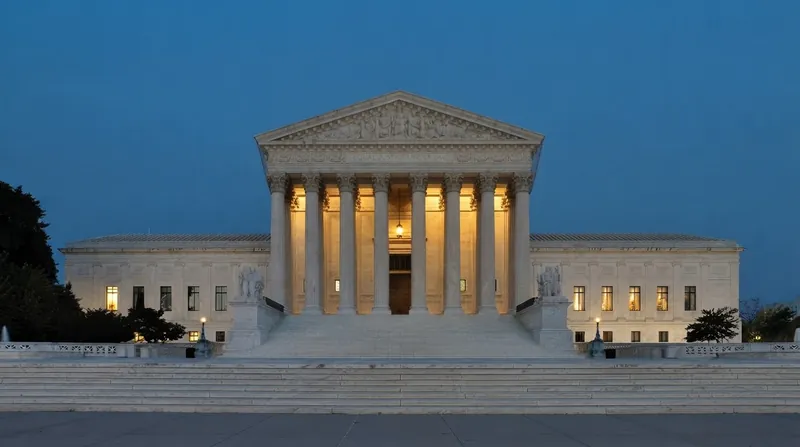
Supreme Court Hears Landmark Arguments on Whether Cities Can Sue Big Oil Over Climate Damages
4 sources
Executive Power
Trump Directs $2 Billion From Medicare Fund for $90 Senior Rebates Ahead of Midterms
7 sources
Federal Savings Programs
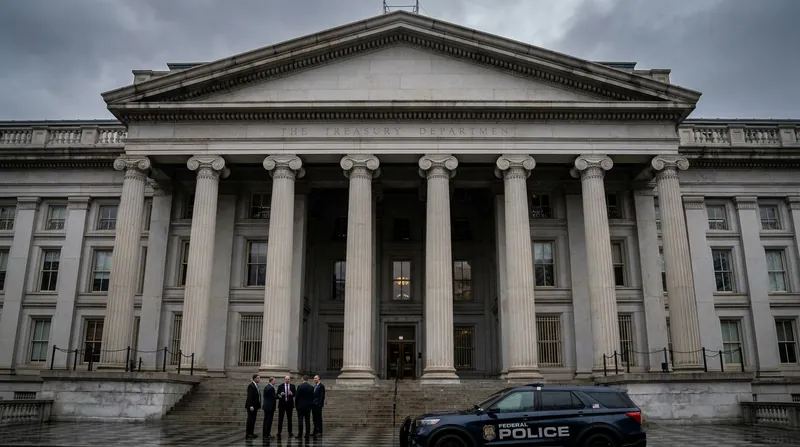
Treasury Department Completes Automatic Enrollment of 60 Million Children in Trump Accounts
8 sources
Comments
Every angle. Every day.
Get News & Politics stories with full source coverage and perspective breakdowns, free every day.