
Why Passkeys Are Replacing Passwords: How the New Standard Works
Tech giants and security experts are urging users to abandon traditional passwords in favor of passkeys. Here is how the cryptographic technology works behind the scenes to eliminate phishing.
By Factlen Editorial Team
- FIDO Alliance & Tech Giants
- Advocates for the universal adoption of passkeys to eliminate the vulnerabilities of shared secrets and streamline user experience.
- Cybersecurity Experts
- Focuses on the cryptographic superiority of passkeys, particularly their inherent resistance to phishing and server-side data breaches.
- Everyday Users
- Balances the convenience of passwordless login with practical concerns about device loss, account recovery, and biometric privacy.
What's not represented
- · Website developers migrating legacy systems
- · Users without modern smartphones
Why this matters
With over 80% of data breaches stemming from compromised passwords, understanding how to use passkeys is the single most effective step you can take to protect your digital identity and personal data.
Key points
- Passkeys replace traditional passwords with a pair of cryptographic keys, eliminating the "shared secret" vulnerability.
- Your private key never leaves your device, making passkeys inherently resistant to phishing and server-side data breaches.
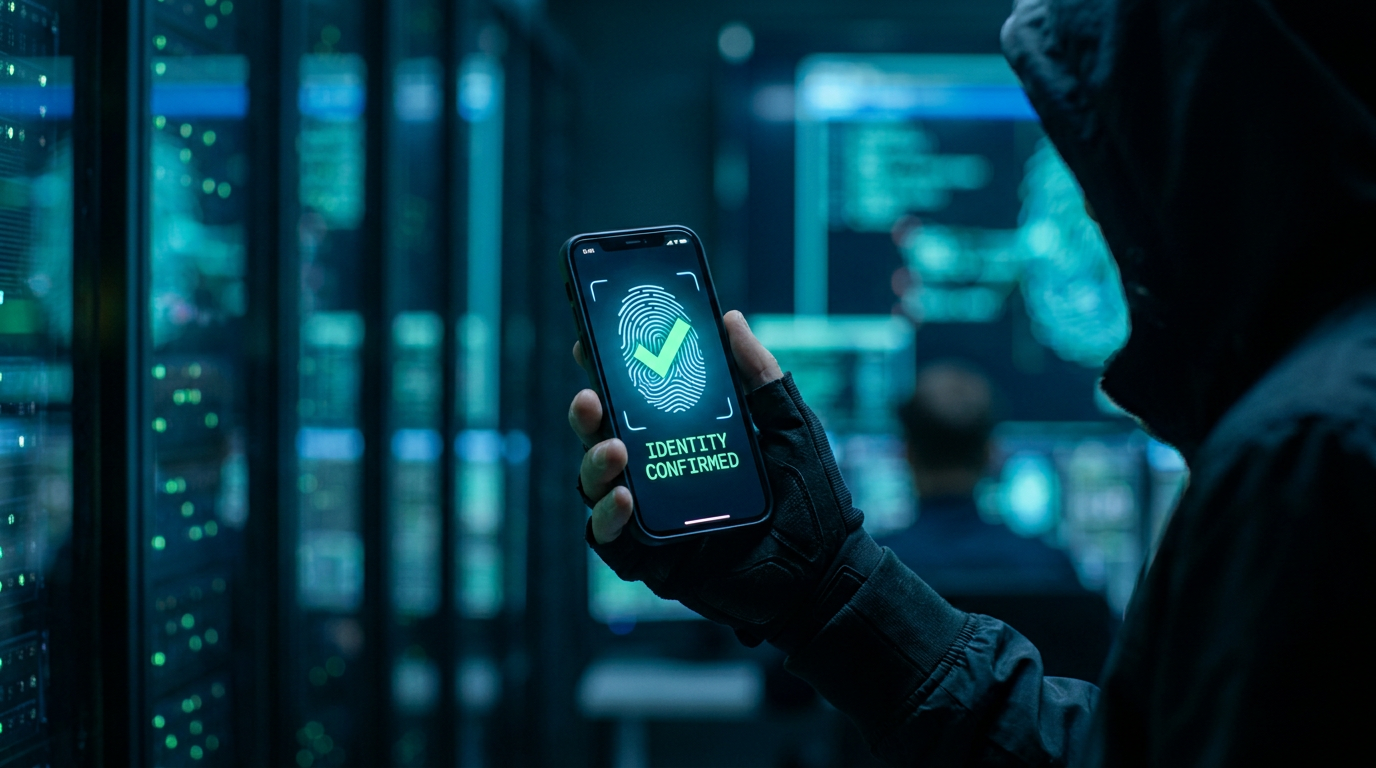
- Biometric data, such as a fingerprint or face scan, is only used locally to unlock the device and is never sent to the website.
- Major tech companies now allow passkeys to be synced across devices via the cloud, preventing lockouts if a phone is lost.
For decades, the golden rule of cybersecurity was to create complex, unguessable passwords. Now, experts are telling users to abandon them in favor of a smartphone PIN or a quick facial scan. As one reader recently asked in The Guardian, it sounds deeply counterintuitive: how can a simple four-digit code be safer than a 16-character string of symbols?[1]
The answer lies in a rapid industry shift toward "passkeys," a passwordless authentication standard that is fundamentally rewiring how we log into our digital lives. Driven by major technology companies, this standard aims to make the traditional password obsolete.[4][9]
To understand why a thumbprint is safer than a complex password, one must look at the root cause of modern cybercrime. According to industry data, including the Verizon Data Breach Investigations Report, over 80 percent of all data breaches stem from compromised, stolen, or reused accounts.[6]
Passwords rely on a "shared secret" model. Both the user and the website's server must know the password to verify identity. If the server is breached, or if a user is tricked into typing their password into a fake website, the secret is exposed and the account is compromised.[7]

Passkeys eliminate the shared secret entirely. Developed by the FIDO Alliance—a consortium that includes Apple, Google, and Microsoft—passkeys rely on a well-established cryptographic concept called public key cryptography.[5][6]
When a user registers for a passkey on a website, their device generates a unique pair of cryptographic keys. One is a "public key," which is sent to the website's server. The other is a "private key," which remains securely locked inside the hardware of the user's device.[2][3]
The public key is mathematically linked to the private key, but it cannot be used to reverse-engineer it. The server can store the public key openly without any security risk, because a public key is useless on its own.[3][7]
During a login attempt, the website's server sends a cryptographic "challenge" to the user's device. The device uses its hidden private key to solve the challenge, generating a unique signature, and sends that signed response back to the server.[7]

During a login attempt, the website's server sends a cryptographic "challenge" to the user's device.
The server then uses the public key to verify that the signature is authentic. Because the private key never leaves the user's device, it cannot be intercepted in transit or stolen from a compromised server database.[2][7]
This architecture makes passkeys inherently resistant to phishing. A fake website might trick a user into clicking a malicious link, but the user's device will recognize that the fraudulent domain does not match the specific domain bound to the private key. The device will simply refuse to sign the challenge.[2][8]
Furthermore, the biometric scan or PIN is only used locally. When a user looks at their phone to log in, the facial recognition software is merely unlocking the device's secure hardware enclave to access the private key. The biometric data itself is never transmitted to the website.[3][4]
The security benefits are already measurable at scale. Google reports that accounts utilizing passkeys experience a 99.9 percent lower compromise rate compared to those relying on traditional passwords.[8]

Adoption is expanding rapidly across the internet. As of 2026, the FIDO Alliance estimates that over 15 billion online accounts across various platforms are capable of authenticating with passkeys, supported natively by every major operating system.[5][8]
However, the transition is not without friction. The primary vulnerability of a passkey system is device loss. Because the private key is tied to hardware, losing the device can mean losing access to the account if proper backup mechanisms are not established.[6][9]
To mitigate this risk, tech giants have enabled cloud synchronization. Services like Apple's iCloud Keychain and Google Password Manager can securely sync passkeys across a user's ecosystem of devices, ensuring that a dropped phone does not result in a permanent digital lockout.[4][8]

Yet, this synchronization introduces a nuanced debate among security purists. Storing private keys in a cloud environment, even when heavily encrypted, slightly dilutes the strict "device-bound" security model that made physical hardware tokens the gold standard for high-risk targets.[6][9]
How we got here
2013
The FIDO Alliance is founded to develop open standards for passwordless authentication.
2019
The WebAuthn standard becomes an official web recommendation, laying the technical groundwork for passkeys.
2022
Apple, Google, and Microsoft announce expanded support for the FIDO standard, coining the consumer-friendly term "passkey."
2023
Google rolls out passkey support across all major platforms for Google Accounts.
2026
Over 15 billion online accounts are now capable of authenticating natively with passkeys.
Viewpoints in depth
The FIDO Alliance's view
Tech giants believe passkeys are the definitive solution to the internet's password problem.
For companies like Google, Apple, and Microsoft, the password is a fundamental liability that degrades user experience and drives massive customer support costs. By standardizing WebAuthn and the FIDO2 protocols, these companies aim to make authentication invisible. They argue that by removing the human element—our tendency to reuse weak passwords—they can eliminate the vast majority of account takeovers at the architectural level.
Cybersecurity Experts' view
Security professionals praise the cryptographic model but debate the nuances of cloud synchronization.
While the security community universally prefers passkeys over passwords due to their phishing resistance, there is an ongoing debate about implementation. Purists favor "device-bound" passkeys, where the private key cannot be extracted from the physical hardware under any circumstances. However, to make passkeys consumer-friendly, tech giants allow them to be synced via the cloud. Experts acknowledge this trade-off is necessary for mass adoption, even if it slightly weakens the absolute security of the credential.
Everyday Users' view
Consumers are intrigued by the convenience but harbor anxieties about losing their devices.
For the average internet user, the concept of a passkey can feel abstract and slightly alarming. Questions frequently arise about what happens if a phone is dropped in a lake, or whether a website is secretly collecting their facial recognition data. While the underlying cryptography ensures biometric data never leaves the device, the tech industry still faces a significant educational hurdle in convincing users to trust a system where they don't know their own "password."
What we don't know
- How long it will take for smaller, independent websites and legacy enterprise systems to fully deprecate password logins.
- Whether future quantum computing advancements will eventually require an overhaul of the underlying public key cryptography that powers passkeys.
Key terms
- Passkey
- A digital credential that uses public key cryptography to let you log into accounts without typing a password.
- Public Key Cryptography
- A security system that uses two mathematically linked keys—a public one stored on a server, and a private one kept secret on your device.
- Phishing
- A cyberattack where criminals trick users into revealing sensitive information, like passwords, by pretending to be a legitimate website or service.
- FIDO Alliance
- An open industry association launched to develop and promote authentication standards that reduce reliance on passwords.
- WebAuthn
- The web standard API that allows browsers and operating systems to create and use passkeys securely.
Frequently asked
Does the website get my fingerprint or face scan?
No. Your biometric data never leaves your device. It is only used locally to unlock the device's secure hardware so it can access your private key.
What happens if I lose my phone?
If you use a cloud-synced ecosystem like Apple's iCloud Keychain or Google Password Manager, your passkeys are backed up and will sync to your new device once you log into your main account.
Can a passkey be stolen in a data breach?
No. Websites only store your "public key," which is mathematically useless to hackers without the "private key" that remains securely locked on your physical device.
Do I still need a password manager?
Yes, for the foreseeable future. Many websites do not yet support passkeys, and modern password managers now also store and sync your passkeys alongside traditional passwords.
Sources
Source coverage
9 outlets
3 viewpoints surfaced









[1]The GuardianEveryday Users
Readers reply: Experts say we should use passkeys, but can a smartphone pin really be safer than a password?
Read on The Guardian →[2]DashlaneFIDO Alliance & Tech Giants
Passkeys Explained: What Is a Passkey and How Do Passkeys Work?
Read on Dashlane →[3]1PasswordFIDO Alliance & Tech Giants
What are passkeys and how do they work?
Read on 1Password →[4]Google BlogFIDO Alliance & Tech Giants
The beginning of the end of the password
Read on Google Blog →[5]FIDO AllianceFIDO Alliance & Tech Giants
What is FIDO? What is FIDO Alliance? FIDO Authentication Explained
Read on FIDO Alliance →[6]Passkey.orgCybersecurity Experts
What is a passkey?
Read on Passkey.org →[7]SentinelOneCybersecurity Experts
How Do Passkeys Work? Authentication Flow Guide
Read on SentinelOne →[8]AuthgearCybersecurity Experts
Passkey vs Password: Are Passkeys Safer? (2026 Guide)
Read on Authgear →[9]Factlen Editorial TeamCybersecurity Experts
Synthesis by Factlen editorial team
Read on Factlen Editorial Team →
More in technology
See all 5 stories →
Every angle. Every day.
Get technology stories with full source coverage and perspective breakdowns delivered to your inbox.