
The Multimillion-Dollar Scientific Quest to Engineer the Perfect World Cup Pitch
Scientists and engineers have spent years developing a highly advanced, identical natural grass system for the 16 stadiums hosting the 2026 FIFA World Cup.
By Factlen Editorial Team
- Turfgrass Scientists
- Researchers view the World Cup pitches as a complex agronomic and structural engineering challenge.
- FIFA Pitch Management
- Organizers prioritize strict competitive neutrality and identical playing conditions across all venues.
- Stadium Operators
- Venue managers face the logistical and financial nightmare of sustaining living grass indoors.
What's not represented
- · NFL players and the NFL Players Association, who have long advocated for natural grass fields in their own league.
- · Environmental groups monitoring the water and energy consumption required to sustain indoor grass pitches.
Why this matters
The playing surface is the most critical variable in the world's most-watched sporting event; a single slip or uneven bounce can determine the fate of a nation. The unprecedented engineering required to grow identical natural grass across 16 diverse stadiums could also revolutionize player safety and field design for local sports leagues worldwide.
Key points
- FIFA mandates that all 2026 World Cup matches be played on natural grass, despite eight host stadiums normally using artificial turf.
- Turfgrass scientists from the University of Tennessee and Michigan State University spent years engineering the perfect pitch.
- The fields utilize a hybrid system, with synthetic fibers stitched into a sand root zone to prevent divots and stabilize the surface.
- A custom 'shallow pitch profile' featuring vacuum ventilation and temporary irrigation allows grass to survive on top of concrete stadium floors.
- Researchers invented a mechanical testing foot to ensure all 16 pitches provide identical traction and bounce.
- Domed stadiums rely on massive LED grow lights and precise moisture sensors to keep the grass alive indoors.
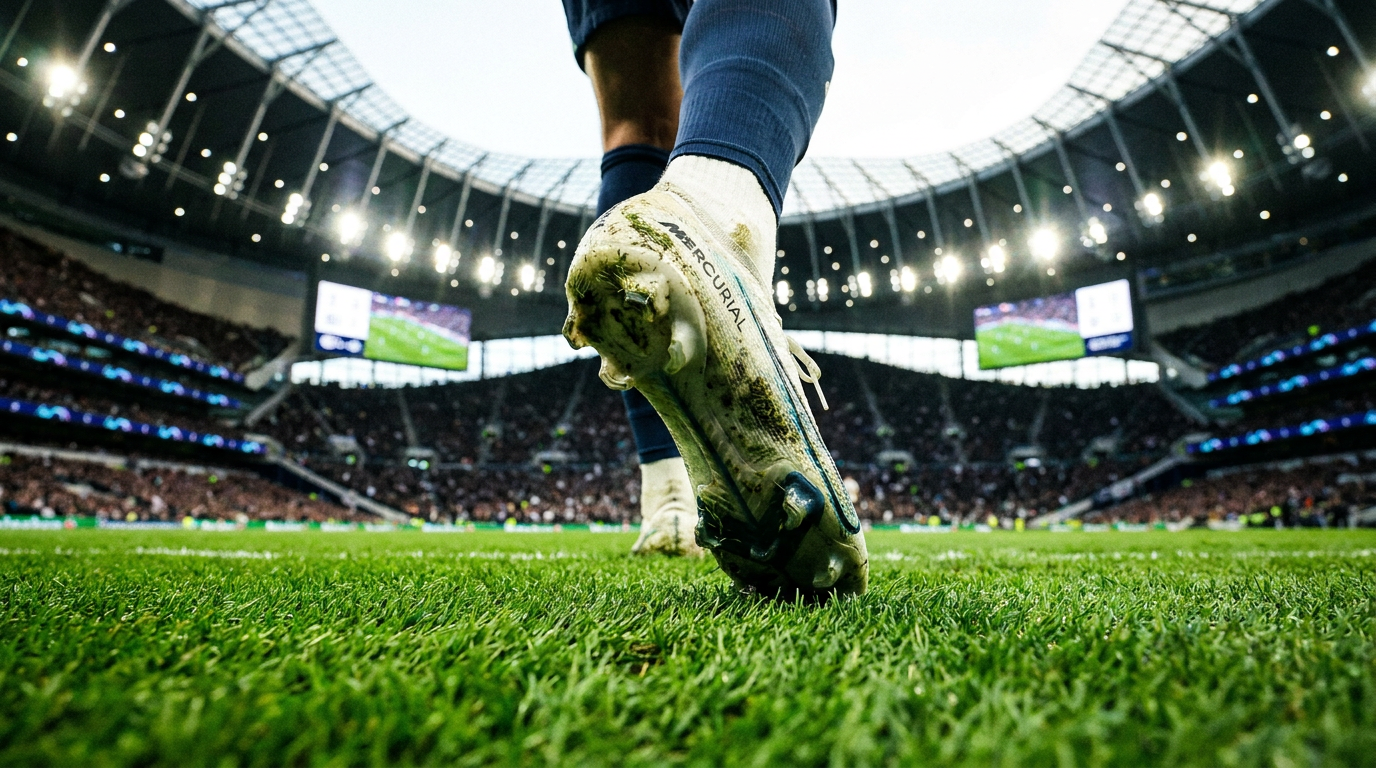
The 2026 FIFA World Cup will be a tournament of superlatives, spanning three countries, 16 cities, and 104 matches. But beneath the feet of the world's greatest soccer players lies an unprecedented engineering challenge: the grass itself.[1][7]
FIFA has an unambiguous mandate that all World Cup matches must be played on natural grass. This requirement has set in motion one of the most complex agricultural and structural engineering projects in sporting history, as eight of the 16 host stadiums are NFL arenas designed primarily for artificial turf.[7]
Five of those NFL stadiums feature roofs or domes, meaning they lack the natural sunlight and airflow required to sustain living grass. Growing and maintaining a competition-standard natural pitch indoors over a two-month tournament is a logistical nightmare that pushes the boundaries of modern stadium infrastructure.[6][7]

The stakes for getting the surface right are monumental. FIFA requires strict competitive neutrality, meaning a player running on a pitch in Miami must experience the exact same traction, ball speed, and surface bounce as a player in Boston or Mexico City.[6]
Past attempts at temporary grass overlays have drawn fierce criticism; during the 2024 Copa América, players complained about seams tearing apart and uneven joins that made footing treacherous. A single slip on a subpar surface could cost a nation the World Cup, and a blown-out divot could end a superstar's career.[7]
To solve this, FIFA's Pitch Management Team partnered with turfgrass scientists at the University of Tennessee (UT) and Michigan State University (MSU) years in advance of the tournament. Led by John Sorochan at UT and John "Trey" Rogers III at MSU, the researchers approached the pitch not as landscaping, but as a highly controlled scientific variable.[4][5]
The researchers spent nearly three years testing different combinations of grass types to develop a dense sod capable of withstanding the heavy wear of up to nine matches over 39 days. They built a state-of-the-art shade house in Tennessee to replicate the microclimates of domed stadiums, and an asphalt pad in Michigan to simulate laying turf directly onto a concrete stadium floor.[2][5]

The agronomic solution relies on precise seed mixtures tailored to the 10 different climatic zones of the host cities. For cooler climates, the MSU team developed an exact blend of 84 percent Kentucky bluegrass and 16 percent perennial ryegrass grown on a sand base. Warmer host cities will rely on specialized Bermudagrass.[2][4]
The agronomic solution relies on precise seed mixtures tailored to the 10 different climatic zones of the host cities.
However, natural grass alone is no longer sufficient to meet the extreme physical demands of modern elite soccer. To prevent the pitch from breaking down under sliding tackles and sharp cuts, the fields utilize a hybrid reinforcement system.[8]
Synthetic plastic fibers are stitched directly into the sand root zone, comprising about 5 percent of the surface area. These fibers sit entirely below the grass canopy—invisible to the players and fans—but act as "rebar" to anchor the turf, stabilize the sand, and drastically reduce tearing.[3]
Because many of the NFL stadiums cannot accommodate deep soil excavation, engineers developed a "shallow pitch profile." This purpose-built modular system sits directly on top of the existing stadium floors, elevating the playing surface by up to two feet in some venues.[7]

The shallow profile is a multilayered technological marvel. It features a temporary automatic irrigation system and a vacuum ventilation layer designed to pull excess moisture out of the root zone. Above a drainage layer of gravel or plastic modules sits 6 to 12 inches of specialized sand, topped with the hybrid grass sod.[4]
To guarantee that all 16 pitches perform identically, the UT team invented a specialized testing device called the fLEX machine. The device features a 3D-printed mechanical foot wearing a real soccer cleat, which strikes the turf to simulate the exact impact of a 168-pound athlete—the average weight of a player in the last two men's World Cups.[2][3]
The fLEX machine allows scientists to objectively measure traction, rotational resistance, and surface hardness. By relying on hard data rather than the subjective feel of a player's foot, the researchers can fine-tune the moisture and density of each pitch until they all match a single, unified standard.[2][3]
Keeping the grass alive inside the domed stadiums is a relentless battle against nature. The grass is grown on specialist sod farms, transported under refrigeration, and tracked continuously. Once installed, the turf lives beneath massive LED grow-lighting rigs that are rolled onto the field to bathe the grass in artificial daylight.[7][8]

Between matches, the indoor pitches are heavily micromanaged. Moisture sensors track how water moves through the turf, and ventilation systems maintain precise airflow. Groundskeepers meticulously repair divots after every match, pressing the damaged areas back into the soil while the subsurface aeration systems speed up the grass's biological recovery.[8]
After the tournament concludes, many of these meticulously engineered pitches will be removed as quickly as they were installed, and the NFL stadiums will revert to their regular artificial surfaces. The World Cup grass serves as a highly advanced, short-term stage.[8]
If the scientists, engineers, and groundskeepers succeed in their mission, their years of multimillion-dollar research will go completely unnoticed by the billions of people watching. The ultimate goal of the perfect pitch is invisibility; when the world tunes in, they should only see the beautiful game, played on a canvas that performs flawlessly.[6]
How we got here
2018
FIFA approaches turfgrass scientists at the University of Tennessee to begin preliminary discussions about the 2026 World Cup pitches.
2021
FIFA officially initiates a five-year research project with UT and Michigan State University to develop the perfect playing surface.
June 2022
The 16 host cities across the United States, Canada, and Mexico are officially announced, locking in the climatic challenges.
Spring 2024
FIFA delegations inspect the turf research facilities in Tennessee, reviewing the progress of the shade houses and testing equipment.
June 2026
The expanded 48-team FIFA World Cup kicks off on the meticulously engineered natural grass pitches.
Viewpoints in depth
Turfgrass Scientists
Researchers view the World Cup pitches as a complex agronomic and structural engineering challenge.
For the scientists at the University of Tennessee and Michigan State University, the 2026 World Cup is an unprecedented opportunity to advance the field of turfgrass management. They approach the pitches not as landscaping, but as highly controlled scientific variables. By utilizing data-driven tools like the fLEX machine and experimenting with precise seed ratios and hybrid fiber stitching, these researchers aim to eliminate the guesswork from stadium groundskeeping. Their ultimate goal is to create a legacy of evidence-based research that will improve the safety and consistency of sports fields globally, long after the tournament ends.
FIFA Pitch Management
Organizers prioritize strict competitive neutrality and identical playing conditions across all venues.
FIFA's primary concern is ensuring that the playing surface does not unfairly influence the outcome of a match. With the tournament spread across 10 distinct climatic zones—from the humidity of Miami to the high altitude of Mexico City—the governing body demands that all 16 pitches look, feel, and play identically. They maintain an uncompromising mandate for natural grass, arguing that it provides the safest and most authentic medium for the sport's highest level of competition, regardless of the logistical hurdles involved in converting indoor NFL arenas.
Stadium Operators
Venue managers face the logistical and financial nightmare of sustaining living grass indoors.
For the operators of the eight NFL stadiums that typically rely on artificial turf, hosting the World Cup presents a monumental infrastructure challenge. Growing and maintaining a competition-standard natural pitch indoors over a two-month period requires multi-million dollar investments in specialized ventilation, irrigation, and LED grow-light systems. Venue managers must balance the strict demands of FIFA's pitch inspectors with the reality that these living surfaces are highly vulnerable to damage, requiring relentless, round-the-clock maintenance to survive the grueling tournament schedule.
What we don't know
- It remains to be seen how well the temporary shallow pitch profiles will hold up during the later stages of the tournament after enduring weeks of heavy use.
- The exact total cost of researching, installing, and maintaining the 16 natural grass pitches across North America has not been publicly disclosed.
- It is unclear if the success of these hybrid grass systems will pressure NFL owners to permanently replace their artificial turf fields with natural grass in the future.
Key terms
- Shallow Pitch Profile
- A modular, multilayered field system built on top of an existing stadium floor, featuring drainage, ventilation, and a sand root zone for natural grass.
- Hybrid Turf
- Natural grass reinforced with synthetic plastic fibers stitched into the soil to stabilize the surface and prevent large divots.
- fLEX Machine
- A testing device developed by the University of Tennessee that uses a mechanical foot to simulate a soccer player's impact on the grass.
- Root Zone
- The layer of soil and sand immediately beneath the grass surface where the plant's roots grow and absorb water and nutrients.
Frequently asked
Why doesn't FIFA just allow artificial turf for the World Cup?
FIFA mandates natural grass for all World Cup matches to ensure a consistent, competitively neutral playing surface and to reduce the risk of certain player injuries associated with synthetic turf.
How do they keep natural grass alive inside a domed stadium?
Groundskeepers use massive LED grow-lighting rigs to simulate sunlight, alongside advanced subsurface ventilation and irrigation systems that carefully monitor and adjust moisture levels.
What happens to the grass after the World Cup is over?
In many of the NFL stadiums, the temporary natural grass pitches will be removed shortly after the tournament concludes, and the venues will revert to their regular artificial turf surfaces.
Sources
Source coverage
8 outlets
3 viewpoints surfaced








[1]The New York TimesTurfgrass Scientists
The Secrets of a Soccer-Turf Master
Read on The New York Times →[2]Fast CompanyTurfgrass Scientists
Inside the 2026 World Cup's push to engineer the perfect pitch
Read on Fast Company →[3]NPRStadium Operators
John Sorochan explains the agronomic feat needed a perfect FIFA World Cup grass pitch
Read on NPR →[4]Michigan State UniversityTurfgrass Scientists
Spartan research to soccer's biggest stage
Read on Michigan State University →[5]University of TennesseeTurfgrass Scientists
UT Leads Research Project to Create the Perfect Pitches for FIFA World Cup 2026
Read on University of Tennessee →[6]Phys.orgStadium Operators
The World Cup pitches are the result of years of engineering to find just the right grass
Read on Phys.org →[7]The Box GroupFIFA Pitch Management
The Engineering Behind 'The Most Micromanaged Grass in the World'
Read on The Box Group →[8]Somoy NewsFIFA Pitch Management
World Cup 2026 football pitches have been designed using advanced agriculture
Read on Somoy News →
Every angle. Every day.
Get science stories with full source coverage and perspective breakdowns delivered to your inbox.