
Hegseth Clashes With CBS Over U.S. Munitions Crisis as Iran War Drains Stockpiles
Secretary of War Pete Hegseth angrily denied reports of a U.S. weapons shortage during a tense television interview, despite his own recent congressional testimony acknowledging that replenishing depleted missile reserves will take years.

Share this story
A simmering crisis over the rapid depletion of the American military's most advanced munitions spilled into public view on Sunday when Secretary of War Pete Hegseth engaged in a highly confrontational exchange on CBS's "Face the Nation." Confronted with warnings from private industry that the United States is facing a critical shortage of interceptors and cruise missiles, Hegseth lost his temper, shouting that the crisis was a "manufactured story that the media wants to peddle." He insisted that U.S. reserves remain exceptionally strong and capable of meeting all strategic objectives.[1]
The television clash escalated when CBS moderator Margaret Brennan challenged Hegseth's aggressive denial by reading back his own words. During a high-stakes congressional hearing on May 1, Hegseth testified under oath that it would take "months to years" to fully rebuild the nation's advanced weapon stockpiles. When reminded that he had explicitly validated the timeline of the crisis before Congress, the Secretary turned deeply defensive, pivoting to attack the press corps rather than addressing the mathematical reality of America's shrinking magazines.[1]
The mathematical reality, however, is stark. The ongoing war with Iran—dubbed Operation Epic Fury by the Pentagon—has forced the U.S. military to burn through its highest-end munitions at an unsustainable rate. Following heavy expenditures to support Ukraine against Russia and Israel in Gaza, the intense air and naval campaigns required to strike Iranian targets and intercept incoming ballistic missiles have pushed the American defense industrial base past its limits.[2]
According to a recent analysis by the Center for Strategic and International Studies (CSIS), the Iran conflict has consumed approximately 27 percent of the military's total Tomahawk cruise missile stockpile.
The toll on defensive interceptors is even more severe: an estimated 61 percent of the nation's Patriot interceptor missiles and up to 80 percent of its Terminal High Altitude Area Defense (THAAD) systems have been expended. U.S. officials acknowledge that since the outbreak of hostilities in late February, naval and air forces have fired over 1,000 Tomahawks and nearly 2,000 key air defense missiles.[2]
Despite Hegseth's public assurances, the administration's private actions indicate deep concern. Last week, the White House convened an emergency meeting with executives from the largest American defense companies, including Lockheed Martin and RTX, to discuss accelerating weapons production. Defense officials reportedly defined the effort to increase output as a matter of urgent national security, inquiring whether civilian manufacturers like GE Aerospace and Oshkosh could swiftly transition commercial assembly lines into defense production—a mobilization tactic not seen since World War II.[3]
The fundamental bottleneck is that modern precision-guided munitions cannot be mass-produced overnight. Systems like the Patriot PAC-3 MSE or the Tomahawk Block V require highly specialized components, complex solid rocket motors, and rare earth minerals—over 90 percent of which are controlled by China. Defense industry analysts estimate that even with emergency funding and multi-year procurement contracts, it will take at least five to six years to replenish the stockpiles consumed in just the first few months of 2026.[2]
The administration's sensitivity to the stockpile issue has already triggered political retaliation. In May, Hegseth publicly demanded a legal investigation into Democratic Senator Mark Kelly, a retired Navy captain who sits on the Armed Services Committee. After Kelly expressed alarm on television about how "deep we have gone into these magazines," Hegseth accused him of "blabbing" classified information. Kelly quickly pointed out that he was quoting Hegseth's own unclassified testimony, noting that the administration was attempting to hide the "serious cost" of the war from the public.
The most severe consequence of the munitions drain is the strategic vulnerability it creates in the Indo-Pacific. National security analysts warn that the United States is eating into the exact reserves required to deter or fight a conflict over Taiwan. While the U.S. assesses there are no immediate signs of a Chinese invasion, the depletion of long-range strike capabilities and robust air defenses leaves the military exposed to short-term risks.[2]
The crisis also highlights the asymmetric economic drain of modern warfare. The U.S. military is routinely forced to fire multi-million-dollar interceptors to shoot down relatively cheap Iranian drones and ballistic missiles. This cost-exchange ratio heavily favors adversaries who can mass-produce low-cost munitions, forcing the Pentagon to exhaust its exquisite, expensive inventory just to maintain defensive perimeters.[2]
Moving forward, the Pentagon is pushing Congress to authorize multi-year agreements to expand the production lines for Patriot, THAAD, and Tomahawk systems. These contracts are designed to give defense contractors the financial certainty needed to hire specialized labor and build new factory floors. However, until those expanded lines begin delivering finished missiles at scale in the late 2020s, the U.S. military will be forced to carefully ration its remaining arsenal.[3]
Key points
- Secretary of War Pete Hegseth clashed with CBS over reports of severe U.S. munitions shortages.
- Hegseth called the shortage a 'manufactured story,' despite his own prior testimony that rebuilding stockpiles will take years.
- The ongoing war with Iran has consumed up to 61% of Patriot interceptors and 27% of Tomahawk missiles.
- The White House recently convened defense executives to demand accelerated weapons production.
What we don’t know
- The exact number of Tomahawk and Patriot missiles remaining in the U.S. inventory, which is highly classified.
- Whether defense contractors can successfully compress the five-year manufacturing timeline using emergency funding.
- How the depletion of U.S. stockpiles is altering China's strategic calculus regarding Taiwan.
How we got here
Feb 28, 2026
The U.S. enters a direct conflict with Iran, dubbed Operation Epic Fury, triggering massive munitions expenditures.
May 1, 2026
Secretary of War Pete Hegseth testifies before Congress that it will take 'months to years' to replenish depleted stockpiles.
May 11, 2026
Hegseth threatens to investigate Senator Mark Kelly for discussing the munitions shortage on television.
June 11, 2026
The White House convenes defense executives to discuss emergency acceleration of missile production.
June 14, 2026
Hegseth clashes with CBS's Margaret Brennan, angrily denying that the U.S. faces a munitions crisis.
- National Security Analysts
- Warns that the rapid consumption of high-end interceptors and cruise missiles leaves the U.S. dangerously exposed to a potential conflict in the Indo-Pacific.
- Defense Department Leadership
- Argues that U.S. military readiness remains robust, stockpiles are sufficient for strategic goals, and media reports of a crisis are manufactured.
- Congressional Oversight
- Expresses alarm over the depletion of magazines and demands transparency regarding the timeline and cost of replenishing the arsenal.
Perspectives this story doesn't cover
- Defense Industry Executives
- Allied Nations Relying on U.S. Exports
Sources
Source coverage
3 outlets
3 viewpoints surfaced



- [1]Fox NewsDefense Department Leadership
Pete Hegseth clashes with CBS host over shortage claims of US weapon stockpiles
Read on Fox News → - [2]The Wall Street JournalNational Security Analysts
U.S. Munitions Depleted by Iran Conflict, Raising Concerns Over China
Read on The Wall Street Journal → - [3]ReutersCongressional Oversight
White House convenes defense executives to accelerate weapons production amid shrinking stockpiles
Read on Reuters →
More in News & Politics
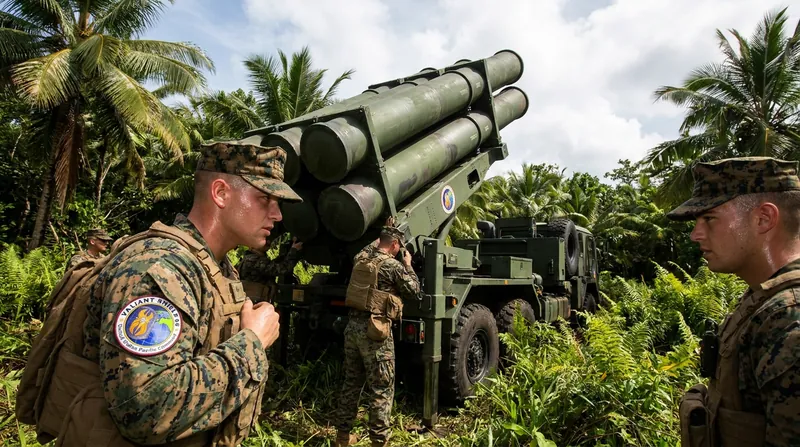
See all →Pacific Defense
Japanese Torpedo Sinks US Navy Vessel in Friendly Fire Incident During Valiant Shield Exercise
2 sources
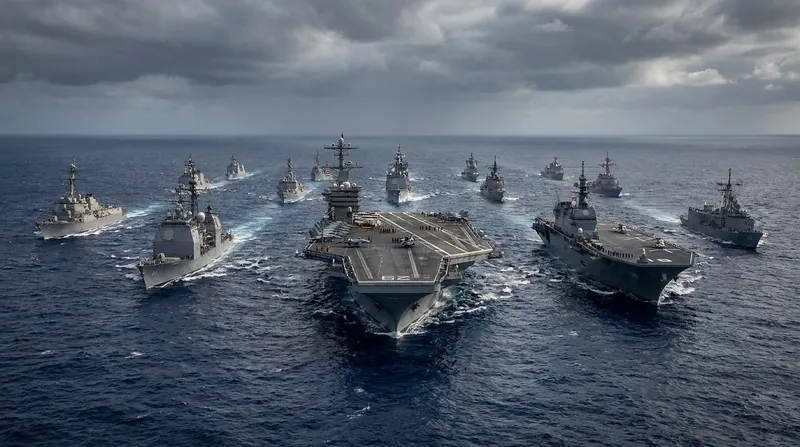
Military Space
US Army Establishes Dedicated Space Operations Branch in Major Strategic Shift
3 sources
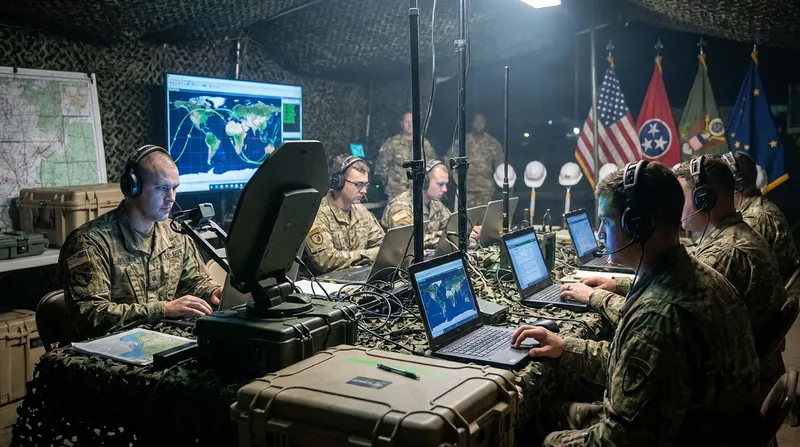
Ukraine Air War
Ukraine Signs $2.5 Billion Contract With Sweden for Gripen E Fighters, Securing Major Air Force Upgrade
4 sources
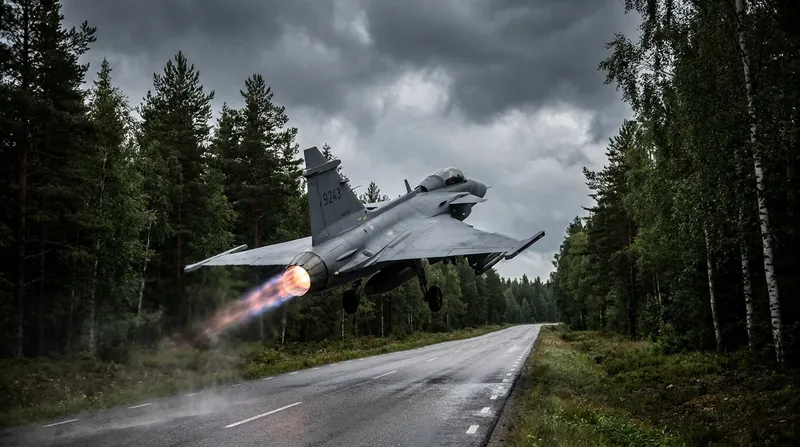
NATO Posture
Pentagon Discloses Massive Cuts to Strategic Military Assets Available to NATO
3 sources
Comments
Every angle. Every day.
Get News & Politics stories with full source coverage and perspective breakdowns, free every day.