
AI Transforms the 10-Second ECG into a 'Superhuman' Disease Predictor
A new AI system developed at Imperial College London can detect hidden heart failure, diabetes, and kidney disease from a standard 10-second electrocardiogram, years before symptoms appear.
By Harper Lane

In short
- A new AI system from Imperial College London can detect hidden diseases from a standard 10-second ECG.
- The models achieved up to 93% accuracy for heart conditions and 80% for non-cardiac diseases like diabetes.
- Cardiovolt.ai recently raised £1.4 million to integrate this technology into hospital IT workflows.
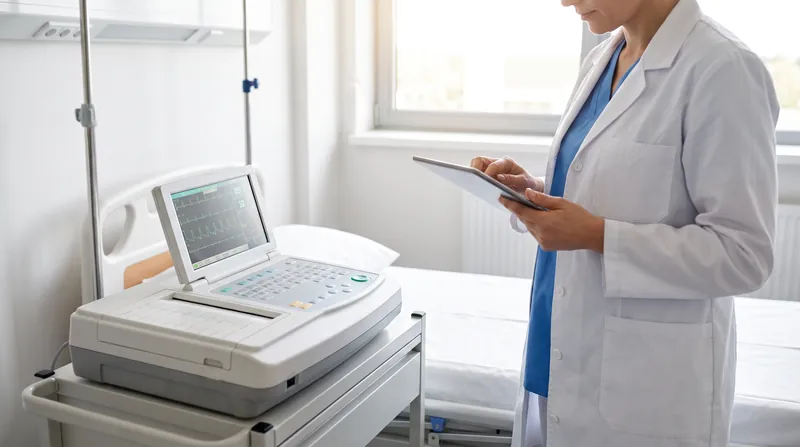
For decades, the standard electrocardiogram (ECG) has been one of the most common and inexpensive tests in modern medicine. Taking just ten seconds to record, it measures the electrical activity of the heart and is routinely used by doctors to check for irregular rhythms or signs of a recent heart attack.
However, cardiologists have long regarded the basic ECG as a relatively blunt instrument. To get a detailed, predictive picture of the heart's structure and blood supply, physicians typically have to order an echocardiogram—a sophisticated ultrasound scan that requires specialized equipment, longer appointment times, and significant healthcare resources.[1][5]
That paradigm is now shifting dramatically. Researchers at Imperial College London's National Heart and Lung Institute (NHLI) have developed a suite of artificial intelligence models capable of unlocking a vast amount of hidden information embedded within those simple squiggly lines. By training deep learning neural networks on millions of clinical records, the team has taught AI to spot subtle waveform patterns that are entirely invisible to the human eye. The technology effectively turns a routine 10-second trace into a powerful, predictive diagnostic tool.[1]
The momentum behind this breakthrough accelerated on June 8, 2026, when Cardiovolt.ai—a spinout company created to commercialize the Imperial College research—announced £1.4 million in new funding. The capital injection is designed to move these validated AI models out of academic laboratories and directly into hospital workflows. The company's immediate goals include securing regulatory clearances and integrating their algorithms with existing hospital electronic health records and ECG machines, paving the way for widespread clinical deployment.[1]
To build a system capable of this level of analysis, the researchers required data at an unprecedented scale. The AI models were initially trained using a massive databank of over 1.6 million ECGs from Brazil, each meticulously linked to the patient's long-term medical history. This was subsequently augmented with several million additional ECG records from the United States. By feeding the neural network both the electrical traces and the eventual health outcomes of those patients, the AI learned to identify the earliest digital signatures of disease.[1]
The performance of the resulting models has been staggering. In rigorous testing, the AI achieved a diagnostic accuracy of between 83% and 93% for identifying cardiovascular conditions, including left ventricular systolic dysfunction, aortic valve disease, and atrial fibrillation. Crucially, the system can detect these structural heart issues years before a patient experiences any physical symptoms like shortness of breath or dizziness, allowing doctors to intervene before irreversible damage occurs.[1][4]
Even more surprisingly, the AI's capabilities extend far beyond cardiology. The researchers discovered that the models could accurately flag the presence of non-cardiovascular diseases simply by analyzing the heart's electrical trace. The system reached 70% to 80% accuracy in detecting conditions such as chronic kidney disease and type 2 diabetes. The AI is essentially reading a "digital biomarker"—a subtle signal that systemic disease processes are underway in the body, manifesting as microscopic changes in the heart's electrical conductivity.[1]
Dr. Arunashis Sau, Chief Scientific Officer of Cardiovolt.ai and a cardiology registrar at Imperial College Healthcare NHS Trust, describes the technology as fundamentally "superhuman." He emphasizes that the goal was never to build an AI that simply replicates what a doctor does. Instead, the team focused on extracting high-dimensional relationships from the data that are biologically impossible for even the most expert human cardiologist to see. The AI does not replace clinical judgment; it provides a new layer of hidden insight.[1]
In a real-world clinical setting, this technology promises to radically alter the patient pathway. Under the proposed workflow, a patient visiting their primary care doctor or a local clinic would receive a standard, low-cost ECG. The AI would analyze the trace in under ten seconds. If the algorithm flags a high risk for an underlying condition like heart failure, the physician is immediately alerted to order a confirmatory echocardiogram or begin preventive treatment, shifting care from reactive crisis management to proactive health preservation.
The implications for global health equity are particularly profound. Advanced cardiac imaging is often scarce or prohibitively expensive in low- and middle-income countries, as well as in rural areas of wealthier nations. Recent research published in JAMA Cardiology demonstrated that these AI-enhanced ECG algorithms maintain their high diagnostic performance across different risk strata in resource-limited settings. By relying on inexpensive, ubiquitous ECG machines, the technology could democratize access to world-class cardiac screening.[3][5]
The underlying research has been heavily supported by major health institutions, including the British Heart Foundation and the National Institute for Health and Care Research. These organizations recognize that with an estimated 41 million people worldwide living with heart valve diseases alone, early diagnosis is the only sustainable way to manage the growing burden on global healthcare systems. Catching these conditions early prevents costly emergency hospital admissions and significantly improves patient survival rates.[4]
Despite the clear clinical promise, the transition from a validated algorithm to a ubiquitous medical tool involves significant hurdles. Cardiovolt.ai must now navigate complex regulatory landscapes and prove that their software can integrate seamlessly with the fragmented legacy IT systems used by different hospital networks. The company is actively pursuing partnerships with health systems and medical device manufacturers to embed the AI directly into the hardware that takes the readings.[2]
Looking ahead, the team is preparing for prospective clinical trials within the UK's National Health Service to definitively prove the AI's impact on patient outcomes in real-time settings. Professor Fu Siong Ng, the spinout's Chief Medical Officer, envisions a near future where the technology is standard practice. If successful, the humble 10-second ECG—once viewed as a basic screening tool—will be elevated into one of the most informative and life-saving tests in all of medicine.[1]
Terms to know
- Electrocardiogram (ECG)
- A routine, 10-second medical test that records the electrical activity of the heart to check its rhythm and function.
- Digital Biomarker
- A measurable indicator of a disease or health condition that is extracted from digital data, such as subtle, invisible patterns in an ECG trace.
- Echocardiogram
- An ultrasound scan of the heart used to look at its structure and how well it is pumping blood, typically more expensive and time-consuming than an ECG.
- Left Ventricular Systolic Dysfunction (LVSD)
- A condition where the lower left chamber of the heart does not pump blood out effectively, which can eventually lead to heart failure.
Questions readers ask
What is an AI-enhanced ECG?
It is an artificial intelligence system trained to find hidden patterns and digital biomarkers in a standard 10-second heart trace that human doctors cannot see.
Can this AI diagnose diseases other than heart conditions?
Yes, testing shows the AI has a 70% to 80% accuracy rate in flagging non-cardiac conditions like diabetes and chronic kidney disease based on the heart's electrical signals.
Will this technology replace human cardiologists?
No. The AI acts as a clinical decision support tool. If the algorithm flags a high risk, doctors will use their clinical judgment and order confirmatory tests like an echocardiogram.
When will this be available in hospitals?
Cardiovolt.ai recently raised funding to secure regulatory approvals and integrate the system into hospital workflows, with real-world clinical trials planned for the near future.
Different angles
Clinical Researchers
Medical scientists focused on the biological validation and accuracy of the algorithms.
For clinical researchers, the excitement centers on the AI's ability to perceive high-dimensional relationships in medical data that are biologically impossible for the human eye to detect. By validating the models against millions of international records, researchers have proven that the AI isn't just guessing; it is identifying genuine 'digital biomarkers' of disease. They view this as a fundamental expansion of human diagnostic capability, allowing doctors to see the microscopic electrical signatures of heart failure and diabetes long before structural damage occurs.
Public Health Advocates
Organizations focused on population health, preventative care, and healthcare equity.
Public health organizations see this technology as a massive lever for health equity. Because an ECG is one of the cheapest and most widely available medical tests globally, enhancing it with AI could democratize advanced cardiac screening. Advocates argue that deploying this software in primary care clinics and resource-limited settings could catch millions of cases of heart disease early, shifting the entire healthcare paradigm away from expensive, reactive hospitalizations and toward proactive, manageable outpatient care.
Health-Tech Innovators
Founders and engineers focused on commercializing the technology and integrating it into hospitals.
For the technologists bringing this to market, the primary challenge is no longer algorithmic accuracy, but workflow integration. Innovators emphasize that the most powerful AI model is useless if it disrupts a doctor's busy schedule. Their focus is on navigating complex medical device regulations and ensuring the AI software can communicate seamlessly with legacy electronic health record (EHR) systems, providing instant, actionable alerts to physicians without adding administrative friction.
- Clinical Researchers
- Focus on the 'superhuman' capability of the AI to see high-dimensional relationships in the data that are biologically impossible for the human eye to detect.
- Public Health Advocates
- Argue that the true value of the technology lies in population health, turning a cheap test into a mass-screening tool to prevent costly hospitalizations.
- Health-Tech Innovators
- Emphasize the commercialization process and the importance of integrating these algorithms seamlessly into existing hospital IT workflows.
Perspectives this story doesn't cover
- Primary Care Physicians
- Patient Privacy Advocates
Sources
Source coverage
5 outlets
3 viewpoints surfaced





- [1]Imperial College LondonClinical Researchers
Cardiovolt.ai turns heart traces into powerful diagnostic tools
Read on Imperial College London → - [2]Cardiovolt.aiHealth-Tech Innovators
Clinically validated artificial intelligence ECG analysis
Read on Cardiovolt.ai → - [3]JAMA CardiologyClinical Researchers
Interpreting AI-Enhanced ECG Performance in High-Risk, Resource-Limited Settings
Read on JAMA Cardiology → - [4]National Institute for Health and Care ResearchPublic Health Advocates
AI can predict serious heart conditions years in advance
Read on National Institute for Health and Care Research → - [5]Factlen Editorial TeamHealth-Tech Innovators
Synthesis by Factlen editorial team
Read on Factlen Editorial Team →
More in Artificial Intelligence
See all →Open-Source AI
Mistral AI Releases One-Trillion-Parameter Open-Weight Model Large 4
4 sources

Model Compression
How Per-Channel Outlier Scaling Protects AI Models From 4-Bit Accuracy Collapse
7 sources

AI Regulation
UK Adopts Lifecycle Regulation to Continuously Monitor AI Medical Devices Across NHS
5 sources

Orbital Computing
Google Launches First Project Suncatcher Satellite to Test In-Orbit AI Computing
5 sources

Comments
Every angle. Every day.
Get Artificial Intelligence stories with full source coverage and perspective breakdowns, free every day.