
full timeline
Waymo robotaxi safety recall
Alphabet's Waymo has halted all autonomous highway operations across the United States after California regulators barred the vehicles from state freeways due to construction zone safety incidents.
Follow Waymo robotaxi safety recall in the Factlen app and get an alert when there is news. Get the app
Share this story
Latest report
Waymo Suspends Nationwide Driverless Freeway Rides Following California DMV Safety Ban
Alphabet's Waymo has halted all autonomous highway operations across the United States after California regulators barred the vehicles from state freeways due to construction zone safety incidents. The nationwide pause highlights the ongoing technical challenges of deploying robotaxis in high-speed, unpredictable environments.
- Waymo has suspended all driverless freeway operations nationwide following a direct order from the California DMV.
- The regulatory ban was triggered by safety incidents involving Waymo vehicles struggling to navigate active highway construction zones.
- While the order only applies to California, Waymo proactively grounded its freeway fleets in Arizona and Texas to maintain software consistency.
- The restriction forces Waymo vehicles onto surface streets, significantly increasing travel times for lucrative airport routes.
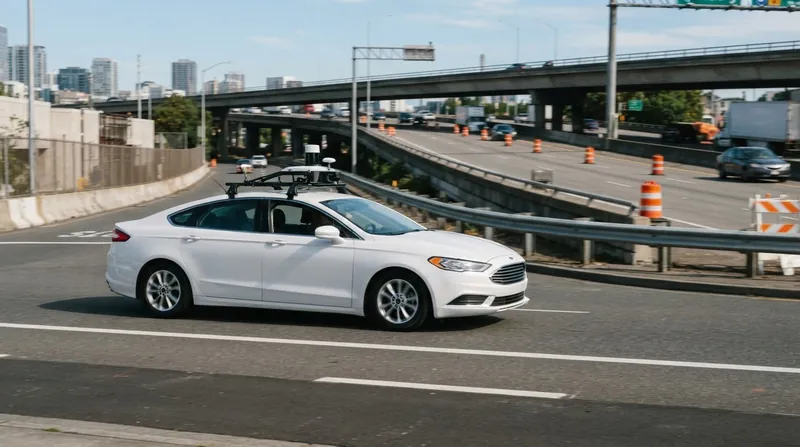
Alphabet’s autonomous vehicle unit Waymo has suspended all driverless freeway operations across the United States. The nationwide halt follows a direct order from the California Department of Motor Vehicles barring the company’s robotaxis from state highways.[1]
The regulatory intervention centers on a series of recent safety incidents involving Waymo vehicles navigating active construction zones. While the California mandate only applies within state lines, Waymo opted to ground its highway fleet in Arizona and Texas as well.[2]
Waymo’s decision underscores the technical realities of autonomous driving, stripping away the marketing optimism that often surrounds robotaxi deployments. A software stack that struggles to interpret temporary lane shifts in San Francisco cannot be safely trusted with similar anomalies in Phoenix.[3][6]
The suspension marks a significant operational setback for the industry leader, which had been steadily expanding its high-speed routes to connect urban centers with major airports. Without freeway access, travel times for paying passengers will increase substantially.[1][4]
Construction zones expose software limits
The California DMV’s restriction was triggered by documented failures of Waymo’s autonomous system to safely negotiate highway work zones. Autonomous vehicles rely heavily on high-definition pre-mapped routes, which become instantly obsolete when road crews deploy temporary barriers.[2][6]
Human drivers naturally interpret dynamic, unmapped environments through context, such as following the gesture of a construction worker or understanding the implied path of misaligned traffic cones. Waymo’s sensor suite, despite generating terabytes of lidar and radar data, struggles to parse these informal human cues at 65 miles per hour.[1][3]
"The DMV has notified Waymo that its vehicles are no longer permitted to operate in driverless mode on freeways," the agency stated, citing an unacceptable risk to public safety. The regulator emphasized that the suspension will remain until the company can demonstrate reliable performance in unpredictable highway scenarios.[2]
Waymo engineers must now retrain their prediction models to handle edge cases that occur daily on American interstates. Until the software can reliably distinguish between a legally parked work truck and an active lane closure, the highway network remains off-limits.[5]
The technical gap highlights the difference between operating in a geofenced, low-speed urban grid and navigating the high-stakes environment of a multi-lane freeway. At highway speeds, the reaction time required to process a sudden lane shift drops from seconds to milliseconds.[3][6]
The complexity of highway environments is magnified by the behavior of surrounding human drivers, who frequently speed, tailgate, and make erratic lane changes near construction barriers. Waymo’s conservative driving algorithms, programmed to strictly obey traffic laws, can sometimes trigger unpredictable reactions from aggressive human motorists.[4]
A nationwide pause for a local order
While the California DMV holds jurisdiction only over routes in Los Angeles and the San Francisco Bay Area, Waymo’s response was immediate and national. The company pulled its vehicles from freeways in Phoenix, Arizona, and Austin, Texas, where local regulators had not issued similar bans.[4]
This voluntary national grounding reflects the monolithic nature of Waymo’s core driving software. Because the entire fleet operates on the same primary perception and prediction algorithms, a vulnerability discovered on Interstate 280 in California exists identically on Interstate 10 in Arizona.[1][3]
Waymo spokesperson Julia Ilina confirmed the scope of the operational pause, noting the company is prioritizing safety over rapid expansion. "We are temporarily suspending freeway routing for our fully autonomous fleet across all markets while we work with California officials to address their feedback," the company stated.[1][4]
The decision to halt operations proactively in unregulated markets is also a defensive regulatory strategy. By grounding the fleet nationwide, Waymo avoids the risk of a high-speed collision in Texas that could trigger a more severe federal intervention by the National Highway Traffic Safety Administration.[6]
The pause does not affect Waymo’s core business of low-speed, surface-street rides, which continue to operate normally across its established service areas. However, the restriction forces the routing engine to keep vehicles on local roads, fundamentally altering the service's utility.[5]
The business cost of surface streets
Freeway access is not merely a technical milestone for robotaxi operators; it is a fundamental requirement for achieving commercial viability. The most lucrative routes in the ride-hailing industry are airport transfers, which almost universally require highway driving to be time-competitive.[1][3]
Without the ability to use freeways, a Waymo trip from downtown Phoenix to Sky Harbor International Airport must navigate dozens of traffic lights and surface-street intersections. This routing adds roughly 15 to 20 minutes to a standard journey, making the service significantly less attractive to business travelers.[4]
The suspension also impacts fleet utilization rates, a critical metric for the capital-intensive autonomous vehicle sector. Vehicles forced to travel at 35 miles per hour on local roads complete fewer trips per shift than those utilizing 65-mile-per-hour highway corridors.[3][6]
Alphabet has invested billions of dollars into Waymo over the past decade, banking on the premise that the technology would eventually scale to replace human-driven ride-hailing entirely. The current highway ban serves as a stark reminder that the final 10 percent of autonomous development remains stubbornly difficult to solve.[5]
Investors have largely remained patient with Alphabet’s timeline, viewing Waymo as a long-term strategic asset rather than a near-term profit center. However, the inability to monetize high-speed routes indefinitely could force a reevaluation of the capital required to reach full commercial maturity.[1][6]
Federal scrutiny and public trust
Competitors are closely monitoring the fallout from the California DMV's decision. General Motors’ Cruise unit is only just beginning to resume manual testing after a severe pedestrian dragging incident in late 2023 grounded its entire fleet, leaving Waymo as the undisputed, yet currently constrained, market leader.[2][6]
The California intervention arrives amid heightening federal scrutiny of the autonomous vehicle industry. The NHTSA is already conducting multiple investigations into Waymo’s safety record, including a probe launched earlier in 2024 regarding unexpected braking and collisions with stationary objects.[4]
Regulators are increasingly skeptical of the industry's self-reported safety metrics, which often compare robotaxi performance against broad national averages of human drivers. State agencies are demanding more granular data on how these systems perform in specific, high-risk scenarios like active work zones.[6]
Public trust in driverless technology remains fragile, heavily influenced by viral social media videos of robotaxis blocking intersections or ignoring emergency vehicles. A high-speed incident on a crowded freeway would cause catastrophic reputational damage to the entire sector.[3][5]
The DMV’s decisive action demonstrates that state regulators are no longer willing to give autonomous vehicle developers the benefit of the doubt. The era of permissive testing on public roads is transitioning into a period of strict, incident-driven enforcement.[2][6]
Waymo has not provided a timeline for when it expects to resume freeway operations, indicating that the software updates required to satisfy California regulators will take substantial engineering effort. The company must prove its vehicles can reliably interpret the chaotic choreography of highway construction.[1][4]
Until that technical threshold is met and verified by independent regulators, the robotaxi industry's ambitions for high-speed, city-to-city transport remain paused. The path to widespread autonomous adoption is currently detoured onto the local roads, waiting for software that can safely read a traffic cone.[3]
Sources
- [1]TechCrunch — Waymo suspends freeway rides nationwide after California DMV order Read on TechCrunch →
- [2]CBS News — California DMV blocks Waymo robotaxis from freeways after construction zone incidents Read on CBS News →
- [3]Electrek — Waymo halts highway operation nationwide after CA DMV pause Read on Electrek →
- [4]Al Jazeera — Waymo suspends driverless freeway rides across US after California ban Read on Al Jazeera →
- [5]AFP — Waymo pulls self-driving cars from US freeways after California ban Read on AFP →
- [6]Axios — California halts Waymo freeway rides over safety concerns Read on Axios →
What to watch
- The validation of the wireless over-the-air software patch designed to fix the algorithmic blind spot.
Charts, maps and images
Timeline
November 2026
Waymo Suspends Nationwide Driverless Freeway Rides Following California DMV Safety Ban
AI
June 2026
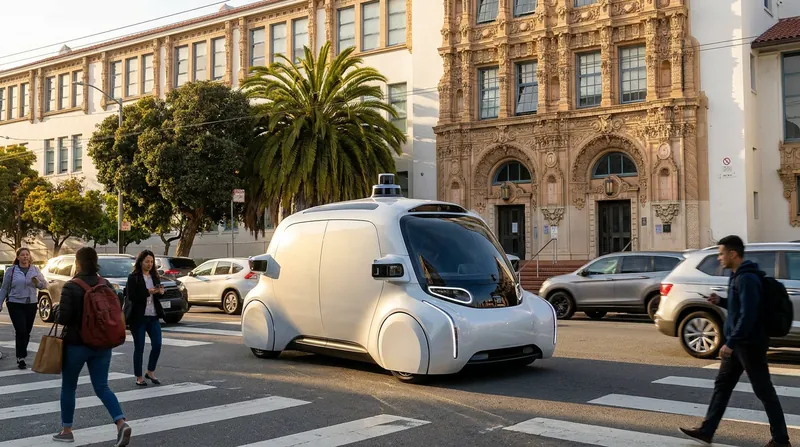
Waymo Recalls Nearly 4,000 Robotaxis After Software Failure Allows Entry Into Closed Freeway Construction Zones
AI
How the story developed
The safety concerns originated from a series of 13 documented incidents in Arizona and California where Waymo vehicles repeatedly entered closed freeway construction zones. The vehicles' software inappropriately prioritized avoiding other traffic hazards over recognizing construction markers. No injuries or crashes were reported in any of these events.
On June 29, Waymo issued a voluntary software recall addressing the algorithmic blind spot. The recall affected 3,871 robotaxis, specifically targeting the company's fifth-generation Jaguar I-Pace fleet, while newer models were not included.
To resolve the navigation failures without requiring physical repairs, Waymo began deploying a wireless over-the-air update. Freeway operations for the robotaxis were temporarily restricted while this patch underwent validation.
The ongoing technical challenges of deploying robotaxis in high-speed, unpredictable environments ultimately escalated into the California regulatory intervention and the subsequent nationwide pause of autonomous highway operations.