
full timeline
Israel–UK diplomatic dispute
The British government has frozen the assets of eight Israeli developers and an activist group blocking Gaza aid.
Follow Israel–UK diplomatic dispute in the Factlen app and get an alert when there is news. Get the app
Share this story
Latest report
UK Sanctions Israeli Construction Firms and Settler Group Over West Bank Expansion
The British government has frozen the assets of eight Israeli developers and an activist group blocking Gaza aid. The measures arrive just before the deadline for the controversial E1 settlement tender.
- The UK government has frozen the assets of eight Israeli construction firms involved in expanding West Bank settlements.
- Sanctions were also imposed on Tzav 9, an activist group that has repeatedly blocked humanitarian aid trucks from entering Gaza.
- The penalties arrive just before the final deadlines for the E1 settlement tender, a project that would bisect the West Bank.
- British officials warned that settlement expansion and aid obstruction are actively destroying the prospects for a two-state solution.
The United Kingdom imposed sweeping financial sanctions on eight Israeli construction and property development firms on Tuesday, targeting their involvement in expanding settlements across the occupied West Bank. The measures also penalize Tzav 9, an Israeli activist group responsible for blocking humanitarian aid convoys destined for the Gaza Strip.[1]
The penalties represent the first concrete enforcement of a major policy shift announced by the British government in September. Foreign Secretary Ed Miliband described the protection of a viable two-state solution as the "North Star" of the administration's approach to the Israeli-Palestinian conflict.[1]
Under the new restrictions, the designated companies face immediate asset freezes within the UK financial system. Individuals associated with the firms are now subject to director disqualifications, barring them from holding executive roles in any British-registered enterprise.[1][3]
The targeted businesses include Har Hevron Development Company Ltd, Hemdat Shomron Ltd, and SAG Construction and Development Ltd. The Foreign Office stated that these entities have actively helped plan, build, supply, or market housing and public infrastructure in settlements that international law considers illegal.[1][5]
The E1 settlement red line
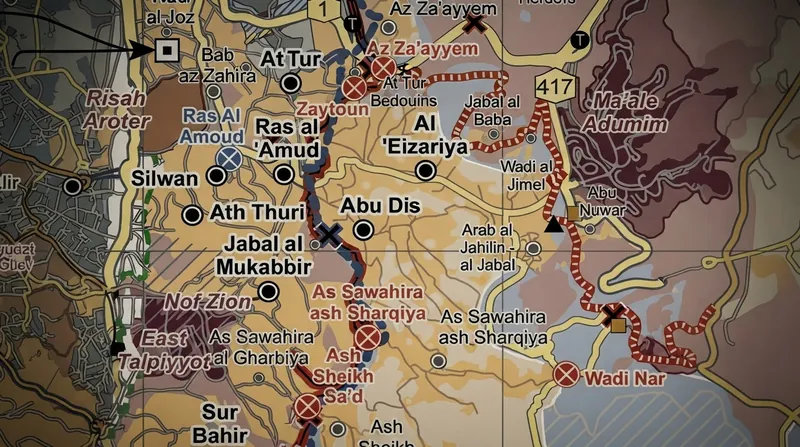
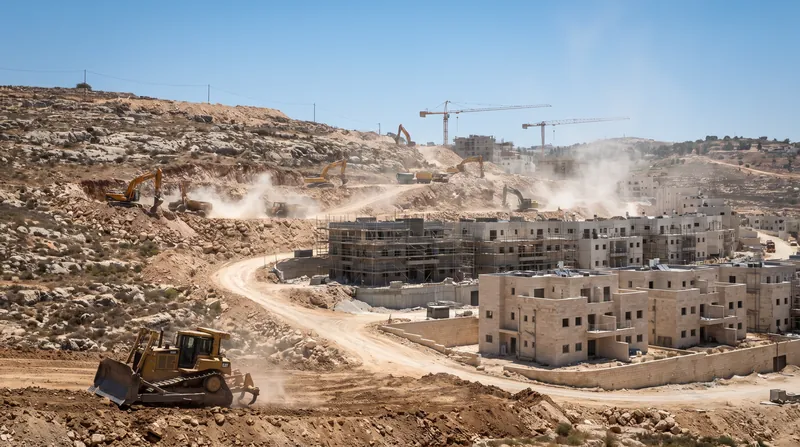
The timing of the sanctions directly precedes the final deadlines for the highly controversial E1 settlement tender. The Israeli government is scheduled to allocate bids for the construction of 1,200 new homes in the corridor east of Jerusalem, a project that has drawn intense international opposition for decades.[1][3]
If completed, the E1 development would effectively bisect the West Bank, severing territorial contiguity between key Palestinian population centers such as Ramallah and Bethlehem. Western diplomats and the United Nations have long warned that building in this specific area would render an independent Palestinian state geographically impossible.[3][4]
Miliband issued a direct warning to developers considering participation in the E1 project, demanding they abandon the effort. "That is why my message on E1 is clear: do not bid, do not build, and do not profit from the destruction of the two-state solution," the Foreign Secretary said.[1]
The sanctions also single out Harey Zahav, a real estate developer that gained notoriety in 2023 for publishing marketing materials that envisioned building settlements inside the Gaza Strip. The company has a documented history of constructing unauthorized settler outposts in the West Bank without formal Israeli government approval.[1]
Cracking down on aid blockades
Beyond the West Bank construction sector, the British government directed its new enforcement powers at Tzav 9, an activist movement that has repeatedly obstructed aid deliveries. The group has organized blockades at border crossings, ports, and roads to prevent trucks carrying food, water, and fuel from reaching Gaza.[1][3]
The Foreign Office noted that Tzav 9 activists were still actively preventing humanitarian convoys from entering the war-torn territory as recently as October. The United States had previously sanctioned the same organization earlier in 2024 for its role in exacerbating the humanitarian crisis.[1]
The crackdown on aid obstruction arrives as Palestinian civilians in Gaza face increasingly desperate winter conditions. Recent catastrophic flooding has left nearly 4,000 households without adequate shelter, compounding a crisis where 1.4 million people are already living in tents or makeshift encampments.[1]
British officials highlighted that critical winter supplies remain stalled outside the enclave due to Israeli administrative hurdles. According to the United Nations, more than 150,000 tents and 300,000 tarpaulins purchased by international donors are currently waiting at the border, while Israeli authorities continue to block timber imports.[1]
"We will not stand by while those blocking desperately needed aid deepen the intolerable suffering of civilians in Gaza," Miliband stated. He emphasized that the current status quo in both the West Bank and Gaza remains entirely unacceptable to the British government.[1]
A broader shift in British policy
Tuesday's designations fall under the UK's expanded Global Human Rights and International Humanitarian Law sanctions regime. The move follows Miliband's September declaration that Britain would toughen its stance toward its longtime ally, citing a record surge in settlement approvals and rampant settler violence.[1]
The broader policy reset includes plans to ban the import of goods produced in West Bank settlements and prohibit advertising for settlement real estate in the UK. Officials expect the full legislative package required to enforce the trade embargo to be implemented within the next six to nine months.
If fully realized, the new regulatory framework would require British banks, pension funds, and asset managers to divest entirely from companies operating in the settlements. Financial institutions would also be barred from providing mortgages, insurance, or other services that facilitate construction beyond the Green Line.
Despite the severe measures targeting the occupied territories, the Foreign Office took care to distinguish between settlement enterprises and the broader Israeli economy. The government explicitly stated that it continues to welcome and encourage bilateral trade with businesses operating within Israel's internationally recognized pre-1967 borders.
Economic war and diplomatic fallout
The Israeli response to the sanctions was swift and fiercely critical, particularly from settler leadership. Israel Ganz, chairman of the Yesha Council, accused the United Kingdom of declaring an "economic war against Israel" and demanded that the Israeli government take immediate retaliatory action.[3]
Ganz argued that attempting to isolate companies operating in the West Bank would inevitably damage the broader Israeli economy. "Anyone who believes that sanctions can be imposed on Israeli companies in Judea and Samaria without harming the State of Israel as a whole is mistaken," he warned.[3]
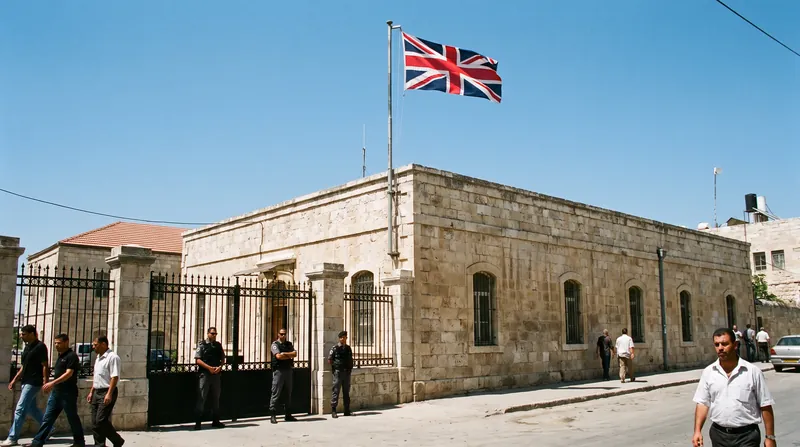
The diplomatic relationship between London and Jerusalem has deteriorated significantly over the past three years, driven by disagreements over the Gaza war and settlement expansion. In September, Israel threatened to shutter the British consulate in East Jerusalem over the UK's initial sanctions announcement, though a last-minute compromise kept it open.[3]
The sanctions arrive during a period of intense political uncertainty in Israel, following an inconclusive Knesset election last month. As political factions attempt to build a governing coalition, the influence of settler leaders remains a central dynamic in the negotiations, complicating any potential policy shift.[3]
International alignment and next steps
Conversely, the Palestinian Authority welcomed the British intervention, describing it as a necessary and clear message to developers eyeing the E1 corridor. The Palestinian foreign ministry praised the UK for moving beyond rhetoric and imposing tangible financial consequences on the infrastructure of the occupation.
The British measures align closely with recent actions taken by other Western allies, reflecting a growing international consensus against the settlement enterprise. European leaders previously condemned the August tender for the 1,200 E1 homes, while several nations have independently sanctioned violent settler groups.[3]
Among the other companies named in the sanctions list are Ariel Residential Judea and Samaria Ltd, Ami Gvirtzman Architects 2021 Ltd, Lev HaHar Yazamut Ltd, and Z.F. Building Company Ltd. Each firm plays a distinct role in the supply chain of settlement expansion, from architectural planning to the final marketing of housing units.[1]
The E1 project itself has been a flashpoint since it was first proposed in the 1990s, repeatedly delayed by successive US administrations and European pressure. The decision by Israel's outgoing government to advance the tenders was viewed in London as crossing a long-standing red line, triggering Tuesday's unprecedented financial response.[3]
However, the practical financial impact of the UK asset freezes remains untested, as it is unclear how heavily the eight targeted construction firms rely on British capital. The true test of the policy will emerge as UK financial institutions audit their portfolios to ensure compliance with the new directives.
Miliband concluded the announcement by offering a diplomatic opening to whoever forms the next Israeli government. He stressed that the UK remains committed to working productively with both Israeli and Palestinian leadership to advance lasting peace, provided the expansion of settlements is halted.[1]
Sources
- [1]GOV.UK — UK cracks down on companies building settlements in the West Bank and groups blocking aid access into Gaza Read on GOV.UK →
- [2]Associated Press — UK sanctions Israeli companies building West Bank settlements Read on Associated Press →
- [3]The Times of Israel — UK sanctions West Bank settlement construction companies, activist group that blocks Gaza aid Read on The Times of Israel →
- [4]The National — UK imposes sanctions on companies building settlements in West Bank Read on The National →
- [5]Israel Hayom — Eight Israeli construction, development and architecture firms targeted in new British sanctions package Read on Israel Hayom →
What to watch
- The final deadlines for the E1 settlement tender.
Charts, maps and images
Timeline
November 2026
UK Sanctions Israeli Construction Firms and Settler Group Over West Bank Expansion
October 2026
Britain Warns It Will Expel 27 Israeli Diplomats if East Jerusalem Consulate Is Closed

September 2026
Israel Closes British Consulate in East Jerusalem After UK Declares West Bank Occupation Unlawful
AIUK Announces Comprehensive Sanctions and Policy Reset on Israeli West Bank Settlements
AI
How the story developed
The diplomatic dispute began on September 3, when British Foreign Secretary Ed Miliband announced a policy overhaul regarding the West Bank. The United Kingdom prepared targeted economic sanctions and trade restrictions, including a ban on settlement goods and restrictions on British companies financing or advertising them. The policy was triggered by Israel advancing a tender for 1,400 new homes in the E1 area. Israeli officials condemned the move as patronizing and warned of retaliation, while British Jewish leaders expressed concern that the sanctions could fuel broader boycotts and domestic antisemitism.
On September 10, the United Kingdom formally banned imports from Israeli settlements and sanctioned enabling companies, citing "ethnic cleansing" in the West Bank. The diplomatic rupture followed a 2024 International Court of Justice ruling that declared Israel's occupation of Palestinian territories unlawful.
In retaliation for the trade sanctions, Israel ordered the closure of the British consulate in East Jerusalem within 30 days. Israeli Foreign Minister Gideon Sa'ar also expelled United Kingdom diplomats from a Gaza coordination center and banned 12 British nationals, a group that included 11 lawmakers.
Tensions escalated further on October 6, when the United Kingdom threatened a mass expulsion of 27 Israeli diplomats from London if Israel forced the closure of the East Jerusalem consulate. The reciprocal warning dictated that one Israeli envoy would be removed for every British diplomat whose status was revoked. Diplomatic talks failed to yield a compromise ahead of an October 8 deadline.