
full timeline
Trump DC triumphal arch proposal
A federal judge in Virginia has issued a preliminary injunction against the proposed monument, marking the second legal blockade of the project this month.
Follow Trump DC triumphal arch proposal in the Factlen app and get an alert when there is news. Get the app
Share this story
Latest report
Second Federal Judge Halts Construction of Trump's Washington Triumphal Arch
A federal judge in Virginia has issued a preliminary injunction against the proposed monument, marking the second legal blockade of the project this month. The ruling cites unresolved environmental and zoning reviews required for federal land use.
- A federal judge in Virginia halted site preparation for the Washington Triumphal Arch, the second such injunction this month.
- The court ruled the administration cannot bypass mandatory environmental and historical reviews to expedite construction.
- The Justice Department immediately appealed the decision, arguing the project falls under emergency executive authority.
- The dual injunctions freeze $145 million in federal funding and threaten to delay the project beyond its 2027 fiscal deadline.
A federal district court in Virginia has issued a nationwide preliminary injunction halting all site preparation for the planned Washington Triumphal Arch. The order, delivered Saturday morning, represents the second judicial blockade of the administration's flagship monument project in less than three weeks.[1][5]
The ruling prevents the Department of the Interior and the National Park Service from breaking ground on the 210-foot structure. It effectively freezes the allocation of $145 million in federal funds earmarked for the initial excavation phase.[2][5]
U.S. District Judge Leonie Brinkema wrote that the administration bypassed mandatory environmental and historical reviews to accelerate the timeline. "Executive ambition does not supersede the statutory requirements of the National Environmental Policy Act," the 42-page ruling stated.[1][5]
The Virginia decision compounds an existing legal barrier erected earlier this month. On November 4, a federal judge in the District of Columbia issued a narrower injunction focusing specifically on local zoning and airspace restrictions.[2][4]
Statutory bypasses rejected
The dual rulings center on the administration's attempt to use emergency executive authority to bypass the National Capital Planning Commission. The commission typically requires a multi-year review process for any permanent structure altering the Washington skyline.[5][6]
Administration attorneys argued that the monument qualifies as a national security installation under the 1950 Defense Production Act, exempting it from standard municipal oversight. The Justice Department claimed the structure is essential for "national cohesion and morale."[2][6]
The invocation of the Defense Production Act for a commemorative monument is legally unprecedented. The statute, originally passed during the Korean War, is designed to compel private companies to prioritize government contracts for critical national security materials.[2][6]
Brinkema rejected that classification outright in Saturday's order. The judge noted that a purely commemorative structure cannot bypass the National Historic Preservation Act without an explicit act of Congress.[1][5]
The proposed arch, designed to span a major arterial roadway near the Potomac River, would be the tallest addition to the capital's monumental core since the completion of the Washington Monument in 1884.[3][4]
Environmental and local pushback
The lawsuit was brought by a coalition of environmental groups and local municipal planners. The plaintiffs argued that the massive concrete and marble foundation would disrupt the local water table and destabilize adjacent historic structures.[2][5]
"This is a victory for the rule of law and the preservation of our capital's historic integrity," said Sarah Jenkins, lead counsel for the Coalition for a Responsible Washington. "You cannot simply drop a 210-foot marble arch onto a fragile floodplain without studying the consequences."[5]
The National Park Service had already begun staging heavy equipment near the proposed site earlier this week. Following the Saturday morning ruling, contractors were seen halting operations and securing the perimeter fencing.[1][3]
The project's total estimated cost sits at $450 million, with the administration pledging to raise half the funds through private donations. However, the initial $145 million excavation phase relies entirely on redirected federal infrastructure budgets.[4][6]
Private fundraising efforts for the remaining $305 million have reportedly stalled amid the ongoing litigation. Several major corporate donors have paused their pledged contributions until the project secures final legal clearance to proceed.[4][6]
Administration files appeals
The White House immediately condemned the Virginia ruling, characterizing it as judicial overreach. Press officials confirmed that the Justice Department filed an emergency notice of appeal to the Fourth Circuit Court of Appeals within hours of the decision.[6]
"Once again, a single unelected judge is attempting to stand in the way of a beautiful, historic tribute to American greatness," a White House spokesperson said in a statement released Saturday afternoon. "We will win this on appeal, and the arch will be built."[6]
The administration faces a tight fiscal deadline to begin construction. The redirected infrastructure funds utilized for the project's first phase will expire at the end of the 2027 fiscal year if ground is not broken.[5][6]
Legal experts note that fighting two separate injunctions in two different appellate circuits significantly complicates the administration's path forward. The D.C. Circuit and the Fourth Circuit will now hear parallel appeals regarding the same project.[2][6]
Design and location disputes
The architectural plans for the triumphal arch feature a neoclassical design heavily inspired by the Arc de Triomphe in Paris. The structure is intended to feature bronze reliefs depicting recent American military and economic achievements.[3][4]
Siting the monument has been a point of intense friction between federal and local authorities. The chosen location near the Potomac requires the permanent rerouting of three major traffic arteries that serve 120,000 commuters daily.[2][5]
The D.C. City Council passed a unanimous resolution last month condemning the project's location. Local lawmakers argued that the federal government cannot unilaterally seize municipal transit corridors without providing equivalent replacement infrastructure.[5]
District of Columbia officials have strongly opposed the project, citing the estimated $85 million in unfunded traffic mitigation costs the city would be forced to absorb. The local government joined the Virginia lawsuit as an amicus curiae.[5]
The Federal Aviation Administration had also previously raised concerns about the structure's 210-foot height. The arch sits directly beneath the primary approach path for Ronald Reagan Washington National Airport.[4][5]
Next legal checkpoints
The Fourth Circuit has not yet scheduled a hearing for the administration's emergency appeal. The Justice Department has requested an expedited briefing schedule, asking the appellate court to stay the injunction by December 15.[6]
If the appellate courts uphold either of the injunctions, the administration will be forced to initiate the formal environmental review process. That procedure typically takes between 24 and 36 months to complete.[2][5]
The National Environmental Policy Act requires federal agencies to assess the environmental effects of their proposed actions prior to making decisions. For a project of this scale, the law mandates a comprehensive Environmental Impact Statement, including multiple periods of public comment.[1][5]
Sources
- [1]Associated Press — A 2nd federal judge blocks construction of Trump's memorial arch in DC Read on Associated Press →
- [2]The Guardian — Construction of Trump's proposed 'triumphal arch' blocked by judge Read on The Guardian →
- [3]AFP — Second US judge blocks Trump plan to build triumphal arch Read on AFP →
- [4]Euronews — Second judge blocks construction of Trump's massive 'triumphal arch' Read on Euronews →
- [5]The Washington Post — Federal judge in Virginia issues second injunction against Trump's D.C. arch project Read on The Washington Post →
- [6]Politico — Trump administration appeals dual injunctions on Washington triumphal arch Read on Politico →
What to watch
- The Justice Department's appeal arguing the project falls under emergency executive authority.
- Whether the dual injunctions will delay the project beyond its 2027 fiscal deadline.
Charts, maps and images
Timeline
November 2026
Second Federal Judge Halts Construction of Trump's Washington Triumphal Arch
Federal Judge Halts Construction of Trump's Planned DC Monument Arch
August 2026
DC Commission Grants Preliminary Approval to 250-Foot Triumphal Arch
How the story developed
On August 26, the National Capital Planning Commission granted preliminary approval for a 250-foot triumphal arch near Arlington National Cemetery. The proposed structure is designed as an occupied public facility featuring an observation deck, elevators, and deep foundation systems. Federal officials planned an aggressive construction schedule of 20 hours per day to complete the monument within three years.
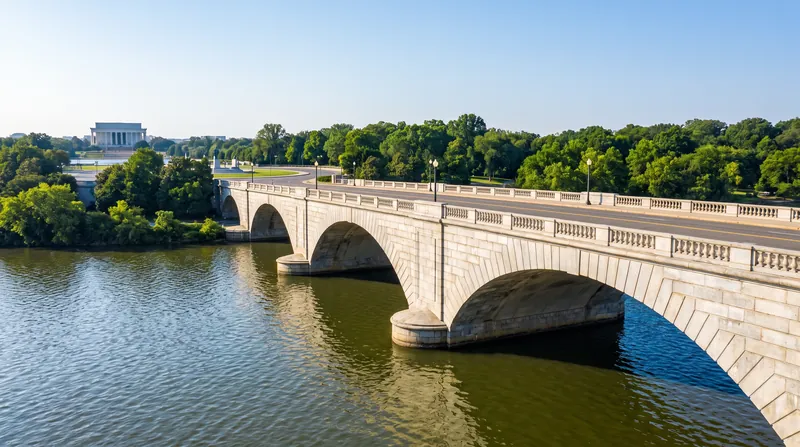
The proposal sparked debate over Washington's historic sightlines and height restrictions. Critics argued the arch violates the city's 130-foot height limit and severs historic sightlines established by the 1901 McMillan Plan. The National Park Service warned the project could disrupt the visual alignment between the Lincoln Memorial and Arlington House.
On November 6, the National Capital Planning Commission granted final approval for the project in an 8-4 vote. The Trump administration maintains the arch is a high-priority tribute for the nation's 250th anniversary and claims it holds national security functions.
Hours after the final approval, Vietnam War veterans and local governments sued to block the monument, arguing it bypasses congressional approval and disrupts historic sightlines. This led to the initial 14-day restraining order issued by Judge Chutkan, followed by the second preliminary injunction in Virginia citing unresolved environmental and zoning reviews required for federal land use.