
full timeline
UN autonomous weapons treaty negotiations
During a closed-door session in Geneva, US and Russian diplomats successfully stripped provisions mandating human verification of AI-selected military targets from a draft United Nations agreement.
Follow UN autonomous weapons treaty negotiations in the Factlen app and get an alert when there is news. Get the app
Share this story
Latest report
US and Russia Remove Human Oversight Requirement From Draft UN AI Weapons Treaty
During a closed-door session in Geneva, US and Russian diplomats successfully stripped provisions mandating human verification of AI-selected military targets from a draft United Nations agreement.
- US and Russian diplomats collaborated to remove the human oversight requirement from a draft UN treaty on lethal autonomous weapons.
- The changes were pushed through during a 15-hour closed-door session where UN cameras were turned off and observers were removed.
- Provisions requiring AI weapons to operate predictably and reliably, as well as ethical considerations, were also stripped from the text.
- Human rights groups warn the revisions eliminate accountability for civilian casualties and cross a moral boundary.
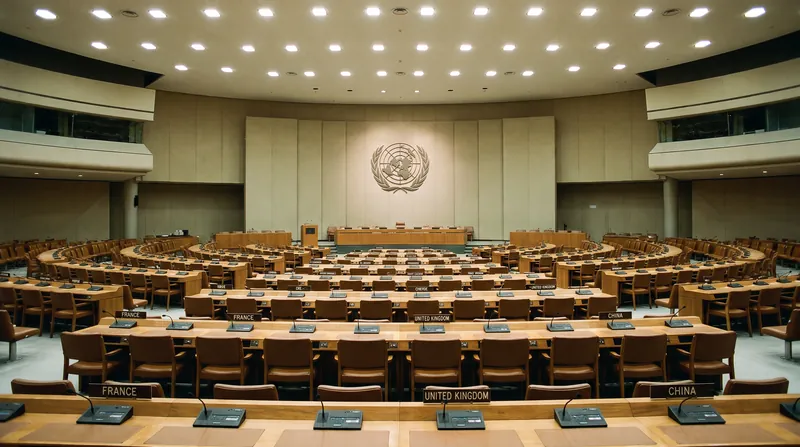
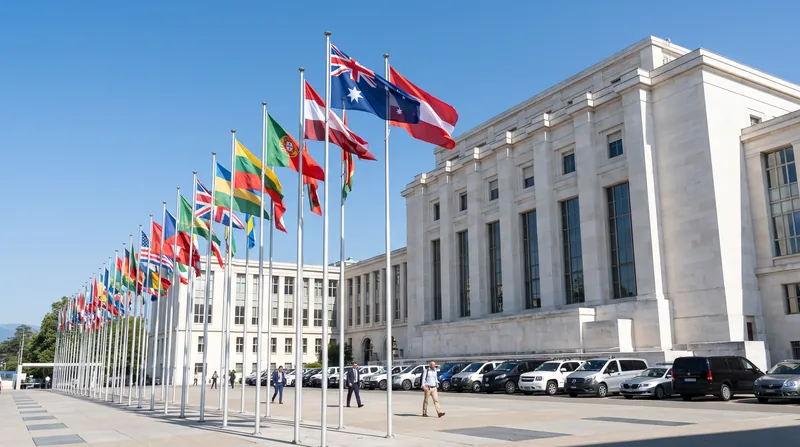
On the final day of negotiations in Geneva earlier this month, United States and Russian diplomats deployed a combined team of roughly 20 lawyers to a closed-door United Nations session, systematically removing the requirement for human oversight from a draft treaty on lethal autonomous weapons. Over the course of 15 hours, the two delegations stripped provisions that would have mandated human verification of military targets selected by artificial intelligence before a strike could be carried out.[1][2][4]
The Geneva talks represented the furthest progress yet toward establishing international rules for AI-powered combat systems. Hundreds of diplomats had gathered to draft the first global agreement governing the use of autonomous weapons. However, as the negotiations reached their conclusion, UN cameras were switched off and civil society observers were asked to leave the room.[1][2][4]
Operating behind closed doors, Washington and Moscow each fielded legal teams of about 10 people—nearly double the diplomatic presence of most other nations at the table. The pace of the amendments left smaller delegations struggling to keep up, with one person familiar with the talks describing the process as "death by a thousand paper cuts."[1][2]
Beyond the human veto requirement, the US and Russian teams eliminated language that would have forced AI weapons systems to operate in a "predictable" and "reliable" manner. They also struck a clause mandating that ethical considerations be factored into how the weapons are deployed.[1][4]
The push to weaken the UN draft comes as militaries increasingly integrate AI into active conflicts. Israel has actively utilized artificial intelligence systems during its operations in the Gaza Strip, drawing international scrutiny over collateral damage and the delegation of targeting decisions to algorithms.[1][2]
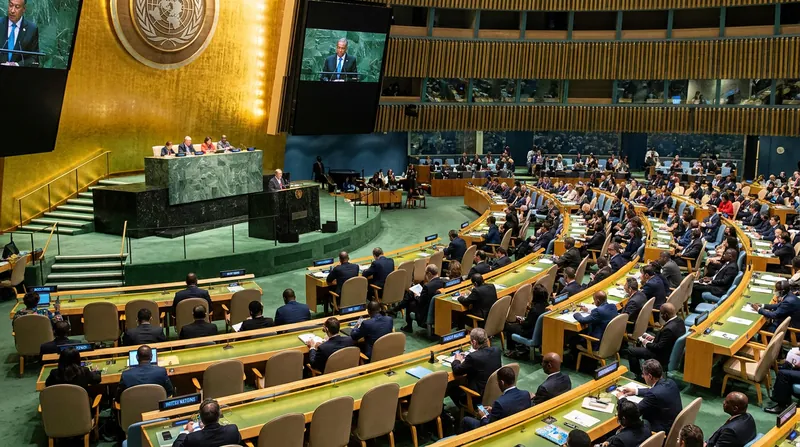
The diplomatic maneuvering also aligns with broader resistance to binding regulations on military technology. Addressing the United Nations on Tuesday, US President Donald Trump explicitly rejected international regulatory frameworks for advanced AI. "The United States also completely rejects any attempts to create a globalist scheme to control artificial intelligence," he stated.[1]
Domestically, the US Department of Defense had previously updated its own directive on autonomous weapon systems in 2023, which specifically provided for human involvement in the assessment and verification of such systems. The removal of similar language from the international treaty suggests a shift toward maximizing operational flexibility over codified restrictions.[2][4]
Human rights groups and arms control advocates argue that the revised text significantly reduces accountability for civilian casualties. Nicole van Rooijen, executive director of the advocacy coalition Stop Killer Robots, accused Washington and Moscow of deliberately seeking to weaken the draft.[4]
UN Secretary-General António Guterres previously called target selection by algorithms "a moral boundary that must not be crossed," urging a legally binding international agreement prohibiting weapon systems without human control. Currently, a record 76 nations support turning the nonbinding text into a binding treaty, though the removal of the human oversight clauses presents a major roadblock to that effort.[2][4]
Sources
- [1]Defensemirror.com — U.S., Russia Remove Human Oversight Requirement to Verify AI-defined Targets From Draft UN Rules Read on Defensemirror.com →
- [2]Nashaniva.com — Russia and US in UN Removed Requirement for Human Control Over Military Artificial Intelligence Read on Nashaniva.com →
- [3]Seoul Economic Daily — U.S. and Russia Join Forces to Strip Key Clause From Draft UN AI Weapons Treaty Read on Seoul Economic Daily →
- [4]The Daily Express — Russia and US reportedly strip safeguards from UN 'killer robots' treaty Read on The Daily Express →
What to watch
- Member states will decide in November 2026 whether to use the September 7 text as a basis for negotiating a binding international treaty.
- The United Nations Secretary-General has set a target for a legally binding treaty on autonomous weapons by the end of 2026.
Charts, maps and images
Timeline
September 2026
US and Russia Remove Human Oversight Requirement From Draft UN AI Weapons Treaty
AI128 Countries Agree on First UN Framework Defining Autonomous Weapons
July 2026
The End of Arms Control Consensus: How the UN's Push for a LAWS Treaty Rewrites the Future of Warfare
How the story developed
The push for international regulation accelerated by July 17, when the United Nations Secretary-General called for a legally binding treaty on autonomous weapons to be established by the end of 2026. The proposed framework sought to mandate meaningful human control over the use of force, ban fully autonomous systems, and regulate semi-autonomous military artificial intelligence. Experts warned that delegating lethal force to algorithms risked automated discrimination and rapid flash wars.
The initiative immediately sparked a geopolitical clash. A massive coalition of states, frustrated by consensus deadlocks in Geneva, moved the debate to the United Nations General Assembly to demand a ban on autonomous weapons. Conversely, major military powers resisted a binding ban, preferring voluntary guidelines to maintain strategic flexibility.
On September 7, a coalition of 128 nations reached a consensus at talks in Geneva on a non-binding text defining lethal autonomous weapons. The framework marked the first multilateral agreement on the technology, establishing a shared definition but imposing no immediate restrictions on the development or use of the weapons.
The September 7 agreement faced immediate criticism from humanitarian and campaign groups, who argued that measures to protect civilians were substantially diluted. Major military powers, including the United States and Russia, had successfully pushed for flexible language and opposed legally binding international regulations.